In manufacturing, contracts are the operational blueprint for the business. AI integration for CLM platforms like Icertis, Ironclad, or Agiloft must connect to the systems that execute those blueprints: your ERP (SAP, Oracle, NetSuite), PLM (Teamcenter, Windchill), and supply chain platforms. The integration surfaces are not just the CLM's review interface, but the data objects and APIs that link a supplier quality agreement to a bill of materials, a logistics contract to a shipment tracking event, or a capital equipment warranty to a maintenance work order in your CMMS. AI agents act as the connective tissue, parsing contract terms and triggering downstream actions or alerts.

Integration
AI Integration for Contract Management in Manufacturing
Connect AI to your Contract Lifecycle Management (CLM) platform to automate the review, extraction, and tracking of supplier contracts, quality agreements, and logistics terms, with direct integration to ERP, PLM, and supply chain systems.
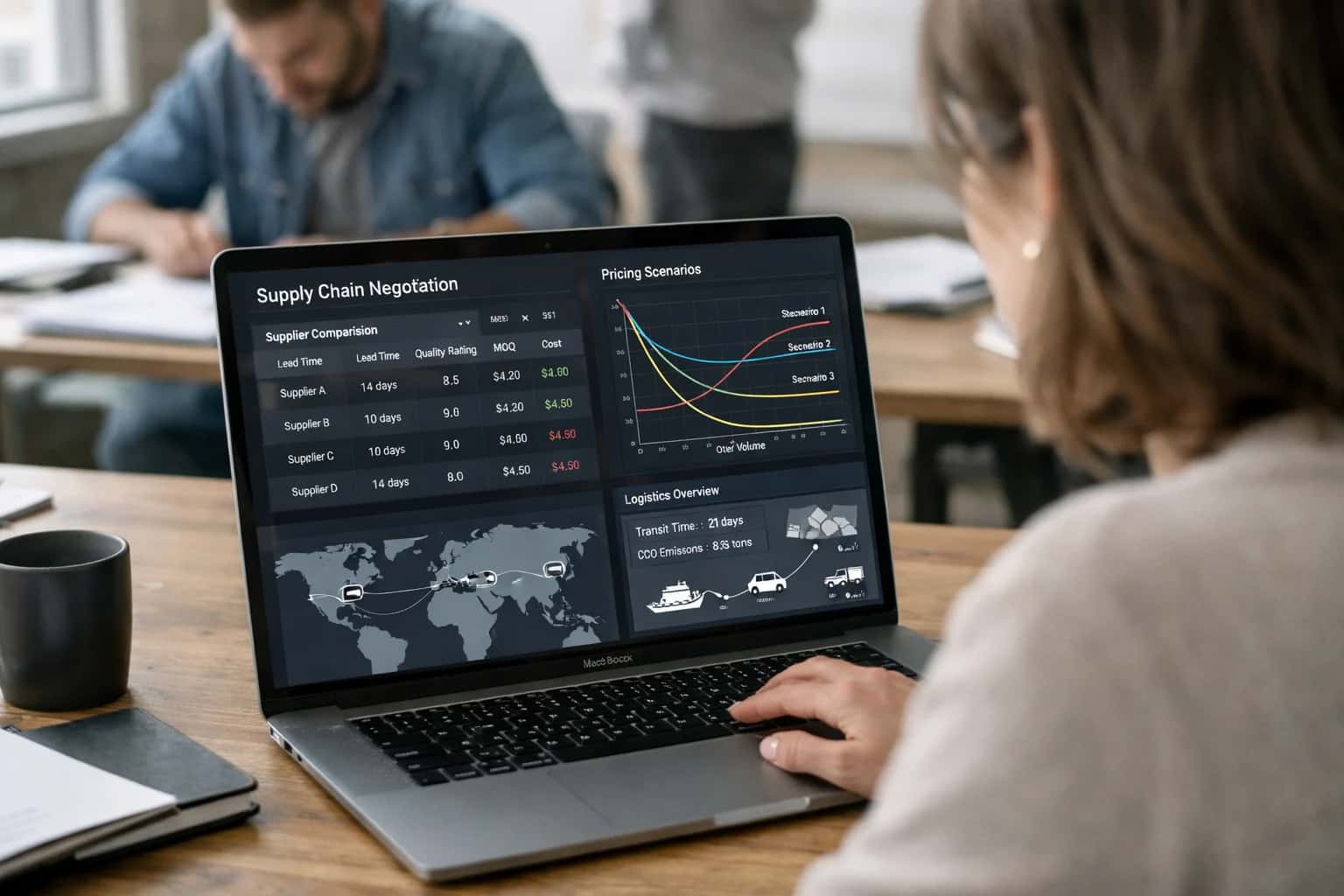
CONNECTING CLM TO THE SHOP FLOOR AND SUPPLY CHAIN
Where AI Fits in Manufacturing Contract Management
A practical blueprint for integrating AI into manufacturing contract workflows, connecting CLM data to ERP, PLM, and supply chain systems for operational intelligence.
High-value use cases are operational and preventative. For example, an AI workflow can extract incoterms and liability clauses from a freight contract in Icertis and push key dates and responsibilities into a Transportation Management System (TMS) like Oracle TMS or SAP TM. Another agent can monitor supplier quality agreements in Ironclad, cross-reference them with non-conformance reports from your MES or QMS, and automatically flag potential breaches for the quality team. For capital projects, AI can link contractual milestones and payment terms from a construction agreement in Agiloft to project schedules in Procore or Autodesk Build, generating alerts for invoicing or delay notices.
A production rollout starts with a RAG pipeline grounded in your specific contract corpus—supplier, customer, logistics, and quality agreements—and integrated via secure APIs. Governance is critical: AI suggestions for clause acceptance or breach alerts should route through existing approval workflows in the CLM, with a full audit trail logging the AI's rationale and the human decision. The goal isn't to replace negotiators or plant managers, but to give them a copilot that reduces the time from contract signature to operational execution from days to minutes, and surfaces risks before they cause line-down events or cost overruns.
ARCHITECTURE BLUEPRINT
AI Integration Points Across Manufacturing CLM Platforms
Supplier & Procurement Contracts
AI integration focuses on automating the intake and review of high-volume supplier agreements, quality agreements, and purchase contracts. Key surfaces include vendor onboarding portals, RFx modules, and procurement workflows within platforms like Icertis or Ironclad.
Integration Points:
- Vendor Portal Webhooks: Trigger AI analysis when a new supplier contract is uploaded, extracting key terms (pricing, liability, delivery SLAs) and populating CLM metadata fields.
- Procurement Playbook Enforcement: Use AI to compare draft agreements against approved procurement playbooks, flagging deviations in payment terms, warranty clauses, or termination rights for sourcing manager review.
- ERP Synchronization: AI agents can validate extracted terms (e.g., part numbers, lead times) against SAP S/4HANA or Oracle Cloud ERP master data, ensuring consistency before contract execution.
Example Workflow: A new raw material supply agreement is submitted via a supplier portal. An AI service classifies it, extracts key commercial terms, scores it against the procurement playbook, and routes it for approval—all before a buyer manually opens the document.
MANUFACTURING CLM INTEGRATION
High-Value AI Use Cases for Manufacturing Contracts
Manufacturing contracts—from supplier MSAs to quality agreements and logistics terms—contain critical operational and financial data. AI integration with your CLM platform extracts this intelligence and connects it to ERP, PLM, and supply chain systems for end-to-end visibility and automated workflows.
01
Supplier Contract Risk & Compliance Triage
AI scans incoming supplier agreements (MSAs, SOWs) against approved playbooks within Ironclad or Icertis, flagging non-standard liability clauses, payment terms, or delivery schedules. High-risk contracts are automatically routed to procurement or legal, while low-risk agreements proceed for automated approval, reducing initial review from days to hours.
Days -> Hours
Initial review time
02
Quality Agreement Obligation Extraction
AI parses complex quality and technical agreements with suppliers to extract specific obligations: testing frequencies, documentation requirements (COAs, batch records), and audit rights. These are structured into tracked tasks in the CLM and synced to quality management systems (QMS) like ETQ Reliance or MasterControl for automated compliance tracking.
Manual -> Automated
Obligation tracking
03
Logistics & Incoterms Validation
AI identifies and validates logistics terms (Incoterms, carrier responsibilities, damage liability) within freight and warehousing contracts. It cross-references these terms with active shipments in the Transportation Management System (TMS) like Oracle TMS or SAP TM, flagging discrepancies between contracted terms and actual carrier performance for corrective action.
Proactive Alerts
Contract-to-performance gap
04
MRO & Spare Parts Contract Intelligence
For maintenance, repair, and operations (MRO) contracts, AI extracts pricing schedules, SLA response times, and spare parts catalogs. This data populates the CLM and is pushed to the Enterprise Asset Management (EAM) system like IBM Maximo or the CMMS, enabling automated work order creation and parts requisition when SLAs are triggered.
Integrated Workflow
CLM to EAM/CMMS
05
Raw Material Price Index & Volume Analysis
AI extracts complex pricing formulas, volume tiers, and raw material index clauses from long-term supply agreements. It structures this data for integration with the ERP (e.g., SAP S/4HANA) to automate purchase order price calculations and with spend management platforms for forecasting and variance analysis against market indices.
Formula -> ERP Field
Data mapping
06
IP & Technical Specification Clause Retrieval
Using RAG architecture, AI creates a searchable knowledge base of intellectual property licenses and technical specifications buried in engineering contracts and joint development agreements. Engineers can query the CLM via a natural language interface to instantly find approved component specs or licensing terms, linked to the PLM (e.g., Siemens Teamcenter).
Instant Discovery
Cross-contract search
INTEGRATION BLUEPRINTS
Example AI-Driven Contract Workflows in Manufacturing
These concrete workflows illustrate how AI integrates with manufacturing-centric CLM platforms to automate supplier, quality, and logistics contracts, connecting to ERP, PLM, and supply chain systems for end-to-end visibility and operational efficiency.
Trigger: A new supplier contract (e.g., raw material purchase agreement) is uploaded to the CLM platform via a vendor portal or email ingestion.
AI Actions:
- Document Intelligence: An AI agent extracts key metadata (supplier name, material SKUs, Incoterms, delivery locations).
- Clause & Risk Analysis: The agent scans for critical manufacturing clauses:
- Force Majeure: Flags geographic-specific weather or political instability risks.
- Liability Caps: Evaluates caps against the material's value and potential production line impact.
- Quality Standards: Cross-references extracted quality specs (e.g., ISO 9001, ASTM standards) against internal PLM/quality system requirements.
- Supplier Profile Enrichment: The agent queries the ERP's vendor master and past performance data to append a risk score.
System Update: The contract record in the CLM (e.g., Ironclad, Icertis) is auto-populated with extracted data and an AI-generated risk summary. The workflow is automatically routed:
- Low-Risk/Standard: To procurement for fast-track approval.
- High-Risk/Non-Standard: To legal and quality engineering for review, with the AI-highlighted clauses presented.
Integration Points: CLM API, ERP (SAP/Oracle) vendor master, PLM system for spec libraries.
CONNECTING CLM TO ERP, PLM, AND SUPPLY CHAIN SYSTEMS
Implementation Architecture: Data Flow & System Connections
A practical blueprint for integrating AI into manufacturing contract workflows, connecting your CLM platform to core operational systems for end-to-end visibility.
The integration architecture connects your Contract Lifecycle Management (CLM) platform—such as Ironclad, Icertis, or Agiloft—as the central system of record for supplier contracts, quality agreements, and logistics terms. AI agents are deployed via the CLM's API layer to perform initial document intake, extracting key entities like part numbers, lot traceability requirements, INCOTERMS, and penalty clauses. This extracted data is structured into the CLM's custom object model, triggering automated review workflows that score contracts against manufacturing playbooks for supplier risk, liability caps, and force majeure language.
For production impact, the AI layer orchestrates bi-directional data flows. Upon contract execution, an AI workflow automatically pushes approved supplier details, payment terms, and delivery schedules to the ERP system (e.g., SAP S/4HANA, Oracle Cloud ERP) to update the vendor master and create purchase requisitions. Concurrently, critical technical specifications and quality assurance clauses are routed to the Product Lifecycle Management (PLM) platform (e.g., Siemens Teamcenter, PTC Windchill) to link contractual obligations to specific BOMs and engineering change orders. A separate AI monitor scans active contracts for logistics and shipping terms, updating Transportation Management (TMS) and Warehouse Management (WMS) systems with routing instructions and compliance flags.
Governance is built into the pipeline. All AI extractions and recommendations are logged with a human-in-the-loop approval step for high-value or non-standard terms before system updates are committed. The architecture uses a RAG (Retrieval-Augmented Generation) pipeline grounded in your historical contract repository and quality manuals to ensure AI suggestions are context-aware and compliant with internal standards. This setup allows for phased rollout, starting with high-volume supplier NDAs and quality agreements before expanding to complex global logistics contracts and licensing deals.
MANUFACTURING CLM
Code & Payload Examples for Key Integration Tasks
Ingesting Supplier Contracts from ERP
Manufacturing CLM systems must ingest contracts from ERP systems like SAP S/4HANA or Oracle Cloud ERP, where supplier master data and blanket purchase agreements reside. A common pattern is to use an event-driven webhook or scheduled sync to pull new or updated contract documents, enrich them with supplier metadata, and trigger an AI analysis pipeline.
Example Python payload for triggering AI analysis after ingestion:
pythonimport requests # Payload sent from CLM to AI processing service analysis_payload = { "contract_id": "SUP-2024-0892", "document_url": "https://clm-instance.com/files/supplier_agreement.pdf", "metadata": { "supplier_number": "V-78421", "erp_system": "SAP", "material_group": "RAW_STEEL", "buyer": "[email protected]" }, "extraction_focus": ["pricing_tiers", "delivery_sla", "quality_penalties", "raw_material_specs"] } # Call AI service endpoint response = requests.post( "https://ai-service.inferencesystems.com/analyze", json=analysis_payload, headers={"Authorization": "Bearer YOUR_API_KEY"} )
This payload instructs the AI service to focus extraction on manufacturing-specific terms, linking the contract back to the supplier and material master for downstream workflows.
MANUFACTURING CONTRACT WORKFLOWS
Realistic Time Savings & Operational Impact
How AI integration for Contract Lifecycle Management (CLM) platforms changes key manufacturing contract workflows, connecting to ERP, PLM, and supply chain systems.
| Metric | Before AI | After AI | Notes |
|---|---|---|---|
Supplier contract review | Manual clause-by-clause check | AI-assisted risk scoring & summary | Legal review focuses on flagged high-risk clauses |
Quality agreement compliance check | Cross-reference against manual checklist | Automated validation against quality standards | Links to PLM for spec history and ERP for lot data |
Logistics term extraction | Manual entry into TMS/WMS | AI auto-extracts Incoterms, lead times, penalties | Direct sync to Transportation or Warehouse Management Systems |
Renewal & expiration tracking | Calendar reminders & spreadsheet tracking | AI predicts renewal windows & auto-generates tasks | Triggers workflows in CRM for supplier relationship management |
Obligation tracking for deliverables | Periodic manual audits | AI extracts milestones, creates tasks in ERP/project tools | Enables real-time visibility into supplier performance |
Contract data entry into ERP | Manual keying of terms, prices, dates | AI populates vendor master, purchase info records | Reduces errors and accelerates procurement setup |
Spend under management analysis | Quarterly manual report consolidation | AI correlates contract terms with actual AP spend | Identifies savings opportunities and compliance gaps automatically |
MANUFACTURING-SPECIFIC IMPLEMENTATION
Governance, Security & Phased Rollout
A controlled, risk-aware approach to integrating AI into your manufacturing contract lifecycle.
In manufacturing, AI governance starts with data classification. Supplier quality agreements, logistics terms, and IP clauses often contain sensitive operational data, proprietary formulations, and regulated information. Your AI integration must enforce strict access controls, ensuring models only process data users are authorized to see based on their role (e.g., procurement, quality, logistics). All AI-generated summaries, redlines, and extracted obligations should be logged with a full audit trail linking back to the source contract version and the user who initiated the action, critical for ISO audits and quality management systems.
A phased rollout is essential for adoption and risk management. Start with a pilot on a single, high-volume contract type, such as raw material purchase orders or standard NDAs with non-critical suppliers. Use this phase to validate AI accuracy on your specific clause library, calibrate risk scoring thresholds with your legal and quality teams, and establish a human-in-the-loop review process for all AI outputs. The next phase typically expands to supplier onboarding packages and logistics agreements, integrating extracted terms (INCOTERMS, liability caps) directly into your ERP (e.g., SAP S/4HANA, Oracle Cloud) for automated purchase order creation and shipment routing.
The final phase targets complex, high-value contracts like long-term supply agreements, joint development contracts, and quality agreements. Here, AI's role shifts from automation to augmentation, providing negotiators with risk analysis against historical outcomes, obligation tracking against PLM (Product Lifecycle Management) milestones, and predictive alerts for renewal or renegotiation based on market indices. Throughout, maintain a sandbox environment for testing new AI models or prompts against a curated set of contracts before promoting them to production, ensuring stability for your global supply chain operations.
Enabling Efficiency, Speed & Accuracy
Intelligent Analysis, Decision & Execution
We build AI systems for teams that need search across company data, workflow automation across tools, or AI features inside products and internal software.
Talk to Us
Search across company data
Give teams answers from docs, tickets, runbooks, and product data with sources and permissions.
Useful when people spend too long searching or get different answers from different systems.
Enterprise searchRAGPermissions
Read more
Automate internal workflows
Use AI to route work, draft outputs, trigger actions, and keep approvals and logs in place.
Useful when repetitive work moves across multiple tools and teams.
AI agentsWorkflow automationGovernance
Read more
Add AI to products and internal tools
Build assistants, guided actions, or decision support into the software your team or customers already use.
Useful when AI needs to be part of the product, not a separate tool.
AI integrationDecision supportModel routing
Read moreIMPLEMENTATION BLUEPRINT
FAQ: AI Integration for Manufacturing CLM
Practical answers for engineering, supply chain, and legal teams integrating AI into manufacturing contract management. Focused on connecting CLM platforms like Ironclad, Icertis, Agiloft, and DocuSign CLM to ERP, PLM, and quality systems.
The integration typically involves a middleware layer or direct API calls from your CLM platform (e.g., Ironclad, Icertis) to your AI service. Here’s the common pattern:
- Trigger: A new supplier contract or quality agreement is uploaded to the CLM, initiating a workflow.
- Context Pull: The AI service receives the document via a secure webhook or API call, along with relevant metadata (supplier ID, part number, commodity code).
- AI Action: A pre-configured model or agent performs:
- Clause Extraction: Identifies and extracts key terms like liability caps, indemnification, warranty periods, and inspection rights.
- Risk Scoring: Flags clauses that deviate from your approved manufacturing playbook (e.g., non-standard force majeure language for single-source components).
- Obligation Mapping: Pulls out delivery schedules, quality reporting requirements (PPAP, FAIR), and audit rights.
- System Update: The extracted, structured data is posted back to the CLM, populating custom object fields (e.g.,
WarrantyTerm,LiabilityCap,QualityAuditFrequency). - Human Review: The contract is routed in the CLM workflow to the appropriate reviewer (Quality Engineer, Procurement Manager) with the AI-generated summary and risk flags highlighted.
Key Integration Point: The CLM platform's workflow engine API (e.g., Ironclad Workflow API, Icertis AI Studio) is used to trigger and receive data from the AI service.

About the author
Prasad Kumkar
CEO & MD, Inference Systems
Prasad Kumkar is the CEO & MD of Inference Systems and writes about AI systems architecture, LLM infrastructure, model serving, evaluation, and production deployment. Over 5+ years, he has worked across computer vision models, L5 autonomous vehicle systems, and LLM research, with a focus on taking complex AI ideas into real-world engineering systems.
His work and writing cover AI systems, large language models, AI agents, multimodal systems, autonomous systems, inference optimization, RAG, evaluation, and production AI engineering.
LinkedIn
Limited slotsGet a Free AI Consultation
Partnered with leading AI, data, and software stack.





How We Work
Custom AI workflows for your Business
One-fit-all AI don't work for modern businesses. At Inferensys, we aim to understand your business & custom requirements; which we use to define most efficient agentic workflows, the data, and the tools for your business.
01
Review the use case
We understand the task, the users, and where AI can actually help.
Read more02
Pick the right approach
We define what needs search, automation, or product integration.
Read more03
Build the first useful version
We implement the part that proves the value first.
Read more04
Improve from there
We add the checks and visibility needed to keep it useful.
Read moreThe first call is a practical review of your use case and the right next step.
Talk to Us