The gap between negotiated contract terms in your CLM (like Ironclad or Icertis) and their execution in your P2P system (like Coupa or SAP Ariba) is where value leaks and risk accumulates. An AI integration closes this loop by treating the executed contract as the single source of truth. The core architecture involves a middleware layer or API orchestration that uses AI to perform three critical tasks: extracting key commercial terms (pricing, payment terms, volume discounts, SLAs), mapping them to the correct P2P objects (vendor master records, catalog items, purchase order lines, invoice matching rules), and triggering automated workflows for validation and exception handling.

Integration
AI Integration for CLM and P2P Integration
Connect Contract Lifecycle Management (CLM) platforms with Procure-to-Pay (P2P) systems using AI to ensure contract terms automatically flow into purchase orders, invoices, and payment approvals, reducing manual validation and compliance risk.
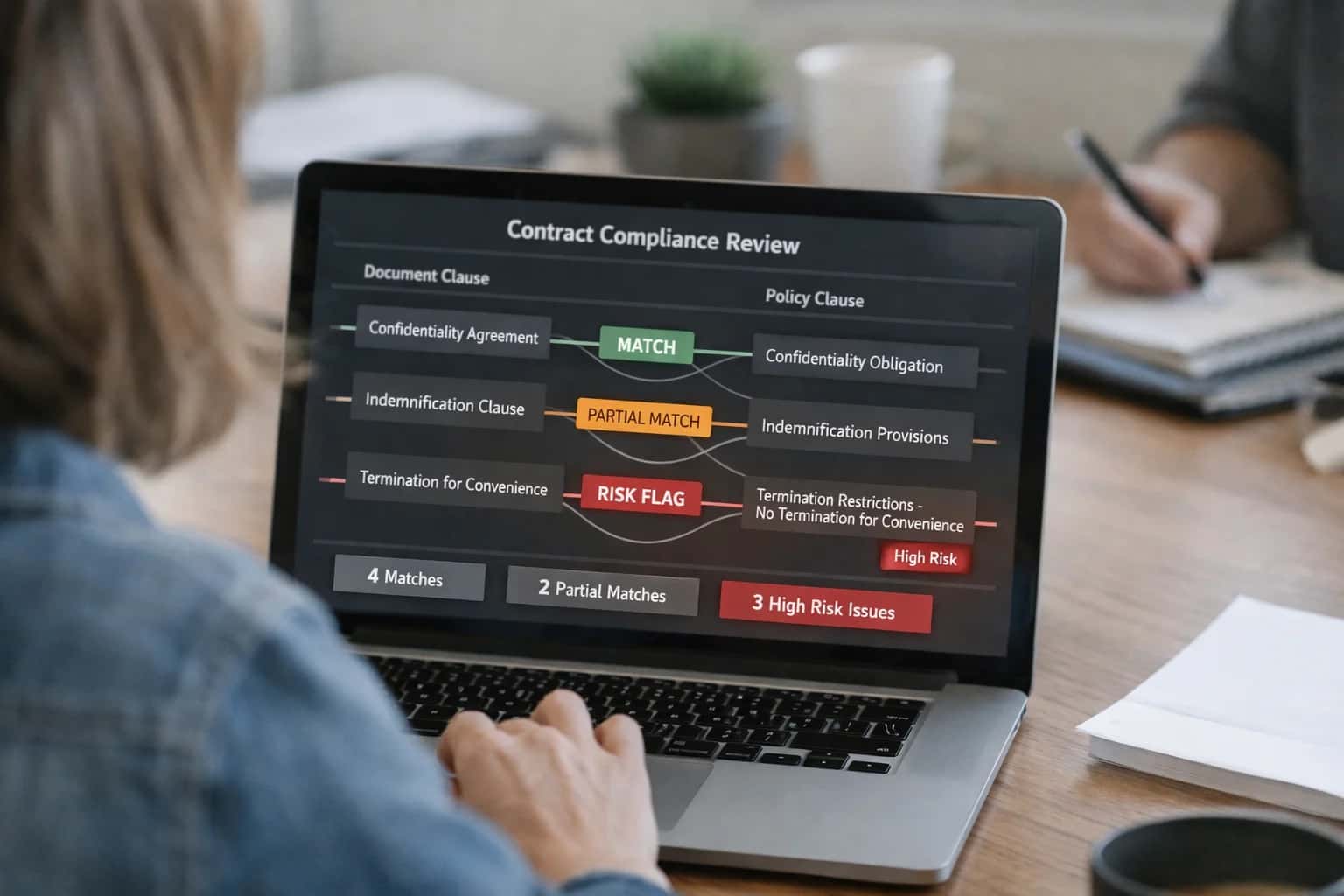
AI INTEGRATION FOR CLM AND P2P INTEGRATION
Closing the Loop Between Contract Terms and Procurement Execution
Architecting an AI-driven data bridge between Contract Lifecycle Management (CLM) and Procure-to-Pay (P2P) platforms to enforce terms, automate compliance, and optimize spend.
A practical implementation flows in two directions. From CLM to P2P: When a vendor contract is executed, an AI agent parses it, extracts structured data (e.g., net 60 terms, 5% discount on volumes over $50k), and via APIs, updates the corresponding vendor record in Coupa and configures the appropriate payment term and discount rules. From P2P to CLM: During invoice processing in Ariba, an AI service validates line items and totals against the contracted rates and terms stored in Icertis, flagging discrepancies for review before payment. This creates a governed, closed-loop system where procurement operates within the guardrails of legal agreements.
Rollout requires a phased, use-case-led approach. Start with high-volume, high-value supplier contracts where term leakage is costly. Implement AI extraction for a focused set of clauses (payment terms, pricing schedules) and map them to a few key P2P fields. Use a human-in-the-loop review step initially to validate AI accuracy, logging overrides to retrain models. Governance is critical: establish clear ownership between Legal, Procurement, and IT, and implement audit trails for all AI-driven data writes to both systems. This ensures accountability and provides the data needed to measure ROI through metrics like reduction in off-contract spend, faster invoice approval cycles, and fewer vendor disputes.
This integration transforms contracts from static documents into active, operational assets. By connecting CLM and P2P with AI, you move from reactive auditing to proactive enforcement, ensuring every purchase order and invoice aligns with the terms your legal and procurement teams worked hard to negotiate. For a deeper look at the foundational patterns, see our guide on AI Integration for Contract Lifecycle Management Platforms and the specific technical considerations for AI Integration for CLM and ERP Integration.
INTEGRATION ARCHITECTURE
AI Touchpoints Across the CLM and P2P Stack
AI-Powered Drafting and Intake
AI integration begins at the point of contract creation within the CLM (Ironclad, Icertis). Key touchpoints include:
- Template Assembly: An AI agent uses deal attributes from a connected CRM or intake form to dynamically assemble a contract from a pre-approved clause library, ensuring compliance with playbooks.
- Initial Risk Scan: Upon draft upload, an AI model performs a first-pass review, flagging non-standard clauses, missing terms, or deviations from fallback language. This score can automatically route the contract to the appropriate legal or procurement reviewer.
- Metadata Enrichment: AI extracts core entities (parties, effective dates, governing law, financial values) from unstructured text to populate CLM metadata fields, eliminating manual data entry.
python# Example: AI service call to extract metadata from a contract draft def extract_contract_metadata(file_bytes): # Call to a hosted LLM with a structured extraction prompt payload = { "document": file_bytes, "instructions": "Extract: parties, effective_date, termination_date, governing_law, total_value" } response = llm_client.post("/extract", json=payload) return response.json() # Returns structured data for CLM API
CONTRACT-TO-PAY AUTOMATION
High-Value AI Use Cases for CLM-P2P Integration
Connecting Contract Lifecycle Management (CLM) platforms like Ironclad and Icertis with Procure-to-Pay (P2P) systems like Coupa and SAP Ariba using AI ensures negotiated terms are operationalized, payments are validated, and compliance is automated.
01
Automated Purchase Order Creation & Validation
AI extracts pricing, payment terms, and approved vendors from executed contracts in the CLM. It validates new POs in Coupa/Ariba against these terms, flagging discrepancies (e.g., incorrect discount, non-contract vendor) before submission, ensuring procurement compliance.
Batch -> Real-time
Compliance check
02
AI-Powered Invoice Matching & Dispute Routing
When an invoice hits the P2P system, AI cross-references it against the source contract in the CLM. It validates line items, rates, and totals against the agreed terms. Mismatches are automatically routed with context to the contract owner in the CLM for review, reducing manual AP research.
Hours -> Minutes
Dispute resolution
03
Dynamic Discount & Rebate Capture
AI monitors contracts in the CLM for volume-based rebates and early payment discount terms. It analyzes spend data flowing through Coupa/Ariba, identifies qualifying transactions, and automatically triggers discount claims or optimized payment workflows, capturing hard savings.
1-3%
Typical savings capture
04
Obligation & Milestone Tracking for Services
For SOWs and service contracts, AI extracts deliverables, milestones, and acceptance criteria into the CLM. It syncs these as tracked tasks. Upon milestone completion in project tools, AI validates supporting documentation and triggers the corresponding payment release in the P2P system.
Same day
Payment trigger
05
Spend Under Management Intelligence
AI creates a unified view by linking contractual spend commitments from the CLM with actual spend data from Coupa/Ariba. It generates alerts for off-contract spend, forecasts rebate attainment, and provides dashboards showing the percentage of spend tied to governed contracts.
>95%
Spend visibility goal
06
Automated Contract Renewal & Re-procurement Workflows
AI predicts renewal dates and analyzes spend and performance data from the P2P system. As a contract in the CLM nears expiration, it automatically triggers a re-procurement project in the sourcing module, pre-populated with usage analytics to inform the new negotiation.
Weeks -> Days
Process lead time
CLM + P2P INTEGRATION PATTERNS
Example AI-Powered Workflows: From Contract to Payment
These concrete workflows show how AI bridges the gap between executed contracts in your CLM (Ironclad, Icertis, Agiloft, DocuSign CLM) and operational execution in your Procure-to-Pay platform (Coupa, SAP Ariba, Jaggaer). Each flow automates a high-friction, manual step to ensure contract terms govern purchasing and payment.
Trigger: A contract is fully executed and marked 'Active' in the CLM platform.
AI Action & Context Pull:
- An AI agent, listening via webhook, retrieves the new contract document and metadata.
- Using a RAG pipeline grounded in your procurement playbooks, the agent extracts key PO-relevant terms:
- Supplier/Vendor Details (legal name, remittance address, tax ID)
- Pricing & Payment Terms (agreed unit prices, payment schedule
Net 30, early payment discounts) - Item/Service Description (SKUs, service codes, SOW deliverables)
- Contract-Specific Requirements (required PO language, clause references)
System Update: 3. The agent validates the extracted vendor against the P2P platform's vendor master via API. If not found, it triggers a guided vendor onboarding workflow. 4. It formats the data into a JSON payload and calls the P2P platform's PO creation API, generating a draft PO with all contract terms pre-populated. 5. The PO is routed for a final procurement review (human-in-the-loop) before release to the supplier.
Result: PO creation time drops from hours of manual data entry to minutes, with guaranteed alignment to the signed contract.
CONNECTING CLM WITH P2P SYSTEMS
Implementation Architecture: Building the Intelligent Bridge
A technical blueprint for integrating AI between Contract Lifecycle Management (CLM) and Procure-to-Pay (P2P) platforms to automate term validation and financial execution.
The integration architecture establishes a secure, event-driven bridge between your CLM system (Ironclad, Icertis, Agiloft, DocuSign CLM) and your P2P platform (Coupa, SAP Ariba, Jaggaer). The core AI agent listens for contract execution events via webhook or API from the CLM. Upon receiving a new or amended contract, it triggers an AI extraction pipeline to parse key financial and operational terms—such as payment terms, pricing schedules, volume discounts, and delivery SLAs—mapping them to structured data objects. This enriched contract data is then pushed to the P2P system, typically creating or updating a vendor record, catalog item, or contract header to serve as the system-of-record for downstream procurement and invoicing.
For the reverse flow—validating payments against contracts—the AI system monitors the P2P platform's invoice approval queue or payment run. It uses the contract ID or vendor details to retrieve the governing agreement from the CLM via API. An AI validation agent then compares the invoice line items (amounts, dates, GL codes) against the extracted contract terms, flagging discrepancies such as incorrect pricing, early payments violating terms, or purchases exceeding agreed volumes. Flagged exceptions are routed to a human-in-the-loop dashboard within the P2P or CLM interface for review, with the AI providing a clear rationale. Approved transactions are logged back to the CLM as a fulfillment event, creating a closed-loop audit trail.
Rollout requires a phased approach: start with a pilot for a single high-volume vendor contract type (e.g., SaaS subscriptions or maintenance agreements). Governance is critical; establish a cross-functional steering committee from Legal, Procurement, and Finance to define the risk thresholds for automated validation versus mandatory human review. Implement robust logging for all AI decisions to support auditability and model retraining. This architecture not only enforces contractual compliance but turns static agreements into active, operational assets that directly control spend and reduce leakage.
AI-DRIVEN DATA FLOWS
Code and Payload Examples
Extracting Key Terms for P2P Systems
The first step is using an LLM to parse executed contracts in the CLM and extract structured financial and operational terms needed by the Procure-to-Pay (P2P) system. This payload is then sent via webhook or API to create or update vendor records and contract terms in Coupa or SAP Ariba.
pythonimport requests import json # Example payload from AI extraction service to P2P platform extraction_payload = { "vendor_id": "V-2024-001", "contract_id": "CTR-78910", "extracted_terms": { "payment_terms": "Net 45", "pricing_schedule": { "unit_price": 125.50, "currency": "USD", "volume_tiers": [ {"min_quantity": 1, "price": 125.50}, {"min_quantity": 100, "price": 118.00} ] }, "delivery_sla": "5 business days", "auto_renewal": true, "renewal_notice_days": 60, "governing_law": "State of Delaware" }, "source_document_url": "https://clm.instance.com/contracts/78910.pdf", "confidence_scores": { "payment_terms": 0.98, "pricing": 0.95 } } # POST to P2P system's contract terms API response = requests.post( 'https://api.coupa.com/api/v3/contract_terms', json=extraction_payload, headers={'Authorization': 'Bearer <token>'} )
AI-BRIDGED CLM AND P2P WORKFLOWS
Realistic Time Savings and Operational Impact
This table illustrates the operational impact of integrating AI between Contract Lifecycle Management (CLM) and Procure-to-Pay (P2P) platforms. It focuses on reducing manual handoffs, accelerating cycle times, and improving compliance by ensuring contract terms automatically flow into purchasing and payment operations.
| Workflow / Metric | Before AI Integration | After AI Integration | Key Notes |
|---|---|---|---|
Contract-to-PO Term Validation | Manual review of each PO against contract pricing, terms, and approvals | AI auto-validates PO against extracted contract terms; flags exceptions | Reduces procurement errors and ensures compliance with negotiated rates |
Invoice Matching & Payment Approval | AP team manually matches invoices to POs and contract terms (2-4 days) | AI matches line items to contract terms and auto-approves compliant invoices (same day) | Accelerates supplier payments, improves cash flow, and frees AP for exception handling |
Spend Under Management Tracking | Quarterly manual reconciliation between CLM data and P2P spend reports | AI continuously correlates contract commitments (CLM) with actual spend (P2P) | Provides real-time visibility into contract compliance and identifies savings leakage |
Vendor Onboarding & Compliance | Manual checklist review for insurance, certifications, and contract requirements | AI monitors vendor master records in P2P against active contract obligations in CLM | Automates compliance alerts for expiring certificates or missed deliverables |
Renewal & Upsell Trigger Identification | Manual calendar tracking and sales/ops syncs to identify renewal windows | AI analyzes contract end dates, usage data from P2P, and triggers renewal workflows in CLM | Proactively captures renewal revenue and prevents service lapses |
Obligation & Milestone Tracking | Spreadsheet or email-based tracking of contract deliverables and milestones | AI extracts obligations from CLM, creates tasks in P2P/project tools, and monitors completion | Reduces risk of missed deliverables and associated penalties |
Audit & Compliance Reporting | Weeks of manual data gathering from CLM and P2P systems for internal/regulatory audits | AI generates pre-populated audit reports showing contract-to-payment lineage | Cuts audit preparation time significantly and improves evidence accuracy |
ARCHITECTING FOR ENTERPRISE CONTROL
Governance, Security, and Phased Rollout
A practical blueprint for deploying AI between CLM and P2P systems with security, auditability, and controlled adoption.
A production AI integration between your Contract Lifecycle Management (CLM) platform (like Ironclad or Icertis) and your Procure-to-Pay (P2P) system (like Coupa or SAP Ariba) must be built on a secure, observable pipeline. This typically involves a middleware layer or API gateway that orchestrates the flow: 1) AI services retrieve contract text and metadata from the CLM via its API, 2) models extract and validate specific terms (payment terms, pricing, volume discounts, SLAs), 3) validated data is formatted into a payload (e.g., JSON) and posted to the P2P system's vendor, purchase order, or invoice API to create or update records. Every step should be logged with a correlation ID for a complete audit trail from contract clause to PO line item.
Governance is critical because AI is making operational decisions. Implement a human-in-the-loop (HITL) review for high-value or non-standard terms before they are written to the P2P system. For example, an AI-suggested payment term of "Net 60" extracted from a new vendor contract could be flagged for procurement approval if it deviates from the standard "Net 30" policy. Role-based access controls (RBAC) ensure only authorized procurement or legal ops users can approve these exceptions. Furthermore, the AI's confidence scores for each extracted term should be visible in the approval interface, allowing users to assess reliability before proceeding.
A phased rollout mitigates risk and proves value. Start with a closed-loop pilot on a single, high-volume contract type—such as NDAs or simple purchase agreements—where the AI validates a limited set of terms (e.g., effectiveDate, terminationClause) against corresponding fields in the P2P system. Measure accuracy and time savings. Phase two expands to more complex agreements (MSAs, SOWs) and integrates obligation tracking, creating tasks in the CLM or a project tool when a contract requires a certificate of insurance or a milestone report. The final phase enables bi-directional intelligence, where the AI also analyzes P2P spend data to flag contracts for renegotiation if usage patterns deviate from terms, creating a feedback loop for continuous optimization. This measured approach builds trust, refines the models on your specific data, and demonstrates clear ROI before enterprise-wide deployment.
Enabling Efficiency, Speed & Accuracy
Intelligent Analysis, Decision & Execution
We build AI systems for teams that need search across company data, workflow automation across tools, or AI features inside products and internal software.
Talk to Us
Search across company data
Give teams answers from docs, tickets, runbooks, and product data with sources and permissions.
Useful when people spend too long searching or get different answers from different systems.
Enterprise searchRAGPermissions
Read more
Automate internal workflows
Use AI to route work, draft outputs, trigger actions, and keep approvals and logs in place.
Useful when repetitive work moves across multiple tools and teams.
AI agentsWorkflow automationGovernance
Read more
Add AI to products and internal tools
Build assistants, guided actions, or decision support into the software your team or customers already use.
Useful when AI needs to be part of the product, not a separate tool.
AI integrationDecision supportModel routing
Read moreCLM AND P2P AI INTEGRATION
Frequently Asked Questions (FAQ)
Practical questions for teams connecting Contract Lifecycle Management (CLM) platforms like Ironclad or Icertis with Procure-to-Pay (P2P) systems like Coupa or SAP Ariba using AI.
AI acts as the intelligent bridge between structured contract data and transactional procurement workflows. Key integration points are:
- Contract Execution to PO Creation: When a contract is executed in the CLM, an AI agent reviews the pricing, payment terms, and approved vendors, then triggers the creation of a corresponding purchase requisition or draft PO in the P2P system with the correct terms pre-populated.
- Invoice Matching & Validation: As invoices arrive in the P2P system, an AI service compares line items, quantities, and prices against the extracted terms from the governing contract in the CLM. It flags discrepancies (e.g., unit price overage, unapproved charges) for review before payment approval.
- Spend Commitment Tracking: AI monitors P2P spend against contractually committed volumes or values in the CLM, alerting procurement when thresholds are approaching or when off-contract "maverick spend" is detected.
- Obligation & Milestone Sync: AI extracts key obligations (e.g., delivery schedules, reporting requirements) from contracts and creates corresponding tasks or milestones in the P2P system's project or supplier management modules.

About the author
Prasad Kumkar
CEO & MD, Inference Systems
Prasad Kumkar is the CEO & MD of Inference Systems and writes about AI systems architecture, LLM infrastructure, model serving, evaluation, and production deployment. Over 5+ years, he has worked across computer vision models, L5 autonomous vehicle systems, and LLM research, with a focus on taking complex AI ideas into real-world engineering systems.
His work and writing cover AI systems, large language models, AI agents, multimodal systems, autonomous systems, inference optimization, RAG, evaluation, and production AI engineering.
LinkedIn
Limited slotsGet a Free AI Consultation
Partnered with leading AI, data, and software stack.





How We Work
Custom AI workflows for your Business
One-fit-all AI don't work for modern businesses. At Inferensys, we aim to understand your business & custom requirements; which we use to define most efficient agentic workflows, the data, and the tools for your business.
01
Review the use case
We understand the task, the users, and where AI can actually help.
Read more02
Pick the right approach
We define what needs search, automation, or product integration.
Read more03
Build the first useful version
We implement the part that proves the value first.
Read more04
Improve from there
We add the checks and visibility needed to keep it useful.
Read moreThe first call is a practical review of your use case and the right next step.
Talk to Us