AI integration typically connects at three key surfaces within a construction management platform: the project financials and procurement module (for material invoices and purchase orders), the project management or daily logs tool (for waste tracking and diversion logs), and the documents repository (for product submittals, EPDs, and certifications). An AI agent can be triggered via platform webhooks or scheduled syncs to ingest this unstructured data—such as extracting cubic yards of concrete from a delivery ticket or identifying a product's declared unit from a PDF submittal—and map it to a structured sustainability data model.

Integration
AI for Construction Sustainability Tracking
Integrate AI with Procore, Autodesk Build, and Fieldwire to automate embodied carbon calculations, material sourcing validation, and waste diversion reporting for LEED, BREEAM, and ESG compliance.
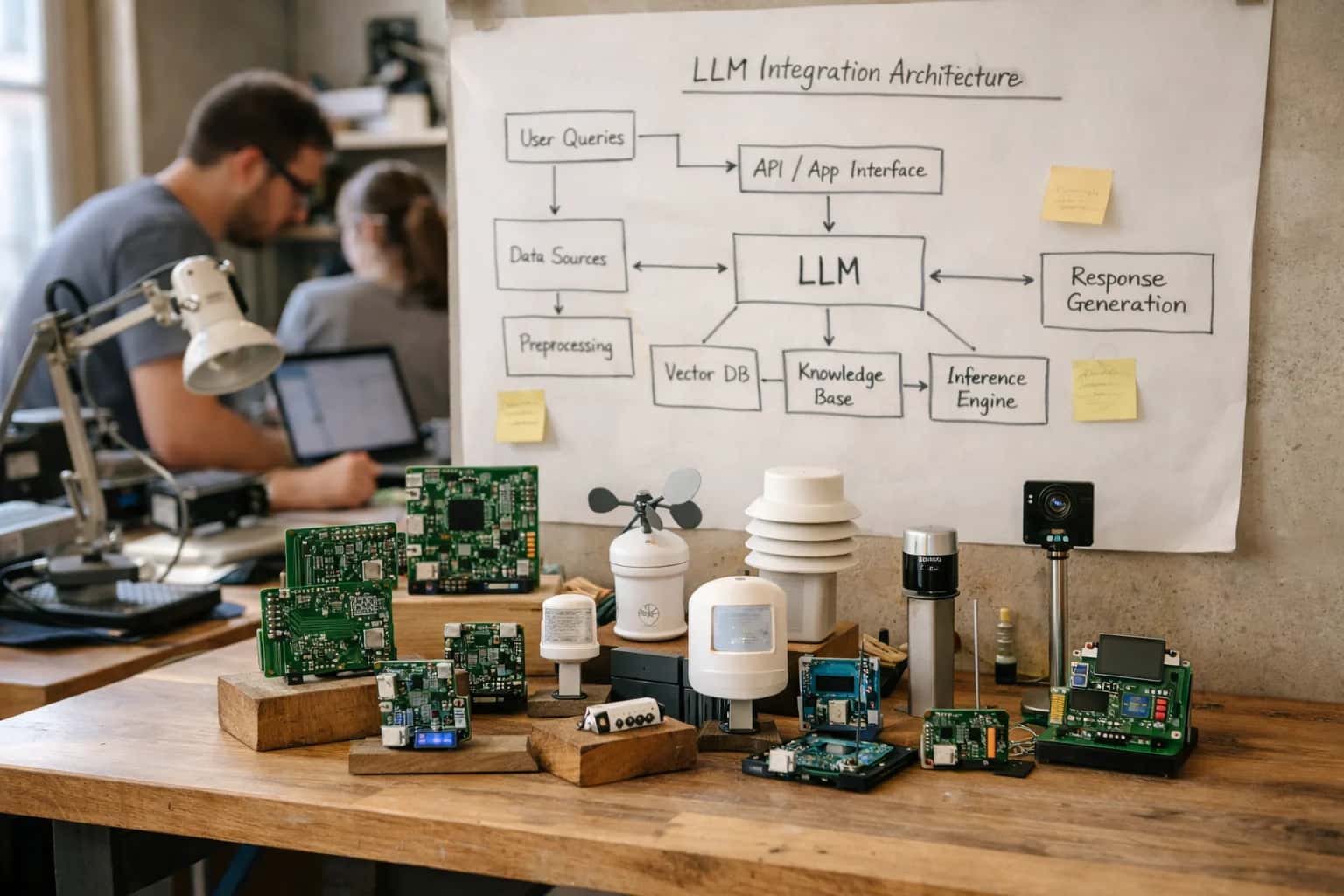
ARCHITECTURE AND ROLLOUT
Where AI Fits into Construction Sustainability Workflows
Integrating AI into platforms like Procore and Autodesk Build automates the collection, calculation, and reporting of sustainability data, turning manual tracking into a governed, data-driven process.
The core workflow involves an AI pipeline that classifies materials, calculates embodied carbon using integrated databases (like EC3), and updates custom objects or external systems. For example, when a new purchase order for structural steel is approved in Procore's Commitments tool, an agent can:<br>- Fetch the PO details and attached mill certificates.<br>- Extract material type, quantity, and supplier.<br>- Calculate the associated GWP (Global Warming Potential) using the product's EPD.<br>- Write the calculated carbon equivalent back to a custom Procore Sustainability Tracking object or push it to a dedicated ESG platform like Novata or Sweep for portfolio aggregation.
Rollout should be phased, starting with a pilot project and a limited set of high-impact material categories (e.g., concrete, steel, insulation). Governance is critical: all AI-generated calculations should be flagged for human review and approval within the platform's existing workflow (e.g., using Procore's Approval workflows) before being locked into reports. This creates an audit trail and ensures accountability, especially for certifications like LEED or Envision. The final architecture should treat the construction platform as the system of engagement and record, while AI acts as the intelligent layer that enriches that data for sustainability intelligence.
WHERE AI CONNECTS TO TRACK EMBODIED CARBON, MATERIAL SOURCING, AND WASTE DIVERSION
Sustainability Data Touchpoints in Your Construction Platform
The Foundation for Sustainability Accounting
This module holds the master project data, budget, and cost codes essential for calculating the financial impact of sustainable choices. AI integrates here to map material purchases and labor to sustainability metrics.
Key Touchpoints:
- Project Setup & Cost Codes: AI can automatically append Environmental Product Declaration (EPD) data or Global Warming Potential (GWP) factors to custom cost codes for concrete, steel, insulation, and finishes.
- Purchase Orders & Commitments: As subcontractors and suppliers are engaged, AI agents can scan PO descriptions and vendor catalogs to flag materials with available EPDs or recycled content, enriching the commitment record.
- Budget Tracking: AI models can forecast the embodied carbon impact of the budget vs. actuals, providing early warnings if material selections are drifting from sustainability targets.
This creates a single source of truth where financial and environmental costs are analyzed in parallel.
CONSTRUCTION MANAGEMENT PLATFORMS
High-Value AI Use Cases for Sustainability
Integrate AI with Procore, Autodesk Build, and Fieldwire to automate embodied carbon tracking, material compliance, and waste reporting—turning project data into auditable sustainability intelligence.
01
Automated Embodied Carbon Tracking
AI agents ingest material purchase orders, submittals, and BIM data from Procore or Autodesk Build to calculate real-time embodied carbon. Automatically maps materials to EPD databases and updates the project's carbon ledger.
Batch → Real-time
Reporting cadence
02
Specification & Submittal Compliance Checking
AI reviews project specs within Procore Documents against submitted material data sheets. Flags non-compliant items for recycled content, VOC levels, or sourcing requirements before approval, ensuring sustainability standards are met.
Hours → Minutes
Review time
03
Waste Diversion Reporting & Optimization
Connects AI to Fieldwire daily logs and waste hauler tickets. Categorizes waste streams from field notes, calculates diversion rates, and identifies opportunities to improve recycling or reuse for LEED or other certification reporting.
Same day
Audit readiness
04
Sustainable Procurement Guidance
An AI copilot for procurement teams analyzes vendor catalogs and historical spend. Suggests lower-carbon material alternatives within budget during the buyout phase in Buildertrend or Procore, based on project location and availability.
1 sprint
Implementation timeline
05
Automated Certification Documentation
For projects targeting LEED, BREEAM, or Envision. AI aggregates evidence from across Procore modules—photos, inspection reports, product data—and auto-generates the required documentation packages, drastically reducing manual compilation.
Days → Hours
Submission prep
06
Portfolio-Wide Carbon Forecasting
For owners and developers. AI synthesizes data from multiple Procore/Autodesk Build projects to forecast the carbon footprint of the entire portfolio. Models the impact of design or material decisions on future projects for strategic planning.
CONSTRUCTION MANAGEMENT INTEGRATION
Example AI-Powered Sustainability Workflows
These workflows demonstrate how AI agents can be integrated with Procore, Autodesk Build, and other construction platforms to automate sustainability tracking, reduce manual reporting overhead, and support certifications like LEED, BREEAM, and Envision.
Trigger: A new material delivery ticket is logged in Procore's Daily Log or a purchase order is marked 'Received' in the project's Cost Management module.
Context Pulled: The AI agent retrieves the delivery ticket details, cross-references the material type and quantity with the project's BIM model or material takeoff, and fetches the associated Environmental Product Declaration (EPD) from a connected database or vendor portal.
AI Action: A pre-configured LLM agent calculates the embodied carbon (kg CO2e) using the EPD data and delivery quantity. It can also check for sustainable sourcing certifications (e.g., FSC, CRS) noted in the submittal documents.
System Update: The calculated carbon value and material provenance are automatically written to a dedicated 'Sustainability Log' custom table in Procore or appended to a shared dataset in Autodesk Build's Data Connector. The project's live carbon dashboard is updated.
Human Review Point: For materials without a clear EPD match, the agent flags the item for manual review by the project's sustainability manager and suggests similar materials with known impacts for future procurement.
FROM SITE DATA TO SUSTAINABILITY REPORTING
Implementation Architecture: Data Flow and System Boundaries
A practical architecture for integrating AI into construction platforms to automate embodied carbon, material, and waste tracking.
The core integration connects your primary construction management platform—Procore, Autodesk Build, or Fieldwire—to specialized AI services and your sustainability reporting system. Data flow begins at the source: Purchase Orders for material quantities and suppliers, Daily Logs for waste hauling tickets, Submittals for product data sheets, and Photos from site inspections. An AI agent, triggered by platform webhooks or scheduled API calls, extracts and normalizes this unstructured data, identifying key entities like material type (e.g., concrete, 4000 psi), volume, supplier name, and transport distance.
The processed data is then enriched and classified. The AI matches materials against a custom carbon factor database (e.g., EC3, ICE) to calculate embodied carbon, classifies waste streams for diversion tracking, and flags materials against sustainability certifications like LEED or Living Building Challenge requirements. These enriched records are written back to the construction platform as Custom Fields or linked Documents, creating an auditable trail within the existing project record. Simultaneously, aggregated metrics are pushed to your ESG reporting platform (e.g., Workiva, Novata) or a dedicated dashboard via API, ready for disclosure workflows.
Governance is built into the flow. All AI-generated classifications and calculations include confidence scores and source references, enabling manual review in the construction platform's interface before final reporting. A reconciliation queue handles discrepancies, such as a purchase order quantity not matching the submittal, flagging them for the project engineer. Rollout typically starts with a pilot project, focusing on 2-3 high-impact material categories (e.g., structural concrete, steel rebar), before scaling to full material and waste streams across the portfolio. This architecture ensures sustainability tracking is a byproduct of existing workflows, not a manual, post-project burden.
SUSTAINABILITY DATA PIPELINES
Code and Payload Examples
Ingesting Purchase Orders for Embodied Carbon
This Python example fetches recent purchase orders from a construction platform API, extracts material descriptions, and calls an external embodied carbon database (like EC3) to append estimated carbon factors. The result is a structured payload ready for insertion into a sustainability dashboard or custom Procore log.
pythonimport requests import re # Fetch purchase orders from construction platform (e.g., Procore) def fetch_purchase_orders(project_id, api_token): headers = {'Authorization': f'Bearer {api_token}'} url = f'https://api.example-platform.com/v1/projects/{project_id}/purchase_orders?status=approved' response = requests.get(url, headers=headers) return response.json().get('data', []) # Call EC3 API for material carbon factor (pseudocode) def get_carbon_factor(material_description): # Clean and standardize description clean_desc = re.sub(r'\d+\s*[xX]\s*\d+', '', material_description).strip() # Example EC3 API call ec3_payload = {'query': clean_desc, 'category': 'Concrete'} # response = requests.post('https://api.buildingtransparency.org/...', json=ec3_payload) # return response.json().get('average_kgCO2e_per_unit') return 350 # kgCO2e per cubic yard (example for concrete) # Main orchestration for po in fetch_purchase_orders('proj_123', 'token_abc'): material = po.get('description') quantity = po.get('quantity') unit = po.get('unit') carbon_factor = get_carbon_factor(material) total_embodied_carbon = quantity * carbon_factor # Prepare payload for sustainability log sustainability_record = { 'project_id': 'proj_123', 'po_id': po['id'], 'material': material, 'quantity': quantity, 'unit': unit, 'carbon_factor_kgCO2e_per_unit': carbon_factor, 'total_kgCO2e': total_embodied_carbon, 'supplier': po.get('vendor_name'), 'timestamp': po.get('approved_date') } # Post to custom Procore log or external dashboard # requests.post('https://api.example-platform.com/v1/sustainability_logs', json=sustainability_record)
AI FOR SUSTAINABILITY TRACKING
Realistic Time Savings and Operational Impact
How AI integration with Procore, Autodesk Build, and Fieldwire transforms manual data collection and reporting for LEED, BREEAM, and embodied carbon tracking.
| Workflow | Before AI | After AI | Implementation Notes |
|---|---|---|---|
Material Sourcing Documentation | Manual vendor outreach and PDF review | Automated extraction from supplier submittals | AI parses product data sheets into platform fields |
Embodied Carbon Calculation | Spreadsheet entry from manual takeoffs | Auto-calculation from BIM model quantities | Links to material databases (EPDs) via API |
Waste Diversion Reporting | Weekly site walk to estimate dumpster loads | Photo analysis of waste streams + scale data | AI classifies materials and estimates tonnage |
LEED Credit Documentation | Months of manual evidence compilation | Continuous evidence capture and gap alerts | AI maps site activities to credit requirements |
Sustainability Dashboard Updates | Monthly manual data consolidation | Real-time dashboard from connected systems | Pulls from IoT sensors, logs, and procurement APIs |
Audit and Certification Support | Pre-audit scramble to locate documents | Pre-populated audit trail with key documents | AI flags missing evidence for specific credits |
Subcontractor Compliance Tracking | Email chains and manual follow-up | Automated reminders and compliance scoring | AI monitors submittal status against specs |
ARCHITECTING FOR AUDITABILITY AND SCALE
Governance, Data Handling, and Phased Rollout
A sustainable AI integration must be built on a foundation of data integrity, clear ownership, and controlled adoption.
The integration architecture connects to your construction platform's core data objects—typically the Project, Cost Item, Submittal, and Daily Log modules in Procore or Autodesk Build—to extract material quantities, procurement records, and waste tickets. AI agents process this data against embodied carbon databases (like EC3) and sustainability frameworks (LEED, BREEAM) via secure API calls. All source data, AI inferences, and final calculations are written back to a dedicated custom object or external table, creating a complete, versioned audit trail for each project's carbon ledger.
Governance is enforced through role-based access control (RBAC) within the construction platform, ensuring only authorized sustainability managers or project executives can trigger AI analyses or approve reported figures. For sensitive data, we implement a human-in-the-loop pattern where AI-generated sustainability scores or compliance flags are routed as tasks in the platform's workflow engine for manual review before final submission to ESG reporting tools like Workiva or Novata. This maintains accountability while automating the heavy lifting of data aggregation and calculation.
A phased rollout minimizes risk and maximizes value. Phase 1 typically automates the tracking of a single, high-impact material category (e.g., concrete or structural steel) within a pilot project, delivering a clear ROI on manual data entry reduction. Phase 2 expands to full material takeoffs and waste diversion tracking, integrating with accounting platforms for purchase order data. Phase 3 introduces predictive analytics for material sourcing and circularity recommendations, enabling proactive sustainability decisions. Each phase is governed by a cross-functional team from operations, sustainability, and IT, ensuring the AI augments—rather than disrupts—existing project delivery workflows.
Enabling Efficiency, Speed & Accuracy
Intelligent Analysis, Decision & Execution
We build AI systems for teams that need search across company data, workflow automation across tools, or AI features inside products and internal software.
Talk to Us
Search across company data
Give teams answers from docs, tickets, runbooks, and product data with sources and permissions.
Useful when people spend too long searching or get different answers from different systems.
Enterprise searchRAGPermissions
Read more
Automate internal workflows
Use AI to route work, draft outputs, trigger actions, and keep approvals and logs in place.
Useful when repetitive work moves across multiple tools and teams.
AI agentsWorkflow automationGovernance
Read more
Add AI to products and internal tools
Build assistants, guided actions, or decision support into the software your team or customers already use.
Useful when AI needs to be part of the product, not a separate tool.
AI integrationDecision supportModel routing
Read moreIMPLEMENTATION AND WORKFLOW DETAILS
Frequently Asked Questions
Practical questions about integrating AI with Procore, Autodesk Build, and other construction platforms to automate sustainability tracking for embodied carbon, material sourcing, and waste diversion.
AI integrates via the platform's REST API and webhooks to read and write sustainability-related data. A typical architecture involves:
-
Data Ingestion Triggers: Webhooks fire when key events occur, such as:
- A new material purchase order is created in Procore's Commitments tool.
- A daily log is submitted in Fieldwire with waste hauling details.
- A submittal is approved in Autodesk Build containing a product's Environmental Product Declaration (EPD).
-
Context Enrichment: The AI agent pulls related records (e.g., the project's location, material specs from the submittal, supplier details) via API calls.
-
AI Processing: The agent uses a combination of:
- Pre-trained models to classify materials and extract key attributes from documents.
- External data APIs (like EC3 or Pharos) to fetch carbon factors for specific materials.
- Calculation logic to compute embodied carbon (A1-A3) based on quantity and material type.
-
System Update: The AI writes the calculated carbon data, material origin, or waste diversion rate back to a custom table, a dedicated sustainability module, or tags the original record with metadata for reporting.
This creates an automated, auditable link between operational actions and sustainability metrics.

About the author
Prasad Kumkar
CEO & MD, Inference Systems
Prasad Kumkar is the CEO & MD of Inference Systems and writes about AI systems architecture, LLM infrastructure, model serving, evaluation, and production deployment. Over 5+ years, he has worked across computer vision models, L5 autonomous vehicle systems, and LLM research, with a focus on taking complex AI ideas into real-world engineering systems.
His work and writing cover AI systems, large language models, AI agents, multimodal systems, autonomous systems, inference optimization, RAG, evaluation, and production AI engineering.
LinkedIn
Limited slotsGet a Free AI Consultation
Partnered with leading AI, data, and software stack.





How We Work
Custom AI workflows for your Business
One-fit-all AI don't work for modern businesses. At Inferensys, we aim to understand your business & custom requirements; which we use to define most efficient agentic workflows, the data, and the tools for your business.
01
Review the use case
We understand the task, the users, and where AI can actually help.
Read more02
Pick the right approach
We define what needs search, automation, or product integration.
Read more03
Build the first useful version
We implement the part that proves the value first.
Read more04
Improve from there
We add the checks and visibility needed to keep it useful.
Read moreThe first call is a practical review of your use case and the right next step.
Talk to Us