AI integration for construction dispute resolution connects directly to the project record within platforms like Procore, Autodesk Build, and Fieldwire. The primary surfaces are the Documents module (for contracts, RFIs, submittals, daily logs, and correspondence), the Schedule module (for delay analysis), and the Cost Management module (for impact quantification). An AI agent is typically deployed as a background service, using platform APIs and webhooks to monitor new entries, classify them for relevance (e.g., potential delay, scope change, defect), and extract key entities like dates, parties, obligations, and cost references into a structured claims register.

Integration
AI for Construction Dispute Resolution
Integrate AI with Procore, Autodesk Build, and Fieldwire to analyze correspondence, logs, and schedules, accelerating claims preparation and strengthening your dispute resolution position.
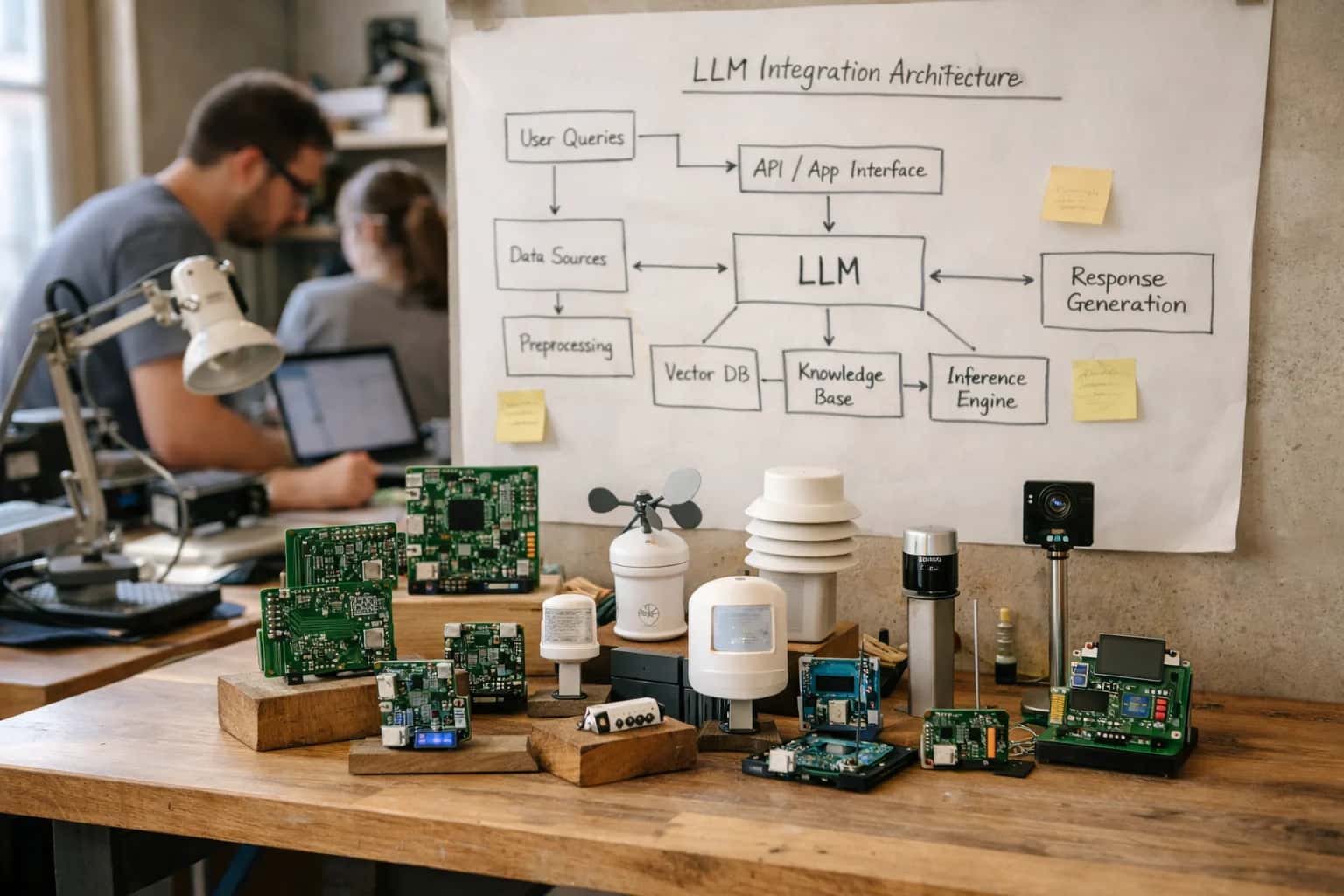
ARCHITECTING INTELLIGENT CLAIMS SUPPORT
Where AI Fits in Construction Dispute Resolution
Integrating AI with construction platforms to transform reactive dispute management into proactive, data-driven claims preparation.
The high-value workflow begins with automated evidence compilation. For a delay claim, the AI system can parse schedule updates (Primavera P6 or MS Project imports), correlate them with contemporaneous daily logs and weather data, and draft a preliminary timeline narrative. For a defective work dispute, it can analyze inspection reports and photo markups from the Inspections or Punch List tools, linking visual evidence to specification clauses from the submittal log. This shifts the project team's effort from manual document review—often taking weeks—to review and refinement, enabling faster, more substantiated preliminary notices.
Rollout requires a phased, claims-type-specific approach. Start with a focused integration for RFI and Correspondence Analysis, using the platform's webhooks to send new documents to an AI pipeline for clause extraction and obligation tracking. Governance is critical: all AI-generated summaries and flags should be stored as non-editable audit entries within the platform (e.g., as a custom tool or linked record) and require a project manager or legal reviewer's approval before external use. This creates a defensible, AI-augmented workflow that improves claim accuracy while maintaining human oversight, ultimately reducing dispute lifecycle time and legal spend.
AI FOR CONSTRUCTION DISPUTE RESOLUTION
Key Data Surfaces for AI Integration
The Narrative of the Project
This surface includes all threaded communications: emails, RFI (Request for Information) logs, and meeting minutes stored in platforms like Procore's Communications tool or Autodesk Build's Issues module. AI agents can ingest this unstructured text to construct a timeline of events, identify conflicting instructions, and pinpoint responsibility.
Key Use Cases:
- Automated Chronology Building: Parse thousands of emails and RFIs to auto-generate a defensible project narrative for claims.
- Liability Signal Detection: Use NLP to flag phrases indicating directed change, delay acknowledgment, or shifting scope from owners, architects, or GCs.
- Clause & Obligation Cross-Reference: Link communication content to specific contract clauses within the Prime Contract or Subcontract tools, highlighting potential breaches.
This turns reactive document review into proactive risk intelligence, giving legal and claims teams a searchable, evidence-backed foundation weeks faster.
CONSTRUCTION DISPUTE RESOLUTION
High-Value AI Use Cases for Disputes
Disputes are costly and time-consuming. AI can analyze the vast data within your construction platform—daily logs, RFIs, correspondence, schedules, and photos—to build stronger claims, accelerate resolution, and reduce legal spend. These are practical integration patterns for Procore, Autodesk Build, and Fieldwire.
01
Automated Chronology & Event Reconstruction
AI scans daily logs, RFI submissions, email threads, and meeting minutes from your construction platform to build a timestamped, causal narrative of project events. This automates the manual process of piecing together a dispute timeline, ensuring no critical correspondence or delay notice is missed.
Days -> Hours
Timeline assembly
02
Contract Obligation & Clause Tracking
Integrate AI with Procore's Prime Contract or Document modules to extract key clauses (liquidated damages, change order procedures, notice requirements) and cross-reference them against project actions. The system flags potential breaches or missing contractual steps as they occur, not months later.
Proactive Alerts
Risk mitigation
03
Delay Analysis & Schedule Impact Modeling
AI agents ingest schedule data (P6, MS Project sync), weather logs, and material delivery tickets to perform forensic schedule analysis. They model 'what-if' scenarios to quantify the impact of specific delays, providing data-driven support for time extension claims directly within the platform's schedule view.
Complex -> Clear
Causal analysis
04
Document Intelligence for Claim Packaging
Instead of manually sorting thousands of files, AI classifies and tags documents in Procore Folders or Autodesk Docs (e.g., 'Notice of Delay', 'Approved Submittal', 'Defect Photo'). It then auto-assembles evidentiary packages for specific claim line items, pulling the right documents for cost overruns, scope changes, or defects.
Batch -> Targeted
Evidence compilation
05
Quantification of Cost Impacts
AI links delay events or scope changes identified in logs and RFIs to actual cost data in Procore's Cost Management or Commitments tools. It helps quantify additional labor, equipment, and material costs by analyzing time-tracking entries, change order logs, and purchase order histories to build the financial basis of a claim.
Manual -> Auditable
Cost tracing
06
Drafting Support for Notices & Claim Documents
Using the analyzed project data, an AI copilot helps project managers draft formal delay notices, claim summaries, and response letters. It suggests relevant contract clauses, inserts key dates and figures from the platform, and maintains a professional, consistent tone, all within the native environment (e.g., via a Procore custom item).
Hours -> Minutes
First draft creation
CONSTRUCTION CLAIMS AUTOMATION
Example AI-Powered Dispute Workflows
These workflows demonstrate how AI agents, integrated directly into your construction management platform, can automate the evidence gathering, analysis, and drafting required for claims preparation and dispute resolution.
Trigger: A schedule update in Procore Schedules or a linked Primavera P6 file shows a critical path delay exceeding a predefined threshold (e.g., 7 days).
AI Agent Actions:
- Context Retrieval: The agent is triggered via webhook. It pulls the updated schedule, identifies the delayed activities, and extracts relevant dates.
- Evidence Gathering: Using platform APIs, it automatically queries and retrieves related records from the previous 30 days:
- Daily logs from Fieldwire or Procore's Daily Log tool for weather, manpower, and work completed notes.
- RFIs and Submittals in Procore related to the delayed scope.
- Correspondence (emails, comments) from the Procore Project Directory.
- Change order requests in Buildertrend or Procore linked to the area.
- Narrative Drafting: An LLM synthesizes the evidence into a structured draft:
- Impact Analysis: Correlates specific delays with root causes (e.g., "Late material delivery on 10/15 per RFI #2023-045").
- Timeline Construction: Builds a day-by-day account of the delay event.
- System Update & Next Step: The draft narrative, with citations (record IDs, links), is posted as a private note on the relevant schedule activity and an alert is sent to the project manager for review and inclusion in the formal claim package.
BUILDING A CONTROLLED, AUDITABLE SYSTEM
Implementation Architecture: Data Flow & Guardrails
A production-ready AI system for dispute resolution must be integrated, not isolated, connecting directly to your construction platform's data while enforcing strict governance.
The core architecture establishes a secure data pipeline from your Procore, Autodesk Build, or Fieldwire instance. Using platform-specific APIs and webhooks, the system ingests key data objects—Daily Logs, RFI threads, Meeting Minutes, Submittal correspondence, and Schedule updates—into a vector-enabled data lake. This creates a unified, searchable corpus of project narrative. An orchestration layer then triggers AI analyses on-demand (e.g., for a new claim) or on a scheduled basis, using LLMs to perform tasks like timeline reconstruction, obligation mapping, and contradictory statement detection across thousands of documents.
Critical guardrails are built into the workflow. All AI-generated outputs—such as a draft claim narrative or a liability assessment matrix—are tagged as AI-DRAFT and routed through a human-in-the-loop approval step within the construction platform, typically as a task for the project's legal or claims manager. Every AI interaction is logged to a dedicated audit trail, recording the source data IDs, prompt versions, model used, and the approving user. This ensures full traceability from a final claim document back to the original project records and the specific AI analysis that supported it.
Rollout follows a phased, risk-managed approach. We typically start with a single high-value project and a narrow use case, such as automating the evidence gathering for delay claims. The AI is configured to only access data from that project's modules. After validating outputs and refining prompts, the system is scaled to additional projects and more complex analyses, like defect liability or payment dispute support. This controlled deployment, coupled with the immutable audit log, provides the defensibility required for legal and insurance contexts, turning AI from a black box into a governed, accountable component of your dispute resolution workflow.
IMPLEMENTATION PATTERNS
Code & Payload Examples
Parsing Field Logs for Dispute Evidence
AI agents can ingest daily log entries from platforms like Procore or Fieldwire to build a timeline of events, crucial for delay claims. The workflow involves extracting entities (weather, manpower, delays, work completed) and correlating them with schedule activities.
Example Payload for AI Analysis:
json{ "source": "Procore Daily Logs API", "project_id": "PRJ-2024-001", "date": "2024-10-15", "entries": [ { "log_id": "LOG-789", "crew": "Electrical", "manpower": 8, "hours_worked": 64, "work_description": "Rough-in wiring for Levels 2-4. Delayed start due to missing conduit delivery (PO #4412). 2 hours lost.", "weather_notes": "Light rain, 55°F", "delay_reasons": ["Material Delivery"] } ] }
The AI processes this to flag potential compensable delays, link them to specific purchase orders or RFIs, and summarize impact for claim narratives.
AI-POWERED DISPUTE RESOLUTION
Realistic Time Savings & Operational Impact
How AI integration with construction management platforms transforms the evidence gathering and claims preparation process, measured in practical operational shifts.
| Workflow Stage | Traditional Process | AI-Assisted Process | Key Impact |
|---|---|---|---|
Evidence Collection & Cataloging | Manual search across emails, logs, and documents (4-8 hours per claim) | Automated ingestion and tagging from Procore, email, and schedules (30-60 minutes) | Reduces foundational legwork, ensures no key document is missed. |
Chronology & Timeline Construction | Manual date extraction and sequencing from disparate sources (2-3 hours) | AI auto-generates a master timeline with linked evidence (15-20 minutes) | Creates a defensible, auditable narrative backbone instantly. |
Liability & Responsibility Analysis | Manual review of contracts and correspondence to assign cause (3-5 hours) | AI extracts clauses, matches actions to parties, suggests preliminary liability (1 hour) | Provides a data-driven starting point for legal counsel, reducing subjective bias. |
Impact Quantification (Delay/Cost) | Manual calculation from schedule fragments and cost logs (6-10 hours) | AI correlates schedule data with RFIs/Change Orders to model delays and costs (1-2 hours) | Accelerates damage modeling, supports more accurate claim values. |
Draft Narrative & Claim Package Assembly | Manual drafting and compilation into a single document (8-16 hours) | AI generates a structured draft with embedded evidence citations (2-3 hours) | Turns weeks of work into days, allowing for higher-quality human review and strategy. |
Internal Review & Strategy Session | Back-and-forth emails and meetings to align on facts (1-2 weeks) | Stakeholders review a pre-populated, consistent AI draft (2-3 days) | Focus shifts from fact-finding to strategic decision-making and negotiation planning. |
Ongoing Case Support & Discovery | Reactive searches for new information as the case evolves (Ongoing hours) | AI monitors new project data and flags relevant updates (Automated alerts) | Maintains a living evidence base, reducing last-minute scrambles for information. |
ARCHITECTING FOR PRODUCTION
Governance, Security & Phased Rollout
A controlled, secure implementation of AI for dispute resolution requires careful planning around data access, human review, and incremental delivery.
The integration architecture typically involves a dedicated AI service layer that connects to your construction platform's APIs (e.g., Procore's Documents, RFIs, and Daily Logs APIs) via secure, service-specific credentials. This layer ingests project correspondence, schedule updates, and meeting minutes into a vector database for semantic search, while maintaining a strict read-only policy for source systems. All AI-generated analyses—such as timeline reconstructions or liability assessments—are written to a dedicated AI Findings custom object or module within your platform, creating a clear audit trail separate from source data.
A phased rollout is critical for adoption and risk management. We recommend starting with a non-adversarial pilot: use AI to automatically organize and tag project documents for a single, completed project to build a 'chronology engine.' Phase two introduces AI-drafted summaries of RFI threads and change order logs for active projects, with outputs routed to the project manager for review before any sharing. The final phase activates predictive analysis for potential disputes, flagging schedule delays that lack documented cause or cost impacts that deviate from baseline without corresponding change orders, always presenting findings as 'assistive insights' for the claims team.
Governance is enforced through role-based access control (RBAC) within the construction platform. For instance, only users with the Project Executive or Legal role in Procore might see the AI-generated dispute risk score. All AI interactions are logged, capturing the prompt, data sources queried, and the generated output. For high-stakes workflows, such as preparing a formal claim notice, the system can enforce a mandatory human-in-the-loop step, where a superintendent or project executive must review and approve the AI-assisted draft before it's finalized and sent.
Enabling Efficiency, Speed & Accuracy
Intelligent Analysis, Decision & Execution
We build AI systems for teams that need search across company data, workflow automation across tools, or AI features inside products and internal software.
Talk to Us
Search across company data
Give teams answers from docs, tickets, runbooks, and product data with sources and permissions.
Useful when people spend too long searching or get different answers from different systems.
Enterprise searchRAGPermissions
Read more
Automate internal workflows
Use AI to route work, draft outputs, trigger actions, and keep approvals and logs in place.
Useful when repetitive work moves across multiple tools and teams.
AI agentsWorkflow automationGovernance
Read more
Add AI to products and internal tools
Build assistants, guided actions, or decision support into the software your team or customers already use.
Useful when AI needs to be part of the product, not a separate tool.
AI integrationDecision supportModel routing
Read moreAI FOR CONSTRUCTION DISPUTE RESOLUTION
Frequently Asked Questions
Practical answers for GCs, owners, and legal teams evaluating AI to support claims preparation and dispute resolution by analyzing project data from Procore, Autodesk Build, and other platforms.
AI integrates via the platform's API (e.g., Procore REST API, Autodesk Construction Cloud API) to access structured and unstructured data. A typical implementation involves:
- API Authentication & Data Sync: Secure service accounts with appropriate permissions (e.g., Project Admin) are used to pull data into a secure processing environment.
- Targeted Data Ingestion: The system ingests key data objects relevant to disputes:
- Project Correspondence: Emails, RFIs, Submittal logs, Meeting minutes.
- Daily Logs & Photos: Weather, manpower, work completed, delay notations.
- Schedule Data: Baseline vs. actual dates, update logs from Procore Schedules or linked Primavera P6 files.
- Contract Documents: Prime contracts, subcontracts, change orders.
- Orchestration Layer: An agent workflow (using tools like n8n or CrewAI) coordinates the analysis, calling different AI models for document understanding, timeline reconstruction, and impact assessment.
- Output & Action: Findings are written back as summarized notes in a dedicated Procore folder, used to populate a claims dashboard, or trigger alerts in a connected legal matter management system like Clio.

About the author
Prasad Kumkar
CEO & MD, Inference Systems
Prasad Kumkar is the CEO & MD of Inference Systems and writes about AI systems architecture, LLM infrastructure, model serving, evaluation, and production deployment. Over 5+ years, he has worked across computer vision models, L5 autonomous vehicle systems, and LLM research, with a focus on taking complex AI ideas into real-world engineering systems.
His work and writing cover AI systems, large language models, AI agents, multimodal systems, autonomous systems, inference optimization, RAG, evaluation, and production AI engineering.
LinkedIn
Limited slotsGet a Free AI Consultation
Partnered with leading AI, data, and software stack.





How We Work
Custom AI workflows for your Business
One-fit-all AI don't work for modern businesses. At Inferensys, we aim to understand your business & custom requirements; which we use to define most efficient agentic workflows, the data, and the tools for your business.
01
Review the use case
We understand the task, the users, and where AI can actually help.
Read more02
Pick the right approach
We define what needs search, automation, or product integration.
Read more03
Build the first useful version
We implement the part that proves the value first.
Read more04
Improve from there
We add the checks and visibility needed to keep it useful.
Read moreThe first call is a practical review of your use case and the right next step.
Talk to Us