AI integration for industrial construction focuses on three high-stakes surfaces: commissioning workflows, vendor documentation, and complex MEP coordination. In platforms like Procore or Autodesk Build, this means connecting AI agents to the Submittals, Documents, and Inspections modules to automate the validation of O&M manuals against specifications, extract key data from vendor PDFs (e.g., pump curves, valve schedules), and cross-reference installed equipment against BIM models. The goal is to reduce the manual, error-prone reconciliation that delays plant startup.

Integration
AI for Construction in Industrial Projects
A practical integration guide for adding AI intelligence to Procore, Autodesk Build, and Fieldwire for manufacturing plants, data centers, and complex industrial builds. Focuses on commissioning, vendor documentation, and MEP coordination workflows.
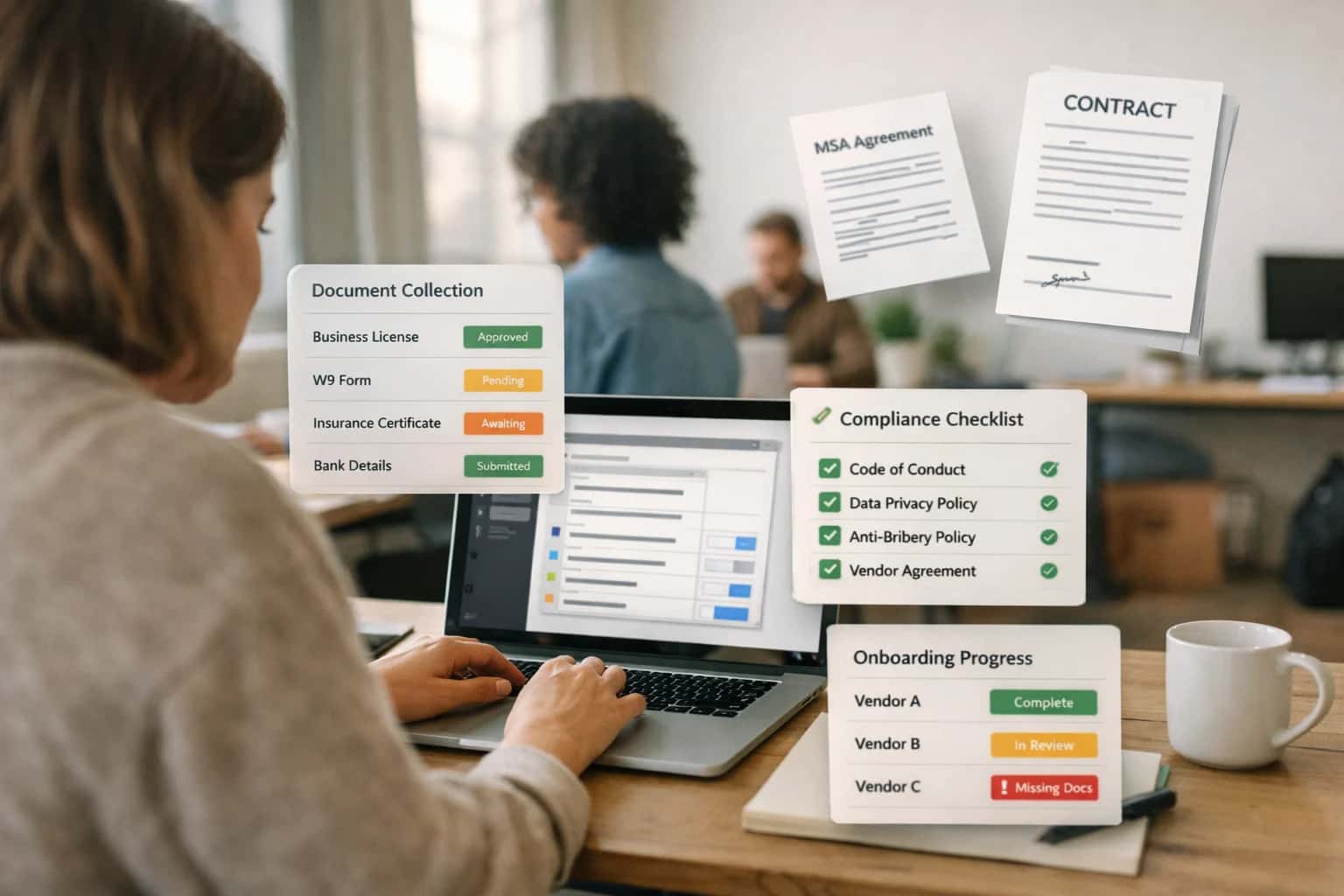
ARCHITECTURE FOR COMMISSIONING AND COMPLEX COORDINATION
Where AI Fits in Industrial Construction Management
Industrial projects—from data centers to manufacturing plants—demand precision in commissioning, vendor coordination, and MEP systems, creating unique surfaces for AI integration.
Implementation typically involves a retrieval-augmented generation (RAG) pipeline ingesting project specifications, vendor submittals, and BIM metadata into a vector store. Agents can then answer questions like "Show all deviation reports for HVAC duct pressure tests" or draft commissioning checklists by synthesizing equipment schedules from the Prime Contract tool and installation records from Daily Logs. For MEP coordination, AI can analyze clash reports from Navisworks, automatically generate and route RFIs in Procore for the affected trades, and update the issue log in Autodesk Build—closing the loop between design coordination and field resolution.
Rollout requires a phased approach, starting with a single commissioning package or MEP discipline to validate accuracy and user adoption. Governance is critical: all AI-generated outputs (checklists, RFI drafts) should be tagged for human review before submission, with an audit trail in the platform's native activity log. For industrial owners, the impact is measured in schedule compression during commissioning and reduced risk of post-handover operational failures, as AI ensures documentation completeness and system interoperability before the first production run.
WHERE AI CONNECTS TO PROJECT DATA AND WORKFLOWS
AI Integration Surfaces in Industrial Construction Platforms
Automating Turnover Documentation
Industrial projects generate thousands of asset tags, warranty documents, and O&M manuals. AI agents can integrate with platforms like Procore Closeout or Autodesk Docs to:
- Parse Vendor Submittals: Extract equipment data (make, model, serial) from PDF submittals and auto-populate asset registers.
- Generate O&M Drafts: Use LLMs to draft operation and maintenance summaries from technical specifications and shop drawings.
- Track Punch-to-Commissioning: Link unresolved punch list items from tools like Fieldwire to specific systems, delaying handover until AI-confirmed closure.
Implementation typically involves a pipeline: document ingestion → OCR/LLM extraction → validation against BIM/COBie data → update in the platform's closeout module. This reduces manual data entry from weeks to days for complex plants.
SPECIALIZED WORKFLOWS FOR MANUFACTURING PLANTS, DATA CENTERS, AND COMPLEX FACILITIES
High-Value AI Use Cases for Industrial Construction
Industrial construction projects involve unique complexities in commissioning, vendor coordination, and MEP systems. These AI integration patterns connect to platforms like Procore and Autodesk Build to automate high-friction workflows, reduce rework, and accelerate project delivery.
01
Automated Commissioning Documentation
AI agents ingest vendor equipment submittals, O&M manuals, and test reports to auto-populate commissioning logs and turnover packages in Procore Closeout. This transforms a manual, multi-week documentation assembly into a structured, auditable process, ensuring nothing is missed for client handover.
Weeks -> Days
Documentation timeline
02
MEP Coordination & Clash Resolution
Integrate AI with Autodesk Build's Model Coordination to analyze BIM clash reports. AI prioritizes clashes by trade, system criticality, and schedule impact, then auto-generates RFIs or tasks in Procore for the responsible subcontractor, reducing manual triage by field and VDC teams.
Batch -> Prioritized
Clash review
03
Vendor Submittal & Spec Compliance
For complex equipment in data centers or plants, AI reviews subcontractor submittals in Procore against project specifications. It flags non-compliant items for the project engineer and suggests alternative approvals, accelerating the submittal review cycle and preventing installation of non-conforming materials.
First-pass review
Engineer time saved
04
Intelligent Punch Lists from Drone Data
AI processes orthomosaic maps and LiDAR point clouds from drone flights, comparing as-built conditions against BIM models. It automatically generates prioritized punch list items in Fieldwire or Procore, tagged by location, trade, and defect type (e.g., missing firestop, conduit misalignment).
Site-wide scan
Coverage
05
Proactive Safety for High-Risk Activities
AI correlates schedule data (Procore Schedules), subcontractor manpower logs, and historical incident reports to predict high-risk periods for activities like steel erection or confined space work. It triggers pre-task planning alerts and custom safety checklists in Procore Safety before crews mobilize.
06
Utility & Process Tie-In Coordination
For plant projects, AI maps utility tie-in points from P&IDs to construction schedules and subcontractor scopes. It monitors inspection sign-offs and material delivery statuses, providing a real-time dashboard of critical path dependencies to prevent costly delays in commissioning sequences.
Real-time visibility
Tie-in status
IMPLEMENTATION PATTERNS
Example AI-Powered Workflows for Industrial Projects
Industrial construction projects—like manufacturing plants, data centers, and power facilities—involve complex coordination, stringent commissioning, and massive vendor documentation. These workflows illustrate how AI agents integrate with platforms like Procore and Autodesk Build to automate high-friction processes.
Trigger: A system or equipment tag is marked Installation Complete in the project's commissioning tracker (often a custom Procore tool or spreadsheet).
Context Pulled: The AI agent queries:
- Equipment metadata (model, serial number, location) from the asset register.
- Relevant vendor submittals (O&M manuals, test reports) from Procore Documents.
- Associated inspection reports and signed-off checklists from Autodesk Build.
- Project-specific commissioning template from the document management system.
Agent Action: Using a structured generation model, the agent drafts a complete commissioning package for the asset, including:
- A cover sheet with asset tag, system, and sign-off blocks.
- A populated equipment data sheet.
- Referenced attachments (hyperlinked to Procore).
- A summary of pre-functional test results.
System Update: The drafted document package is saved to a Ready for Review folder in Procore Documents. A task is automatically created in Procore or Autodesk Build for the commissioning agent, with the document linked and a due date set.
Human Review Point: The commissioning agent reviews the AI-assembled package for accuracy, adds any field verification notes, and routes it for client approval. The AI can be prompted to flag any missing required documents (e.g., a missing factory test report) for the reviewer.
INDUSTRIAL PROJECTS
Implementation Architecture: Connecting AI to Your Construction Stack
A practical blueprint for integrating AI agents into the complex data and workflow fabric of industrial construction.
For industrial projects—data centers, manufacturing plants, pharmaceutical facilities—the AI integration surface spans three critical layers: commissioning documentation, vendor coordination, and complex MEP/FP systems. Your architecture must connect AI to the Procore Documents or Autodesk Docs repository for O&M manuals, the RFI/Submittal modules for vendor clarifications, and the BIM coordination surfaces (like Autodesk Build's Model Coordination) for system clash and sequencing intelligence. AI agents act as cross-platform orchestrators, pulling data from these silos to answer field questions, auto-populate turnover packets, and flag coordination issues before they hit the field.
A production implementation typically uses a central orchestration layer (often built with tools like n8n or CrewAI) that listens for webhooks from your construction platform—like a new RFI in Procore or a model issue in Autodesk Build. This layer routes the context (e.g., RFI text, attached spec section) to specialized AI agents. One agent might retrieve relevant vendor submittals from the document management system using RAG (via a vector store like Pinecone), while another analyzes the 3D model context via the BIM API to suggest spatial conflicts. Results are posted back via the platform's API, logged for audit, and can trigger follow-up actions in the schedule or quality modules.
Rollout and governance are paramount. Start with a pilot workflow, such as automated RFI drafting for MEP coordination questions, where an AI agent suggests answers by searching approved submittals and past project archives. Implement strict human-in-the-loop approvals before any AI-generated content is posted to the live project. Access must respect your platform's existing RBAC; AI should only see data the triggering user can access. Finally, establish a feedback loop where superintendents and commissioning agents can flag inaccurate AI suggestions, continuously refining the agents' knowledge base—a process we manage through structured evaluation pipelines in LangChain or Weights & Biases.
INDUSTRIAL CONSTRUCTION WORKFLOWS
Code and Payload Examples
Automating O&M Manual Generation
For industrial projects, commissioning requires compiling thousands of pages of vendor documentation, test reports, and as-built drawings into organized O&M manuals. An AI agent can ingest these documents from Autodesk Docs or Procore, extract key data, and generate structured manuals.
Typical Workflow:
- Agent monitors a
Closeoutfolder for new vendor submittals. - Uses vision and NLP to extract equipment tags, serial numbers, and warranty dates.
- Structures data into a predefined template.
- Posts the draft manual back to the platform for engineer review.
Example Payload (Agent Trigger):
json{ "event": "document_uploaded", "platform": "autodesk_build", "project_id": "DC-2024-001", "folder_path": "/Closeout/Vendor Docs/Mechanical", "file_url": "https://cdn.autodesk.com/.../chiller_spec.pdf", "metadata": { "vendor": "Trane", "equipment_type": "Chiller", "tag_number": "CH-01" } }
The agent processes this payload, retrieves the file, and begins the extraction and templating process.
INDUSTRIAL CONSTRUCTION
Realistic Time Savings and Operational Impact
How AI integration for Procore, Autodesk Build, and Fieldwire accelerates complex industrial project delivery by automating high-volume documentation, coordination, and compliance workflows.
| Workflow | Before AI | After AI | Notes |
|---|---|---|---|
Commissioning Document Generation | Manual compilation from vendor PDFs, specs, and test sheets | AI-assisted drafting from structured data and unstructured sources | Reduces document prep from weeks to days; engineer review required |
MEP Coordination Issue Resolution | Manual clash detection review and RFI drafting for each conflict | AI-prioritized clash lists with suggested resolution paths | Focuses engineering time on critical system interferences |
Vendor Submittal & O&M Manual Review | Manual page-by-page verification against project specifications | AI-powered compliance checking and gap flagging | QA time shifts from 100% review to exception handling |
Daily Progress Reporting (Field Logs) | Superintendent manually logs activities, manpower, delays | AI auto-generates draft from IoT data, photos, and schedule updates | Field time reallocated from admin to supervision |
RFI Drafting & Routing | Project engineer writes each RFI from scratch, researches context | AI suggests draft text and relevant specs, auto-routes by discipline | Cuts initial drafting time by 60-70%; engineer owns final content |
Safety Inspection & Incident Reporting | Paper-based forms, manual trend analysis | AI analyzes inspection photos/notes, auto-populates reports, flags patterns | Shifts focus from data entry to proactive hazard mitigation |
Change Order Documentation (Scope/Impact) | Manual quantity takeoff and narrative writing for each change | AI cross-references drawings, logs, and emails to suggest scope delta | Accelerates client and subcontractor negotiations |
INDUSTRIAL PROJECTS REQUIRE A CONTROLLED APPROACH
Governance, Security, and Phased Rollout
For industrial construction, AI integration must be architected for data sovereignty, phased validation, and strict change control.
Industrial project data—commissioning procedures, vendor O&M manuals, complex MEP coordination logs, and safety validation records—resides in systems like Procore, Autodesk Build, and specialized commissioning platforms. An AI integration must enforce strict role-based access control (RBAC) tied to existing project directories, ensure all AI-generated outputs (like automated punch lists from model reviews) are logged in the platform's audit trail, and maintain data residency within the project's designated cloud tenant. API calls to LLMs should be configured to never send sensitive intellectual property or Personally Identifiable Information (PII) outside the secured environment without explicit, logged approval workflows.
A phased rollout is critical. Start with a read-only pilot in a non-critical surface area, such as using AI to summarize daily reports from Fieldwire or auto-tagging incoming vendor submittals in Procore Documents. This validates the technology without impacting live workflows. Phase two introduces assistive writing, like drafting RFI responses based on spec sections or generating inspection checklist items from BIM data in Autodesk Build. The final phase enables orchestrated agents that can, for example, automatically update a commissioning tracker when a vendor manual is approved, triggering notifications in the project management platform. Each phase includes a defined validation step where a superintendent or project engineer reviews and approves AI outputs before they become system-of-record.
Governance extends to model management. For industrial projects, you often need a mix of general LLMs for language tasks and custom, fine-tuned models for domain-specific work like parsing P&ID diagrams or interpreting equipment datasheets. An LLMOps layer is required to track prompt versions, evaluate output quality against trade-specific checklists, and detect drift. A human-in-the-loop (HITL) approval gate should be configurable for any AI action that modifies a critical path schedule, updates a cost forecast, or communicates with external vendors, ensuring superintendents and project managers retain ultimate control.
Enabling Efficiency, Speed & Accuracy
Intelligent Analysis, Decision & Execution
We build AI systems for teams that need search across company data, workflow automation across tools, or AI features inside products and internal software.
Talk to Us
Search across company data
Give teams answers from docs, tickets, runbooks, and product data with sources and permissions.
Useful when people spend too long searching or get different answers from different systems.
Enterprise searchRAGPermissions
Read more
Automate internal workflows
Use AI to route work, draft outputs, trigger actions, and keep approvals and logs in place.
Useful when repetitive work moves across multiple tools and teams.
AI agentsWorkflow automationGovernance
Read more
Add AI to products and internal tools
Build assistants, guided actions, or decision support into the software your team or customers already use.
Useful when AI needs to be part of the product, not a separate tool.
AI integrationDecision supportModel routing
Read moreAI INTEGRATION FOR INDUSTRIAL CONSTRUCTION
Frequently Asked Questions
Practical questions and workflow walkthroughs for implementing AI in industrial construction projects, focusing on commissioning, vendor coordination, and complex MEP systems.
This workflow automates the creation and tracking of commissioning documentation, a critical and manual-heavy phase in industrial projects.
- Trigger: A system turnover package (TOP) is marked "Ready for Commissioning" in Procore or a new equipment tag is scanned in the field via Autodesk Build.
- Context/Data Pulled: The AI agent retrieves:
- Equipment specifications and vendor manuals from the project's Document Management module.
- Relevant commissioning procedures and checklists from the project's standards library.
- Associated subcontractor and vendor contact information from the project directory.
- Model or Agent Action: A multi-step agent:
- Drafts a customized commissioning checklist by merging the standard template with the specific equipment data.
- Generates a preliminary commissioning schedule, sequencing tests based on system dependencies (e.g., power must be on before HVAC testing).
- Creates and assigns tasks in Fieldwire or Procore for the commissioning team and relevant vendors.
- System Update or Next Step: The drafted documents and assigned tasks are pushed back to the construction platform. The system logs the initiation of the commissioning sequence for tracking.
- Human Review Point: The commissioning manager reviews and approves the AI-generated checklist and schedule before tasks are officially issued to the field team and vendors.

About the author
Prasad Kumkar
CEO & MD, Inference Systems
Prasad Kumkar is the CEO & MD of Inference Systems and writes about AI systems architecture, LLM infrastructure, model serving, evaluation, and production deployment. Over 5+ years, he has worked across computer vision models, L5 autonomous vehicle systems, and LLM research, with a focus on taking complex AI ideas into real-world engineering systems.
His work and writing cover AI systems, large language models, AI agents, multimodal systems, autonomous systems, inference optimization, RAG, evaluation, and production AI engineering.
LinkedIn
Limited slotsGet a Free AI Consultation
Partnered with leading AI, data, and software stack.





How We Work
Custom AI workflows for your Business
One-fit-all AI don't work for modern businesses. At Inferensys, we aim to understand your business & custom requirements; which we use to define most efficient agentic workflows, the data, and the tools for your business.
01
Review the use case
We understand the task, the users, and where AI can actually help.
Read more02
Pick the right approach
We define what needs search, automation, or product integration.
Read more03
Build the first useful version
We implement the part that proves the value first.
Read more04
Improve from there
We add the checks and visibility needed to keep it useful.
Read moreThe first call is a practical review of your use case and the right next step.
Talk to Us