AI integration for licensing compliance connects directly to the child and staff record modules, attendance logs, incident reports, and document storage within your center management software (Brightwheel, Procare, Kangarootime, Famly). The system acts as a continuous audit layer, using scheduled jobs to pull data from these APIs—such as staff-to-child ratios, credential expiration dates, immunization records, and square footage per child—and compares it against a dynamic knowledge base of state licensing rules. This transforms a manual, periodic review process into a real-time monitoring system that flags potential violations like expired CPR certifications or exceeded classroom capacities before an inspector arrives.

Integration
AI Integration for Licensing Regulation Compliance AI
Build AI systems that monitor changing state childcare licensing regulations and automatically audit center practices, staff records, and child files for compliance gaps in platforms like Brightwheel, Procare, Kangarootime, and Famly.
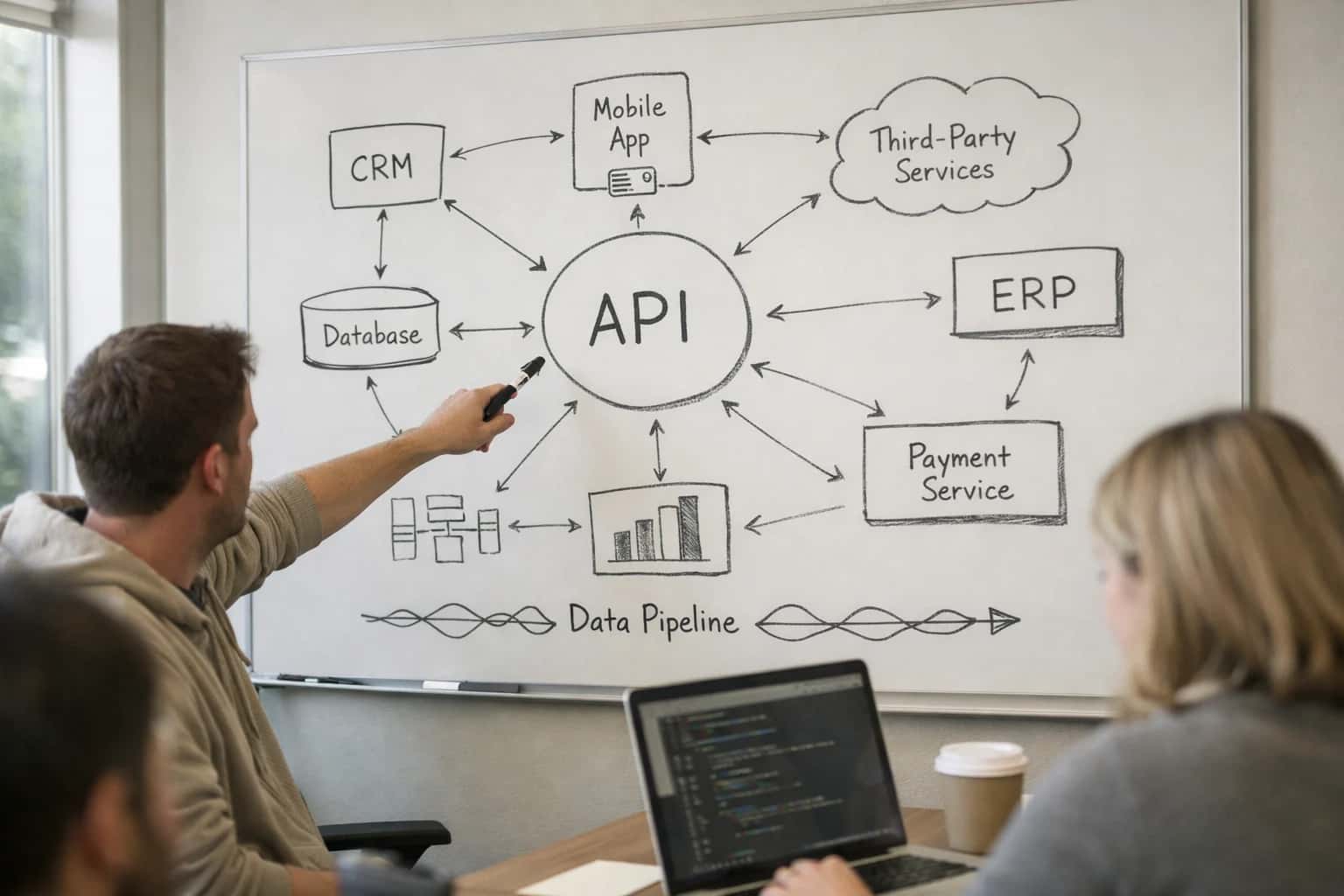
ARCHITECTURE AND ROLLOUT
Where AI Fits into Licensing Compliance for Childcare Centers
A practical guide to embedding AI agents into your childcare management platform to automate the monitoring of state licensing regulations and compliance gap detection.
Implementation typically involves a middleware agent that subscribes to webhooks for key events (new staff hire, child check-in, incident logged) and performs immediate compliance checks. For example, when a child is checked in via the platform's API, the agent can instantly verify room ratios and trigger an alert if a threshold is breached. For document-heavy processes, AI-powered OCR can parse uploaded inspection reports or training certificates, extract relevant dates and details, and update the center's compliance dashboard. The core workflow is: 1. Ingest platform data and regulatory updates, 2. Map data points to rule parameters, 3. Evaluate for gaps, 4. Route findings to the correct stakeholder (director, owner) via the platform's native alerting or a connected channel like Slack, and 5. Log all actions for audit trails.
Rollout should start with a pilot on 2-3 high-risk, high-volume rule categories (e.g., staff qualifications and child-to-staff ratios) within a single center. Governance is critical: the AI's findings should be configured as recommendations that require human review and approval before any official record is altered. This creates a feedback loop where directors confirm or correct findings, continuously improving the model's accuracy. A successful integration doesn't just automate checking; it provides a clear audit trail of why a flag was raised, referencing the specific regulation text and the source data from your Procare or Brightwheel instance, which is invaluable during actual licensing reviews.
WHERE TO CONNECT AI FOR LICENSING MONITORING
Key Data Surfaces for AI Compliance Checks
Core Profile Data for Ratio and Credential Checks
The foundation of licensing compliance lies in accurate, up-to-date child and staff records. AI systems connect here to perform continuous, automated checks against state-mandated ratios and staff qualification rules.
Key Data Points for AI:
- Child Records: Date of birth, enrolled days/hours, special needs accommodations, authorized pick-up lists.
- Staff Records: Role (Lead Teacher, Assistant), educational credentials, certification expiration dates (CPR, First Aid), background check status, mandated training completion.
AI Integration Workflow: An AI agent periodically queries the platform's staff and child profile APIs. It calculates real-time and projected staff-to-child ratios per room/age group, flagging potential violations before they occur. It also monitors credential expiration dates, automatically generating task assignments for directors to renew certifications, preventing lapses that could jeopardize the center's license.
This surface is critical for Procare, Brightwheel, and Kangarootime, where these records are the system of truth.
LICENSING & REGULATORY AUTOMATION
High-Value AI Compliance Use Cases
AI systems that continuously monitor evolving state licensing regulations and automatically audit center practices, records, and workflows for compliance gaps, reducing audit risk and administrative overhead.
01
Automated Regulation Monitoring & Gap Analysis
AI agents ingest updates from state licensing portals (e.g., DSS, DCFS) and cross-reference them against your center's configured policies, staff credentials, and room setups in Procare or Brightwheel. Flags discrepancies (e.g., new staff-to-child ratio rules, updated safety drill frequencies) for director review.
Manual Review -> Automated Alerts
Compliance workflow
02
Staff Credential & Training Compliance
Connects to Procare Staff Management or Kangarootime HR modules to track CPR/First Aid expirations, mandated reporter training, and educational units. AI predicts renewal deadlines, auto-assigns training, and generates audit-ready reports, preventing violations from lapsed credentials.
Batch -> Real-time
Credential tracking
03
Documentation & Record Audit Preparation
AI reviews child files, immunization records, incident reports, and attendance logs across Brightwheel, Famly, and Procare for completeness and compliance. Generates pre-audit checklists, highlights missing signatures or expired forms, and auto-compiles evidence packets for inspectors.
Days -> Hours
Audit prep time
04
Real-Time Ratio & Capacity Monitoring
Integrates with Kangarootime Attendance and room management APIs to enforce dynamic staff-to-child ratios. AI predicts potential violations based on scheduled breaks or absences, suggests coverage adjustments, and maintains a real-time compliance log for licensing reviews.
Reactive -> Proactive
Violation prevention
05
Subsidy & Funding Program Compliance
AI validates attendance and meal count data against state subsidy and CACFP program rules within Procare or custom billing systems. Automates claim generation, ensures documentation aligns with reimbursement requirements, and flags anomalies before submission to reduce payment delays.
Manual Verification -> Automated Checks
Claim accuracy
06
Health & Safety Protocol Enforcement
Uses AI to analyze logs from Kangarootime Health Tracking and incident reports. Monitors medication administration, allergy alerts, and safety drill completion. Identifies patterns (e.g., missed sanitization logs) and triggers corrective workflows, ensuring continuous adherence to health codes.
Periodic -> Continuous
Protocol monitoring
LICENSING AND REGULATORY AUTOMATION
Example AI Compliance Workflows
These workflows illustrate how AI agents can be integrated with childcare management platforms to automate the monitoring of state licensing regulations and the auditing of center practices, reducing compliance risk and administrative overhead.
Trigger: Real-time attendance check-in/out event via the platform's webhook (e.g., Procare or Kangarootime attendance API).
Context/Data Pulled: The AI agent queries the platform's API for:
- Current room assignments and staff schedules.
- Active child count per room/age group.
- Staff qualifications and role (Lead Teacher, Assistant).
- The applicable state licensing rules for staff-to-child ratios, stored in a vector database.
Model/Agent Action: The LLM compares real-time counts against the retrieved regulatory text for the specific age group and program type. It calculates if a violation is imminent or has occurred.
System Update/Next Step: If a violation is detected or predicted (e.g., a staff member is about to go on break):
- An immediate alert is pushed to the director's mobile app and a designated Slack/MS Teams channel.
- A non-compliant event log is written to a dedicated compliance audit table in the platform.
- The agent suggests available, qualified staff for reassignment from the scheduling module.
Human Review Point: The director must acknowledge the alert. All violations and overrides are logged for the next licensing inspection report.
AUTOMATED COMPLIANCE MONITORING
Implementation Architecture: Data Flow & System Design
A practical blueprint for integrating AI to monitor state licensing regulations and automatically audit center practices.
The core architecture connects to your childcare management platform (Brightwheel, Procare, Kangarootime, Famly) via its REST APIs and webhook streams to access the critical data objects for compliance checks. This includes real-time feeds of staff-to-child ratios from attendance modules, staff credential and training completion records from HR surfaces, incident reports from health & safety logs, and child enrollment and immunization documents from family profiles. A scheduled ingestion pipeline pulls the latest state and county licensing rules from official government RSS feeds, PDF publications, and regulatory databases, converting them into structured, machine-readable requirements.
An AI compliance engine—built on a Retrieval-Augmented Generation (RAG) system—continuously compares live platform data against the parsed regulatory corpus. For example, it can cross-reference a staff member's role and a room's real-time attendance against state-mandated ratio matrices, triggering an alert via the platform's notification API if a violation is imminent. For document compliance, it uses vision models to scan uploaded PDFs (e.g., fire inspection certificates) for expiry dates and required signatures, logging gaps in a central compliance findings dashboard. High-confidence, routine checks (e.g., staff:child ratio) can auto-resolve by adjusting schedules in the platform's staffing module, while ambiguous findings are routed to a director's review queue with suggested corrective actions.
Governance is built into the workflow. All AI-generated findings and automated actions are logged with a full audit trail, including the source data, the specific regulation clause cited, and the model's confidence score. This creates a defensible record for licensing visits. Rollout typically starts with a pilot on 1-2 high-impact, rule-based areas like ratio monitoring or credential expiry, using a human-in-the-loop approval step for all initial AI actions. As confidence grows, the system expands to more complex, interpretive regulations, such as assessing the adequacy of playground safety logs or the completeness of emergency drill documentation.
LICENSING COMPLIANCE WORKFLOWS
Code & Payload Examples
Monitoring State Licensing Updates
AI agents can be configured to continuously monitor official state childcare licensing websites, regulatory bulletins, and email digests. When a change is detected—such as a new staff-to-child ratio or an updated safety drill requirement—the system parses the document, extracts the relevant rules, and creates a structured alert payload.
This payload is then sent via webhook to your management platform (e.g., Procare or Brightwheel) to trigger internal compliance tasks. The AI cross-references the new rule against your center's current configuration to assess initial impact.
python# Example: Webhook handler for new regulation alert import requests def handle_new_regulation(regulation_doc): # AI service extracts key compliance points compliance_points = ai_service.extract_rules(regulation_doc) # Create alert payload for Procare webhook payload = { "regulation_id": compliance_points["id"], "effective_date": compliance_points["date"], "summary": compliance_points["summary"], "impacted_modules": ["Staffing", "Safety"], "action_required": True, "center_ids": ["center_123", "center_456"] } # Post to Procare's webhook endpoint for task creation response = requests.post( PROCAR_WEBHOOK_URL, json=payload, headers={"Authorization": f"Bearer {API_KEY}"} ) return response.status_code
LICENSING COMPLIANCE WORKFLOWS
Realistic Time Savings & Operational Impact
How AI integration reduces manual effort and risk in managing state licensing regulations for childcare centers.
| Compliance Workflow | Before AI | After AI | Notes |
|---|---|---|---|
Regulation Change Monitoring | Manual web searches & email alerts | Automated daily scanning & summaries | AI monitors 50+ state websites and rulemaking portals |
Policy-to-Practice Gap Analysis | Quarterly manual checklist review | Continuous automated record scanning | Checks child files, staff credentials, and room logs against latest rules |
Audit Preparation & Documentation | 2-3 days of frantic file gathering | Pre-compiled report in < 1 hour | AI pulls compliant records, flags gaps, and generates audit binders |
Corrective Action Plan Tracking | Spreadsheet & calendar reminders | Automated workflow with escalation | Tasks assigned, deadlines monitored, and directors notified of delays |
Staff Training Compliance | Manual cross-reference of training logs | Automatic alignment with new requirements | Identifies staff needing recertification when regulations change |
Parent Communication Updates | Manual updates to handbooks & forms | AI-drafted updates for director review | Generates revised policy snippets for parent newsletters and portals |
Multi-Center License Renewal | Per-location manual process | Centralized dashboard with location status | Provides chain-wide visibility into renewal timelines and requirements |
ENSURING CONTROLLED, COMPLIANT DEPLOYMENT
Governance, Security & Phased Rollout
Implementing AI for licensing compliance requires a governance-first architecture that respects sensitive data and integrates with existing center workflows.
A production system connects to your childcare management platform (Brightwheel, Procare, Kangarootime, Famly) via secure, read-only API service accounts to access child records, staff credentials, inspection logs, and policy documents. AI agents are configured to operate within a strict data perimeter, never storing raw PII in external vector databases. Instead, they use on-premise or VPC-hosted retrieval systems where document chunks are indexed with de-identified references, linking back to live records only within your platform's secure environment for any required updates or alert generation.
Rollout follows a phased, location-by-location approach: Phase 1 involves a passive monitoring agent that ingests new state regulation PDFs and maps them to your center's existing policy library, flagging potential gaps in a sandbox dashboard. Phase 2 activates automated daily checks against live data—cross-referencing staff-to-child ratios from the attendance module against licensed capacity, verifying staff training expiration dates in the HR module, and scanning incident reports for mandatory reporting triggers. Phase 3 introduces proactive workflow automation, where the system generates draft corrective action plans in the platform's task management module and routes them for director approval, creating a full audit trail.
Governance is managed through a centralized prompt hub and evaluation suite, ensuring all AI-generated compliance guidance is grounded in the retrieved regulatory text and your center's specific license number stipulations. Every AI-suggested action is logged with the source regulation clause and the underlying data point (e.g., Child_Count from Room_Attendance API). This traceability is critical for audit defense and allows for human-in-the-loop review steps before any automated communication is sent to licensing bodies. Regular drift detection monitors for changes in both regulatory language and your platform's API schemas to maintain system integrity.
Enabling Efficiency, Speed & Accuracy
Intelligent Analysis, Decision & Execution
We build AI systems for teams that need search across company data, workflow automation across tools, or AI features inside products and internal software.
Talk to Us
Search across company data
Give teams answers from docs, tickets, runbooks, and product data with sources and permissions.
Useful when people spend too long searching or get different answers from different systems.
Enterprise searchRAGPermissions
Read more
Automate internal workflows
Use AI to route work, draft outputs, trigger actions, and keep approvals and logs in place.
Useful when repetitive work moves across multiple tools and teams.
AI agentsWorkflow automationGovernance
Read more
Add AI to products and internal tools
Build assistants, guided actions, or decision support into the software your team or customers already use.
Useful when AI needs to be part of the product, not a separate tool.
AI integrationDecision supportModel routing
Read moreLICENSING COMPLIANCE AI
Frequently Asked Questions
Practical questions about implementing AI to monitor state licensing regulations and automate compliance checks for childcare centers.
The system uses a multi-source ingestion pipeline to track regulatory updates, which then triggers automated compliance checks against your center's data.
Typical workflow:
- Trigger: A scheduled agent scans official state childcare licensing websites, RSS feeds, and regulatory bulletins for updates.
- Context/Data Pulled: The agent extracts the text of new or amended rules, focusing on sections related to staff ratios, facility requirements, health & safety, and record-keeping.
- Model or Agent Action: A specialized LLM classifies the update (e.g., "Staff Credential Requirement," "Playground Safety Standard") and maps it to specific data objects in your management platform (e.g., Procare staff records, Brightwheel room logs).
- System Update: The system creates a new compliance task in your platform's workflow module, flagging records that may be impacted. It can also generate a summary alert for directors.
- Human Review Point: The director or compliance officer reviews the AI's assessment, confirms the impacted records, and approves any required corrective action plans.
This process turns a manual, error-prone monitoring task into a systematic, auditable workflow.

About the author
Prasad Kumkar
CEO & MD, Inference Systems
Prasad Kumkar is the CEO & MD of Inference Systems and writes about AI systems architecture, LLM infrastructure, model serving, evaluation, and production deployment. Over 5+ years, he has worked across computer vision models, L5 autonomous vehicle systems, and LLM research, with a focus on taking complex AI ideas into real-world engineering systems.
His work and writing cover AI systems, large language models, AI agents, multimodal systems, autonomous systems, inference optimization, RAG, evaluation, and production AI engineering.
LinkedIn
Limited slotsGet a Free AI Consultation
Partnered with leading AI, data, and software stack.





How We Work
Custom AI workflows for your Business
One-fit-all AI don't work for modern businesses. At Inferensys, we aim to understand your business & custom requirements; which we use to define most efficient agentic workflows, the data, and the tools for your business.
01
Review the use case
We understand the task, the users, and where AI can actually help.
Read more02
Pick the right approach
We define what needs search, automation, or product integration.
Read more03
Build the first useful version
We implement the part that proves the value first.
Read more04
Improve from there
We add the checks and visibility needed to keep it useful.
Read moreThe first call is a practical review of your use case and the right next step.
Talk to Us