AI integration for Famly lesson plan generation connects at the planning module API layer, where teachers create weekly plans aligned to learning frameworks. The AI agent acts as a co-pilot within the existing workflow, triggered when a teacher initiates a new plan. It ingests context from Famly's data model: the selected learning framework (like EYFS or a custom curriculum), past observational notes for the child group, available resources logged in the center's inventory, and the teacher's high-level learning intentions. This context is structured into a prompt for a language model, which returns a draft plan with suggested activities, materials, and developmental goal mappings.

Integration
AI Integration for Famly Lesson Plan Generation AI
Automate and enhance weekly lesson planning in Famly by integrating AI to generate developmentally appropriate activities, align with learning frameworks, and incorporate past child observations—reducing manual planning from hours to minutes.
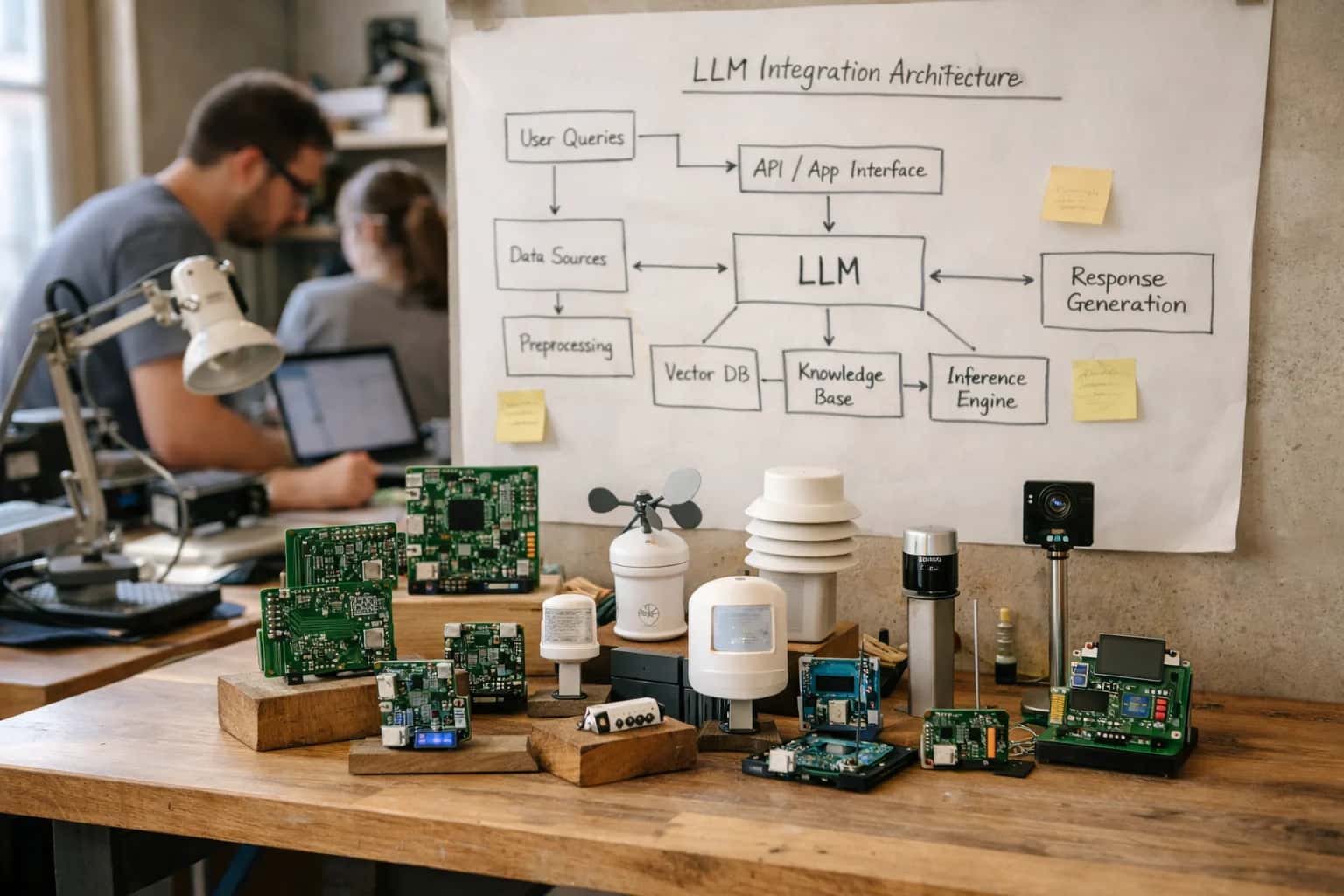
ARCHITECTURE AND IMPLEMENTATION
Where AI Fits into Famly's Lesson Planning Workflow
A practical guide to embedding AI-assisted lesson plan generation directly into Famly's curriculum planning surfaces.
The implementation typically uses a secure, serverless function (e.g., AWS Lambda or Azure Function) that calls Famly's REST API to fetch context and, after AI generation, posts the structured draft back into the plan as a template. This keeps the teacher in the driver's seat for final review and customization. Key technical considerations include caching framework definitions to reduce LLM token usage, implementing idempotent retry logic for API calls, and setting usage quotas per center to manage cost. The AI's output is formatted to match Famly's plan schema, ensuring seamless rendering in the UI.
Rollout should be phased, starting with a pilot group to refine prompts and gather feedback on activity relevance. Governance is critical: all generated plans should be audit-logged with the source context and prompt used, and a human-in-the-loop approval step must remain mandatory before a plan is published. This integration doesn't replace pedagogical expertise; it reduces the time spent on administrative drafting from hours to minutes, allowing educators to focus more on adaptation and direct interaction. For a deeper look at integrating AI with Famly's broader operational APIs, see our guide on Famly Center Operations.
ARCHITECTURAL SURFACES
Key Famly Modules and APIs for AI Integration
The Core Data Source for AI
Famly's Learning Journals and Observations API surfaces the raw material for AI-driven lesson planning. This includes teacher notes, photos, videos, and tagged developmental milestones linked to specific children and dates. An AI integration can process this unstructured data to identify recurring themes, skill gaps, and individual interests.
Key API endpoints typically involve:
GET /observations: Retrieve historical observations with filters for child, date range, and category.POST /observations: Potentially create new AI-generated observation summaries or suggestions.GET /children/{id}/development: Access a child's tracked milestones against frameworks like EYFS or local standards.
By analyzing this data, an AI can suggest activities that build on past learning, ensuring continuity and personalized progression in weekly plans.
LESSON PLAN GENERATION AI
High-Value AI Use Cases for Famly Lesson Plans
Transform the weekly planning process from a time-consuming manual task into an AI-assisted workflow that aligns with learning frameworks, incorporates past observations, and optimizes resource allocation.
01
Framework-Aligned Weekly Plan Drafting
AI generates a structured weekly lesson plan draft based on selected developmental frameworks (e.g., EYFS, Montessori). It incorporates learning objectives, suggested activities, and required materials, pulling from a center's approved curriculum library. Teachers review and personalize, cutting planning time significantly.
Hours -> Minutes
Draft creation
02
Observation-Driven Activity Suggestions
The AI analyzes recent child observations and assessments logged in Famly to recommend personalized follow-up activities. For a child working on fine motor skills, it suggests specific crafts or manipulatives, ensuring lesson plans are responsive to individual developmental progress.
Batch -> Real-time
Insight integration
03
Resource & Inventory-Aware Planning
Before finalizing a plan, the AI checks Famly's resource tracking and room scheduling modules. It flags conflicts, suggests alternatives for unavailable materials, and ensures activities are feasible based on current inventory and room bookings, preventing last-minute scrambles.
Pre-empts conflicts
Operational smoothness
04
Differentiated Instruction Scaffolding
For each core activity in the plan, the AI automatically generates tiered suggestions for scaffolding up or down. This provides teachers with ready-made adaptations to support children at different ability levels, directly within the Famly lesson plan interface.
05
Parent-Facing Summary Generation
Once a lesson plan is approved, the AI creates a parent-friendly summary highlighting key learning goals and weekly themes. This summary can be auto-published to the Famly family portal or sent via message, enhancing transparency and parent engagement with the curriculum.
Same day
Communication sync
06
Planning Analytics & Trend Reporting
AI analyzes historical lesson plans to provide directors with insights into framework coverage gaps, activity diversity, and resource utilization trends. This supports data-driven decisions for curriculum improvement and professional development, accessible via Famly's reporting surfaces.
1 sprint
Review cycle
FAMLY INTEGRATION PATTERNS
Example AI-Driven Lesson Plan Workflows
These workflows illustrate how AI agents connect to Famly's APIs and data model to automate and enhance lesson planning. Each pattern is designed to reduce manual effort while ensuring plans are personalized, developmentally appropriate, and aligned with your center's curriculum framework.
This workflow automates the creation of a weekly lesson plan by synthesizing recent child observations and active learning goals.
- Trigger: A teacher or director initiates plan creation for a specific room and upcoming week via the Famly UI or a scheduled automation.
- Context Pulled: The AI agent calls Famly's APIs to retrieve:
- Recent
observationsfor children in the room (last 7-14 days). - Active
learning goalsor developmental milestones from each child's profile. - The room's available
resourcesandmaterialsfrom inventory. - The center's preferred curriculum
framework(e.g., EYFS, Montessori, state standards).
- Recent
- Agent Action: The LLM analyzes the data to identify common themes, interests, and skill gaps. It generates a structured weekly plan that includes:
- Daily activities linked to specific learning goals.
- Suggested materials from available inventory.
- Differentiation notes for children at varying developmental stages.
- Vocabulary prompts and open-ended questions for teachers.
- System Update: The drafted plan is posted as a new
planrecord in Famly via the Planning API, saved in a "Draft" status. - Human Review: The lead teacher receives a notification to review, edit, and approve the AI-generated plan before it becomes active, ensuring pedagogical oversight.
FROM TEACHER INPUT TO FRAMEWORK-ALIGNED PLANS
Implementation Architecture: Data Flow and System Design
A production-ready AI integration for Famly connects teacher observations, center resources, and learning frameworks to generate structured, actionable lesson plans.
The integration is triggered within Famly's Planning & Journals module, typically via a Generate Plan button on a classroom or weekly planning surface. The system packages a request payload containing: the target classroom's age group, recent observational notes from the Observations log, available resources from the Inventory module, and the center's selected learning framework (e.g., EYFS, Montessori). This payload is sent via a secure webhook or direct API call (POST /api/v1/plans/generate) to the Inference Systems orchestration layer.
Our orchestration layer processes the request through a multi-step AI agent workflow: First, a context retrieval agent parses the observational notes to identify emerging child interests and developmental needs. Next, a resource matching agent cross-references available materials and activities from the inventory data. Finally, a plan synthesis agent, grounded in the specific learning framework's objectives, generates a structured weekly plan. The output is a JSON object with daily activities, linked learning goals, required resources, and differentiation suggestions, which is posted back to Famly's Plans API to create a draft plan for teacher review and editing.
Governance is built into the flow. All generated plans are saved as drafts, requiring a teacher or lead educator to review, adjust, and publish. The system maintains a full audit trail linking the generated plan to the source observations and framework tags. For rollout, we recommend a phased approach: start with a pilot classroom, use the approval workflow to gather feedback on AI-suggested activities, and fine-tune the agent prompts based on educator input before scaling to the entire center. This ensures the AI acts as a collaborative copilot, enhancing rather than replacing professional judgment.
FAMLY LESSON PLAN GENERATION
Code and Payload Examples
Triggering a Lesson Plan Draft
This example shows a serverless function (e.g., AWS Lambda, Vercel Edge Function) that triggers a new lesson plan draft. It's called via a webhook from Famly when a teacher creates a new plan shell or via a scheduled cron job for the upcoming week. The function calls our orchestration API, passing the necessary context from Famly.
pythonimport requests import os # This payload is sent to the Inference Systems orchestration endpoint # It includes the Famly group ID, educator ID, and date range for context. generation_payload = { "action": "generate_lesson_plan_draft", "tenant_id": "famly_center_12345", "source": "famly", "context": { "group_id": "preschool-room-a", "educator_id": "teacher_jane_doe", "plan_start_date": "2024-05-20", "plan_end_date": "2024-05-24", "learning_framework": "EYFS", # E.g., EYFS, Montessori, State Standards "previous_plan_id": "prev_plan_67890" # For continuity }, "callback_url": "https://your-center.famly.co/api/webhooks/plan-ready" } # Securely call the Inference Systems orchestration API response = requests.post( os.environ.get('INFERENCE_API_URL') + "/orchestrate/generate", json=generation_payload, headers={ 'Authorization': f'Bearer {os.environ.get("INFERENCE_API_KEY")}', 'Content-Type': 'application/json' } ) # The orchestration service will handle LLM calls, retrieval of past observations, # and eventually POST the structured plan back to the Famly callback_url. print(f"Generation triggered: {response.status_code}")
LESSON PLAN GENERATION
Realistic Time Savings and Operational Impact
How AI-assisted lesson planning in Famly changes the weekly workflow for educators and directors.
| Metric | Before AI | After AI | Notes |
|---|---|---|---|
Weekly plan creation time | 2-4 hours per classroom | 30-60 minutes per classroom | AI drafts based on framework, past observations, and available resources |
Framework alignment | Manual cross-referencing | Automated tagging & suggestions | AI ensures activities map to developmental goals (ECERS, state standards) |
Resource integration | Manual inventory check | AI suggests available materials | Pulls from Famly's resource library and classroom inventory lists |
Individualization | Limited due to time | Personalized activity variants | AI proposes modifications for specific children based on their observation history |
Observation synthesis | Sifting through notes | Key themes & gaps highlighted | AI analyzes past week's Famly journal entries to inform next week's focus |
Director review & approval | Line-by-line content check | High-level coherence & compliance review | Focus shifts from formatting to pedagogical quality and safety |
Staff communication | Email or printed handouts | Automated push to Famly staff feeds | Plans are instantly available in the app with clear instructions and links |
CONTROLLED DEPLOYMENT FOR EDUCATIONAL CONTENT
Governance, Safety, and Phased Rollout
A structured approach to deploying AI-generated lesson plans in Famly that prioritizes educator oversight, child safety, and curriculum integrity.
AI-generated lesson plans in Famly should be treated as a first draft assistant, not an autonomous content creator. The implementation architecture should enforce a human-in-the-loop workflow where all AI-generated plans are routed to a designated educator or director for review and approval within Famly's planning module before they become visible to teaching teams or are linked to child observations. This ensures pedagogical expertise and center-specific context are always applied.
Safety and alignment are non-negotiable. The AI system must be configured with strict guardrails to ensure all generated content adheres to your center's chosen learning frameworks (like EYFS or state-specific standards) and avoids any inappropriate or developmentally mismatched activities. This is managed through a combination of structured prompt templates, retrieval of approved past plans and resources from Famly's database for context, and a post-generation review against a center's policy document library using a RAG (Retrieval-Augmented Generation) check.
A phased rollout is critical for adoption and trust. Start with a pilot group of lead teachers generating plans for a single age group or classroom. Use Famly's group and permission settings to control access. In this phase, log all AI interactions and educator edits to refine prompts and workflows. Phase two expands access, integrates AI suggestions with Famly's resource inventory for material checks, and finally, phase three introduces automation, like weekly plan generation triggered by Famly's calendar, always maintaining the required approval step.
Enabling Efficiency, Speed & Accuracy
Intelligent Analysis, Decision & Execution
We build AI systems for teams that need search across company data, workflow automation across tools, or AI features inside products and internal software.
Talk to Us
Search across company data
Give teams answers from docs, tickets, runbooks, and product data with sources and permissions.
Useful when people spend too long searching or get different answers from different systems.
Enterprise searchRAGPermissions
Read more
Automate internal workflows
Use AI to route work, draft outputs, trigger actions, and keep approvals and logs in place.
Useful when repetitive work moves across multiple tools and teams.
AI agentsWorkflow automationGovernance
Read more
Add AI to products and internal tools
Build assistants, guided actions, or decision support into the software your team or customers already use.
Useful when AI needs to be part of the product, not a separate tool.
AI integrationDecision supportModel routing
Read moreLESSON PLAN GENERATION
Frequently Asked Questions
Common technical and operational questions about integrating AI for automated lesson plan creation within Famly's curriculum and planning workflows.
The integration connects to Famly's Observation API and Child Profile API to retrieve structured data. Before generating a plan, the system:
- Queries for recent observations: Fetches the last 2-4 weeks of observational notes for the target child group, filtered by developmental area tags (e.g., "social-emotional", "language").
- Pulls child profiles: Retrieves age ranges, known interests, and any Individual Learning Plans (ILPs) or specific goals documented in Famly.
- Context assembly: This data is formatted into a structured prompt context, ensuring the AI's suggestions are personalized and developmentally appropriate.
All data access is scoped by the same room and center permissions that govern staff access in Famly, enforced via API tokens with appropriate RBAC.

About the author
Prasad Kumkar
CEO & MD, Inference Systems
Prasad Kumkar is the CEO & MD of Inference Systems and writes about AI systems architecture, LLM infrastructure, model serving, evaluation, and production deployment. Over 5+ years, he has worked across computer vision models, L5 autonomous vehicle systems, and LLM research, with a focus on taking complex AI ideas into real-world engineering systems.
His work and writing cover AI systems, large language models, AI agents, multimodal systems, autonomous systems, inference optimization, RAG, evaluation, and production AI engineering.
LinkedIn
Limited slotsGet a Free AI Consultation
Partnered with leading AI, data, and software stack.





How We Work
Custom AI workflows for your Business
One-fit-all AI don't work for modern businesses. At Inferensys, we aim to understand your business & custom requirements; which we use to define most efficient agentic workflows, the data, and the tools for your business.
01
Review the use case
We understand the task, the users, and where AI can actually help.
Read more02
Pick the right approach
We define what needs search, automation, or product integration.
Read more03
Build the first useful version
We implement the part that proves the value first.
Read more04
Improve from there
We add the checks and visibility needed to keep it useful.
Read moreThe first call is a practical review of your use case and the right next step.
Talk to Us