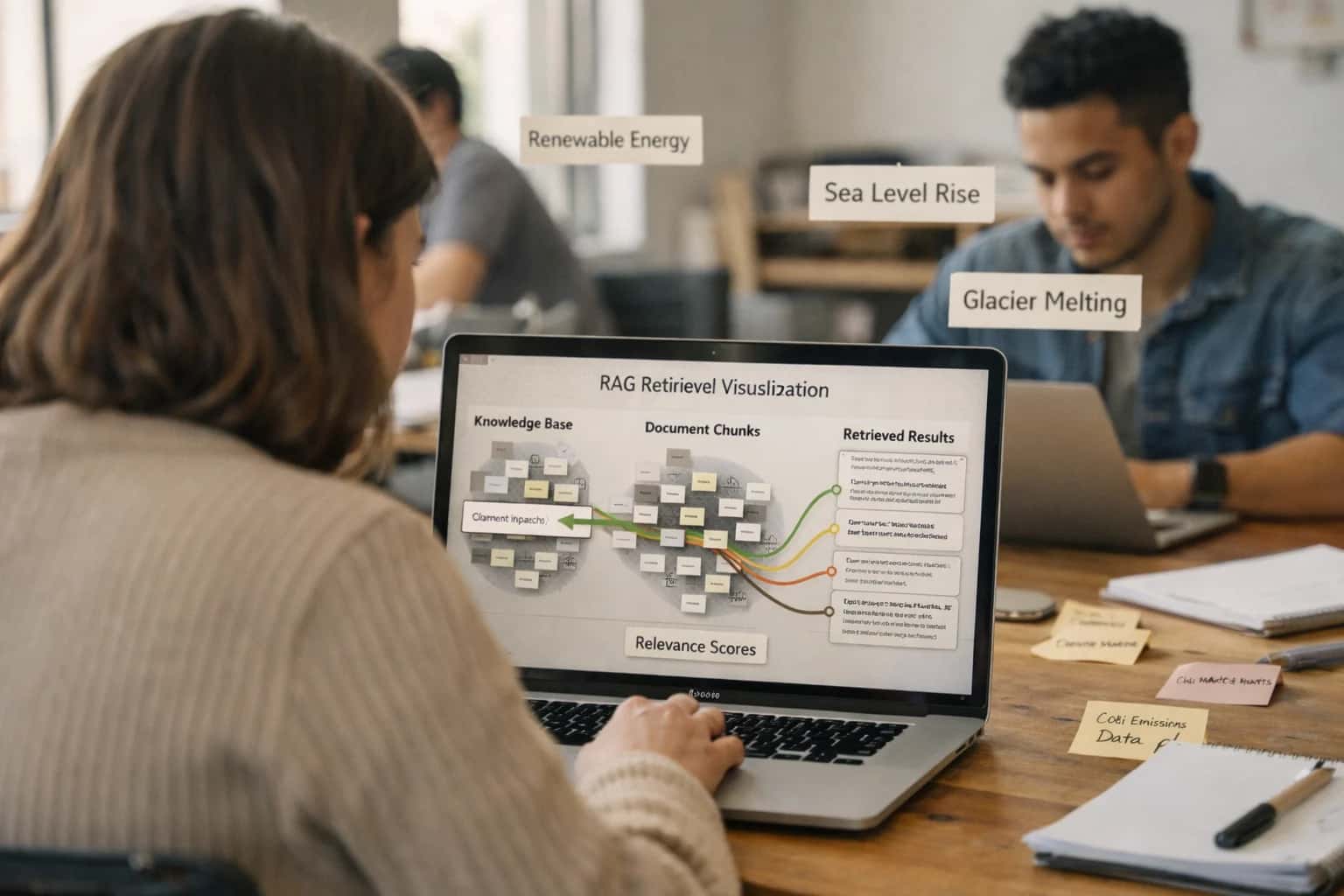
A RAG system for childcare policy management connects to your center's document repositories—typically PDFs, Word docs, or pages within your Brightwheel, Procare, Kangarootime, or Famly platform—and creates a searchable knowledge layer. The key surfaces are your staff portal, center management dashboard, and mobile teacher apps. Instead of digging through folders for state licensing manuals, employee handbooks, or COVID-19 protocols, staff can ask natural questions like "What's the required staff-to-child ratio for 3-year-olds during nap time?" or "What's the procedure for a severe allergic reaction?" The RAG agent retrieves the most relevant passages from your approved documents and generates a concise, cited answer.

Integration
AI Integration for Childcare Software RAG for Policy Queries
A practical guide to building a Retrieval-Augmented Generation (RAG) system that lets staff ask natural language questions about center policies, handbooks, and compliance documents, reducing time spent searching and ensuring consistent answers.
ARCHITECTURAL BLUEPRINT
Where RAG Fits into Childcare Policy Management
A technical guide to implementing a Retrieval-Augmented Generation (RAG) system that allows staff to query internal policy manuals and handbooks via chat.
Implementation involves ingesting documents from your platform's file storage or a connected SharePoint/Google Drive, chunking them semantically, and indexing them in a vector database like Pinecone or Weaviate. An integration layer, often built with lightweight AI agent frameworks, sits between your childcare software's staff interface and the RAG pipeline. For example, you could add a "Policy Assistant" chatbot tab in Procare's staff portal or trigger the agent via a slash command (/policy) in a connected Slack or Microsoft Teams channel used by your center. The system must be secured with role-based access control (RBAC) to ensure only authorized staff can query sensitive documents and that answers are grounded solely in your vetted policy corpus, preventing hallucination.
Rollout should start with a pilot on a single, high-value document set—such as your state's licensing regulations—and a small group of lead teachers or directors. Governance is critical: establish a clear process for updating the document index when policies change and implement an audit log to track all queries for compliance. This transforms policy management from a reactive, search-intensive task into a proactive support tool, reducing time spent on manual lookups from minutes to seconds and ensuring consistent, accurate information is delivered at the point of need. For a deeper dive into building secure, integrated AI agents, see our guide on [/integrations/ai-agent-builder-and-workflow-platforms](AI Agent Builder and Workflow Platforms).
WHERE TO CONNECT YOUR POLICY KNOWLEDGE BASE
Policy RAG Integration Surfaces by Platform
Embedding Policy Chat in User Portals
The primary surface for a Policy RAG system is the family and staff web or mobile portals. This is where real-time Q&A happens.
Integration Points:
- Widget Injection: Add a persistent chat widget to the portal's navigation bar or sidebar, authenticated via the platform's SSO.
- Contextual Launch: Trigger the policy assistant from specific pages (e.g., "Billing & Tuition" page) to pre-load relevant context.
- API-Driven Responses: The widget calls your RAG backend, which queries the vector store and returns a grounded answer. The response can cite specific policy document sections for transparency.
Example Workflow: A parent in the Brightwheel app asks, "What's the late pickup policy?" The RAG system retrieves the relevant section from the staff handbook, summarizes it, and states the fee amount and grace period.
RETRIEVAL-AUGMENTED GENERATION
High-Value Policy RAG Use Cases for Childcare
A Retrieval-Augmented Generation (RAG) system turns your policy manuals, handbooks, and licensing documents into an on-demand knowledge base. Staff can ask questions in natural language and get accurate, sourced answers, reducing time spent searching and ensuring consistent policy application.
01
Staff Onboarding & Policy Queries
New hires can ask questions like 'What's the diaper change procedure?' or 'How do I log a medication error?' and get instant answers with citations from the staff handbook and state licensing rules. Integrates with Procare or Brightwheel's staff modules to personalize answers based on role and center location.
Hours -> Minutes
Time to find answers
02
Parent FAQ & Contract Resolution
Empower front-desk staff to instantly answer parent questions about tuition policies, late pick-up fees, sick child protocols, or vacation credits by querying the parent handbook and enrollment contracts. The RAG system can be surfaced via the center's family portal (e.g., Famly) or staff dashboard, citing specific contract clauses.
Same day
Dispute resolution
03
Licensing & Compliance Audits
During inspections or internal audits, directors can query the RAG system against uploaded state licensing manuals and internal compliance checklists. Ask 'What's the required staff-to-child ratio for 3-year-olds?' or 'What documentation is needed for a field trip?' to prepare accurate, defensible responses.
Batch -> Real-time
Audit preparation
04
Health & Safety Protocol Lookup
In urgent situations (allergic reaction, injury), staff can quickly ask 'What are the steps for an EpiPen administration?' or 'Where is the incident report form?' The RAG system retrieves step-by-step instructions from emergency action plans and health policies, reducing panic and ensuring correct procedure. Can trigger via mobile interfaces used by teachers.
Critical
Response accuracy
05
Curriculum & Activity Policy Guidance
Teachers planning activities can query policies on water play, food allergies, or outdoor time requirements. For example, 'Are peanuts allowed in classrooms?' returns the center's allergen policy and approved snack list. Integrates with planning surfaces in Kangarootime or Famly to provide context-aware guidance during lesson creation.
1 sprint
Policy rollout
06
Multi-Center Policy Harmonization
For chains or franchises, a centralized RAG system ensures all locations answer policy questions consistently. It can reference both universal corporate policies and location-specific state regulations. Directors query 'What's our corporate policy on staff discounts, and how does it apply in California?' Integration pulls from a vector store containing documents tagged by region and policy type.
Consistent
Cross-location answers
RAG IMPLEMENTATION PATTERNS
Example Policy Query Workflows
These workflows illustrate how a Retrieval-Augmented Generation (RAG) system connects to your childcare management platform, enabling staff to instantly query policy manuals, licensing regulations, and center handbooks via a simple chat interface. Each pattern shows the trigger, data flow, AI action, and system update.
Trigger: A staff member receives a parent question about the center's sick policy, late pick-up fees, or sunscreen authorization during drop-off or via the parent app.
Context/Data Pulled: The agent uses the staff member's query to perform a semantic search across the vectorized policy documents. It retrieves the 3-5 most relevant chunks, which may include:
- The official parent handbook (PDF)
- State licensing regulations regarding illness exclusion
- Internal director memos on fee adjustments
- Permission form templates
Model or Agent Action: An LLM (e.g., GPT-4, Claude 3) synthesizes the retrieved chunks into a concise, plain-language answer. It is instructed to:
- Cite the specific handbook section and effective date.
- Highlight any conditions or exceptions.
- If the policy differs from state minimums, note the distinction.
- Suggest next steps (e.g., "Direct them to the 'Forms' section of the parent portal to submit a sunscreen authorization.")
System Update or Next Step: The answer is displayed in the staff-facing chat interface (e.g., a sidebar in Procare or a Slack channel). The system logs the query, retrieved sources, and response for audit and training. If the query reveals a policy gap, it can be flagged for director review.
Human Review Point: For queries involving sensitive financial or disciplinary policies, the system can be configured to require supervisor approval before the answer is shared with the parent.
BUILDING A GROUNDED POLICY COPILOT
Implementation Architecture: Data Flow, APIs, and Guardrails
A technical blueprint for implementing a secure, governed RAG system that connects LLMs to your childcare center's policy documents.
The core architecture connects a vector database (like Pinecone or Weaviate) to your childcare management platform's document storage—whether that's a dedicated policy repository in Brightwheel, Procare, or Famly, or a connected cloud drive like SharePoint or Google Drive. A secure ingestion pipeline uses platform APIs (e.g., GET /documents or cloud storage SDKs) to fetch policy PDFs, handbooks, and procedure manuals. These documents are chunked, embedded using a model like text-embedding-3-small, and indexed in the vector store with metadata tagging for source, effective date, and applicable center locations. This creates a searchable knowledge layer separate from your operational database.
At query time, a staff member's natural language question (e.g., "What's the late pick-up fee for infants?") from a chat interface triggers a retrieval-augmented generation workflow. The system performs a semantic search against the vector index, fetches the top 3-5 relevant policy chunks, and constructs a prompt for an LLM like GPT-4, instructing it to answer only using the provided context. The response is streamed back to the user interface, which could be a custom chatbot embedded in the staff portal, a Slack/Microsoft Teams integration, or a simple web widget. Critical guardrails include:
- Source citation: Every answer must cite the exact policy document and section.
- Fallback handling: A confidence score threshold routes low-confidence queries to a human supervisor or a predefined FAQ.
- Audit logging: All queries, retrieved documents, and generated answers are logged with user ID and timestamp for compliance.
Rollout follows a phased approach: start with a pilot group of directors and administrators querying a curated set of core policies (e.g., tuition, attendance, safety). Use their feedback to refine chunking strategies and prompt templates. Governance is maintained through a policy review workflow in your childcare platform; when a new policy version is approved and uploaded, an automated webhook from the platform triggers the ingestion pipeline to re-index the updated document, ensuring the AI's knowledge is always current. This architecture turns static policy binders into an interactive, always-available copilot, reducing time spent searching manuals and increasing consistent policy application across staff.
IMPLEMENTATION PATTERNS
Code and Configuration Examples
Document Ingestion Pipeline
A production RAG system starts with a robust ingestion pipeline that processes policy documents (PDFs, DOCs, internal wikis) into a vector store. This involves chunking text, generating embeddings, and storing metadata for source attribution.
Key Steps:
- Extract: Pull documents from sources like Google Drive, SharePoint, or the platform's internal document manager via their APIs.
- Chunk: Split text into logical segments (e.g., by section headers) using libraries like LangChain or LlamaIndex. Preserve metadata like
document_title,effective_date, andapplicable_center. - Embed & Index: Generate embeddings using a model like
text-embedding-3-smalland upsert them into a vector database (Pinecone, Weaviate) with the associated metadata.
python# Example: Processing a policy PDF for Brightwheel from langchain_community.document_loaders import PyPDFLoader from langchain_text_splitters import RecursiveCharacterTextSplitter from langchain_openai import OpenAIEmbeddings from pinecone import Pinecone loader = PyPDFLoader("path/to/center_sick_policy.pdf") docs = loader.load() # Split preserving context splitter = RecursiveCharacterTextSplitter(chunk_size=1000, chunk_overlap=200) chunks = splitter.split_documents(docs) # Add platform-specific metadata for chunk in chunks: chunk.metadata["system"] = "Brightwheel" chunk.metadata["doc_type"] = "Health & Safety" # Generate and store embeddings embeddings = OpenAIEmbeddings(model="text-embedding-3-small") pc = Pinecone(api_key="YOUR_KEY") index = pc.Index("childcare-policies") # Upsert logic here...
RAG FOR POLICY QUERIES
Realistic Time Savings and Operational Impact
How a RAG system for policy and handbook queries changes daily workflows for directors, teachers, and administrative staff.
| Workflow / Task | Before AI (Manual) | After AI (RAG-Assisted) | Operational Impact |
|---|---|---|---|
Finding a specific policy clause | Search PDFs or binders (5-15 mins) | Natural language query (<1 min) | Reduces interruption, ensures consistent answers |
Answering parent FAQ on sick policy | Staff memory or manual lookup (3-10 mins) | AI provides cited answer from handbook (1 min) | Frees staff for care, improves parent satisfaction |
New staff onboarding on procedures | Manual review of lengthy documents (hours) | Interactive Q&A with source documents (30-60 mins) | Accelerates time-to-competence, reduces trainer burden |
Preparing for a licensing audit | Manual compilation of relevant policies (2-4 hours) | AI compiles relevant sections with citations (30 mins) | Reduces audit prep stress, ensures thoroughness |
Updating staff on policy changes | Email blast; uncertain if read | AI highlights changes; answers related queries | Improves compliance and awareness |
Resolving a billing dispute reference | Cross-reference handbook and family contract (10-20 mins) | AI retrieves and compares both documents (2 mins) | Speeds resolution, reduces administrative friction |
Daily operational guidance (e.g., ratio in gym) | Ask a lead or director (5 mins) | Instant, context-aware policy answer (<30 secs) | Empowers on-floor decision-making |
IMPLEMENTING RAG FOR POLICY QUERIES
Governance, Security, and Phased Rollout
A secure, governed approach to deploying AI-powered policy search in childcare centers.
A RAG system for policy queries connects to your childcare software's document storage—typically a module like Brightwheel's Files, Procare's Document Manager, or Famly's Resources—to index PDFs, Word docs, and handbook pages. The implementation must enforce strict role-based access control (RBAC) from the source platform, ensuring staff can only query policies relevant to their center, role (e.g., teacher vs. director), and enrolled classrooms. All queries and retrieved document snippets should be logged to an immutable audit trail, linking each interaction to a user ID and timestamp for compliance reviews.
A phased rollout mitigates risk and builds trust. Start with a pilot group in a single center, focusing on low-risk, high-frequency queries like "What's the sick child policy?" or "How do I log a medication?" Monitor the system's accuracy via a human-in-the-loop review queue, where ambiguous answers are flagged for supervisor verification. In phase two, expand to all staff, adding more complex policy areas like licensing regulations or emergency procedures. Finally, integrate the RAG agent into the staff portal or mobile app as a native chat interface, using the platform's existing authentication (e.g., Brightwheel SSO) for seamless access.
Security is paramount when handling sensitive operational data. The RAG pipeline should operate within your private cloud or VPC, with data encrypted in transit and at rest. Vector embeddings should be generated on-premises or via a secure API to prevent policy document leakage. Implement prompt shielding to reject off-topic or personally identifiable information (PII) queries. Regular model evaluations check for drift or degradation in answer quality, ensuring the system remains a reliable source of truth. This governed approach turns your policy manuals from static documents into a dynamic, always-available knowledge asset, reducing administrative overhead and ensuring consistent compliance.
Enabling Efficiency, Speed & Accuracy
Intelligent Analysis, Decision & Execution
We build AI systems for teams that need search across company data, workflow automation across tools, or AI features inside products and internal software.
Talk to Us
Search across company data
Give teams answers from docs, tickets, runbooks, and product data with sources and permissions.
Useful when people spend too long searching or get different answers from different systems.
Enterprise searchRAGPermissions
Read more
Automate internal workflows
Use AI to route work, draft outputs, trigger actions, and keep approvals and logs in place.
Useful when repetitive work moves across multiple tools and teams.
AI agentsWorkflow automationGovernance
Read more
Add AI to products and internal tools
Build assistants, guided actions, or decision support into the software your team or customers already use.
Useful when AI needs to be part of the product, not a separate tool.
AI integrationDecision supportModel routing
Read moreRAG FOR POLICY QUERIES
FAQ: Technical and Commercial Questions
Implementing a Retrieval-Augmented Generation (RAG) system for policy queries requires careful planning around data, security, and user experience. Below are answers to common technical and commercial questions.
The effectiveness of your RAG system depends entirely on the quality and scope of the documents you index. For a childcare center, the core policy corpus typically includes:
- Center-Specific Manuals: Employee handbooks, parent handbooks, emergency procedures, health and safety protocols.
- Regulatory Documents: State licensing regulations, USDA food program guidelines, local health department codes.
- Operational Procedures: Field trip policies, medication administration logs, incident reporting workflows, enrollment and withdrawal processes.
- Templates & Forms: Permission slip templates, allergy action plans, authorization forms.
Technical Implementation:
- Use the platform's API (e.g., Brightwheel's Documents API, Procare's file storage endpoints) to programmatically access PDFs, Word docs, and HTML pages.
- For unstructured text in database fields (like policy notes in a
CenterSettingstable), you'll need a direct database connection or a custom export. - A common pattern is to set up a scheduled pipeline that checks for updated documents, chunks the text, generates embeddings, and upserts them into a vector database like Pinecone or Weaviate.
Governance Note: Establish a clear process for who can add or update source documents to maintain the system's accuracy. Consider integrating with your /integrations/childcare-and-daycare-management-platforms/ai-integration-for-childcare-compliance-automation workflows for automated compliance checks.

About the author
Prasad Kumkar
CEO & MD, Inference Systems
Prasad Kumkar is the CEO & MD of Inference Systems and writes about AI systems architecture, LLM infrastructure, model serving, evaluation, and production deployment. Over 5+ years, he has worked across computer vision models, L5 autonomous vehicle systems, and LLM research, with a focus on taking complex AI ideas into real-world engineering systems.
His work and writing cover AI systems, large language models, AI agents, multimodal systems, autonomous systems, inference optimization, RAG, evaluation, and production AI engineering.
LinkedIn
Limited slotsGet a Free AI Consultation
Partnered with leading AI, data, and software stack.





How We Work
Custom AI workflows for your Business
One-fit-all AI don't work for modern businesses. At Inferensys, we aim to understand your business & custom requirements; which we use to define most efficient agentic workflows, the data, and the tools for your business.
01
Review the use case
We understand the task, the users, and where AI can actually help.
Read more02
Pick the right approach
We define what needs search, automation, or product integration.
Read more03
Build the first useful version
We implement the part that proves the value first.
Read more04
Improve from there
We add the checks and visibility needed to keep it useful.
Read moreThe first call is a practical review of your use case and the right next step.
Talk to Us