AI integration for mobile childcare management focuses on the functional surfaces where staff interact with platforms like Brightwheel, Procare, Kangarootime, or Famly via tablets and phones. This includes the check-in/out kiosk, the daily report composer, the activity log, the incident reporter, and the messaging inbox. The goal is to reduce friction in data entry and decision-making while staff are moving between classrooms, supervising children, or managing drop-off lines. Key integration points are the platforms' mobile SDKs, real-time sync APIs, and push notification services, which allow AI to act as a contextual copilot within the native app experience.

Integration
AI Integration for Childcare Management on Mobile Devices
A technical blueprint for embedding AI into Brightwheel, Procare, Kangarootime, and Famly mobile and tablet interfaces. Optimize voice-to-log workflows, real-time compliance alerts, and on-the-go task automation for teachers and directors.
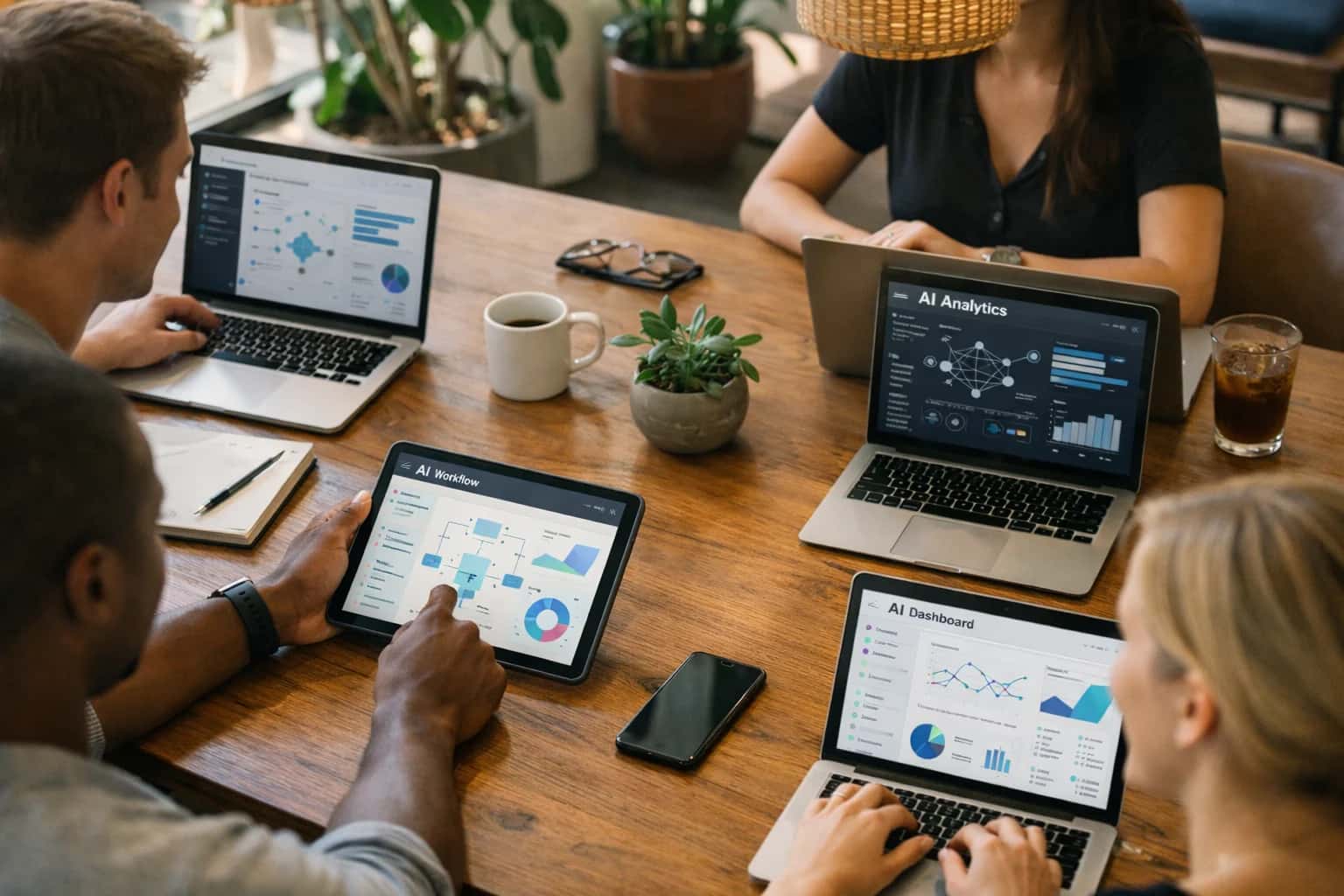
ARCHITECTURE FOR ON-THE-GO STAFF
Where AI Fits in Mobile Childcare Workflows
A practical guide to embedding AI into the mobile-first interfaces used by teachers and directors in childcare centers.
Implementation centers on augmenting mobile workflows with voice-to-text, intelligent pre-filling, and proactive alerts. For example, a teacher can dictate a behavioral observation via the device's microphone; AI transcribes it, tags it to a developmental domain, and pre-populates the relevant fields in the learning journal. For attendance, AI can analyze real-time check-in streams to flag ratio violations and suggest staff reallocation, sending a push notification to a director's device. These features rely on secure, low-latency API calls from the mobile app to backend AI services, often using a queue system to handle offline scenarios common in facilities with spotty Wi-Fi.
Rollout requires a mobile-first design philosophy, prioritizing features that save taps and reduce on-screen time. Governance is critical: all AI-processed data containing child or family PII must be encrypted in transit, access must be controlled via the platform's existing RBAC, and audit logs must track AI-generated suggestions that are accepted or overridden by staff. Start by piloting a single high-impact workflow, like voice-based daily reports or smart photo tagging, measuring the reduction in manual data entry time before expanding. For a deeper technical look at connecting to specific platforms, see our guides on Brightwheel's mobile APIs and Procare's real-time data feeds.
CHILDCARE MANAGEMENT
Mobile Integration Surfaces by Platform
Core Mobile Workflows for On-the-Go Staff
The teacher/staff mobile app is the primary surface for real-time data capture and communication. AI integration here focuses on reducing friction and manual entry for educators.
Key Integration Points:
- Voice-to-Log Input: Use device microphones to transcribe quick observational notes, incident reports, or meal/nap logs directly into structured fields via the platform's API (e.g.,
POST /api/v1/observations). This bypasses cumbersome mobile typing. - Smart Media Tagging: When teachers upload photos/videos, an AI service can automatically tag recognized children (with parental consent) and suggest relevant activity codes or developmental milestones, prepopulating the caption field.
- Context-Aware Notifications: AI evaluates the staff member's current role, location, and schedule to prioritize and summarize mobile push alerts—like surfacing a ratio warning only for teachers in the affected room.
Implementation: A lightweight mobile SDK or secure API gateway handles audio/file processing, calling cloud-based AI services, and returning structured data for seamless app submission.
FOR TEACHERS AND STAFF ON THE GO
High-Value Mobile AI Use Cases
AI transforms the mobile and tablet interfaces used by teachers and directors into intelligent assistants, automating routine tasks and providing instant support to improve care quality and operational efficiency.
01
Voice-to-Log for Daily Reports
Teachers narrate observations (meals, naps, activities) into their device. AI transcribes, structures the data, and auto-populates personalized daily reports in Brightwheel or Famly, turning a 15-minute manual entry into a 2-minute voice note.
15 min -> 2 min
Per-child log time
02
Mobile Incident Triage & Routing
When a staff member logs a minor incident (a fall, disagreement) via a mobile form, AI assesses severity, suggests immediate actions, and automatically routes the alert to the correct director or nurse based on Procare or Kangarootime staff roles and location data.
Batch -> Real-time
Alert response
03
On-Demand Policy & Procedure Q&A
A RAG-powered chatbot accessible from the staff mobile app. Teachers can ask natural language questions ("What's the procedure for a peanut allergy reaction?") and get instant, accurate answers sourced from the center's uploaded policy manuals and state licensing documents.
Manual search -> Instant
Policy access
04
Smart Check-in/Out with Exception Alerts
AI monitors real-time check-in/out streams from Brightwheel's mobile kiosk or tablet app. It detects anomalies (unauthorized pick-up, late arrival) and triggers context-aware SMS/ push notifications to directors and parents, moving from passive logging to active safeguarding.
Reactive -> Proactive
Compliance monitoring
05
Mobile Health & Medication Logging
Staff use a tablet to scan a medication barcode or take a photo of a temperature reading. AI extracts data, validates against the child's Kangarootime health profile, logs the dose/time, and flags potential allergies or dosing errors before submission.
Reduce errors
Data entry accuracy
06
Context-Aware Task Assignment
Based on real-time room ratios, staff location (via tablet GPS/beacon), and scheduled tasks in Famly, AI suggests and assigns the next best task (e.g., "Assist in Toddler Room," "Restock diapers") to optimize staff movement and meet immediate center needs.
Optimized movement
Staff efficiency
FOR TEACHERS AND STAFF ON THE GO
Example Mobile AI Workflows
These workflows demonstrate how AI can augment common mobile tasks in childcare management apps like Brightwheel, Procare, Kangarootime, and Famly, reducing friction for staff using phones and tablets.
Trigger: A teacher taps a microphone icon in the mobile app's daily log section.
Context Pulled: The app identifies the current child/group, time of day, and the log type (e.g., 'lunch', 'nap', 'activity').
AI Action:
- Speech-to-text converts the teacher's spoken note (e.g., "Ava ate all her carrots, drank full milk, needed a little coaxing to sit still").
- An LLM parses the transcription to extract structured data:
- Food Items: carrots, milk
- Intake Amount: all, full
- Behavior Note: needed coaxing to sit
- Sentiment: neutral
- The model formats this into a standardized log entry.
System Update: The structured log is auto-populated into the correct fields in the child's daily record via the platform's API (e.g., POST /api/v1/children/{id}/meals). The teacher reviews and taps 'Save'.
Human Review Point: The teacher always reviews the AI-generated entry before submission. The app highlights extracted fields for quick verification.
CHILDCARE AND DAYCARE MANAGEMENT PLATFORMS
Implementation Architecture for Mobile AI
A technical blueprint for deploying AI features on mobile devices used by childcare staff, focusing on voice input, offline support, and real-time data sync.
For teachers and directors using Brightwheel, Procare, Kangarootime, or Famly on tablets and phones, AI integration must prioritize the mobile surface area: the daily log screen, check-in/out interface, observation capture forms, and in-app messaging. The architecture connects the platform's mobile SDKs or REST APIs to a cloud-based AI orchestration layer. Key data objects—ChildRecord, AttendanceEvent, ObservationNote, MediaAsset—are passed via secure API calls. For latency-sensitive features like voice-to-text for logs, audio streams are processed locally on the device using a lightweight model before structured data is sent to the platform's backend, ensuring usability in low-connectivity environments.
A core implementation pattern is the mobile-first agent workflow. For example, a teacher can dictate a note like "Alex took a 2-hour nap and ate all his carrots." An AI service parses this, tags it to the DailyReport object and Alex's profile, and pushes the structured update via the platform's reporting API. This eliminates manual dropdowns and typing. Similarly, for attendance exceptions, the mobile app can use device location and timestamps to trigger AI logic that evaluates late pick-up policies and automatically sends a personalized SMS alert via the platform's communication API, routing the fee to the BillingModule.
Rollout requires a phased feature flag approach, starting with non-critical surfaces like log enrichment before moving to billing or compliance alerts. Governance is critical: all AI-generated content (logs, messages) should be audit-logged with a human_review_flag for directors and stored as a draft until approved. Staff must retain final approval authority, especially for health or incident reports. The system should support offline queuing, where actions are stored locally and synced when connectivity resumes, maintaining the mobile workflow's reliability. This architecture ensures AI augments—rather than disrupts—the fast-paced, on-the-go reality of classroom management.
MOBILE-FIRST AI INTEGRATION PATTERNS
Code and Payload Examples
Voice-to-Log for Daily Reports
Teachers can dictate observations via mobile, which are transcribed, structured, and posted to a child's daily log. This pattern uses a mobile app's native speech recognition, sends audio to a transcription service, and then uses an LLM to extract structured data (naps, meals, activities) before pushing to the platform's API.
Example Payload to Platform API:
json{ "child_id": "CHLD_789", "date": "2024-05-15", "log_entries": [ { "category": "meal", "time": "12:30 PM", "details": "Ate all of their chicken and carrots, drank full cup of milk." }, { "category": "nap", "time": "1:15 PM - 2:45 PM", "details": "Slept for 90 minutes after lunch." } ], "summary_note": "Had a great day, was very engaged during outdoor play." }
This reduces manual data entry on small screens and ensures logs are completed in real-time.
MOBILE-FIRST AI FOR ON-THE-GO STAFF
Realistic Time Savings and Operational Impact
This table illustrates the tangible impact of optimizing AI features for mobile and tablet interfaces used by teachers and staff in a childcare setting. It compares common manual workflows against AI-assisted mobile execution.
| Mobile Workflow | Before AI (Manual) | After AI (Assisted) | Implementation Notes |
|---|---|---|---|
Daily Log Entry (Meals, Naps, Diapers) | 5-10 minutes per child, typed on small keyboard | 2-3 minutes via voice-to-log dictation & smart forms | AI transcribes and structures notes, pre-fills repeating data |
Incident/Behavior Logging | Delayed entry after shift, details forgotten | Real-time voice note capture with automatic categorization | Triggers immediate alerts to directors if severity is high |
Parent Communication Response | Typed replies between tasks, often delayed | Voice-drafted, AI-suggested replies sent with one tap | Maintains personal tone, ensures policy compliance in responses |
Check-in/Check-out Verification | Manual visual ID check, paper sign-in for emergencies | AI-assisted photo matching & automated emergency contact prioritization | Integrates with mobile camera; fallback to manual code |
Health & Safety Check (Medication, Temp) | Paper log, later entered into system | Voice-logged immediately, auto-synced to child's digital record | Flags allergies and sends alerts for out-of-range readings |
Activity Observation & Milestone Tracking | Handwritten sticky notes, transcribed weekly | Voice note tagged to child and developmental domain in real-time | AI suggests connected learning objectives for future planning |
Staff Task Coordination & Shift Handoff | Verbal updates or messy group text threads | AI-summarized shift notes & automated task assignment via mobile app | Ensures critical info isn't lost between staff changes |
MOBILE-FIRST AI DEPLOYMENT
Governance, Security, and Phased Rollout
Deploying AI on mobile childcare platforms requires a security-first architecture and a controlled rollout to protect sensitive family data and ensure staff adoption.
A mobile AI integration must be built on a zero-trust data architecture. Voice inputs for logs or image-based check-ins should be processed client-side where possible, with only anonymized, encrypted payloads sent to secure inference endpoints. All AI tool calls must respect the platform's existing RBAC (Role-Based Access Control)—a teacher's AI assistant should only access data for their classroom, while a director's agent can query across centers. Audit logs must capture every AI-generated action (e.g., 'AI drafted observation note for child ID X') within the platform's native activity feed for full traceability.
Rollout should follow a phased, location-based pilot. Start with a single classroom using a low-risk feature like voice-to-text for daily logs in Brightwheel or Famly's mobile apps. Monitor for accuracy, latency on cellular networks, and staff feedback. Phase two introduces AI-suggested activity plans in Kangarootime or Procare based on developmental goals, requiring a human-in-the-loop approval step before publishing. The final phase enables predictive alerts, such as mobile notifications for potential ratio violations or automated wellness check reminders, which are triggered by real-time data from the platform's attendance and health modules.
Governance is critical. Establish a clear review protocol for AI-generated content before it becomes a permanent record. For instance, AI-drafted incident reports or developmental summaries must be reviewed and signed off by a lead teacher within the app. Implement regular drift checks on the AI models to ensure voice recognition or suggestion accuracy doesn't degrade with regional accents or new curriculum terms. This controlled, incremental approach minimizes disruption, builds trust with staff, and ensures the AI augments—rather than complicates—the fast-paced, on-the-go reality of childcare work.
Enabling Efficiency, Speed & Accuracy
Intelligent Analysis, Decision & Execution
We build AI systems for teams that need search across company data, workflow automation across tools, or AI features inside products and internal software.
Talk to Us
Search across company data
Give teams answers from docs, tickets, runbooks, and product data with sources and permissions.
Useful when people spend too long searching or get different answers from different systems.
Enterprise searchRAGPermissions
Read more
Automate internal workflows
Use AI to route work, draft outputs, trigger actions, and keep approvals and logs in place.
Useful when repetitive work moves across multiple tools and teams.
AI agentsWorkflow automationGovernance
Read more
Add AI to products and internal tools
Build assistants, guided actions, or decision support into the software your team or customers already use.
Useful when AI needs to be part of the product, not a separate tool.
AI integrationDecision supportModel routing
Read moreMOBILE-FIRST IMPLEMENTATION
Frequently Asked Questions
Common technical and operational questions about deploying AI features—like voice-to-log transcription, on-the-go reporting, and mobile agent support—within the mobile apps used by childcare staff.
This is a core challenge for mobile AI in childcare. Our recommended architecture uses a hybrid offline/online approach:
- Local Processing on Device: The mobile app captures audio and performs initial noise reduction and voice activity detection locally. The raw audio or a compressed version is stored in a local queue.
- Intelligent Sync Logic: When connectivity is restored, the app syncs queued audio files to a secure cloud endpoint. The sync process includes metadata like child ID, staff ID, timestamp, and recording context (e.g., "lunchtime observation").
- Cloud-Based Transcription & NLP: In the cloud, an AI pipeline transcribes the audio using a model tuned for childcare vocabulary (e.g., "nap," "BF," "OT"). It then extracts structured data (mood, activity, food intake) and tags it to the correct child record.
- Update and Notification: The structured log is posted back to the childcare platform's API (e.g., Brightwheel's Daily Report API, Famly's Observation API). The staff member receives a push notification confirming the log was processed and can review/edit the AI-generated entry.
Key Consideration: Implement a fallback where staff can type a short summary if sync fails for an extended period, which the AI can later enrich when data is uploaded.

About the author
Prasad Kumkar
CEO & MD, Inference Systems
Prasad Kumkar is the CEO & MD of Inference Systems and writes about AI systems architecture, LLM infrastructure, model serving, evaluation, and production deployment. Over 5+ years, he has worked across computer vision models, L5 autonomous vehicle systems, and LLM research, with a focus on taking complex AI ideas into real-world engineering systems.
His work and writing cover AI systems, large language models, AI agents, multimodal systems, autonomous systems, inference optimization, RAG, evaluation, and production AI engineering.
LinkedIn
Limited slotsGet a Free AI Consultation
Partnered with leading AI, data, and software stack.





How We Work
Custom AI workflows for your Business
One-fit-all AI don't work for modern businesses. At Inferensys, we aim to understand your business & custom requirements; which we use to define most efficient agentic workflows, the data, and the tools for your business.
01
Review the use case
We understand the task, the users, and where AI can actually help.
Read more02
Pick the right approach
We define what needs search, automation, or product integration.
Read more03
Build the first useful version
We implement the part that proves the value first.
Read more04
Improve from there
We add the checks and visibility needed to keep it useful.
Read moreThe first call is a practical review of your use case and the right next step.
Talk to Us