AI connects to the progressive controller—often a module within systems like Aristocrat Oasis 360, IGT Advantage, or Konami Synkros—that manages the meter values, contribution rates, and jackpot status for linked slot banks. The integration ingests real-time meter data, historical hit frequency, and current player activity to build predictive models. Key data objects include the progressive pool ID, current meter value, contribution percentage, reset value, and last hit timestamp. This allows the AI to forecast the likelihood of a jackpot trigger within a given timeframe, enabling operations to make data-driven decisions on contribution adjustments.

Integration
AI for Jackpot and Progressive System Management
A technical blueprint for integrating AI with casino progressive systems to model jackpot trigger probabilities, optimize contribution rates, and automate targeted player communications when jackpots are nearing.
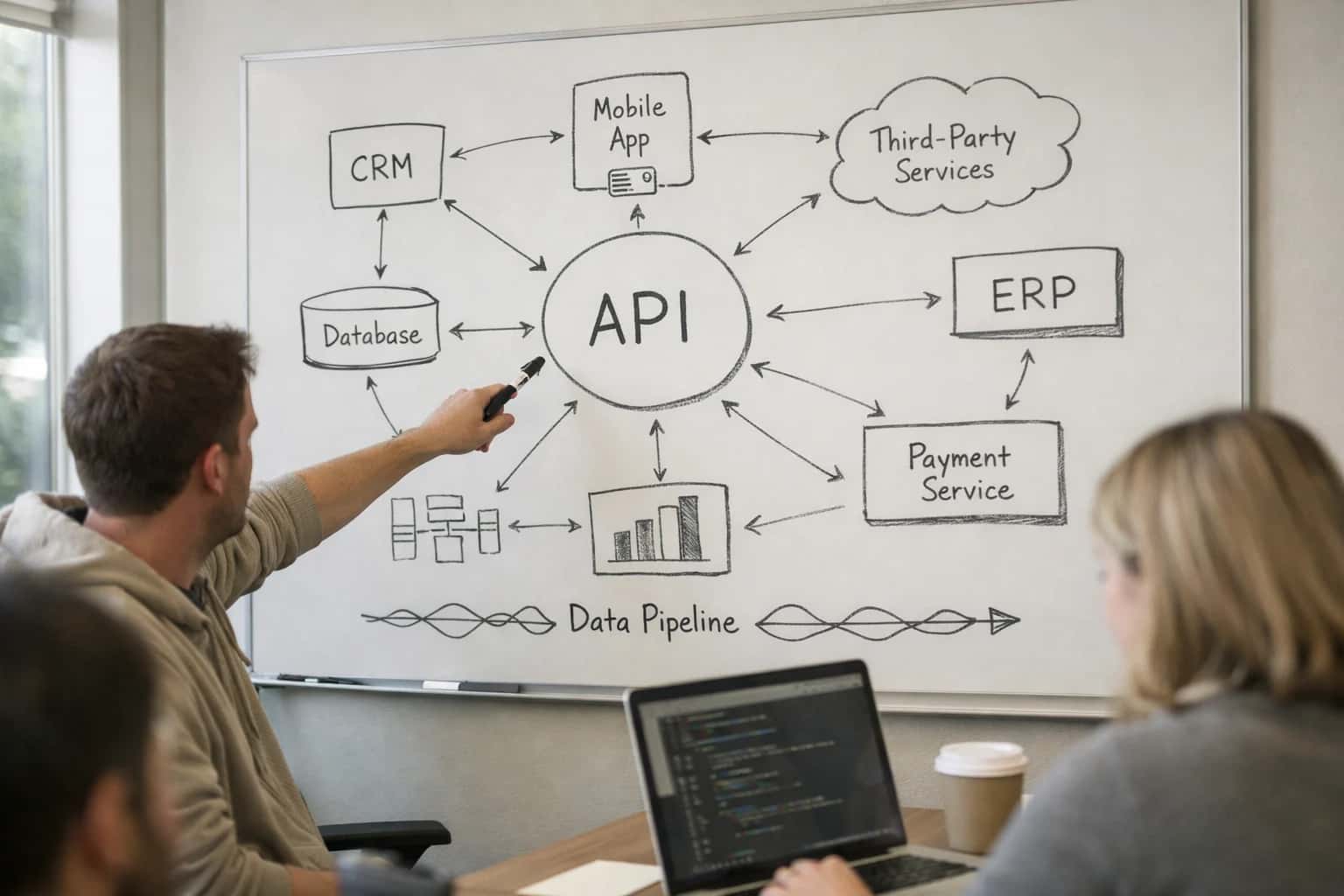
ARCHITECTURE FOR YIELD OPTIMIZATION
Where AI Fits into Progressive Slot Management
Integrating AI with progressive jackpot systems to model trigger probabilities, optimize contribution rates, and automate targeted player communications.
The primary workflow is dynamic contribution optimization. Based on predicted trigger probability, floor capacity, and marketing calendar, the AI can recommend (or, with approval workflows, automatically adjust) the contribution rate for a progressive pool. For example, if a major jackpot is predicted to hit during a slow period, the system might suggest a temporary increase to build excitement and attract play. Conversely, it might recommend lowering contributions if a hit is imminent to protect yield. These recommendations are delivered via API to the casino management system's progressive configuration module or to a marketing decision engine for manual review.
When a jackpot enters a "nearing" state (e.g., within 10% of its trigger point), the AI triggers automated communications. It queries the player tracking system for players who recently played the linked games or have a high affinity for progressives, then generates personalized messages for email, SMS, or the mobile app via integrations with platforms like Salesforce Marketing Cloud or Braze. Example message: "The Mega Jackpot on Bank 12 is at $124,580—your next spin could be the one!" This creates a targeted, operational lift without manual intervention from the marketing team.
Governance is critical. All AI-driven contribution changes should flow through an approval queue in the system, requiring a slot director or marketing manager sign-off via a dashboard or mobile alert. The system maintains a full audit trail linking each prediction, recommendation, action, and resulting meter outcome. Rollout typically starts with a single progressive bank in monitor-only mode, providing forecasts and recommendations to build trust before enabling any automated adjustments. The goal is to move from static, calendar-based contribution schedules to a dynamic model that maximizes player engagement and casino yield.
AI FOR JACKPOT AND PROGRESSIVE SYSTEM MANAGEMENT
Integration Surfaces in the Casino Tech Stack
Core Progressive Jackpot Management
AI integration begins at the progressive controller—the hardware/software that manages the linked jackpot pool (e.g., IGT's SAS Progressive, Aristocrat's Hyperlink, Bally's CMP). This system receives meter updates from each participating slot machine. AI models can be injected here to analyze real-time contributions and meter levels across the link.
Key integration points:
- Meter Data Ingestion: Consume real-time or batch meter data (current value, contributions per spin) via the controller's API or a dedicated data feed.
- Trigger Probability Modeling: Use historical and real-time data to model the probability of a jackpot trigger on each machine, enabling predictive alerts for marketing and operations.
- Contribution Optimization: AI can recommend dynamic contribution rate adjustments (e.g., a temporary increase on a slow day) to manage the jackpot cycle and player excitement, feeding recommendations back to the controller's configuration.
SLOT OPERATIONS & MARKETING
High-Value AI Use Cases for Progressive Systems
Integrate AI with your progressive jackpot systems to move from reactive management to predictive optimization. These use cases connect to platforms like Aristocrat Oasis 360, IGT Advantage, and Konami Synkros to model probabilities, automate workflows, and maximize player engagement.
01
Predictive Jackpot Trigger Modeling
Analyze historical play data, machine performance, and time-series trends from the progressive system to forecast the likelihood of a jackpot trigger. Feed these probability scores into marketing workflows to create urgency campaigns targeting high-value player segments when a jackpot is statistically 'ripe'.
Reactive → Predictive
Campaign timing
02
Dynamic Progressive Contribution Optimization
Use AI to model the ROI of different contribution rates (the percentage of each wager that funds the progressive pool). Analyze player elasticity, floor traffic, and competitive jackpot sizes to recommend or automatically adjust rates at the bank or machine level, balancing attractiveness with hold percentage.
Static → Dynamic
Contribution strategy
03
Automated Near-Miss Communication Engine
Integrate AI with the player tracking system and progressive controller. When a jackpot is hit, automatically identify players who were actively playing linked machines and generate personalized 'you were close!' communications via email, SMS, or the mobile app to drive immediate re-engagement.
Manual → Automated
Player outreach
04
Progressive-Enabled Next-Best-Offer
Incorporate real-time progressive jackpot size and growth rate as a feature in your next-best-action engine. AI can prioritize offering free play on linked progressive banks when jackpots are large and growing, increasing the perceived value of the offer and driving targeted floor movement.
Generic → Contextual
Offer relevance
05
Jackpot Win Analysis & VIP Identification
When a jackpot is awarded, an AI agent automatically enriches the win transaction with data from the player's history, the machine's performance, and the session play. This creates a comprehensive win profile used to instantly flag new or reactivated high-potential players for host follow-up.
Days → Minutes
VIP identification
06
Anomaly Detection in Progressive Funding
Continuously monitor the meter increments and funding data from the progressive system. AI models establish normal baselines for contribution flows and alert slot operations and surveillance to anomalies that could indicate technical faults, meter errors, or potential integrity issues.
Batch → Real-time
Anomaly detection
IMPLEMENTATION PATTERNS
Example AI-Driven Progressive Workflows
These workflows illustrate how AI agents can integrate directly with your jackpot and progressive system's APIs and data feeds to automate high-value operations. Each pattern connects to specific modules like progressive controllers, player tracking databases, and marketing platforms.
Trigger: Scheduled batch job (e.g., every 15 minutes) or real-time feed from the progressive controller.
Context/Data Pulled:
- Current progressive meter levels and rates of climb from the progressive system (e.g., via SASP or proprietary API).
- Historical trigger data for each linked machine or bank.
- Real-time floor occupancy and theoretical win data from the player tracking system.
Model or Agent Action:
- An AI model predicts the probability of a progressive jackpot triggering within the next 1, 4, and 24 hours for each meter.
- The agent evaluates if the current contribution rate is optimal against target trigger windows and floor traffic.
- If a meter is identified as "nearing trigger" (e.g., >65% probability within 4 hours) with suboptimal contribution, the agent generates an alert.
System Update or Next Step:
- The agent creates a task in the operations dashboard with a recommended contribution adjustment.
- For integrated systems, it can draft an API call payload to the progressive controller to suggest a parameter change, pending approval.
- A notification is sent to the slot operations team via SMS or Teams/Slack webhook.
Human Review Point: All system-parameter change recommendations require manual approval in the dashboard before the API call is executed, maintaining audit control.
FROM PROGRESSIVE CONTROLLER TO AI-ENABLED MARKETING
Implementation Architecture: Data Flow and Model Layer
A practical blueprint for connecting AI to your casino's jackpot and progressive systems to model probabilities and automate communications.
The integration connects directly to your progressive system controller (e.g., IGT Advantage Progressive, Aristocrat Oasis 360 Progressive) via its API or a dedicated data feed. This ingests real-time data streams including: current progressive meter levels, contribution rates, linked machine status, and recent jackpot triggers. A secondary feed pulls historical jackpot and play data from the slot accounting system (SAS or G2S logs) to build the foundational model. This data is processed in a low-latency pipeline, where key features like time-since-last-hit, meter acceleration, and theoretical contribution per active machine are calculated and stored in a time-series database for model inference.
The core AI layer consists of two specialized models. A probabilistic forecasting model analyzes the ingested features to predict the likelihood of a progressive jackpot triggering within configurable time windows (e.g., next 4, 12, 24 hours). A separate contribution optimization model evaluates the impact of adjusting the meter contribution rate on player engagement and casino hold, providing recommendations for marketing or operations teams. When a jackpot probability exceeds a defined threshold, the system automatically triggers workflows in your casino marketing platform (e.g., CRM, SMS/email service) to generate and queue targeted communications for players identified as high-propensity to play that game.
Governance is critical. All model inferences, triggered actions, and player communications are logged with a full audit trail, linking back to the source progressive data. A human-in-the-loop approval step can be configured for communication batches, and model performance (prediction accuracy vs. actual triggers) is continuously monitored for drift. Rollout typically begins with a single, high-profile progressive link, using the AI outputs for internal dashboards and manual campaign execution before progressing to fully automated, closed-loop communications.
AI-ENHANCED PROGRESSIVE MANAGEMENT
Code and Payload Examples
Real-Time Probability Modeling
Integrate AI models directly with the progressive system's controller API to analyze real-time coin-in, time since last hit, and historical trigger patterns. This enables dynamic calculation of jackpot trigger probabilities, which can be used to alert marketing systems or adjust progressive contribution rates.
python# Example: Calling an AI service to predict jackpot trigger probability import requests import json # Payload from the progressive system controller progressive_data = { "progressive_id": "MEGABUCKS_01", "current_pool_amount": 1250000.00, "coin_in_last_hour": 85000.00, "time_since_last_hit_hours": 168, "average_daily_play": 220000.00, "linked_machine_count": 150 } # Send to Inference Systems prediction endpoint response = requests.post( "https://api.inferencesystems.com/v1/casino/predict-jackpot-trigger", headers={"Authorization": "Bearer YOUR_API_KEY"}, json=progressive_data ) prediction = response.json() # Example response: {"trigger_probability_next_24h": 0.87, "confidence": 0.92} if prediction["trigger_probability_next_24h"] > 0.8: # Trigger marketing workflow for high-probability jackpot activate_targeted_comms(progressive_data["progressive_id"])
This pattern allows slot operations to move from reactive to predictive management of progressive excitement cycles.
AI-ENHANCED PROGRESSIVE MANAGEMENT
Realistic Operational Impact and Time Savings
This table illustrates the operational improvements when integrating AI with jackpot and progressive systems, focusing on time savings, accuracy gains, and enhanced player engagement for slot operations and marketing teams.
| Workflow / Metric | Before AI | After AI | Implementation Notes |
|---|---|---|---|
Jackpot Trigger Probability Modeling | Manual analysis of historical hit rates | Automated real-time probability forecasts | Models ingest real-time coin-in, machine state, and progressive meter data |
Progressive Contribution Optimization | Static contribution rates based on broad rules | Dynamic, machine-level contribution adjustments | AI recommends changes to maximize player excitement and floor yield |
Targeted Communication for Nearing Jackpots | Broadcast messages to all players or segments | Personalized push notifications to high-propensity players | Integrates with player tracking system to trigger via CRM or mobile app |
Progressive Performance Reporting | Daily or weekly manual report compilation | Automated anomaly detection and narrative summaries | AI highlights underperforming progressives and suggests corrective actions |
Promotional Campaign Analysis | Post-campaign review to gauge lift | Real-time predictive scoring of campaign impact on progressive play | Allows for in-flight adjustments to marketing spend |
Exception & Anomaly Investigation | Reactive review after player or surveillance alert | Proactive alerts on unusual meter activity or contribution patterns | Reduces risk of regulatory issues and operational errors |
Player Re-engagement for 'Cold' Progressives | Manual review of low-traffic machines | Automated identification and targeted offer generation for specific player tiers | Workflow triggers host task lists or marketing automation campaigns |
CONTROLLED DEPLOYMENT FOR CRITICAL SYSTEMS
Governance, Security, and Phased Rollout
Implementing AI for jackpot and progressive management requires a controlled, phased approach that prioritizes system integrity, data security, and regulatory compliance.
A production integration is typically architected as a read-only analytics layer that consumes data feeds from the core casino management system (CMS)—like Aristocrat Oasis 360 or IGT Advantage—and the progressive controller network via secure APIs or ETL pipelines. AI models for trigger probability and contribution optimization run in a separate, governed environment, with all recommendations pushed back to the CMS for human-in-the-loop approval before any system parameters are altered. This ensures the gaming floor's financial controls and random number generator (RNG) integrity remain untouched by autonomous agents.
Rollout follows a clear, low-risk sequence: Phase 1 focuses on analytics and alerting, where AI models generate daily reports on jackpot health and contribution trends without taking action. Phase 2 introduces recommendation workflows into the marketing or slot operations team's dashboard, requiring manual review and approval within the CMS interface. Phase 3, only after extensive validation, enables semi-automated execution for non-critical tasks, such as drafting targeted player communications when a progressive is 'ripe' or adjusting contribution rates within a pre-defined, manager-approved band.
Governance is enforced through role-based access controls (RBAC) in the AI platform, comprehensive audit trails logging every model inference and user action, and regular reviews with compliance teams. All player data used for modeling is anonymized or pseudonymized, and communication triggers adhere to responsible gaming and data privacy regulations. This structured approach allows casinos to capture the operational benefits of AI—reducing manual analysis, optimizing progressive contributions, and personalizing player touchpoints—while maintaining the security and regulatory standing of their core gaming systems.
Enabling Efficiency, Speed & Accuracy
Intelligent Analysis, Decision & Execution
We build AI systems for teams that need search across company data, workflow automation across tools, or AI features inside products and internal software.
Talk to Us
Search across company data
Give teams answers from docs, tickets, runbooks, and product data with sources and permissions.
Useful when people spend too long searching or get different answers from different systems.
Enterprise searchRAGPermissions
Read more
Automate internal workflows
Use AI to route work, draft outputs, trigger actions, and keep approvals and logs in place.
Useful when repetitive work moves across multiple tools and teams.
AI agentsWorkflow automationGovernance
Read more
Add AI to products and internal tools
Build assistants, guided actions, or decision support into the software your team or customers already use.
Useful when AI needs to be part of the product, not a separate tool.
AI integrationDecision supportModel routing
Read moreAI FOR JACKPOT AND PROGRESSIVE SYSTEM MANAGEMENT
Frequently Asked Questions for Technical Buyers
Practical questions for architects and operations leaders planning AI integration with slot progressive systems from Aristocrat, IGT, Bally, and Konami.
The connection is typically made via a secure middleware layer that sits between your progressive controller (e.g., IGT's SAS or Aristocrat's OASIS) and the AI service. The pattern involves:
- API or Message Queue Ingestion: Deploy a lightweight service that subscribes to the progressive system's real-time event stream (often via a dedicated API or message bus like Kafka/RabbitMQ). Events include meter increments, jackpot hits, and contribution logs.
- Data Anonymization & Filtering: Before leaving the gaming network, the service strips out personally identifiable information (PII), keeping only the necessary metadata: machine ID, progressive level, contribution amount, time since last hit, and theoretical values.
- Secure Outbound Call: The filtered payload is sent via a secure, authenticated HTTPS connection to the inference endpoint, which can be hosted in your private cloud or a compliant AI service.
- Response Handling: The AI's output (e.g., a trigger probability score) is returned to the middleware, which can then trigger actions in downstream systems like your CRM or marketing platform.
Key Governance Points:
- All data flows must be documented for regulatory audit trails.
- The AI service should have zero write-access back to the gaming system; it is a read-only analytics layer.
- Use network segmentation and private endpoints to minimize exposure.

About the author
Prasad Kumkar
CEO & MD, Inference Systems
Prasad Kumkar is the CEO & MD of Inference Systems and writes about AI systems architecture, LLM infrastructure, model serving, evaluation, and production deployment. Over 5+ years, he has worked across computer vision models, L5 autonomous vehicle systems, and LLM research, with a focus on taking complex AI ideas into real-world engineering systems.
His work and writing cover AI systems, large language models, AI agents, multimodal systems, autonomous systems, inference optimization, RAG, evaluation, and production AI engineering.
LinkedIn
Limited slotsGet a Free AI Consultation
Partnered with leading AI, data, and software stack.





How We Work
Custom AI workflows for your Business
One-fit-all AI don't work for modern businesses. At Inferensys, we aim to understand your business & custom requirements; which we use to define most efficient agentic workflows, the data, and the tools for your business.
01
Review the use case
We understand the task, the users, and where AI can actually help.
Read more02
Pick the right approach
We define what needs search, automation, or product integration.
Read more03
Build the first useful version
We implement the part that proves the value first.
Read more04
Improve from there
We add the checks and visibility needed to keep it useful.
Read moreThe first call is a practical review of your use case and the right next step.
Talk to Us