This integration connects the financial data objects from your Campspot or ResNexus platform—specifically daily settlement reports, merchant deposit records, and vendor invoices—to your QuickBooks Online company file via secure API webhooks. The core AI agent acts as a middleware bookkeeper, ingesting raw transaction data (e.g., a $125.87 Stripe deposit for reservation #RV-4821) and mapping it to the correct QuickBooks accounts, classes, and customers. It uses a combination of rule-based logic (for known payment processors and vendor IDs) and a fine-tuned LLM to categorize ambiguous expenses like "Mountain Supplies Inc." by analyzing historical coding patterns and invoice line items.

Integration
Campground Integration with QuickBooks AI
A technical blueprint for connecting Campspot or ResNexus to QuickBooks with an AI layer to automate bookkeeping, reconcile accounts, and flag financial discrepancies for campground operators.
ARCHITECTURE & ROLLOUT
Automate Campground Bookkeeping with AI-Powered QuickBooks Sync
A technical blueprint for connecting Campspot or ResNexus to QuickBooks, using AI to automate expense categorization, reconciliation, and financial reporting.
The workflow is event-driven: a nightly batch job from your campground platform triggers the sync. The AI reviews each transaction, checks for duplicates against the QuickBooks JournalEntry API, and proposes a categorized entry. For high-value or unusual items, the system can flag them for human review in a queue before posting, maintaining an audit trail. This reduces manual data entry from hours to minutes per settlement period and cuts down on month-end reconciliation errors by ensuring campground revenue and expense data flows into QuickBooks with consistent, audit-ready categorization.
Rollout follows a phased approach: start with a read-only connection to validate the AI's mapping accuracy on historical data, then move to a pilot property with automated posting for a subset of accounts (e.g., Campground Revenue and Utility Expenses). Governance is managed through a configuration dashboard where you can adjust categorization rules, set approval thresholds, and review the AI's confidence scores. The integration is built to handle multi-property setups in ResNexus or Campground Master, using location IDs to map to QuickBooks Classes, enabling consolidated financials with property-level granularity.
INTEGRATION SURFACES
Where AI Connects: Campground Platform APIs & QuickBooks Modules
Syncing Reservation Revenue & Guest Invoices
Campground platforms like Campspot and ResNexus expose APIs for finalized reservations, payments, and guest folios. This is the primary financial data stream for QuickBooks.
Key API Endpoints:
GET /reservations(withstatus=confirmedand payment details)GET /invoicesfor guest-facing invoicesPOST /refundsto capture reversal events
An AI integration listens for webhook events on reservation confirmation and payment settlement. It extracts line items (site fees, add-ons, taxes) and maps them to the correct QuickBooks Online Sales Receipt or Invoice objects. AI can automatically categorize revenue by site type (RV, tent, cabin) or activity, applying the proper Class and Location tracking in QuickBooks for granular profitability reporting.
INTEGRATING CAMPSPOT & RESNEXUS WITH QUICKBOOKS
High-Value Use Cases for Campground Finance Teams
Connecting your campground management platform to QuickBooks with AI automates manual bookkeeping, reduces errors, and provides real-time financial visibility. These workflows target the specific data objects and reconciliation pain points unique to outdoor hospitality.
01
Automated Expense Categorization
AI reviews vendor invoices and credit card transactions from ResNexus or Campspot, mapping them to the correct QuickBooks Chart of Accounts categories (e.g., Utilities, Maintenance Supplies, Office Expenses). It learns from historical coding patterns and flags uncategorized items for review.
Hours -> Minutes
Monthly close
02
Daily Revenue Reconciliation
An AI agent automatically matches daily settlement reports from payment processors (Stripe, Square) and channel managers against ResNexus booking folios and Campspot transaction logs. Discrepancies in fees, refunds, or tax amounts are flagged in a daily summary for the finance team.
Batch -> Real-time
Reconciliation speed
03
Accrual & Deferred Revenue Tracking
For deposits and seasonal pass sales, AI analyzes booking dates and payment schedules from the campground platform to automatically create and adjust accrual journal entries in QuickBooks, ensuring GAAP compliance without manual spreadsheet work.
1 sprint
Implementation timeline
04
Vendor Payment & 1099 Workflow
AI consolidates contractor and vendor payment data from Campground Master work orders and ResNexus AP modules. It prepares and validates 1099-NEC forms in QuickBooks, checking for missing TINs and ensuring payment thresholds are met before year-end filing.
Same day
Year-end prep
05
Anomaly Detection in Guest Refunds
Monitors refund patterns by analyzing guest communication logs and reservation modification history. AI flags outliers (e.g., high-value refunds without documented cause) for manager approval before syncing to QuickBooks, reducing revenue leakage and fraud risk.
06
Cash Flow Forecasting Inputs
AI aggregates future booking revenue from Campspot, scheduled vendor payments from Campground Master, and historical seasonality to generate weekly cash flow projections. These are formatted and pushed to a dedicated QuickBooks report for owner review.
QUICKBOOKS FINANCIAL OPERATIONS
Example AI Automation Workflows
These workflows illustrate how AI can automate the financial back-office for campgrounds by connecting Campspot or ResNexus to QuickBooks Online. Each flow reduces manual data entry, improves accuracy, and surfaces actionable insights for owners and accountants.
Trigger: A scheduled nightly job runs after the campground management platform (Campspot/ResNexus) closes its financial day.
Context/Data Pulled: The AI agent calls the platform's reporting API to fetch the day's finalized transaction summary. This includes:
- Total revenue by site type, activity, and retail category.
- Tax collected, broken down by jurisdiction (state, local).
- Payment method totals (credit card, cash, external gift card).
- Any discounts, refunds, or promotional adjustments.
Model/Agent Action: The AI maps each revenue and tax line item to the correct QuickBooks accounts using configurable rules and historical patterns. It generates a complete, auditable journal entry payload. For any ambiguous transaction (e.g., a new activity type), it flags it for human review with a suggested classification.
System Update: The validated journal entry is posted to QuickBooks via its API, creating a synchronized record of the day's sales. A summary report is sent via email to the owner and bookkeeper.
Human Review Point: The agent creates a task in the management platform's internal task system for any flagged transactions, attaching the raw data and its recommendation for an accountant to approve or correct.
CAMPING PLATFORM TO QUICKBOOKS
Implementation Architecture: Data Flow & System Design
A production-ready blueprint for automating financial workflows between your campground management system and QuickBooks.
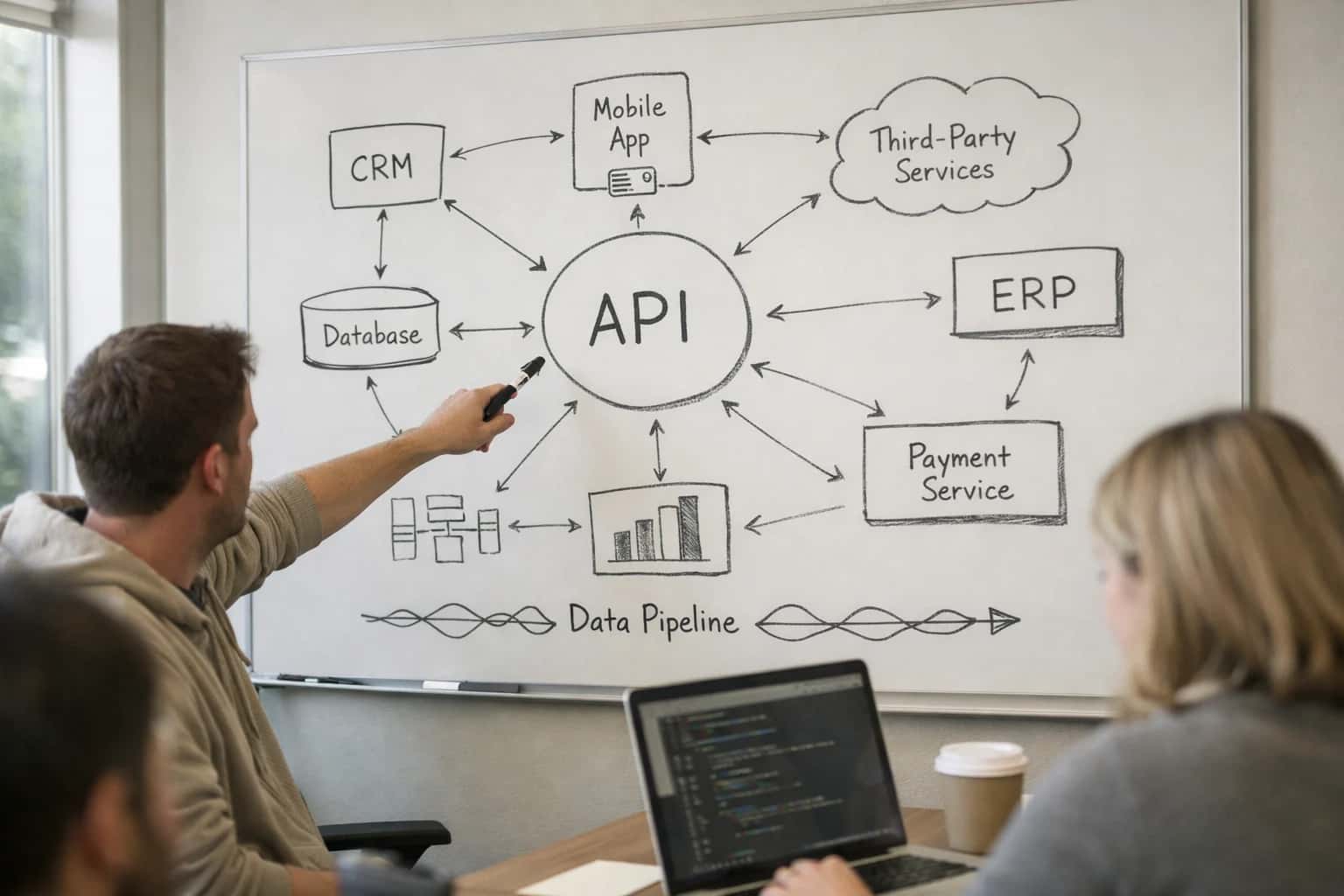
The integration is built on a secure, event-driven pipeline. A middleware service (e.g., an Azure Function or AWS Lambda) acts as the orchestration hub, listening for webhook events from your Campspot or ResNexus platform. Key triggers include reservation.created, payment.processed, and refund.issued. This service validates the payload, enriches it with necessary guest or site metadata from the campground API, and transforms the data into the correct QuickBooks Online API format for SalesReceipt, Invoice, or Bill objects. For high-volume periods, events are queued (using Azure Service Bus or Amazon SQS) to ensure reliability and handle retries for API rate limits or temporary outages.
The AI layer operates on this normalized financial stream. For each transaction, a dedicated classification agent analyzes the line-item descriptions (e.g., "RV Site 12 - Premium," "Firewood Bundle") and contextual metadata (site type, length of stay, add-ons) against your configured QuickBooks chart of accounts. It assigns the correct income or expense account, cost center, and class (e.g., "Tent Sites," "Retail"). A separate reconciliation agent runs on a scheduled basis, comparing daily settlement reports from your payment processor (often synced via ResNexus) with the posted totals in QuickBooks, flagging discrepancies down to the individual transaction for manual review. This reduces the monthly close reconciliation process from hours to minutes.
Governance is embedded throughout. All AI-suggested categorizations are logged with confidence scores and can be routed to a human-in-the-loop approval queue in a tool like n8n or Microsoft Power Automate for transactions over a defined threshold or with low confidence. The entire data flow is audited, with immutable logs tracking the source event from the campground platform, the AI's decision, and the final API call to QuickBooks. Rollout follows a phased approach: starting with a single property or revenue stream, running in a "shadow mode" where AI suggestions are compared against manual entries for accuracy validation, before progressing to full, automated posting.
QUICKBOOKS AI INTEGRATION PATTERNS
Code & Payload Examples
Automating GL Code Assignment
When syncing transactions from Campspot or ResNexus to QuickBooks, the core challenge is mapping campground-specific expenses (e.g., propane refills, site gravel, amenity repairs) to the correct Chart of Accounts. An AI agent can analyze vendor names, memo fields, and amounts from the campground platform's transactions API to predict the appropriate QuickBooks AccountRef.
Example Workflow:
- Fetch uncategorized expenses from the campground platform's financial export endpoint.
- Send transaction details to an LLM with your Chart of Accounts context.
- The LLM returns a structured prediction including
AccountRefvalue and confidence score. - For high-confidence matches, automatically post the journal entry via QuickBooks API. Flag low-confidence items for human review in a queue.
python# Pseudo-code for AI-powered categorization campground_expense = { "vendor": "Pine Ridge Propane", "amount": 245.67, "memo": "Monthly propane delivery for lodge and shower house", "date": "2024-10-15" } # LLM call with your account list prediction = llm.classify_expense( expense=campground_expense, context_accounts=["Utilities", "Vehicle Fuel", "Maintenance & Repairs"] ) # Returns: {"account": "Utilities", "confidence": 0.92, "account_id": "45"}
CAMPING OPERATIONS FINANCE
Realistic Time Savings & Operational Impact
A comparison of manual financial workflows versus an AI-integrated system connecting Campspot/ResNexus to QuickBooks, showing realistic efficiency gains for campground owners and bookkeepers.
| Financial Workflow | Before AI (Manual) | After AI (Assisted) | Implementation Notes |
|---|---|---|---|
Expense Categorization | 1-2 hours weekly manual review | 10-15 minutes weekly review & approval | AI suggests categories from vendor names; human finalizes |
Daily Sales Reconciliation | 30-45 minutes per property | 5-10 minutes anomaly review | AI matches Campspot deposits to QuickBooks; flags mismatches |
Monthly Account Reconciliation | 4-6 hours manual checking | 1-2 hours exception handling | AI pre-reconciles 80-90% of transactions; bookkeeper reviews variances |
Invoice & Bill Entry | Manual data entry from emailed PDFs | Automated extraction with coding suggestions | AI reads vendor invoices, suggests GL codes, and creates drafts in QuickBooks |
Discrepancy & Fraud Flagging | Reactive, found during quarterly review | Proactive daily alerts for anomalies | AI monitors for duplicate payments, unusual amounts, or mismatched guest counts |
Financial Report Generation | Manual compilation from multiple systems | Automated consolidation with narrative summary | AI pulls data from both platforms, generates P&L drafts, and highlights key variances |
Tax Preparation Support | Days gathering and organizing documents | Hours reviewing pre-organized data | AI tags transactions by tax category throughout the year, creating an audit-ready export |
IMPLEMENTING FINANCIAL AI WITH CONFIDENCE
Governance, Security & Phased Rollout
A secure, controlled approach to integrating AI into your campground's QuickBooks financial workflows.
Integrating AI with QuickBooks requires careful handling of sensitive financial data. The architecture connects to your campground management platform's (Campspot, ResNexus) transaction APIs and guest folio data, syncing only necessary fields like InvoiceAmount, PaymentDate, GLAccountCode, and VendorName to a secure processing layer. AI agents operate within a sandboxed environment, accessing data via service accounts with role-based access control (RBAC) scoped strictly to read/write permissions for specific QuickBooks entities like Bill, Invoice, and JournalEntry. All API calls are logged, and any AI-suggested journal entries or categorizations are staged in a pending approvals queue before being posted to QuickBooks Live, creating a mandatory human-in-the-loop for audit trails.
A phased rollout minimizes operational risk. Phase 1 (Pilot): Start with AI-powered expense categorization for a single property or revenue stream, processing historical data to train the model and establish accuracy baselines without touching live books. Phase 2 (Controlled Live): Enable real-time sync for new transactions, with AI suggestions appearing as draft entries in QuickBooks for manager review; implement alerts for high-value or anomalous categorizations. Phase 3 (Scale & Automate): Expand to all properties and financial workflows—like automated bank reconciliation and discrepancy flagging—gradually increasing automation levels for trusted, repetitive tasks while maintaining oversight on complex entries.
Governance is built around transparency and correction. Each AI-generated action is tagged with a source trace (e.g., 'AI Agent: Campspot Sync v1.2'), allowing for easy filtering and reversal in QuickBooks Audit Logs. Regular drift detection runs compare AI categorization against a sample of human-reviewed entries, triggering model retraining if accuracy drops below a defined threshold. This structured approach ensures the AI acts as a controlled copilot, enhancing the efficiency of your bookkeeping team—reducing manual data entry from hours to minutes per week—while keeping financial controllers firmly in command of the general ledger. For related architectural patterns, see our guides on Campground Integration with Xero AI and AI Governance and LLMOps Platforms.
Enabling Efficiency, Speed & Accuracy
Intelligent Analysis, Decision & Execution
We build AI systems for teams that need search across company data, workflow automation across tools, or AI features inside products and internal software.
Talk to Us
Search across company data
Give teams answers from docs, tickets, runbooks, and product data with sources and permissions.
Useful when people spend too long searching or get different answers from different systems.
Enterprise searchRAGPermissions
Read more
Automate internal workflows
Use AI to route work, draft outputs, trigger actions, and keep approvals and logs in place.
Useful when repetitive work moves across multiple tools and teams.
AI agentsWorkflow automationGovernance
Read more
Add AI to products and internal tools
Build assistants, guided actions, or decision support into the software your team or customers already use.
Useful when AI needs to be part of the product, not a separate tool.
AI integrationDecision supportModel routing
Read moreIMPLEMENTATION DETAILS
Frequently Asked Questions
Practical questions about integrating AI with your campground management platform to automate QuickBooks financial workflows.
The integration uses secure API connections to your campground management platform's financial modules. Here’s the typical data flow:
- Trigger: A scheduled job (e.g., nightly) or a webhook from Campspot/ResNexus fires when a new transaction (reservation payment, refund, ancillary charge) is posted.
- Data Extraction: The integration layer calls the platform's API (e.g., Campspot's
Transactionsendpoint, ResNexus'sPaymentsAPI) to fetch the raw transaction data, including:amount,date,payment_methodguest_name,reservation_id,site_numbercharge_type(e.g., site fee, utility, firewood, late fee)
- Context Enrichment: The system may pull additional context from related objects (e.g., guest profile for business vs. leisure) to aid in categorization.
- Payload to AI: A structured JSON payload is sent to the AI service for classification and reconciliation.
Example API Payload Sent for Classification:
json{ "transaction_id": "TXN-789123", "date": "2024-10-26", "amount": 145.50, "platform": "Campspot", "charge_description": "Premium RV Site - Weekly Rate", "guest_type": "returning", "payment_method": "credit_card" }

About the author
Prasad Kumkar
CEO & MD, Inference Systems
Prasad Kumkar is the CEO & MD of Inference Systems and writes about AI systems architecture, LLM infrastructure, model serving, evaluation, and production deployment. Over 5+ years, he has worked across computer vision models, L5 autonomous vehicle systems, and LLM research, with a focus on taking complex AI ideas into real-world engineering systems.
His work and writing cover AI systems, large language models, AI agents, multimodal systems, autonomous systems, inference optimization, RAG, evaluation, and production AI engineering.
LinkedIn
Limited slotsGet a Free AI Consultation
Partnered with leading AI, data, and software stack.





How We Work
Custom AI workflows for your Business
One-fit-all AI don't work for modern businesses. At Inferensys, we aim to understand your business & custom requirements; which we use to define most efficient agentic workflows, the data, and the tools for your business.
01
Review the use case
We understand the task, the users, and where AI can actually help.
Read more02
Pick the right approach
We define what needs search, automation, or product integration.
Read more03
Build the first useful version
We implement the part that proves the value first.
Read more04
Improve from there
We add the checks and visibility needed to keep it useful.
Read moreThe first call is a practical review of your use case and the right next step.
Talk to Us