AI integrates directly with the audit trail and logging APIs of platforms like ResNexus and Campground Master. The primary data objects are user activity logs, system change records, reservation modification histories, and financial transaction journals. An AI agent continuously ingests this stream, applying pattern recognition to baseline normal activity—such as routine rate adjustments, standard check-ins, or scheduled report generation—against which anomalies are flagged.

Integration
AI for Campground Audit Trail and Compliance Reporting
Technical blueprint for integrating AI with ResNexus and other campground platforms to automate security monitoring, detect policy violations, and generate regulatory compliance reports.
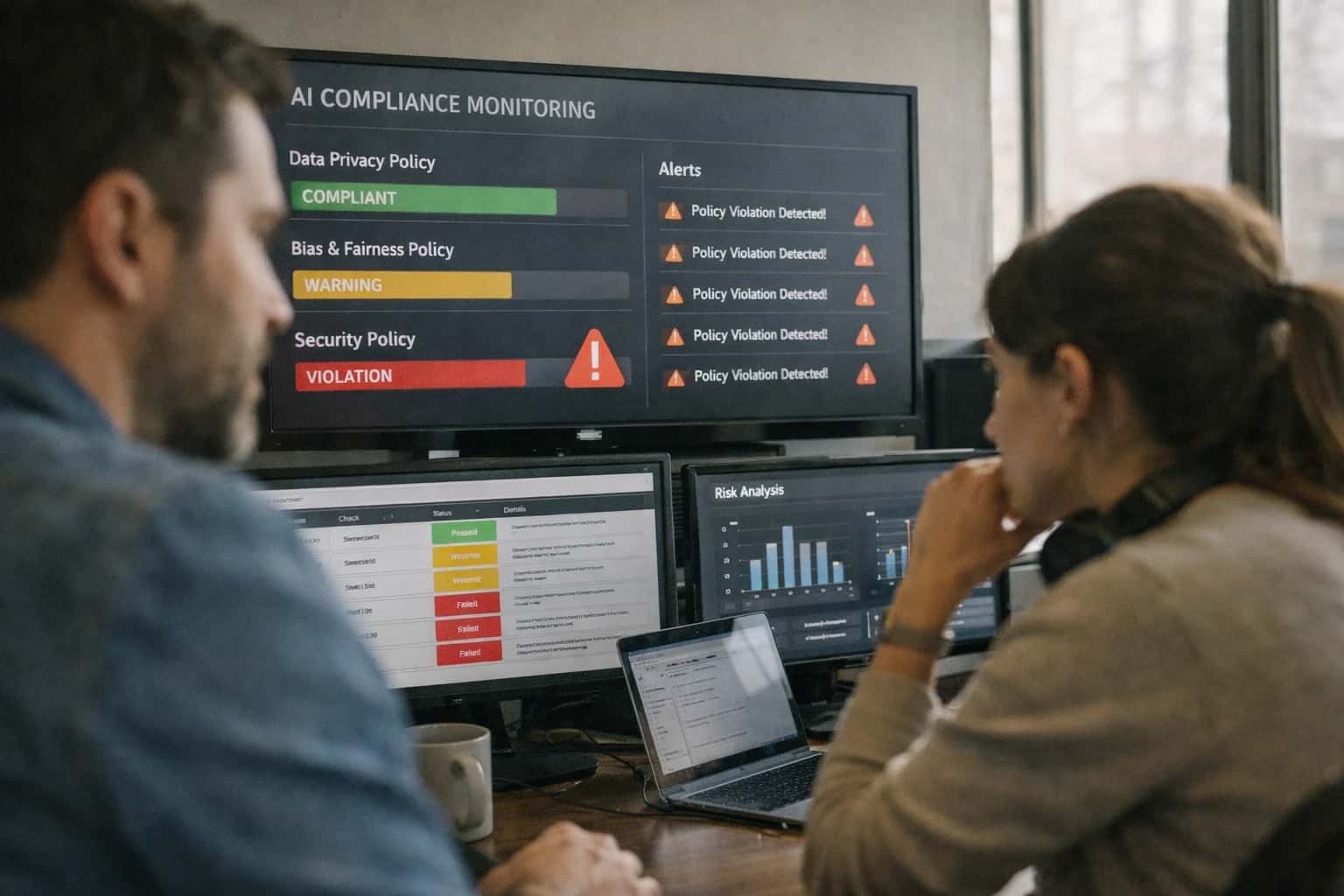
ARCHITECTURE AND GOVERNANCE
Where AI Fits in Campground Audit and Compliance
A technical blueprint for using AI to monitor platform audit logs, detect anomalous activity, and automate compliance reporting for campground operators.
High-value detection workflows include identifying unusual login patterns (off-hours, multiple failed attempts), bulk reservation modifications outside of policy, atypical discount applications, or financial adjustments made without corresponding notes. For compliance, the AI can be configured to monitor for specific regulatory triggers, such as changes to ADA-accessible site assignments or modifications to seasonal permit data, automatically generating draft incident reports or flagging records for manager review in the platform's dashboard.
Rollout is typically phased, starting with read-only API access to historical logs for model training, followed by a pilot monitoring a single high-risk area like user permission changes. Governance requires defining clear review workflows—many teams implement a daily digest of AI-flagged items routed to a compliance officer via email or a dedicated Slack channel, with a direct link back to the source record in ResNexus for investigation. This creates a closed-loop system where the AI augments human oversight without replacing it, providing scalable audit coverage for multi-property groups.
AUDIT TRAIL & COMPLIANCE
Key Integration Points in Campground Platforms
Core Audit Data Sources
The ResNexus platform maintains detailed audit logs for user activity, which are the primary source for compliance monitoring. Key objects to integrate with include:
- User Activity Logs: Track logins, permission changes, reservation modifications, and financial adjustments.
- Reservation Change History: Every edit to a booking—dates, rates, guest details—is timestamped and user-stamped.
- Financial Transaction Logs: Records of payments, refunds, invoice voids, and journal entries.
An AI integration ingests these logs via ResNexus APIs or database exports. The system parses entries to establish a baseline of normal activity—like a manager adjusting rates during peak season—and flags anomalies such as off-hours financial changes or bulk data exports by unauthorized users. This enables real-time alerts and creates a searchable, enriched audit trail far more efficient than manual log review.
CAMPING PLATFORM INTEGRATION PATTERNS
High-Value AI Use Cases for Audit and Compliance
For campground operators using ResNexus, Campspot, Staylist, or Campground Master, AI can transform manual audit reviews and compliance reporting from a reactive, time-consuming task into a proactive, automated control layer. These integrations connect directly to platform APIs and audit logs to monitor, analyze, and report on critical operational and financial activities.
01
Anomalous User Activity Detection
Monitors ResNexus or Campground Master audit logs in real-time to flag high-risk actions like after-hours rate overrides, bulk reservation deletions, or unauthorized discount applications. AI models establish a behavioral baseline for each staff role and trigger alerts for review in Slack or Microsoft Teams.
Batch -> Real-time
Monitoring shift
02
Automated Compliance Report Generation
Connects to ResNexus reporting APIs and Staylist transaction data to auto-generate monthly compliance packs for industry regulations or franchise agreements. An AI agent extracts required data points, drafts narrative summaries, and formats reports—reducing manual consolidation from multiple dashboards.
Hours -> Minutes
Report assembly
03
Reservation Audit Trail Reconciliation
Automates the reconciliation of Campspot reservation audit trails with payment gateway records (e.g., Stripe) and channel manager logs. AI identifies mismatches in deposit amounts, modification timestamps, or cancellation fees, generating a discrepancy report for the finance team and creating Jira Service Management tickets for resolution.
1 sprint
Manual process saved
04
Policy Violation Workflow Automation
Ingests Staylist guest communication logs and Campground Master incident reports to detect potential policy violations (e.g., pet policy, noise complaints, unauthorized vehicles). AI classifies severity, drafts initial guest communications, and creates a structured case in Zendesk for manager follow-up, ensuring consistent enforcement.
Same day
Response time
05
Financial Control & SOX-Ready Logging
For multi-property groups, AI creates a unified, tamper-evident log of all financial transactions across ResNexus properties. It monitors for segregation-of-duties conflicts, ensures proper approval workflows for write-offs, and maintains an immutable audit trail suitable for financial controls and potential SOX compliance.
Batch -> Real-time
Control monitoring
06
Vendor Contract & Permit Compliance
Integrates with Campground Master's document management to track key dates for vendor contracts, insurance certificates, and health/safety permits. AI scans document repositories, extracts expiry dates and critical clauses, and sends proactive alerts to managers via email or Microsoft 365, preventing lapses.
Hours -> Minutes
Manual review saved
FOR CAMPGROUND MANAGEMENT PLATFORMS
Example AI-Powered Audit and Compliance Workflows
Practical automation patterns for using AI to monitor ResNexus, Campspot, and Staylist audit logs, detect policy violations, and generate compliance reports for industry regulations like ADA, fire safety, and health department standards.
Trigger: Scheduled job runs nightly after audit logs are finalized in ResNexus or Campground Master.
Context/Data Pulled:
- Fetches the last 24 hours of user activity logs via the platform's audit API (e.g.,
GET /api/v1/audit-logs). - Enriches with user role metadata from the system's RBAC tables.
Model or Agent Action: An AI agent scans each log entry, flagging anomalies such as:
- A front-desk user accessing financial reporting modules.
- A user from an unrecognized IP address or location.
- Bulk record exports outside of normal business hours.
- Failed login attempts followed by a successful login from a different IP.
The agent uses a pre-configured policy rule set and can classify the severity of each anomaly.
System Update or Next Step:
- High-severity alerts are posted to a dedicated security channel in Microsoft Teams or Slack via webhook, including the user ID, action, and timestamp.
- A summary ticket is automatically created in the campground's IT service management system (e.g., Jira Service Management) for investigation.
- The flagged log entries are tagged within the platform's database for easy filtering.
Human Review Point: All high and medium-severity alerts require a security officer's review within 4 business hours. The AI-generated summary provides the context needed for a rapid decision.
AUTOMATED COMPLIANCE WORKFLOWS
Implementation Architecture: Data Flow and System Design
A production-ready architecture for monitoring ResNexus audit logs and automating compliance reporting.
The integration connects to the ResNexus API to stream audit log events—covering user logins, reservation modifications, rate changes, and financial adjustments—into a secure processing pipeline. A dedicated AI agent, acting as a continuous compliance monitor, analyzes this stream using a rules engine and anomaly detection models to flag activities like off-hours access, bulk data exports, or unauthorized discount applications. Flagged events are enriched with user role context from ResNexus and written to a dedicated case management object for review.
For report generation, the system aggregates flagged events and relevant reservation data on a scheduled basis (e.g., nightly or weekly). An AI workflow retrieves the required data schema for target regulations (like state lodging reports or PCI-DSS controls), drafts narrative summaries of anomalies and corrective actions, and assembles the final document. This report is then posted back to a designated ResNexus file library and can trigger automated alerts to managers via email or Slack, creating a closed-loop audit trail without manual data compilation.
Rollout begins with a read-only phase to baseline normal activity, followed by a pilot focusing on high-risk modules like Payment Posting and User Management. Governance is maintained through a human-in-the-loop approval step for all generated reports before final submission, and all AI actions are themselves logged to a separate audit trail. This architecture ensures compliance operations shift from a monthly manual scramble to a continuous, evidence-backed process.
AI AUDIT AND COMPLIANCE WORKFLOWS
Code and Payload Examples
Real-Time Alerting for Suspicious Activity
Configure ResNexus to send audit log events to an AI webhook endpoint. The AI service analyzes patterns—like off-hours logins, bulk data exports, or unusual discount applications—and triggers alerts in your operations Slack channel or creates a high-priority ticket.
Example Python FastAPI Webhook Handler:
pythonfrom fastapi import FastAPI, Request import json from inference_audit_agent import analyze_audit_event app = FastAPI() @app.post("/resnexus-audit-webhook") async def handle_audit_webhook(request: Request): payload = await request.json() # Payload structure from ResNexus audit trail event = { "timestamp": payload["event_time"], "user_email": payload["user"], "action": payload["action"], # e.g., "UPDATE_RESERVATION", "EXPORT_REPORT" "entity_id": payload["reservation_id"], "ip_address": payload["ip"], "details": payload.get("changes", {}) } # AI analysis for risk scoring risk_result = analyze_audit_event(event) if risk_result["risk_score"] > 0.7: # Trigger alert workflow await post_to_slack( channel="#compliance-alerts", message=f"⚠️ High-risk audit event detected: {risk_result['reason']}" ) # Optionally, create a case in your compliance tracker create_compliance_case(event, risk_result) return {"status": "processed"}
AI-POWERED AUDIT & COMPLIANCE
Realistic Time Savings and Operational Impact
How AI integration with ResNexus transforms manual audit log review and report generation into an automated, proactive compliance function.
| Metric | Before AI | After AI | Notes |
|---|---|---|---|
Audit Log Review for Anomalies | Manual spot-checks, 2-4 hours weekly | Automated daily scan, alerts in <5 min | AI monitors user login, permission changes, and data exports |
Compliance Report Generation | Manual data pull and formatting, 1-2 days monthly | Automated draft in 15-30 minutes | AI assembles data from logs, reservations, and financial modules |
Incident Investigation Timeline | Next business day, manual log correlation | Same-day, AI-provided timeline and context | Agent retrieves related records and suggests root cause |
Regulatory Change Impact Assessment | Ad-hoc manual review, high risk of oversight | Quarterly automated scan of logs against new rules | AI flags potential non-compliant historical activities |
Staff Training on Policy Violations | Generic annual training | Targeted coaching based on detected near-misses | AI identifies patterns and suggests micro-training modules |
Audit Trail Documentation for Inspections | Last-minute scramble to compile evidence packets | Pre-packaged, timestamped evidence ready on-demand | AI maintains a continuous, searchable record of all flagged events and resolutions |
AUDITABLE AI FOR REGULATED OPERATIONS
Governance, Security, and Phased Rollout
Deploying AI for compliance requires a controlled architecture that preserves audit integrity and meets industry regulations.
An AI audit trail integration connects directly to the ResNexus Audit Log API or similar event streams in Campground Master and Staylist. The system ingests user activity logs—covering reservation modifications, rate changes, guest data access, and financial adjustments—into a secure processing pipeline. Here, AI models perform anomaly detection (e.g., off-hours admin logins, bulk rate overrides) and pattern recognition (e.g., inconsistent waiver documentation) against configured compliance rules. All AI inferences, the source log data, and the reasoning are written to an immutable audit table, preserving a clear lineage from original platform event to AI-generated alert for regulator review.
Security is enforced through role-based access control (RBAC) synced from the campground platform. AI-generated compliance reports or alerts are only accessible to users with appropriate permissions (e.g., General Manager, Compliance Officer). Data in transit and at rest is encrypted, and the AI system operates in a zero-trust network model, accessing platform APIs via scoped service accounts rather than broad admin credentials. For sensitive actions like reporting a potential violation, the workflow can integrate a human-in-the-loop approval step within the platform's native interface before any official report is filed.
A phased rollout minimizes operational risk. Phase 1 (Monitoring): Deploy AI in a read-only observation mode for 30-60 days, analyzing historical and real-time logs to baseline normal activity and tune detection models without generating staff alerts. Phase 2 (Assisted Review): Begin surfacing flagged anomalies and draft compliance summaries (e.g., weekly access review reports) to a designated manager via a dedicated dashboard or email, requiring manual confirmation before any action is taken. Phase 3 (Automated Reporting): After validation, activate automated generation of standardized compliance reports (e.g., PCI-DSS, state hospitality regulations) and integrate alerting directly into the platform's workflow or a connected system like Microsoft Teams or Slack for the management team.
This governance-first approach ensures the AI integration enhances compliance posture without introducing new risk. Inference Systems architects these solutions with explainability and rollback capabilities as core requirements, allowing campground operators to answer how an AI conclusion was reached and to disable specific detectors immediately if needed. Our implementation patterns are designed to meet the scrutiny of campground associations, insurance auditors, and regulatory bodies.
Enabling Efficiency, Speed & Accuracy
Intelligent Analysis, Decision & Execution
We build AI systems for teams that need search across company data, workflow automation across tools, or AI features inside products and internal software.
Talk to Us
Search across company data
Give teams answers from docs, tickets, runbooks, and product data with sources and permissions.
Useful when people spend too long searching or get different answers from different systems.
Enterprise searchRAGPermissions
Read more
Automate internal workflows
Use AI to route work, draft outputs, trigger actions, and keep approvals and logs in place.
Useful when repetitive work moves across multiple tools and teams.
AI agentsWorkflow automationGovernance
Read more
Add AI to products and internal tools
Build assistants, guided actions, or decision support into the software your team or customers already use.
Useful when AI needs to be part of the product, not a separate tool.
AI integrationDecision supportModel routing
Read moreAI FOR AUDIT TRAIL AND COMPLIANCE
FAQ: Technical and Commercial Questions
Common questions about implementing AI to monitor ResNexus audit logs, detect anomalous activity, and automate compliance reporting for campgrounds.
The integration primarily consumes two data streams from ResNexus:
-
Audit Log API: This is the core source. You'll need API access to pull the audit trail, which typically includes fields like:
timestampuser_id/usernameaction(e.g.,MODIFIED_RESERVATION,DELETED_INVOICE,CHANGED_USER_PERMISSION)entity_type(e.g.,Reservation,Payment,RatePlan)entity_idold_values/new_values(often as JSON diffs)ip_address
-
Operational Data APIs: To enrich audit events for context, you'll also pull from:
- Reservation API: To get guest details, stay value, and dates associated with a modified reservation.
- User API: To understand the role and permissions of the user who performed an action.
- Financial API: For context on payment or invoice modifications.
Implementation Note: The AI agent acts as a downstream consumer. A secure, serverless function (e.g., AWS Lambda) is typically triggered on new audit log entries via a webhook or scheduled pull, processes the event with the AI model, and writes alerts or enriched records to a separate security dashboard database.

About the author
Prasad Kumkar
CEO & MD, Inference Systems
Prasad Kumkar is the CEO & MD of Inference Systems and writes about AI systems architecture, LLM infrastructure, model serving, evaluation, and production deployment. Over 5+ years, he has worked across computer vision models, L5 autonomous vehicle systems, and LLM research, with a focus on taking complex AI ideas into real-world engineering systems.
His work and writing cover AI systems, large language models, AI agents, multimodal systems, autonomous systems, inference optimization, RAG, evaluation, and production AI engineering.
LinkedIn
Limited slotsGet a Free AI Consultation
Partnered with leading AI, data, and software stack.





How We Work
Custom AI workflows for your Business
One-fit-all AI don't work for modern businesses. At Inferensys, we aim to understand your business & custom requirements; which we use to define most efficient agentic workflows, the data, and the tools for your business.
01
Review the use case
We understand the task, the users, and where AI can actually help.
Read more02
Pick the right approach
We define what needs search, automation, or product integration.
Read more03
Build the first useful version
We implement the part that proves the value first.
Read more04
Improve from there
We add the checks and visibility needed to keep it useful.
Read moreThe first call is a practical review of your use case and the right next step.
Talk to Us