AI integration connects at three key layers within the iMIS data model and workflow engine: the Application Intake module for initial screening, the Review & Scoring workflows managed through committees or staff, and the Post-Award Compliance & Reporting functions tied to fund accounting and member records. The goal is to inject intelligence into existing iMIS objects—like GrantApplication, ReviewerAssignment, PaymentRequest, and ImpactReport—without rebuilding core processes. For example, an AI agent can be triggered via an iMIS workflow rule upon application submission to perform an initial completeness check, extract key data from uploaded PDFs into structured fields, and flag applications that deviate from RFP guidelines for staff review.

Integration
AI Integration with iMIS for Grant Management Workflows
Where AI Fits into iMIS Grant Management
Integrating AI into iMIS transforms grant administration from a manual, document-heavy process into an intelligent, data-driven workflow.
A production implementation typically involves a middleware layer (like an Azure Function or AWS Lambda) that listens to iMIS webhooks or polls designated tables. This layer calls LLM APIs for document understanding and scoring, then writes results back to custom iMIS fields or creates review tasks. High-value use cases include:
- Automated Application Triage: Using a RAG system over past funded proposals and guideline documents to score alignment and suggest priority for reviewer assignment.
- Reviewer Matching & Bias Reduction: Analyzing reviewer expertise from iMIS committee records and past reviews to auto-assign applications, ensuring balanced coverage and reducing manual scheduling.
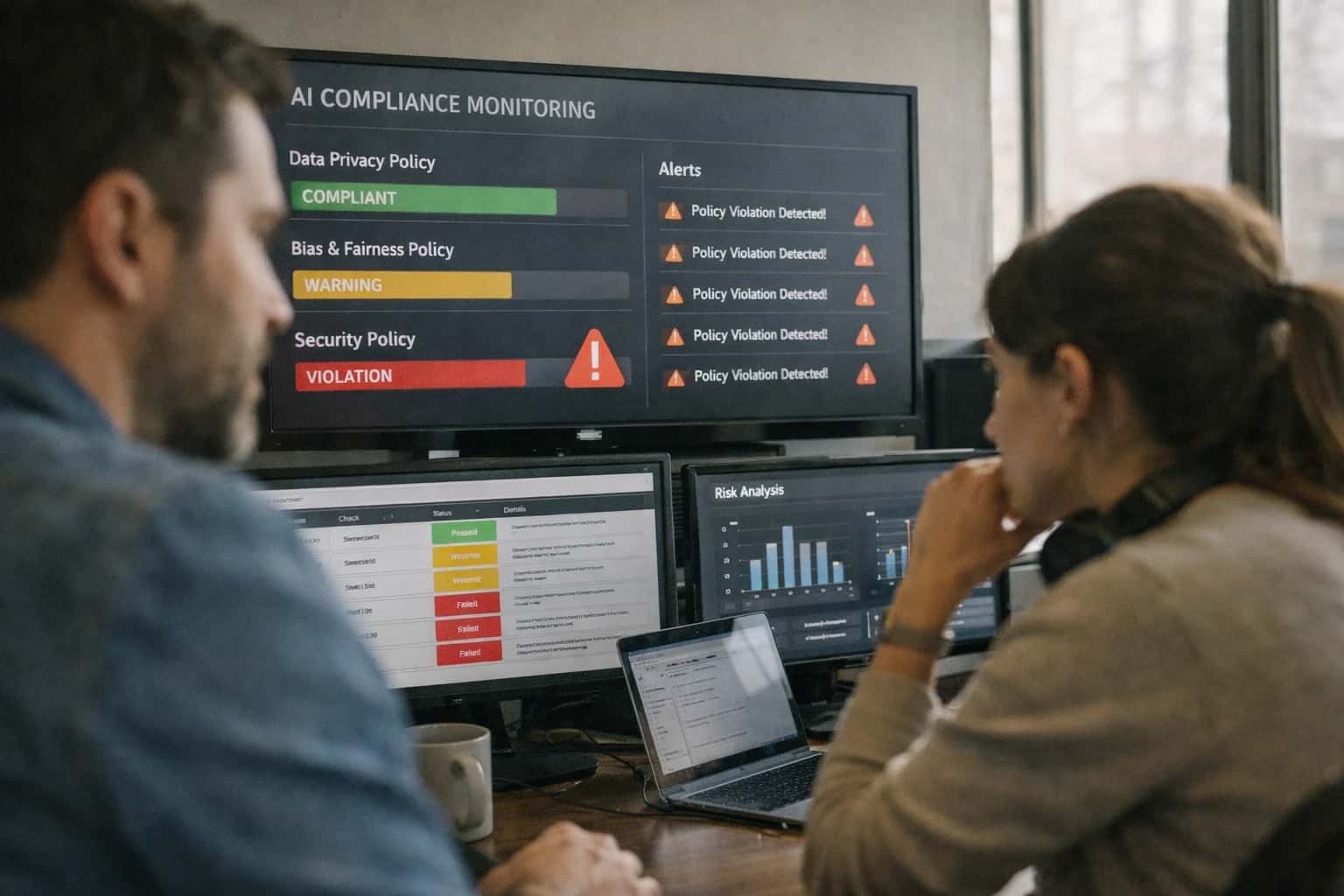
- Compliance Monitoring: Scanning grantee-submitted progress reports and financial documents in iMIS to detect deviations from the budget or project timeline, alerting program officers.
- Impact Report Drafting: Synthesizing final report data, member testimonials, and outcome metrics from iMIS into narrative summaries for board and donor communications.
Rollout should be phased, starting with a single grant program to validate accuracy and staff trust. Governance is critical: all AI-generated scores or extracts should be logged in iMIS audit trails and require a human-in-the-loop for final funding decisions. The integration's value is operational—reducing the 2-3 week initial review cycle to days, enabling program officers to manage 30-50% more grants without adding headcount, and ensuring consistent, auditable decision support. Inference Systems architects these integrations by mapping the specific iMIS modules your foundation uses, designing the agent workflows to complement—not replace—your existing approval chains, and ensuring the AI layer enhances data quality and reporting within the iMIS ecosystem you already govern.
Key iMIS Surfaces for AI Integration
Core Data & Workflow Hub
The iMIS Grants & Awards module is the primary surface for AI integration. It houses the master data objects for the entire grant lifecycle: applications, reviewers, scoring rubrics, award decisions, and compliance documents.
AI agents can be triggered at key workflow stages via iMIS business objects or REST API webhooks. For example, when a new application is submitted, an AI agent can automatically extract structured data (budget amounts, project timelines) from uploaded PDFs and populate the corresponding iMIS fields. This reduces manual data entry and accelerates initial screening. Agents can also monitor the status of ReviewerAssignment objects, sending automated nudges to lagging reviewers and logging all interactions back to the grant record for auditability.
This integration ensures AI actions are logged within the native iMIS audit trail, maintaining a complete chain of custody for sensitive grant data.
High-Value AI Use Cases for iMIS Grant Management
For foundations and associations managing grant programs within iMIS, AI integration automates high-friction, manual workflows. These use cases target specific iMIS modules—like applications, compliance, and reporting—to accelerate cycles, improve decision quality, and free program officers for strategic work.
AI-Assisted Application Triage & Scoring
An AI agent reviews incoming grant applications (PDFs, web forms) in the iMIS application module. It extracts key data points (budget, impact metrics, alignment), scores them against published criteria, and flags incomplete or non-compliant submissions for fast-track review. Program officers receive a ranked shortlist with AI-generated summaries.
Automated Compliance & Document Verification
Integrates AI with iMIS document storage to continuously monitor active grantee records. The system checks uploaded reports, financial statements, and deliverables against grant agreement terms (e.g., spending caps, milestone dates). It flags discrepancies and auto-generates compliance alerts for program managers within the iMIS workflow.
Intelligent Grantee Support Agent
Deploys an AI chatbot embedded in the grantee portal (powered by iMIS) to answer FAQs about application guidelines, reporting requirements, payment schedules, and policy changes. It uses RAG on the foundation's knowledge base and specific grant records, deflecting tier-1 support tickets and logging interactions back to iMIS cases.
Impact Report Generation & Synthesis
At reporting deadlines, AI analyzes structured data and narrative final reports submitted by grantees into iMIS. It synthesizes outcomes across a portfolio, generates draft narrative summaries for board reports, and creates visual data highlights (e.g., geographic impact, beneficiary demographics), saving days of manual compilation.
Proactive Risk & Renewal Forecasting
Builds predictive models on iMIS historical grant data (performance, spend rate, communication frequency) to score active grants for risk of underperformance or non-renewal. The AI surfaces at-risk grants in iMIS dashboards and suggests intervention workflows—like check-in calls or amended deliverables—for program officers.
Grant Agreement & Amendment Drafting
Integrates AI with iMIS' document management to auto-generate first-draft grant agreements and amendments. The agent pulls approved terms from the iMIS application record, inserts standardized clauses from a foundation-approved library, and personalizes variables (amount, dates, PI name). Legal and finance teams review a near-final document.
Example AI-Powered Grant Workflows
These workflows illustrate how AI agents integrate directly with iMIS data and modules to automate high-effort, high-value tasks across the grant lifecycle—from intake to impact reporting.
Trigger: A new grant application is submitted via the iMIS Engagement Management System (EMS) web form.
AI Agent Action:
- The agent retrieves the full application packet (PDFs, form data) from the iMIS document repository.
- Using a multi-step LLM chain, it performs:
- Eligibility Check: Cross-references applicant data (EIN, location) against foundation guidelines stored in iMIS custom tables.
- Narrative Summary: Generates a concise 3-bullet summary of the proposal's goals, methods, and requested amount.
- Initial Scoring: Applies a pre-configured rubric (e.g., alignment, feasibility, community impact) to output a preliminary score (1-10).
- Duplicate Detection: Checks for similar past applications from the same organization using iMIS constituent search.
System Update: The agent writes the summary, score, and eligibility flag back to the grant's iMIS record (e.g., custom fields AI_Summary, AI_Score, AI_Eligibility_Status). It then assigns the record to the appropriate program officer's queue in iMIS based on the proposal's focus area.
Human Review Point: The program officer reviews the AI-generated dossier, adjusts the score if needed, and makes the final decision to advance the application to full review or reject it.
Implementation Architecture: Connecting AI to iMIS
A practical blueprint for integrating AI agents into iMIS to automate grant application review, compliance monitoring, and impact reporting.
Integrating AI into iMIS grant management centers on three core data objects: the Grant Application, Reviewer Scorecard, and Grantee Report. The architecture typically involves an AI orchestration layer that listens for iMIS workflow events—like a new application submission or a report due date—via iMIS REST APIs or a middleware queue. For each application PDF, an AI agent extracts key data (budget figures, project timelines, eligibility criteria) to auto-populate the iMIS Grant_Application__c object and a preliminary scorecard. This pre-processing shifts reviewer effort from data entry to high-value assessment.
High-value workflows are built around iMIS modules and custom objects. For example, an AI scoring agent can be triggered post-extraction to evaluate applications against published rubric criteria stored in iMIS, appending scored notes to the Review__c related list. For compliance, a monitoring agent periodically queries the Grant_Award__c and Report__c objects, using RAG against the original proposal to flag narrative or financial discrepancies in interim reports. Impact report generation can be automated by having an AI synthesize data from final reports, iMIS financial records, and grantee-submitted outcomes into a first-draft narrative for foundation staff.
A production rollout follows a phased approach: start with a single-agent workflow like application data extraction, log all AI actions and decisions to a custom AI_Audit_Log__c object in iMIS for transparency, and implement a human-in-the-loop approval step before any auto-scored application moves to 'Approved' status. Governance is critical; prompts and data handling logic must be version-controlled, and access to AI tools should respect iMIS role-based permissions. This architecture doesn't replace iMIS but turns it into an intelligent command center, reducing grant review cycles from weeks to days and ensuring consistent, auditable compliance checks.
Code and Payload Examples
Automating Initial Application Processing
When a grant application PDF is uploaded to the iMIS document repository, an AI agent is triggered via a webhook. This agent extracts structured data (organization name, project summary, requested amount) and unstructured narrative from the proposal using an LLM with a document parsing tool. The extracted data is then formatted to match iMIS custom object fields for the Grant_Application__c record, ready for validation and scoring.
python# Example: Webhook handler to parse uploaded application import json from imis_client import IMISClient from llm_service import extract_grant_data def handle_application_upload(event): """Process a new application document in iMIS.""" # Get document ID and download URL from iMIS webhook payload doc_id = event['data']['DocumentId'] doc_url = event['data']['DownloadUrl'] # Call LLM service to parse the grant proposal PDF extracted_data = extract_grant_data(doc_url) # Map extracted data to iMIS custom object app_payload = { "Name": extracted_data.get("project_title"), "Applicant_Organization__c": extracted_data.get("org_name"), "Requested_Amount__c": float(extracted_data.get("amount", 0)), "Abstract__c": extracted_data.get("project_summary"), "Status__c": "Parsed - Ready for Review", "Source_Document_ID__c": doc_id } # Create the Grant Application record in iMIS imis = IMISClient() new_record = imis.create_record('Grant_Application__c', app_payload) return new_record
Realistic Time Savings and Operational Impact
How AI integration with iMIS transforms manual, time-intensive grant management workflows into streamlined, high-impact operations for foundation staff.
| Workflow Stage | Before AI | After AI | Impact Notes |
|---|---|---|---|
Initial Application Screening | Manual review of 50+ PDFs per cycle | AI pre-scores & flags non-compliant apps | Staff focus on top 20% of applications requiring nuance |
Reviewer Assignment & Matching | Manual matching based on committee availability | AI suggests optimal reviewer based on expertise & workload | Reduces administrative coordination by 60% |
Compliance & Document Verification | Hours spent cross-checking IRS status, budgets | AI auto-validates key fields & flags discrepancies | Accelerates due diligence, ensures consistency |
Scorecard & Feedback Generation | Manual compilation of reviewer notes | AI drafts consolidated score summaries & feedback | Cuts post-review report drafting from days to hours |
Grant Agreement Drafting | Manual copy-paste from templates | AI populates agreement clauses from approved iMIS data | Reduces legal review cycles, minimizes errors |
Impact Report Synthesis | Quarterly manual data aggregation from grantees | AI analyzes submitted reports, highlights outcomes & risks | Provides board-ready narrative insights in minutes |
Compliance Monitoring & Reporting | Scheduled manual audits of grantee milestones | AI continuously monitors iMIS data, alerts on deviations | Shifts from reactive auditing to proactive stewardship |
Governance, Security, and Phased Rollout
A practical framework for deploying AI in iMIS grant workflows with appropriate controls, security, and a low-risk rollout plan.
Integrating AI into iMIS for grant management requires careful governance, especially when handling sensitive applicant data, reviewer notes, and funding decisions. A secure architecture typically involves an AI middleware layer that sits between iMIS and the LLM (like OpenAI or Anthropic). This layer handles several critical functions: it anonymizes Personally Identifiable Information (PII) from application PDFs before sending text for analysis, enforces role-based access control (RBAC) by checking the user's iMIS permissions before executing AI actions, and logs all AI interactions—including prompts, responses, and the triggering user—back to a dedicated AI_Audit_Log custom table in iMIS for compliance. This ensures that AI-assisted scoring or document review is a traceable, auditable step within the existing grant lifecycle, not a black-box replacement for human judgment.
A phased rollout mitigates risk and builds organizational trust. Phase 1 focuses on augmenting reviewer efficiency: deploy an AI agent that reads submitted grant proposals (stored in iMIS document management) and auto-populates a preliminary scorecard based on predefined rubrics, flagging sections that lack required data. This gives reviewers a consistent starting point. Phase 2 introduces compliance monitoring: an AI workflow continuously scans awarded grant records in iMIS for deliverable due dates, compares submitted progress reports against original scope, and alerts program officers of potential deviations. Phase 3 expands to impact reporting: AI synthesizes final report narratives and quantitative outcomes from iMIS data to generate first-draft impact summaries for funders. Each phase includes a human-in-the-loop approval step, where AI suggestions must be reviewed and confirmed by staff within the iMIS interface before any system-of-record updates are committed.
Successful governance also depends on clear ownership and continuous evaluation. Designate an AI Steward from the grants team to oversee prompt libraries, review audit logs for bias or drift, and refine workflows. Establish a quarterly review to measure key outcomes like time saved in initial application triage or reduction in reporting deadline misses. By treating AI as a governed, phased capability within iMIS, foundations can achieve operational gains—turning weeks of manual review into days—while maintaining the integrity, security, and mission focus of their grantmaking programs. For related architectural patterns, see our guide on [/integrations/association-management-platforms/ai-integration-with-imis-for-compliance-monitoring](AI Integration with iMIS for Compliance Monitoring).
Enabling Efficiency, Speed & Accuracy
Intelligent Analysis, Decision & Execution
We build AI systems for teams that need search across company data, workflow automation across tools, or AI features inside products and internal software.
Talk to Us
Search across company data
Give teams answers from docs, tickets, runbooks, and product data with sources and permissions.
Useful when people spend too long searching or get different answers from different systems.

Automate internal workflows
Use AI to route work, draft outputs, trigger actions, and keep approvals and logs in place.
Useful when repetitive work moves across multiple tools and teams.

Add AI to products and internal tools
Build assistants, guided actions, or decision support into the software your team or customers already use.
Useful when AI needs to be part of the product, not a separate tool.
Frequently Asked Questions
Practical questions for foundations and grantmaking teams planning AI integration with iMIS to automate application review, compliance, and reporting.
The integration typically uses a middleware layer (like an Azure Function or AWS Lambda) that listens for new grant application records in iMIS via its REST API or a dedicated webhook. When a new application is submitted, the workflow triggers:
- Trigger: A new
GrantApplicationrecord is created in iMIS with status "Submitted." - Context Pulled: The middleware fetches the application PDF/text and key metadata (applicant ID, grant program, requested amount) from iMIS.
- AI Action: The application text is processed by an LLM (like GPT-4) with a structured prompt to:
- Extract and normalize key data points (e.g., project timeline, budget total, target demographic).
- Score alignment with grant criteria using a rubric defined in a vector store.
- Flag potential compliance issues (e.g., incomplete sections, budgetary discrepancies).
- System Update: The AI-generated scores, extracted data, and flags are written back to custom fields on the iMIS
GrantApplicationrecord. - Human Review: Applications scoring below a threshold or with critical flags are automatically routed to a "Needs Review" queue in iMIS for program officers.

About the author
Prasad Kumkar
CEO & MD, Inference Systems
Prasad Kumkar is the CEO & MD of Inference Systems and writes about AI systems architecture, LLM infrastructure, model serving, evaluation, and production deployment. Over 5+ years, he has worked across computer vision models, L5 autonomous vehicle systems, and LLM research, with a focus on taking complex AI ideas into real-world engineering systems.
His work and writing cover AI systems, large language models, AI agents, multimodal systems, autonomous systems, inference optimization, RAG, evaluation, and production AI engineering.
Partnered with leading AI, data, and software stack.





How We Work
Custom AI workflows for your Business
One-fit-all AI don't work for modern businesses. At Inferensys, we aim to understand your business & custom requirements; which we use to define most efficient agentic workflows, the data, and the tools for your business.
01
Review the use case
We understand the task, the users, and where AI can actually help.
Read more02
Pick the right approach
We define what needs search, automation, or product integration.
Read more03
Build the first useful version
We implement the part that proves the value first.
Read more04
Improve from there
We add the checks and visibility needed to keep it useful.
Read moreThe first call is a practical review of your use case and the right next step.
Talk to Us