AI integration for compliance monitoring connects directly to iMIS data objects and document stores. The primary surfaces are the Member/Contact record, Certification/Continuing Education modules, and the Document Library where bylaws, codes of conduct, and policy PDFs are stored. An AI agent is typically deployed as a background service that polls these iMIS tables via API or listens for webhook events—such as a new member application, a CE credit submission, or a document upload—to trigger a compliance review. For example, when a member submits proof of completed ethics training, the agent can cross-reference the certificate against the required curriculum, flag any discrepancies, and log the result back to a custom Compliance_Audit_Log object in iMIS for staff review.

Integration
AI Integration with iMIS for Compliance Monitoring
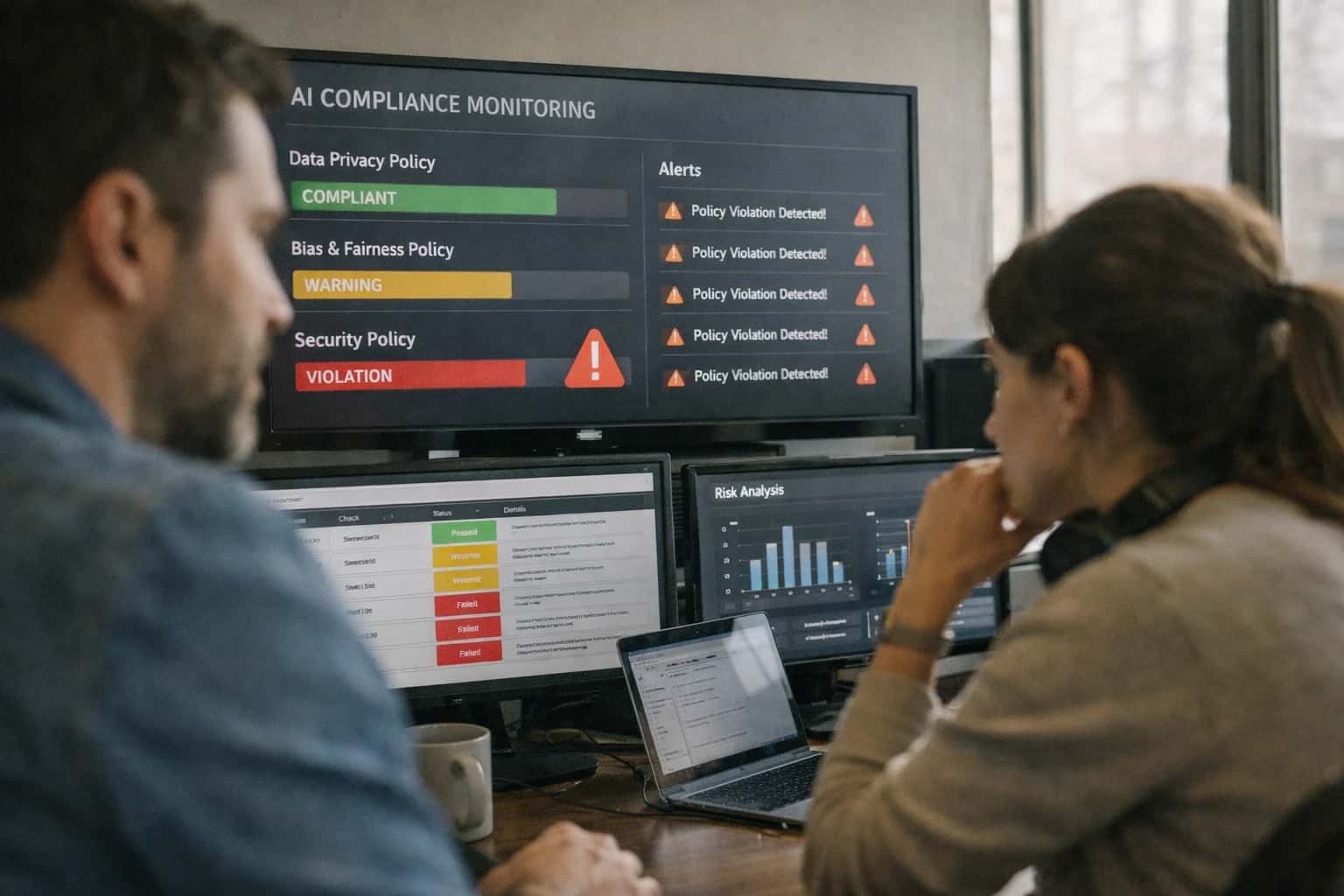
Where AI Fits into iMIS Compliance Operations
A practical guide to integrating AI for monitoring member compliance with bylaws, ethics codes, and continuing education requirements within iMIS.
The high-value workflow is automated exception flagging. Instead of manual quarterly audits, AI continuously scans member profiles, event participation records, and forum posts for potential violations of stated policies. Use cases include:
- Bylaw Adherence: Scanning committee meeting minutes (uploaded as documents) for motions that conflict with governance rules.
- Ethics Code Monitoring: Analyzing text from community discussion posts or support case notes for language that violates the association's code of conduct.
- CE Requirement Tracking: Comparing a member's completed course credits in the iMIS Learning Management module against their certification track's requirements, predicting lapses 60 days out. Impact is operational: reducing manual audit prep from weeks to days, enabling proactive member nudges instead of reactive penalties, and creating a defensible audit trail.
A production rollout follows a phased, governed approach. Start with a single compliance area (e.g., CE tracking) and a pilot member segment. The AI agent should write all decisions and supporting evidence to the iMIS audit log, maintaining a clear human-in-the-loop approval step before any compliance action is taken. Governance is critical: prompts and logic must be version-controlled, and the agent's access should follow iMIS Role-Based Access Control (RBAC) to ensure it only reads/writes data permissible for the compliance officer role. This controlled integration allows associations to augment their iMIS governance without replacing trusted manual oversight, scaling compliance operations as membership grows. For related architectural patterns, see our guides on AI Integration for iMIS Certification Tracking and AI Integration for iMIS Member Sentiment Analysis.
iMIS Modules and Data Surfaces for AI Integration
Core Compliance Data Objects
AI-driven compliance monitoring starts with the structured member and certification data within iMIS. Key surfaces include the Member (IM_MEMBER) and Certification (IM_CERTIFICATION) tables, which track credential status, expiration dates, and continuing education (CE) requirements.
An AI agent can be scheduled to query these records daily, identifying members approaching renewal deadlines or those with incomplete CE credits. By integrating with the iMIS REST API or direct database connections, the system can pull real-time statuses. The agent then compares member activity—logged in event attendance modules or e-learning integrations—against compliance rules defined in custom fields or related Policy (IM_POLICY) objects. This enables proactive, exception-based alerts for staff, moving from manual audit spreadsheets to automated oversight.
For implementation, we typically build a service that consumes iMIS data, applies rule-based and ML models to flag discrepancies, and logs findings back to a custom Compliance Case object or member notes for audit trails.
High-Value AI Compliance Use Cases for iMIS
For associations with regulatory, accreditation, or ethical oversight duties, integrating AI with iMIS transforms manual compliance checks into automated, proactive monitoring. These use cases target specific iMIS modules and data objects to scan member records, documents, and activities for adherence to bylaws, continuing education mandates, and ethical codes, flagging exceptions for staff review.
Continuing Education (CE) Audit Automation
Automates the tracking of member CE credits against certification requirements stored in iMIS. An AI agent monitors the iMIS Learning Management (LMS) module and certification records, cross-references completion dates with renewal cycles, and flags members approaching non-compliance. It can draft personalized nudges and recommend relevant courses from the catalog.
Bylaw & Ethics Code Monitoring
Deploys AI to scan unstructured text in iMIS community forum posts, support case notes, and uploaded documents for potential violations of association bylaws or ethics codes. Using natural language processing, the system flags contentious language, conflicts of interest, or prohibited commercial solicitation for moderator review, logging all alerts back to the member's record.
Accreditation Site Visit Preparation
Targets accrediting bodies using iMIS. An AI workflow aggregates evidence for accreditation standards by pulling data from iMIS member profiles, event attendance records, and the document library. It generates preliminary compliance reports, identifies gaps in submitted materials, and assembles a reviewer dossier—reducing manual evidence collection from days to hours.
Membership Application Compliance Screening
Integrates AI into the iMIS membership application workflow to perform initial compliance checks. The agent verifies applicant credentials against defined criteria (e.g., required licenses, geographic chapters), checks for duplicate records, and flags applications that require manual committee review. This accelerates onboarding while ensuring governance rules are applied consistently.
Ethics & Disciplinary Case Triage
Builds an AI copilot for ethics committees that ingests incoming case submissions via iMIS web forms or email integrations. The agent summarizes allegations, extracts key entities (member names, dates, rule citations), and retrieves relevant historical cases from iMIS for precedent. It routes the summarized case to the appropriate reviewer, speeding up initial assessment.
Regulatory Disclosure Workflow Automation
For associations managing mandatory disclosures (e.g., lobbying, grants), AI automates data extraction from iMIS financial records, event sponsorships, and donor modules. It populates disclosure templates, validates figures against GL codes, and flags transactions requiring manual attestation. The workflow ensures timely, accurate filings and creates a clear audit trail within iMIS.
Example AI-Powered Compliance Workflows
These workflows illustrate how AI agents can be integrated with iMIS to automate the monitoring of member activities against bylaws, ethics codes, and continuing education (CE) requirements, reducing manual audit effort and surfacing exceptions for staff review.
Trigger: Scheduled monthly job or member certification record update.
Context: The agent queries iMIS for all members in a credentialed program whose certification period is ending within the next 90 days.
Agent Action:
- Pulls each member's required CE credits from the
Certificationobject. - Fetches completed CE activities from linked
Event Registration,eLearning, or integrated LMS records. - Uses an LLM to compare the member's completed activities against the credit requirements, checking for:
- Correct credit types (e.g., ethics vs. general).
- Valid date ranges.
- Approved providers.
System Update:
- Updates a
Compliance Statusfield on the member record toCompliant,At Risk, orNon-Compliant. - Creates a task for the credentialing manager for any
Non-Compliantmember. - Automatically drafts and queues a personalized email to
At Riskmembers listing missing credits and suggesting upcoming approved courses.
Human Review Point: The credentialing manager reviews the task list for Non-Compliant members before any final suspension actions are processed in iMIS.
Implementation Architecture: Data Flow and Guardrails
A secure, auditable data flow connecting iMIS records, document stores, and AI models to automate compliance monitoring.
The integration architecture connects to three primary iMIS data surfaces: the member and certification object tables (via iMIS REST API or direct SQL for on-premise), the document management system (often iMIS Document Storage or integrated platforms like SharePoint), and the activity/transaction logs. An orchestration layer (e.g., a secure microservice) polls for new or updated records—such as a member profile change, a continuing education credit submission, or a newly uploaded bylaws document—and packages the relevant data into a context payload for the AI model. For document analysis, text is extracted and chunked; for record analysis, structured data is combined with relevant policy rules defined in a configuration store.
AI processing occurs in a governed environment with clear guardrails. Each analysis job—e.g., 'check member CE credits against certification requirements' or 'scan chapter meeting minutes for ethics code violations'—is executed by a dedicated agent prompt with a strict system instruction to base its findings only on the provided source data and the association's rule set. Findings are returned as structured JSON, including confidence scores, source citations (like document IDs or record fields), and recommended actions (e.g., FLAG_FOR_REVIEW, AUTO_APPROVE). All inputs, outputs, agent prompts, and user overrides are logged to an immutable audit trail linked to the iMIS member or case ID, essential for accreditation audits.
Flagged exceptions are routed back into iMIS workflows. High-confidence approvals can auto-update a compliance status field. Items needing review create a task in the iMIS Task Manager or a case in the Service Module, assigned to the appropriate staff role with the AI's reasoning and evidence attached. The system includes a human-in-the-loop interface where staff can review, override, and provide feedback on the AI's flag, which is used to fine-tune future model performance. Rollout typically starts with a single, high-impact compliance rule (e.g., monitoring CE deadlines for a specific certification) in a pilot group before expanding to broader bylaws or ethics monitoring across all member segments.
Code and Payload Examples
Processing Bylaws and Policy Documents
The first step is to ingest and prepare unstructured compliance documents (PDFs, Word files) stored in iMIS document libraries or attached to member records. This Python example uses LangChain and PyPDF to chunk documents for a RAG pipeline, embedding metadata like member_id and document_type for traceability.
pythonimport os from langchain_community.document_loaders import PyPDFLoader from langchain.text_splitter import RecursiveCharacterTextSplitter from langchain.schema import Document def chunk_imis_compliance_docs(pdf_path, member_id, doc_type): """Load and chunk a compliance document from iMIS.""" loader = PyPDFLoader(pdf_path) raw_docs = loader.load() # Add iMIS metadata to each page for doc in raw_docs: doc.metadata.update({ "source_system": "iMIS", "member_id": member_id, "document_type": doc_type, # e.g., 'bylaws', 'ethics_code', 'ce_certificate' "ingestion_date": datetime.now().isoformat() }) # Split for semantic retrieval text_splitter = RecursiveCharacterTextSplitter( chunk_size=1000, chunk_overlap=200, separators=["\n\n", "\n", ".", " "] ) chunks = text_splitter.split_documents(raw_docs) return chunks
Chunks are then vectorized and stored in a dedicated index (e.g., Pinecone) with the member ID as a filterable namespace, enabling per-member compliance checks.
Realistic Time Savings and Operational Impact
How AI integration transforms manual, reactive compliance monitoring into a proactive, assisted process for association staff managing bylaws, ethics codes, and continuing education requirements.
| Compliance Workflow | Manual Process (Before AI) | AI-Assisted Process (After AI) | Implementation Notes |
|---|---|---|---|
Document Review for Bylaw Adherence | Staff manually reads 100+ pages per case | AI pre-scans and highlights non-compliant clauses | Human final review required; reduces prep time from hours to minutes |
Continuing Education (CE) Audit | Quarterly manual cross-check of iMIS records vs. provider lists | AI continuously matches credits and flags discrepancies | Shifts from batch audits to real-time exception management |
Ethics Code Violation Triage | Relies on member reports; investigation starts after incident | AI monitors community posts and support cases for potential issues | Proactive alerts allow for earlier, informal resolution |
Compliance Reporting for Accreditation | 2-3 days to compile evidence from disparate iMIS modules | AI auto-generates draft report with linked evidence | Staff focus shifts from data gathering to narrative and quality assurance |
Member Certification Expiration Monitoring | Monthly report run; manual email drafting for renewals | AI triggers personalized nudges 90, 60, 30 days pre-expiry | Increases renewal rates while reducing staff admin time |
Policy Update Communication Impact | Broadcast email; no visibility on member comprehension | AI analyzes member inquiries post-communication to identify confusion | Enables targeted follow-up clarifications to specific member segments |
Audit Preparation & Evidence Gathering | 1-2 weeks of intensive manual file collection and organization | AI pre-indexes relevant iMIS records and documents by audit standard | Cuts preparation time by over 50%; ensures evidence completeness |
Governance, Security, and Phased Rollout
A compliance monitoring integration must be built on a foundation of data security, auditability, and controlled adoption.
In iMIS, a compliance monitoring agent primarily interacts with member profiles, certification records, continuing education (CE) transcripts, and document attachments stored in the iMIS database. The integration architecture should enforce strict role-based access control (RBAC), ensuring the AI agent only queries records and fields permitted for the compliance officer role. All AI-generated findings—such as a flagged expired credential or a missing ethics attestation—should be written back to a dedicated audit log object in iMIS with a clear audit trail linking the finding to the source data, the prompting logic, and the reviewing staff member. This creates a defensible, transparent record for accreditation bodies or board reviews.
A phased rollout is critical for user adoption and risk management. Start with a pilot on a single compliance domain, such as monitoring a specific certification's renewal deadlines. Configure the AI agent to run nightly, scanning a defined member segment (e.g., ‘Certified Members’) in iMIS and outputting a daily exception report to a designated iMIS queue or dashboard. This allows the compliance team to validate accuracy and provide feedback before scaling. The next phase can expand to scanning unstructured documents, like uploaded bylaw amendments or policy acknowledgments, using a Retrieval-Augmented Generation (RAG) system on top of iMIS document libraries to check for required language or signatures.
Governance extends beyond the initial build. Establish a human-in-the-loop approval step for any AI-recommended member communications (e.g., non-compliance notices) before they are sent via iMIS workflows. Regularly review the agent's performance by sampling its flagged exceptions against manual reviews to measure precision and recall, adjusting prompts or data sources as needed. For associations operating in regulated industries, consider implementing a model drift detection process to alert if the AI's output patterns change significantly, which could indicate shifting data or a need for retraining. This structured approach ensures the AI augments the compliance team's work without introducing unmanaged risk or eroding member trust.
Enabling Efficiency, Speed & Accuracy
Intelligent Analysis, Decision & Execution
We build AI systems for teams that need search across company data, workflow automation across tools, or AI features inside products and internal software.
Talk to Us
Search across company data
Give teams answers from docs, tickets, runbooks, and product data with sources and permissions.
Useful when people spend too long searching or get different answers from different systems.

Automate internal workflows
Use AI to route work, draft outputs, trigger actions, and keep approvals and logs in place.
Useful when repetitive work moves across multiple tools and teams.

Add AI to products and internal tools
Build assistants, guided actions, or decision support into the software your team or customers already use.
Useful when AI needs to be part of the product, not a separate tool.
Frequently Asked Questions
Practical answers for association leaders and IT teams planning to use AI for monitoring member compliance with bylaws, ethics codes, and continuing education requirements within the iMIS platform.
An AI integration for compliance monitoring typically connects to several key iMIS data objects and modules via the iMIS REST API or direct database access (with appropriate safeguards). The primary sources include:
- Member and Contact Records: For profile data, membership tiers, and chapter affiliations.
- Certification & Credentialing Module: To track CE credits, expiration dates, and certification statuses.
- Document Management & IQA: To scan uploaded documents like ethics pledges, conflict-of-interest forms, or proof of completion certificates.
- Event Registration & Attendance: For verifying participation in mandatory ethics seminars or continuing education events.
- Community/Forum Posts: To monitor for code-of-conduct violations in member discussions (requires text analysis).
- Financial Transactions: To check for dues payments in good standing, a common compliance prerequisite.
A secure implementation uses role-based access controls (RBAC) to ensure the AI agent only reads data necessary for its specific monitoring tasks, and all access is logged for auditability.

About the author
Prasad Kumkar
CEO & MD, Inference Systems
Prasad Kumkar is the CEO & MD of Inference Systems and writes about AI systems architecture, LLM infrastructure, model serving, evaluation, and production deployment. Over 5+ years, he has worked across computer vision models, L5 autonomous vehicle systems, and LLM research, with a focus on taking complex AI ideas into real-world engineering systems.
His work and writing cover AI systems, large language models, AI agents, multimodal systems, autonomous systems, inference optimization, RAG, evaluation, and production AI engineering.
Partnered with leading AI, data, and software stack.





How We Work
Custom AI workflows for your Business
One-fit-all AI don't work for modern businesses. At Inferensys, we aim to understand your business & custom requirements; which we use to define most efficient agentic workflows, the data, and the tools for your business.
01
Review the use case
We understand the task, the users, and where AI can actually help.
Read more02
Pick the right approach
We define what needs search, automation, or product integration.
Read more03
Build the first useful version
We implement the part that proves the value first.
Read more04
Improve from there
We add the checks and visibility needed to keep it useful.
Read moreThe first call is a practical review of your use case and the right next step.
Talk to Us