AI integration connects directly to the core iMIS data objects that power certification programs: the Member record, Certification/Designation tables, Continuing Education (CE) transaction records, and related Document Management modules. The primary workflow surfaces are the member portal for self-service status checks and the iMIS staff workspace for compliance monitoring. An AI agent acts on this data through iMIS REST API or direct database hooks to perform three key functions: 1) Monitor expiration dates and pre-renewal windows, triggering personalized email/SMS nudges; 2) Analyze member CE transcripts against certification requirements to recommend specific, approved courses from your catalog; and 3) Automate audit documentation by extracting evidence from uploaded certificates and generating summary reports for accrediting bodies.

Integration
AI Integration with iMIS for Certification Tracking
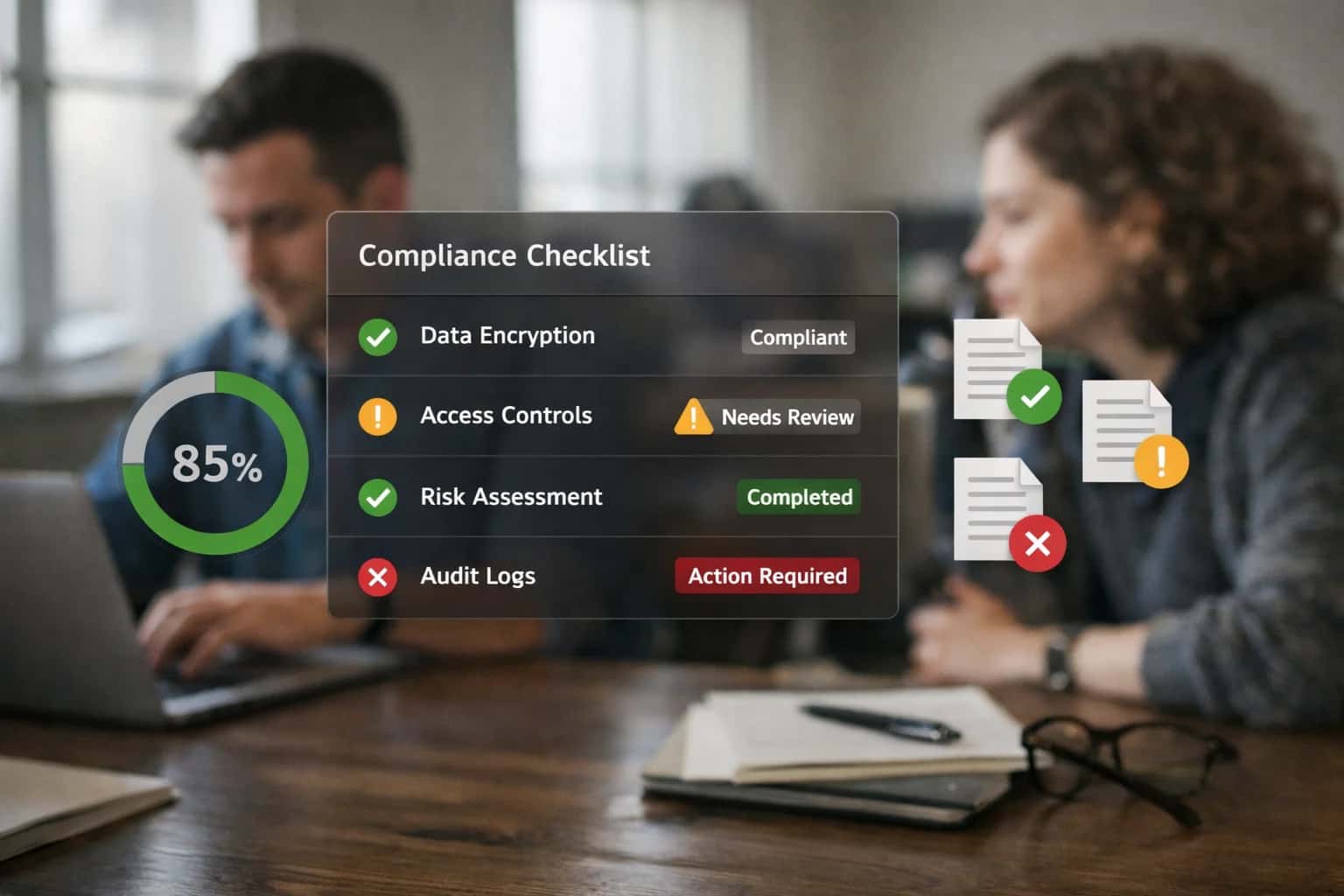
Where AI Fits in iMIS Certification Management
Integrating AI into iMIS transforms manual certification tracking into a proactive, intelligent system for credentialing bodies.
A production implementation typically involves a middleware layer (like an Azure Function or AWS Lambda) that polls iMIS for members nearing recertification. This service calls an LLM with a structured prompt containing the member's certification rules and past CE history. The LLM returns a personalized recommendation, which is posted back to the member's iMIS communication history and can trigger an automated workflow in iMIS Advanced Marketing or a third-party tool like Zapier. For audit trails, a separate process uses document AI to parse uploaded completion certificates, validate them against a master course list, and update the member's CE record—logging all actions in iMIS with a clear audit trail for compliance officers.
Rollout should start with a single, high-volume certification track to validate accuracy and member response. Governance is critical: all AI-generated recommendations should be clearly labeled as such in communications, and a human-in-the-loop review step should be maintained for any automatic status changes or complex proration cases. The business impact is operational: reducing manual hours spent on status verification and audit prep from days to hours, while improving member satisfaction through proactive, personalized guidance that helps them maintain their credentials without lapsing.
Key iMIS Modules and Data Surfaces for AI Integration
Core Certification Objects
The primary surfaces for AI integration are the Credential and Continuing Education (CE) modules. These manage the core data model: certification definitions, member assignments, expiration dates, and required credit hours.
AI agents can monitor the Credential_Expiration_Date field to trigger renewal workflows. For CE tracking, the CE_Transaction object logs completed activities. An AI layer can analyze a member's Credential_Track against their CE_History to identify gaps and recommend specific courses from the integrated Learning Management System (LMS) or event catalog. This moves management from reactive expiration alerts to proactive, personalized learning path guidance.
High-Value AI Use Cases for iMIS Certification Tracking
For credentialing bodies and associations managing professional certifications, AI integration with iMIS transforms manual tracking into proactive, automated compliance operations. These use cases target the specific data objects and workflows within iMIS to reduce administrative burden and enhance member service.
Automated Expiration Monitoring & Proactive Renewal
An AI agent continuously scans the iMIS Certification and Member CE Credit tables for upcoming expirations. It triggers personalized, multi-channel renewal sequences via email and portal notifications, pulling in the member's specific credit history and required competencies. This moves renewal from a batch email blast to a 1:1, just-in-time workflow.
Personalized Continuing Education (CE) Course Recommendations
Using RAG on your course catalog and a member's certification track, an AI copilot suggests relevant live webinars, on-demand content, and even external accredited events. It surfaces these recommendations within the member portal and renewal reminders, increasing CE completion rates by reducing search friction.
AI-Assisted Audit Documentation & Evidence Compilation
For accreditation audits, AI automates the compilation of proof from scattered iMIS records. It extracts data from certification applications, CE transcripts, and payment records to generate standardized audit packets. This ensures consistent, traceable documentation for regulatory bodies, cutting prep time from weeks to days.
Intelligent Credential Verification & Application Triage
An AI workflow reviews new certification applications and renewal submissions against iMIS rules. It verifies uploaded transcripts, checks for completed prerequisites, and flags applications needing manual review for the credentials committee. This reduces manual pre-screening and accelerates approval cycles.
Compliance Gap Analysis & Proactive Member Nudging
AI analyzes individual member progress against their certification requirements, identifying specific gaps (e.g., 'missing 2 ethics credits'). It then sends targeted, actionable nudges via the member portal or email, linking directly to resources that fill the gap. This shifts support from reactive to proactive.
Certification Status Chatbot for Member Self-Service
A RAG-powered chatbot integrated into the member portal answers real-time questions like 'How many credits do I need to renew?' or 'When does my certification expire?' It queries the live iMIS database, providing accurate, instant answers and deflecting routine calls to the credentialing staff.
Example AI Agent Workflows for Certification Management
For credentialing bodies and associations managing professional certifications in iMIS, AI agents can automate high-volume, repetitive tasks. These workflows connect to iMIS certification objects, CE records, and member profiles to reduce manual oversight, improve compliance, and enhance member service.
Trigger: A scheduled daily job queries the iMIS database for certifications expiring within a configurable window (e.g., 90, 60, 30 days).
Context Pulled: The agent retrieves the member's full profile, past CE completion history (from iMIS CE module or integrated LMS), and preferred communication channel.
Agent Action:
- Calculates Gap: Compares required CE credits against completed credits.
- Generates Recommendation: Uses a RAG system over the association's course catalog to recommend specific, relevant CE offerings that fulfill the missing requirements.
- Drafts & Sends Communication: Generates a personalized email or SMS, including:
- Certification name and expiration date
- Clear summary of missing requirements
- Hyperlinked list of recommended courses
- Direct link to the member's certification dashboard in iMIS
System Update: The outbound communication and its context (courses recommended, gap analysis) are logged as a note on the member's iMIS certification record for auditability.
Human Review Point: Members who do not complete required CE after the final pre-expiration nudge are flagged in a "Manual Intervention Required" dashboard for staff follow-up.
Implementation Architecture: How the Integration is Wired
A production-ready AI integration for iMIS certification tracking connects credential data to intelligent agents, automating compliance monitoring and member support.
The integration is anchored on iMIS's core member and certification data objects. An AI agent service, deployed as a containerized microservice, polls the iMIS database via secure API or listens for webhook events on key status changes—like a certification being awarded, updated, or nearing expiration. This service maintains a real-time sync of member IDs, credential types, expiration dates, and related continuing education (CE) credits into a vector-enabled cache. This creates a searchable knowledge layer that powers two primary workflows: proactive expiration alerts and contextual CE course recommendations.
For the alerting workflow, the agent evaluates certification records daily, applying configurable business rules (e.g., 'notify 90, 60, and 30 days pre-expiry'). It then triggers personalized email or in-app notifications via iMIS's communication modules. For the recommendation engine, the agent uses Retrieval-Augmented Generation (RAG) against the cached credential data and a catalog of approved CE offerings. When a member queries 'What courses do I need for my CPA renewal?', the agent retrieves their specific certification track, calculates remaining credit requirements, and surfaces relevant, available courses from the integrated learning management system (LMS), presenting a summarized, actionable list.
Rollout is phased, starting with read-only monitoring and reporting to establish trust. Governance is critical: all AI-generated recommendations and audit summaries are logged back to the member's iMIS record as notes, with a human-in-the-loop approval step for any automated communication or compliance flag before the first production release. This architecture ensures the AI augments—not replaces—the credentialing team's oversight, turning manual tracking into a managed, exception-based workflow. For related patterns on automating other iMIS member journeys, see our guides on AI Integration for iMIS Membership Onboarding and AI Integration for iMIS Renewal Operations.
Code and Payload Examples
Real-Time Compliance Monitoring
An AI agent continuously monitors the Certification and Member objects in iMIS for upcoming expirations. It evaluates each record against business rules (e.g., grace periods, required CE credits) and triggers personalized, multi-channel alerts.
Example Python script that queries iMIS REST API, evaluates status, and queues alerts:
pythonimport requests from datetime import datetime, timedelta # Query iMIS for certifications expiring in next 30 days api_url = "https://your-imis-instance.com/api/Certifications" params = { "$filter": f"ExpirationDate lt {datetime.now() + timedelta(days=30)}", "$expand": "Member" } headers = {"Authorization": "Bearer YOUR_TOKEN"} response = requests.get(api_url, params=params, headers=headers) certifications = response.json()['value'] for cert in certifications: member_name = cert['Member']['DisplayName'] cert_id = cert['CertificationId'] days_until_expiry = (datetime.fromisoformat(cert['ExpirationDate']) - datetime.now()).days # AI logic: Determine alert severity and channel if days_until_expiry <= 7: channel = "SMS" message = f"URGENT: Your {cert['Name']} expires in {days_until_expiry} days." else: channel = "Email" message = f"Reminder: Renew your {cert['Name']} certification." # Queue alert for delivery queue_alert(member_id=cert['MemberId'], channel=channel, message=message)
Realistic Time Savings and Operational Impact
How AI integration reduces manual effort and improves compliance for credentialing teams managing certification lifecycles in iMIS.
| Metric | Before AI | After AI | Notes |
|---|---|---|---|
Expiration monitoring & alerts | Manual calendar checks & batch emails | Automated daily scans & personalized nudges | Shifts from reactive to proactive management |
CE course recommendation | Generic email blasts or manual research | Personalized suggestions based on certification track & history | Increases CE completion rates and member value |
Audit documentation compilation | Hours of manual file gathering & redaction | Automated report generation from iMIS records | Audit-ready packets produced in minutes, not days |
Application completeness review | Staff manually checks each submission for required docs | AI pre-screens uploads & flags missing items | Reduces back-and-forth, accelerates approval cycle |
Compliance status reporting | Monthly manual spreadsheet updates for leadership | Real-time dashboard with AI-highlighted exceptions | Provides continuous visibility into credentialing health |
Credit verification from 3rd parties | Manual entry from PDF certificates or portal logins | AI parses completion data & updates iMIS automatically | Eliminates data entry errors and saves admin hours |
Member inquiries on certification status | Staff looks up records and drafts email responses | AI chatbot provides instant, accurate status via portal | Deflects 40-60% of routine support tickets |
Governance, Security, and Phased Rollout
For credentialing bodies, integrating AI with iMIS demands a controlled approach that prioritizes auditability, data security, and member trust.
A production architecture for certification tracking typically layers AI agents on top of iMIS's core Member, Certification, and Continuing Education objects. Agents are granted read-only API access to member records and certification statuses, with all AI-generated actions—like sending a nudge about expiring credits or recommending a course—logged as system-generated activities in iMIS with a clear audit trail. This ensures every AI interaction is traceable back to the source data and business rule. Sensitive data, such as member exam scores or disciplinary notes, is never sent raw to an LLM; instead, agents use pre-defined, parameterized queries to retrieve only the necessary context for decision-making.
Rollout follows a phased, risk-based model. Phase 1 focuses on low-risk, high-volume automation: an AI agent monitors the Certification Expiration Date field and sends templated, non-personalized renewal reminders 60 and 30 days out, with a human-in-the-loop approval step for the first cohort. Phase 2 introduces personalization, where the agent analyzes a member's past CE Course completions from iMIS to recommend relevant upcoming offerings, with outputs reviewed by a program manager before being added to member communications. Phase 3 enables autonomous operation for pre-approved workflows, like generating draft compliance audit summaries by synthesizing member certification statuses against accreditation standards, but flags any exceptions or low-confidence matches for human review.
Governance is enforced through a centralized prompt registry and a dedicated iMIS AI Actions log. All agent prompts—such as those for course recommendation or audit documentation—are version-controlled and tested for consistency and bias before deployment. Role-based access in iMIS ensures only authorized staff (e.g., Certification Directors) can modify AI workflow rules or access the full audit log. This structured approach mitigates compliance risk, maintains the integrity of the credentialing process, and allows the association to scale AI benefits from simple notifications to complex advisory functions with confidence.
Enabling Efficiency, Speed & Accuracy
Intelligent Analysis, Decision & Execution
We build AI systems for teams that need search across company data, workflow automation across tools, or AI features inside products and internal software.
Talk to Us
Search across company data
Give teams answers from docs, tickets, runbooks, and product data with sources and permissions.
Useful when people spend too long searching or get different answers from different systems.

Automate internal workflows
Use AI to route work, draft outputs, trigger actions, and keep approvals and logs in place.
Useful when repetitive work moves across multiple tools and teams.

Add AI to products and internal tools
Build assistants, guided actions, or decision support into the software your team or customers already use.
Useful when AI needs to be part of the product, not a separate tool.
Frequently Asked Questions for Technical Buyers
Common technical and implementation questions for teams planning to inject AI into iMIS certification and credentialing workflows.
The integration uses a dedicated service account with granular iMIS API permissions, scoped to specific modules like Member, Certification, and ContinuingEducation. The typical pattern involves:
- Trigger: A scheduled job (e.g., nightly) calls the agent, or a webhook fires from iMIS upon a certification status change.
- Data Pull: The agent uses the iMIS REST API to fetch a batch of member records where
Certification.ExpirationDateis within a configurable window (e.g., 30-90 days). The payload includes member ID, certification name, expiration date, and required CE credits. - Context Enrichment: The agent can optionally query related
ContinuingEducationrecords to see completed credits. - AI Action: An LLM reviews the data to personalize recommendations.
- System Update: The agent writes back to iMIS via API, creating a
TaskorCommunicationrecord for staff follow-up, or directly updating aMember.CustomFieldwith a recommendation score. All actions are logged with the service account for a clear audit trail.
Security Note: API keys are managed in a secrets vault, and the agent's access is read-only for core member data, with write permissions only to specific audit/log fields or task objects to prevent accidental mass updates.

About the author
Prasad Kumkar
CEO & MD, Inference Systems
Prasad Kumkar is the CEO & MD of Inference Systems and writes about AI systems architecture, LLM infrastructure, model serving, evaluation, and production deployment. Over 5+ years, he has worked across computer vision models, L5 autonomous vehicle systems, and LLM research, with a focus on taking complex AI ideas into real-world engineering systems.
His work and writing cover AI systems, large language models, AI agents, multimodal systems, autonomous systems, inference optimization, RAG, evaluation, and production AI engineering.
Partnered with leading AI, data, and software stack.





How We Work
Custom AI workflows for your Business
One-fit-all AI don't work for modern businesses. At Inferensys, we aim to understand your business & custom requirements; which we use to define most efficient agentic workflows, the data, and the tools for your business.
01
Review the use case
We understand the task, the users, and where AI can actually help.
Read more02
Pick the right approach
We define what needs search, automation, or product integration.
Read more03
Build the first useful version
We implement the part that proves the value first.
Read more04
Improve from there
We add the checks and visibility needed to keep it useful.
Read moreThe first call is a practical review of your use case and the right next step.
Talk to Us