AI integration for Fonteva financial reporting targets specific data objects and workflows within the Salesforce platform. The primary surfaces are the General Ledger (GL), Accounts Receivable (AR), and Revenue Recognition modules, where AI agents can be triggered by schedule or event. For example, after the nightly batch job posts dues and event revenue, an AI workflow can ingest the new Journal Entry and Invoice records, compare them to budget Custom Objects, and flag variances exceeding a configured threshold for review. This moves anomaly detection from a manual, post-close hunt to a same-day alert.

Integration
AI Integration with Fonteva for Financial Reporting Automation
Automate the consolidation, analysis, and narrative generation for association financial reports by integrating AI with Fonteva's billing, events, and sponsorship modules. Turn raw data into board-ready insights.
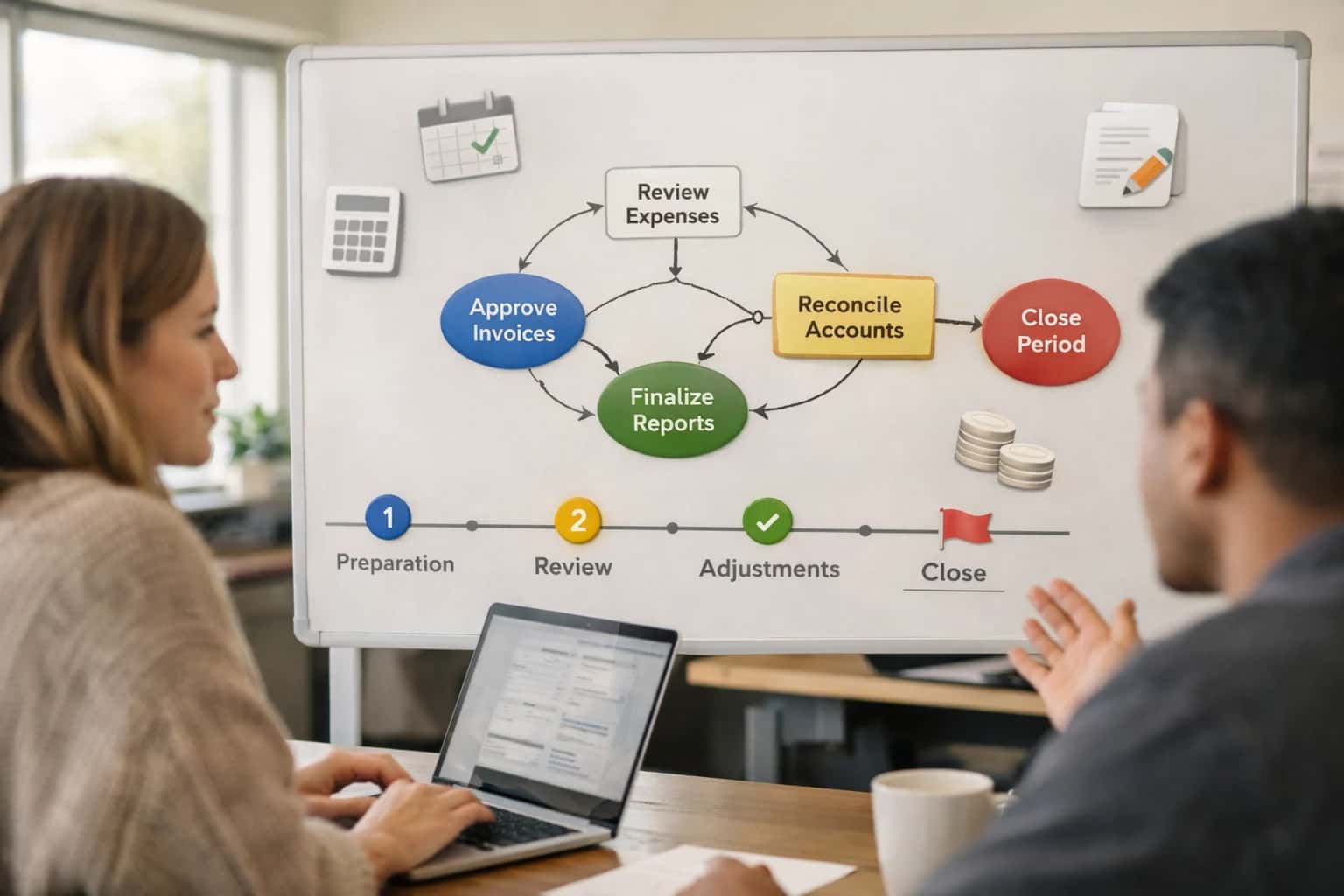
ARCHITECTURE AND ROLLOUT
Where AI Fits into Fonteva Financial Operations
A practical blueprint for integrating AI into Fonteva's Salesforce-native financial modules to automate reporting, explain variances, and accelerate the month-end close.
Implementation typically involves a middleware layer (like a secure queue or webhook) that listens for Fonteva data events or runs on a cron schedule. The AI service queries the Salesforce Data Cloud or direct APIs to fetch transaction summaries, member segment data, and historical trends. Using a Retrieval-Augmented Generation (RAG) pattern grounded in your chart of accounts and past board reports, it generates narrative commentary—explaining, for instance, why 'Q3 Sponsorship Revenue is 15% below forecast, driven by lower-tier renewals in the Southwest region.' This draft is then routed via Salesforce Flow for finance manager approval, audit logging each step, before being pushed to dashboards in Tableau CRM or a board portal.
Rollout should be phased, starting with a single report stream like monthly dues reconciliation. Governance is critical: establish a review panel for AI-generated commentary before production use, implement strict RBAC so the AI only accesses aggregated financial data, and maintain a human-in-the-loop for all journal entry adjustments. This approach reduces the manual compilation of board reports from days to hours, provides consistent, data-driven explanations for variances, and allows finance teams to shift from data gathering to strategic analysis. For related architectural patterns, see our guide on AI Integration for Fonteva Dues Processing.
FINANCIAL REPORTING AUTOMATION
Key Fonteva Modules and Data Surfaces for AI Integration
Billing & Invoicing
This module houses the core transactional data for dues, event fees, and sponsorship charges. AI integration here focuses on automating the narrative around financial performance. By connecting to the Invoice, Payment, and Payment Method objects, an AI agent can:
- Generate commentary on monthly revenue trends, comparing actuals to forecasts.
- Explain variances by analyzing payment method adoption (e.g., "ACH revenue up 15% this quarter").
- Automate reconciliation summaries, flagging discrepancies between Fonteva invoices and integrated payment gateway records for staff review. This surface provides the raw, transaction-level data required for AI to build accurate, line-item-aware financial narratives.
Fonteva + AI
High-Value Financial Reporting Use Cases
AI integration transforms Fonteva's financial data into actionable intelligence, automating consolidation, commentary, and variance analysis for association finance teams.
01
Automated Board & Committee Financial Packets
AI agents query Fonteva GL, membership, and event modules to auto-generate monthly/quarterly financial packets. They pull dues, sponsorship, and event revenue, calculate variances against budget, and draft narrative explanations for trends, flagged for CFO review.
Hours -> Minutes
Packet assembly
02
Dues Revenue Forecasting & Anomaly Detection
Builds predictive models on Fonteva membership and payment history to forecast future dues cash flow. AI monitors daily receipts against projections, alerting finance to unexpected drops or surges with suggested causes (e.g., a large chapter lapse, bulk payment).
Proactive Alerts
Anomaly detection
03
Event & Sponsorship Profitability Analysis
AI consolidates cost data from vendor bills (in AP) and revenue from Fonteva Events/Sponsorship modules to calculate real-time event P&L. It generates post-event summaries highlighting most profitable tiers, sponsor ROI, and recommendations for future pricing.
Real-time P&L
Event analytics
04
Audit & Compliance Documentation Workflow
For annual audits, AI agents extract and organize transaction samples, approval trails, and revenue recognition schedules from Fonteva records. They pre-populate auditor request lists and generate supporting documentation packets, cutting prep time significantly.
1-2 Weeks Saved
Audit prep
05
Departmental & Chapter Financial Dashboards
Creates AI-powered, natural-language dashboards for department heads and chapter leaders. Users can ask, "What was my Q3 marketing spend vs. budget?" and get an answer pulled live from Fonteva, with commentary on key variances, decentralizing finance insights.
Self-Service
Department reporting
06
Cash Flow & Working Capital Intelligence
AI synthesizes data from Fonteva AR, AP, and deferred revenue schedules to produce a 13-week rolling cash flow forecast. It identifies potential shortfalls, suggests timing for large dues invoicing runs, and models the impact of early payment discount campaigns.
Rolling Forecast
Cash flow visibility
Fonteva + AI Implementation Patterns
Example AI-Powered Financial Reporting Workflows
These workflows illustrate how AI agents can automate the consolidation, analysis, and narrative generation for association financial reporting, pulling data from Fonteva's Salesforce-native objects and integrated systems.
Trigger: Scheduled job runs on the 3rd business day of each month after nightly financial syncs.
Data Context:
- Pulls summarized revenue data from Fonteva
Opportunityobjects (filtered by Record Type: Dues, Sponsorship, Event). - Retrieves membership counts and tier distribution from
Membership__ccustom objects. - Fetches prior period and budget figures from integrated budgeting tool (e.g., Adaptive Insights) via API.
AI Agent Action:
- The agent receives a structured payload with key metrics (e.g.,
total_dues_revenue,new_member_count,churn_rate,sponsorship_vs_forecast). - Using a configured prompt, the LLM generates a 3-paragraph narrative summary highlighting:
- Top-line performance vs. budget and prior year.
- Notable variances (e.g., "Sponsorship revenue exceeded forecast by 15%, driven by Q4 conference packages").
- Contextual insights (e.g., "Member retention rate dipped slightly in the Silver tier, correlating with lower event attendance in that segment").
System Update:
- The generated commentary is posted as a rich-text update to a designated
Financial_Dashboard__crecord in Salesforce. - An alert is posted to the #finance Slack channel with the summary and a link to the dashboard.
Human Review Point: The Finance Director reviews the AI-generated commentary each month before the report is distributed to the board. They can edit directly in the dashboard record.
BUILDING A PRODUCTION-READY FINANCIAL INTELLIGENCE LAYER
Implementation Architecture: Data Flow and System Boundaries
A practical architecture for injecting AI-driven financial commentary into Fonteva's reporting workflows without disrupting core operations.
The integration connects at three primary surfaces within the Fonteva platform: the General Ledger (GL) and Transaction objects for raw revenue data, the Event Management and Sponsorship modules for activity-based income, and the Membership Billing objects for dues and recurring revenue streams. An orchestration agent, typically deployed as a serverless function or containerized service, polls these objects via the Fonteva API on a scheduled basis (e.g., nightly). It extracts key metrics—such as Total_Dues_Collected, Event_Net_Revenue, Sponsorship_YTD—and joins them with contextual metadata like Fiscal_Period and Chapter_or_Segment. This consolidated payload is sent to a secure inference endpoint hosting a financial language model, which is prompted to generate narrative commentary explaining variances, trends, and anomalies against budget or prior period.
Generated insights are written back to a dedicated AI_Financial_Commentary__c custom object in Fonteva's underlying Salesforce org, linked to the relevant fiscal period record. This creates a full audit trail and allows for human review and editing by the finance director before publication. For dashboards, a Lightning Web Component or embedded analytics tile queries this object to display the AI-generated narrative alongside traditional charts. Governance is enforced through a simple approval workflow: new commentary records are created with a "Draft" status, triggering a notification to the designated financial controller for review and approval before being marked "Published" and visible in executive dashboards.
Rollout should follow a phased approach: start with a single revenue stream (e.g., dues automation) and a single consumer (e.g., the CFO's dashboard). Use this pilot to validate data accuracy, tone, and usefulness of the commentary. Key technical considerations include implementing idempotency in the data extraction job to handle partial failures, setting strict rate limits on API calls to avoid impacting Fonteva performance, and maintaining a prompt library with version control to iteratively improve the model's output based on user feedback. The entire flow should be monitored for data drift—if underlying transaction patterns change significantly, the AI's explanations may require prompt tuning.
AI-ENHANCED FINANCIAL REPORTING
Code and Payload Examples
Retrieving and Structuring Transactional Data
The first step is programmatically extracting General Ledger (GL) data from Fonteva's Salesforce objects for AI processing. This involves querying the Fin_GL_Transaction__c and related Fin_GL_Account__c objects, then enriching records with contextual metadata from membership (Membership__c) and event (Event__c) objects to provide the AI with operational context.
python# Example: Python function to fetch and prepare GL data for AI analysis import pandas as pd from simple_salesforce import Salesforce def fetch_fonteva_gl_data(sf, start_date, end_date): """ Fetches GL transactions and joins with related membership/event data. Returns a structured DataFrame for AI processing. """ soql = f""" SELECT Id, Transaction_Date__c, Amount__c, Debit_Credit__c, Fin_GL_Account__r.Name, Fin_GL_Account__r.Account_Type__c, Membership__r.Name, Membership__r.Member_Tier__c, Event__r.Name, Event__r.Event_Type__c FROM Fin_GL_Transaction__c WHERE Transaction_Date__c >= {start_date} AND Transaction_Date__c <= {end_date} AND Amount__c != null ORDER BY Transaction_Date__c LIMIT 1000 """ records = sf.query_all(soql)['records'] df = pd.DataFrame(records) # Flatten nested dictionary fields df['GL_Account'] = df['Fin_GL_Account__r'].apply(lambda x: x.get('Name') if x else None) df['Member_Tier'] = df['Membership__r'].apply(lambda x: x.get('Member_Tier__c') if x else None) return df
This structured payload allows the AI to correlate financial figures with member segments and event types, forming the basis for intelligent commentary.
FINANCIAL REPORTING AUTOMATION
Realistic Time Savings and Business Impact
How AI integration transforms manual financial reporting in Fonteva, consolidating data from membership dues, events, and sponsorships to produce dashboards with automated narrative analysis.
| Financial Reporting Task | Before AI Integration | After AI Integration | Operational Notes |
|---|---|---|---|
Monthly Dues Revenue Report | 2-3 hours manual data pull and commentary | 15-20 minutes for automated generation and variance explanation | AI queries Fonteva billing objects, GL data, and payment gateways |
Event P&L Analysis (per major event) | Next-day manual spreadsheet assembly | Same-day automated dashboard with margin commentary | Integrates Fonteva Events, registration fees, and expense data |
Sponsorship Fulfillment & ROI Report | Quarterly manual audit, 1-2 days | Ongoing automated tracking with monthly summaries | AI matches sponsor commitments in Fonteva to delivered benefits and attendee leads |
Board Financial Package Preparation | 8-10 hours consolidating slides and narratives | 2-3 hours reviewing and refining AI-generated report | AI drafts narrative from data, highlighting trends and anomalies for finance review |
Annual Budget vs. Actual Variance Analysis | Week-long process during close | Preliminary analysis available within 1 day of period close | AI flags significant variances (>10%) and suggests causes based on member activity data |
Ad-hoc Financial Inquiry (e.g., 'Q3 dues by chapter') | 30-60 minutes to build report | Natural language query returns answer in <1 minute | Empowers non-technical staff with conversational analytics on live Fonteva data |
Audit Support Documentation | Manual tracing of transactions for sample | AI pre-fills sample documentation with relevant transaction trails | Reduces prep time for auditors; human verification of AI output required |
IMPLEMENTING AI FOR FINANCIAL REPORTING
Governance, Security, and Phased Rollout
A secure, governed approach to deploying AI for automated financial commentary and dashboarding in Fonteva.
Production AI integrations for financial reporting require strict controls over data access and model behavior. In Fonteva, this means implementing role-based access (RBAC) at the Salesforce object level, ensuring AI agents and workflows only query the specific General Ledger, Invoice, Payment, and Event Revenue objects necessary for a given report. All data flows are logged to a secure audit trail, and prompts are engineered to prevent the generation of speculative or ungrounded financial narratives, ensuring all commentary is directly traceable to source records in Fonteva and integrated systems like payment gateways.
A phased rollout mitigates risk and builds confidence. A typical implementation starts with a read-only pilot for the finance team, where an AI agent generates draft commentary for a single revenue stream (e.g., membership dues) on a weekly internal dashboard. This allows validation of accuracy and tone before any automated distribution. Phase two expands to multi-stream analysis (adding events, sponsorships) and integrates the output into scheduled board report packages. The final phase introduces predictive elements, such as AI-highlighted variances against forecast, with clear human-in-the-loop approval steps before inclusion in external-facing materials.
Governance is maintained through a centralized prompt registry and regular output reviews. Financial prompts are version-controlled and tested against historical data to ensure consistent, compliant language. The system is designed for explainability: any AI-generated insight in a dashboard can be clicked to reveal the underlying Fonteva records and the logic used. This controlled, incremental approach, managed by our integration architects, ensures the AI augments the finance team's workflow without introducing compliance or reputational risk.
Enabling Efficiency, Speed & Accuracy
Intelligent Analysis, Decision & Execution
We build AI systems for teams that need search across company data, workflow automation across tools, or AI features inside products and internal software.
Talk to Us
Search across company data
Give teams answers from docs, tickets, runbooks, and product data with sources and permissions.
Useful when people spend too long searching or get different answers from different systems.
Enterprise searchRAGPermissions
Read more
Automate internal workflows
Use AI to route work, draft outputs, trigger actions, and keep approvals and logs in place.
Useful when repetitive work moves across multiple tools and teams.
AI agentsWorkflow automationGovernance
Read more
Add AI to products and internal tools
Build assistants, guided actions, or decision support into the software your team or customers already use.
Useful when AI needs to be part of the product, not a separate tool.
AI integrationDecision supportModel routing
Read moreIMPLEMENTATION DETAILS
Frequently Asked Questions for Technical Buyers
Practical questions for teams evaluating AI integration with Fonteva to automate financial reporting and dashboard commentary.
The integration uses a secure, service-account-based architecture with OAuth 2.0 or named credentials in Salesforce (Fonteva's native platform).
- Data Access Layer: A dedicated middleware service (or Salesforce Apex class) is provisioned with least-privilege access to specific Fonteva objects:
npe01__OppPayment__c(payments),OrderApi__Sales_Order__c(orders/invoices),OrderApi__Revenue_Schedule__c(revenue recognition), and related GL account mappings. - Consolidation Logic: This service runs on a scheduled basis (e.g., nightly) or is triggered by payment/post events. It:
- Pulls raw transactional data from Fonteva.
- Ingests data from configured external systems (e.g., merchant processors, event platforms) via their APIs.
- Normalizes and joins data on common keys (Member ID, Order ID).
- Outputs a clean, time-series dataset to a secure cloud storage (e.g., S3 bucket) or a dedicated Salesforce data extension object.
- Security & Compliance: All data in transit is encrypted (TLS 1.2+). Access is logged and auditable. The AI model is invoked via a secure API call, passing only the necessary aggregated dataset—never live, direct database queries. For a deeper look at secure data orchestration patterns, see our guide on AI-ready data synchronization.

About the author
Prasad Kumkar
CEO & MD, Inference Systems
Prasad Kumkar is the CEO & MD of Inference Systems and writes about AI systems architecture, LLM infrastructure, model serving, evaluation, and production deployment. Over 5+ years, he has worked across computer vision models, L5 autonomous vehicle systems, and LLM research, with a focus on taking complex AI ideas into real-world engineering systems.
His work and writing cover AI systems, large language models, AI agents, multimodal systems, autonomous systems, inference optimization, RAG, evaluation, and production AI engineering.
LinkedIn
Limited slotsGet a Free AI Consultation
Partnered with leading AI, data, and software stack.





How We Work
Custom AI workflows for your Business
One-fit-all AI don't work for modern businesses. At Inferensys, we aim to understand your business & custom requirements; which we use to define most efficient agentic workflows, the data, and the tools for your business.
01
Review the use case
We understand the task, the users, and where AI can actually help.
Read more02
Pick the right approach
We define what needs search, automation, or product integration.
Read more03
Build the first useful version
We implement the part that proves the value first.
Read more04
Improve from there
We add the checks and visibility needed to keep it useful.
Read moreThe first call is a practical review of your use case and the right next step.
Talk to Us