AI integration for Fonteva Abstract Management targets three core surfaces: the submission portal, the reviewer workspace, and the program committee dashboard. The primary data objects are the Abstract__c record (with fields for title, description, keywords, author bios, and attachments) and the Review__c junction object linking reviewers to submissions. An AI layer can be injected via Salesforce Flows, Apex triggers, or external microservices calling Fonteva's APIs to process this data, enabling initial plagiarism checks, automated keyword tagging, and blind-review formatting before submissions enter the manual workflow.

Integration
AI Integration with Fonteva for Abstract Management
Automate conference submission review, session grouping, and feedback drafting by integrating AI directly with Fonteva's abstract module. Reduce planning cycles from weeks to days.
ARCHITECTURE & ROLLOUT
Where AI Fits in Fonteva Abstract Management
A practical blueprint for integrating AI into Fonteva's abstract submission and review workflows to accelerate conference planning.
High-value use cases include reviewer matching, where an AI agent analyzes an abstract's text and metadata to suggest the top 3 qualified reviewers from a Fonteva Contact list based on past review history and self-declared expertise. Another is feedback drafting, where after reviewers submit scores and comments, an LLM synthesizes a cohesive, professional acceptance or rejection letter, pulling specific strengths and weaknesses from the Review__c comments. This turns a multi-day coordination task into a same-day process. Implementation typically involves a secure queue (like Salesforce Platform Events or an external message broker) to handle submission webhooks, a vector store to index reviewer profiles and past abstracts for semantic matching, and a human-in-the-loop approval step for the AI's suggestions before any communications are sent.
Rollout should start with a single-track conference as a pilot. Governance is critical: all AI-generated content must be logged in a custom AI_Audit_Log__c object tied to the abstract record, and final communications should require a program chair's approval via a Fonteva Lightning component or approval process. This ensures quality control and allows the model to learn from overrides. For associations managing multiple events, this architecture scales by using Fonteva's built-in data segregation (like Event__c relationships) to keep AI workflows and training data isolated per conference or community.
This approach is credible because it treats AI as a force multiplier for your existing Fonteva investment, not a replacement. It automates the tedious, time-consuming parts of abstract management—matching, formatting, and drafting—while keeping human experts firmly in the loop for final curation and decision-making. The result is a faster, more consistent review cycle that allows your committee to focus on strategic program building rather than administrative logistics. For a deeper dive into orchestrating these multi-step AI agents within the Salesforce platform, see our guide on AI Agent Builder and Workflow Platforms.
ABSTRACT MANAGEMENT
Fonteva Surfaces and APIs for AI Integration
Core Data Model for AI
AI integration for abstract management connects primarily to Fonteva's custom objects within its Salesforce-native architecture. The key objects are:
- Abstract Submission (
Fonteva_Abstract__c): Contains the core proposal: title, description, keywords, track, speaker bios, and learning objectives. This is the primary source for AI analysis. - Reviewer Assignment (
Fonteva_Review_Assignment__c): Links reviewers to submissions. AI can optimize this matching based on reviewer expertise profiles stored in Contact or custom objects. - Review Score (
Fonteva_Review_Score__c): Stores individual scores and comments. AI can synthesize these into cohesive feedback. - Session (
Fonteva_Session__c): The accepted output. AI can suggest groupings of accepted abstracts into coherent sessions.
Integration points are the standard and custom REST/SOAP APIs exposed by these objects, allowing AI agents to query, create, and update records throughout the review lifecycle.
FONTEVA INTEGRATION PATTERNS
High-Value AI Use Cases for Abstract Management
Integrate AI directly into Fonteva's abstract submission and review workflows to reduce manual effort, improve reviewer consistency, and accelerate the conference planning cycle from months to weeks.
01
Automated Submission Triage & Plagiarism Check
An AI agent reviews incoming abstracts as they hit the Fonteva submission object. It performs an initial plagiarism and similarity check against past conference proceedings, flags incomplete submissions for staff, and routes clean abstracts to the appropriate track based on keywords and topic modeling.
Batch -> Real-time
Review workflow
02
Blind Reviewer Matching & Assignment
Instead of manual assignment, AI analyzes reviewer profiles (past reviews, published work) and abstract content to suggest optimal matches. It ensures expertise alignment, avoids conflicts of interest, and balances workload across the committee, pushing assignments directly to reviewer dashboards in Fonteva.
1 sprint
Setup time
03
AI-Generated Review Summaries & Feedback Drafts
After reviewers submit scores and comments, an AI agent synthesizes all feedback for each abstract. It generates a cohesive summary for the program chair, drafts templated acceptance/rejection/revision letters with personalized reasoning, and prepares data for the post-review debrief meeting.
Hours -> Minutes
Feedback compilation
04
Session Grouping & Agenda Drafting
Once abstracts are accepted, AI analyzes the full set to identify thematic clusters and suggest logical session groupings. It can propose session titles, draft cohesive descriptions from the accepted abstracts, and generate a preliminary agenda structure within Fonteva Events, ready for chair refinement.
Days -> Hours
Agenda planning
05
Real-Time Q&A for Submitters & Reviewers
Deploy an AI chatbot embedded in the Fonteva abstract portal to answer common procedural questions from submitters and reviewers. It pulls context from Fonteva records (deadlines, submission status, review guidelines) to deflect support tickets and provide 24/7 assistance, logging all interactions back to the relevant abstract record.
Same day
Deflection starts
06
Post-Review Analytics & Insights Generation
After the review cycle closes, AI analyzes scoring patterns, reviewer consistency, and submission trends. It generates an insights report for the program committee, highlighting potential bias, topic gaps, reviewer performance, and recommendations for improving next year's call for papers—all surfaced within a Fonteva dashboard.
Batch -> Real-time
Analytics delivery
CONFERENCE PLANNING AUTOMATION
Example AI-Powered Abstract Workflows
These workflows illustrate how AI agents can be integrated with Fonteva's abstract management module to automate the submission-to-acceptance pipeline, reduce reviewer burden, and accelerate conference program development.
Trigger: A new abstract is submitted via the Fonteva portal.
AI Agent Action:
- Extracts the abstract text, title, keywords, and author metadata from the Fonteva
Abstract__cobject. - Runs a series of initial checks:
- Plagiarism/Similarity Check: Compares against a vector database of past conference proceedings.
- Compliance Check: Validates the submission against basic conference guidelines (word count, required sections, topic relevance) using a rules engine.
- Initial Categorization: Uses a classification model to tag the abstract with suggested tracks and session types (e.g., 'Research Paper', 'Case Study', 'Poster').
- System Update: The AI agent updates the Fonteva abstract record with:
- A
Screening_Status__c(e.g., 'Passed', 'Flagged for Manual Review'). - Suggested
Track__candSession_Type__cvalues. - A confidence score and brief rationale.
- A
Human Review Point: Submissions flagged for plagiarism or guideline violations are routed to a 'Screening' queue for a program chair. All others proceed automatically to the reviewer matching phase.
A PRODUCTION-BLUE PRINT FOR FONTEVA
Implementation Architecture: Data Flow and Guardrails
A secure, governed architecture for integrating AI into Fonteva's abstract management workflows, from submission to decision.
The integration is anchored on Fonteva's Abstract Submission object and its related Reviewer Assignment records. Upon a new submission, a webhook triggers an AI workflow that performs three parallel tasks: 1) a plagiarism and policy compliance check against a corpus of past abstracts, 2) semantic analysis to extract key topics, methodologies, and outcomes for tagging, and 3) generation of a blind summary for initial reviewer distribution. All AI outputs are written back to custom fields on the Abstract object, maintaining a clear audit trail within the native Fonteva data model.
For the review phase, a RAG-powered agent assists reviewers. It retrieves similar past abstracts and scoring rubrics from a vector database (e.g., Pinecone) indexed with your historical conference data. The agent can answer reviewer questions in context and draft initial feedback paragraphs, which the human reviewer can edit and approve. The final accept/reject decision and feedback are posted back to Fonteva, triggering the next automation step: personalized communication to the submitter via Fonteva's email tools or community portal.
Governance is built-in. Every AI-suggested score or piece of feedback is logged with a confidence score and can be flagged for human-in-the-loop review. A separate dashboard monitors for model drift in scoring patterns or topic emergence. Access to the AI tools is controlled via Fonteva's existing role-based permissions, ensuring only assigned reviewers and program chairs can use the copilot features. This architecture reduces the abstract review cycle from weeks to days while keeping program chairs firmly in control of the final scientific program.
AI-ENHANCED ABSTRACT WORKFLOWS
Code and Payload Examples
Automating Initial Submission Checks
When an abstract is submitted via the Fonteva API, an AI agent can perform immediate quality and compliance checks before human review begins. This workflow typically listens for a POST to the abstract submission endpoint, extracts the text, and calls a classification model.
Example Payload for AI Pre-Screen:
json{ "submission_id": "ABS-2024-78910", "title": "The Impact of Virtual Networking on Conference Engagement", "abstract_text": "This study examines quantitative data from 3 major association conferences...", "track": "Event Technology", "author_bios": ["Dr. Jane Smith, PhD in Organizational Behavior"] }
The AI service returns a structured assessment:
completeness_score: 0.92predicted_track_match: "Event Technology"- `flags": ["contains_contact_info", "exceeds_word_limit"] This allows staff to auto-reject incomplete submissions or route them for author corrections, saving hours of manual triage.
Fonteva Abstract Management Workflows
Realistic Time Savings and Operational Impact
This table illustrates the operational impact of integrating AI agents into Fonteva's abstract and conference module, focusing on time savings, workflow acceleration, and staff role evolution.
| Workflow Stage | Before AI | After AI | Implementation Notes |
|---|---|---|---|
Submission Intake & Triage | Manual download, format check, and spreadsheet logging (2-4 hours per batch) | Automated validation, PDF extraction, and data entry into Fonteva objects (15-20 minutes per batch) | AI parses PDFs/forms, checks for required fields, and creates Fonteva Abstract records via API |
Blind Reviewer Matching | Committee lead manually assigns based on keyword scanning and past experience (3-5 hours for 200+ submissions) | AI suggests 3-5 optimal reviewers per abstract based on semantic analysis of submission text and reviewer expertise profiles (1 hour for setup and review) | Human lead retains final approval; system learns from past assignment corrections |
Initial Plagiarism & Compliance Check | Ad-hoc spot checks or external service with manual review (Next day) | Automated scan against known sources and conference archives upon submission (Real-time, flagged for committee) | Flags provided as a risk score within the Fonteva abstract record for committee decision |
Drafting Reviewer Feedback & Scores | Reviewers write free-form comments; chair consolidates (1-2 hours per accepted/rejected abstract) | AI generates first-draft feedback summaries from reviewer comments, suggests common themes for acceptance letters (30 minutes consolidation) | Chairs edit and personalize AI-drafted communications; ensures consistency and reduces cognitive load |
Session Grouping & Agenda Building | Manual clustering of accepted abstracts into sessions based on title and track (4-8 hours) | AI suggests thematic session groupings and proposes titles based on abstract content analysis (1-2 hours with chair override) | Integrates with Fonteva Events module to auto-create session records and speaker assignments |
Communications (Accept/Reject/Revision) | Manual mail merge from templates, prone to errors and personalization limits (1 day) | Bulk generation of personalized emails with specific feedback pulled from review forms (2-3 hours for entire batch) | Leverages Fonteva's communication tools; all correspondence logged to member records |
Post-Deadline Analysis & Reporting | Manual compilation of submission stats, reviewer workload, and diversity metrics for board report (1-2 days) | Automated dashboard with AI-generated narrative on trends, reviewer performance, and geographic spread (1-2 hours) | Report auto-generated within Fonteva analytics; enables data-driven planning for next cycle |
PRODUCTION ARCHITECTURE FOR CONFERENCE PLANNING
Governance, Security, and Phased Rollout
A secure, governed implementation ensures AI augments the abstract review process without disrupting Fonteva's core workflows or data integrity.
AI integration with Fonteva's abstract management module connects at the API layer, treating the platform as the system of record. The typical architecture involves a secure middleware service that listens for webhooks on new Abstract Submission object creation. This service retrieves submission text, author metadata, and reviewer assignments via the Fonteva API, processes them through a governed LLM pipeline, and writes structured outputs—like blind-review scores, suggested thematic Session groupings, and draft feedback—back to custom fields or related Review Note objects. All AI-generated content is tagged with a source flag and version hash, maintaining a clear audit trail within Fonteva's native history tracking.
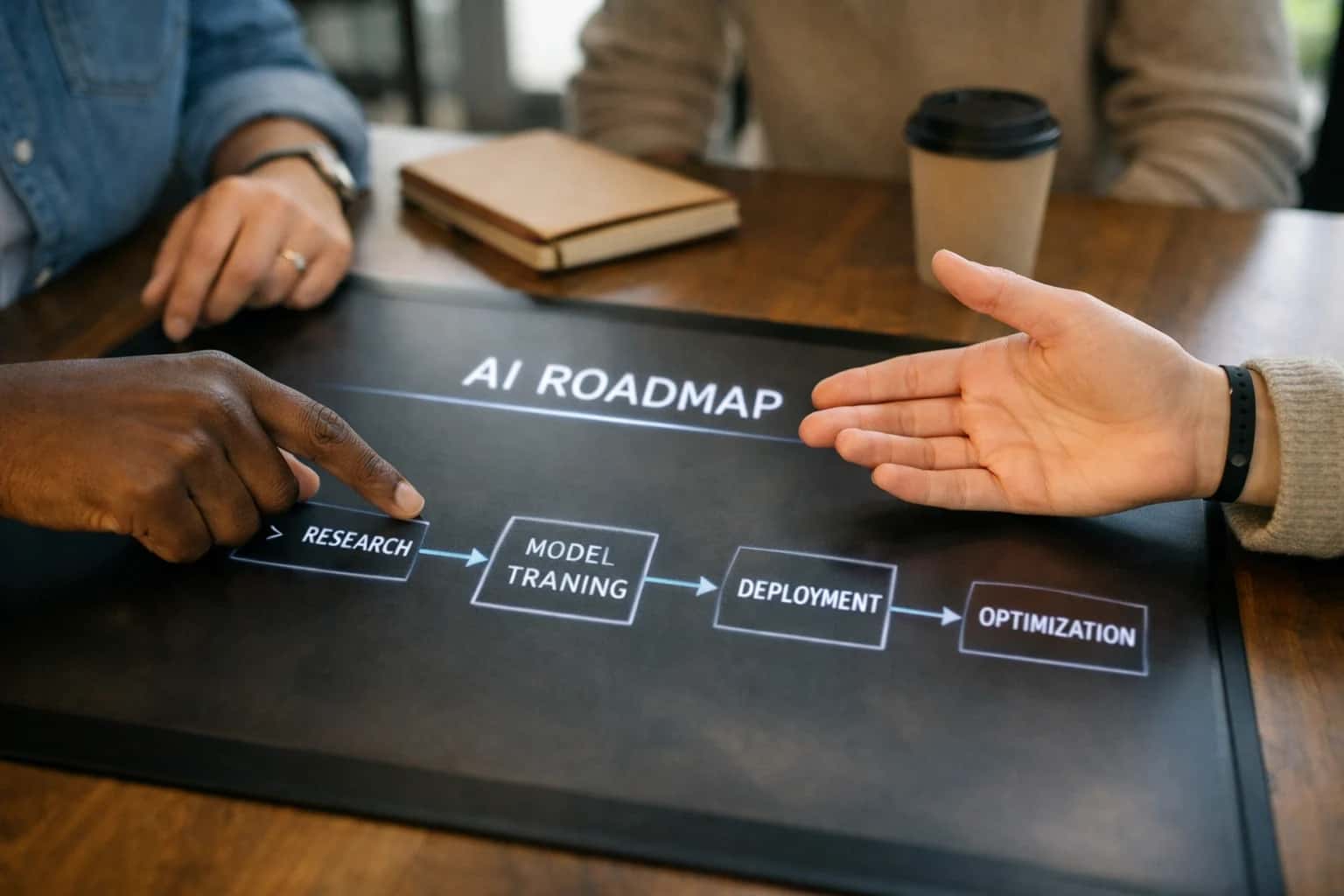
A phased rollout mitigates risk and builds trust. Phase 1 (Pilot) enables AI to generate blind-review summaries and plagiarism checks for a single conference track, with all outputs requiring mandatory reviewer approval before being visible to chairs. Phase 2 (Assisted Workflow) expands to suggest session groupings and draft acceptance/rejection letters, automating the creation of Communication Template drafts that chairs can edit and send. Phase 3 (Optimization) introduces predictive analytics, using historical submission and review data to recommend reviewer assignments and flag potential conflicts of interest, all surfaced within custom Fonteva dashboard components.
Governance is enforced through role-based access control (RBAC) aligned with Fonteva's existing Permission Sets. Only users with 'Conference Chair' or 'Program Admin' roles can activate or modify AI workflows. All prompts and data processing rules are version-controlled in a separate configuration layer, allowing for audit and rollback. Data never leaves your controlled environment for model training, and submissions are processed in-memory to avoid persistent storage outside of Fonteva. This approach ensures compliance with association data policies while delivering concrete time savings—reducing the manual triage and grouping phase from weeks to days.
Enabling Efficiency, Speed & Accuracy
Intelligent Analysis, Decision & Execution
We build AI systems for teams that need search across company data, workflow automation across tools, or AI features inside products and internal software.
Talk to Us
Search across company data
Give teams answers from docs, tickets, runbooks, and product data with sources and permissions.
Useful when people spend too long searching or get different answers from different systems.
Enterprise searchRAGPermissions
Read more
Automate internal workflows
Use AI to route work, draft outputs, trigger actions, and keep approvals and logs in place.
Useful when repetitive work moves across multiple tools and teams.
AI agentsWorkflow automationGovernance
Read more
Add AI to products and internal tools
Build assistants, guided actions, or decision support into the software your team or customers already use.
Useful when AI needs to be part of the product, not a separate tool.
AI integrationDecision supportModel routing
Read moreIMPLEMENTATION DETAILS
Frequently Asked Questions
Practical questions for teams planning to integrate AI with Fonteva's abstract management module for conference planning.
The integration typically connects at the API layer after an abstract is submitted. Here’s a common workflow:
- Trigger: A new abstract submission is created in the Fonteva
Abstract__cobject. - Context Pull: An AI agent is triggered via a Fonteva Flow or external webhook. It retrieves the submission text, author bios, keywords, and track/category assignments.
- AI Action: The abstract text is processed for:
- Initial Screening: Checking for completeness against submission guidelines.
- Blind Review Preparation: Redacting author-identifying information from the text copy.
- Topic Tagging: Suggesting additional relevant keywords or sub-topics for better reviewer matching.
- System Update: The AI agent writes back suggestions and tags to custom fields on the
Abstract__crecord (e.g.,AI_Readiness_Score__c,AI_Suggested_Keywords__c). - Human Review: The program chair reviews the AI's suggestions and tags before officially assigning reviewers.
This keeps Fonteva as the system of record while adding AI-assisted efficiency to the initial processing stage.

About the author
Prasad Kumkar
CEO & MD, Inference Systems
Prasad Kumkar is the CEO & MD of Inference Systems and writes about AI systems architecture, LLM infrastructure, model serving, evaluation, and production deployment. Over 5+ years, he has worked across computer vision models, L5 autonomous vehicle systems, and LLM research, with a focus on taking complex AI ideas into real-world engineering systems.
His work and writing cover AI systems, large language models, AI agents, multimodal systems, autonomous systems, inference optimization, RAG, evaluation, and production AI engineering.
LinkedIn
Limited slotsGet a Free AI Consultation
Partnered with leading AI, data, and software stack.





How We Work
Custom AI workflows for your Business
One-fit-all AI don't work for modern businesses. At Inferensys, we aim to understand your business & custom requirements; which we use to define most efficient agentic workflows, the data, and the tools for your business.
01
Review the use case
We understand the task, the users, and where AI can actually help.
Read more02
Pick the right approach
We define what needs search, automation, or product integration.
Read more03
Build the first useful version
We implement the part that proves the value first.
Read more04
Improve from there
We add the checks and visibility needed to keep it useful.
Read moreThe first call is a practical review of your use case and the right next step.
Talk to Us