Effective LLM deployment requires alignment across data science, engineering, product, and compliance teams. Weights & Biases (W&B) provides the central collaboration layer where this alignment happens. Key surfaces include W&B Projects for organizing experiments, W&B Reports for documenting findings and decisions, and W&B Dashboards for sharing live production metrics. This integration structures the handoff from exploratory sweeps for prompt optimization, to registered model versions in the W&B Model Registry, to operational dashboards monitoring latency and cost in production.

Integration
AI Integration with Weights and Biases Collaboration Features
Structure W&B projects, reports, and dashboards to facilitate cross-functional review of LLM experiments and production metrics between data science, engineering, product, and compliance teams.
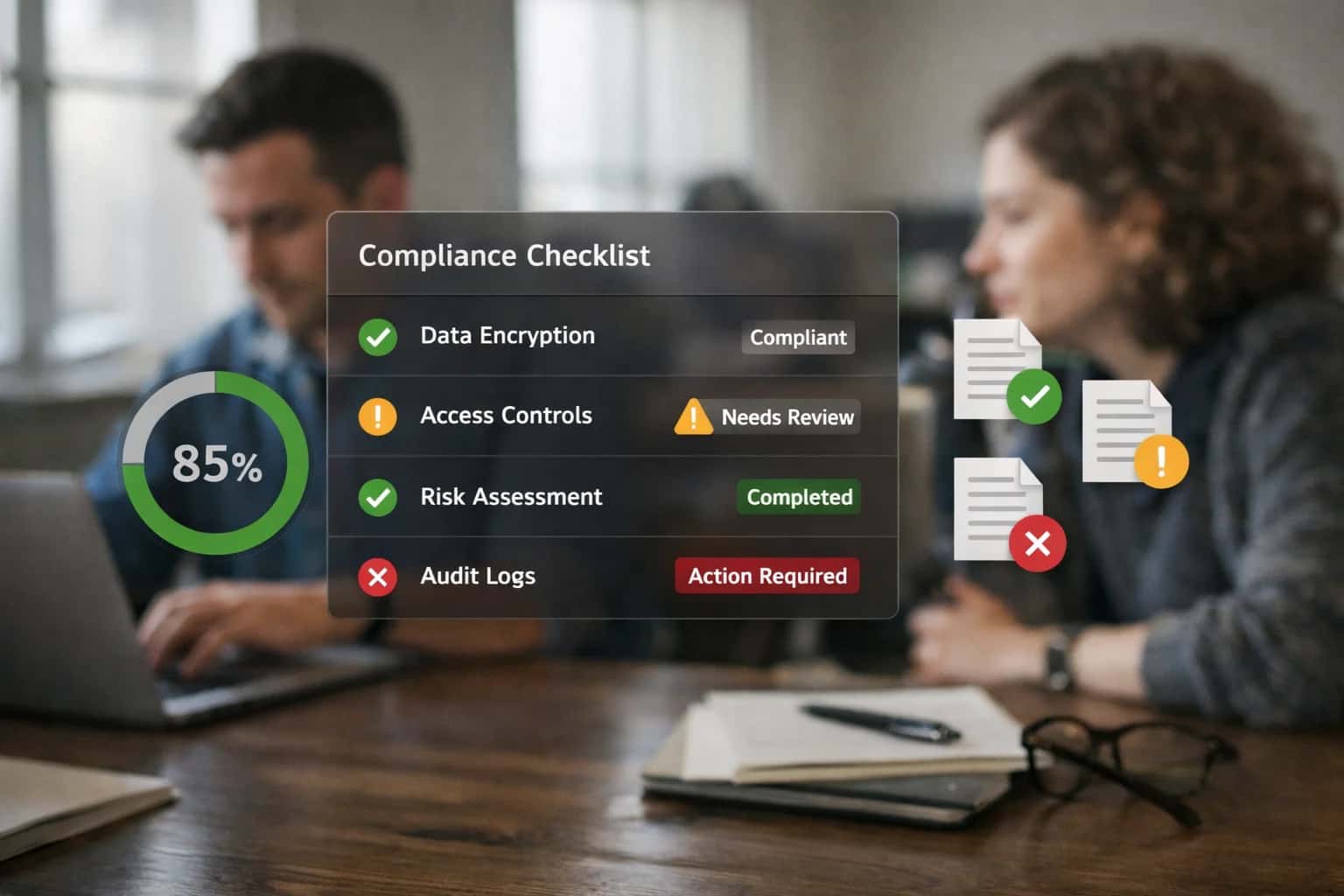
CROSS-FUNCTIONAL REVIEW WORKFLOWS
Where AI Collaboration Fits in the LLM Lifecycle
Integrating Weights & Biases collaboration features to structure the review, approval, and operational handoff of LLM experiments and production models.
A practical implementation wires W&B into your CI/CD and MLOps pipelines. For example, a LangChain-based application's evaluation runs can log metrics, prompts, and outputs directly to a W&B run using the SDK. That run is then linked to a W&B Report where product managers review response quality against business KPIs. Approved model versions are promoted within the W&B Model Registry, triggering a deployment pipeline (e.g., to SageMaker or vLLM) and automatically populating a W&B Dashboard with SLOs like p95 latency and token usage for the engineering on-call team.
Governance is enforced through W&B's RBAC and project permissions. Compliance officers can be granted read-only access to specific projects to audit experiment lineage, while data scientists have write access to create runs. The integration creates an immutable audit trail: every production prediction can be traced back to the exact model version, training data artifact, prompt template, and the W&B Report where it was approved. This structured workflow replaces ad-hoc model sharing and spreadsheet tracking, reducing the rollout time for new LLM features from weeks to days while maintaining rigorous oversight.
STRUCTURING PROJECTS, REPORTS, AND DASHBOARDS
Key W&B Surfaces for Cross-Functional Collaboration
Centralized Experiment Tracking for LLM Development
Structure W&B Projects as the single source of truth for all LLM experiments, from initial prompt engineering to fine-tuned model evaluation. Each Run should capture the full context: the exact prompt template, model parameters (provider, temperature, max tokens), retrieved context (for RAG), and the generated completion.
For cross-team review, enforce a tagging convention (e.g., team:data-science, use-case:support-copilot, phase:prompt-engineering) to allow filtering. Link runs to Jira tickets or GitHub commit SHAs via the config or tags. This creates an auditable lineage from a business requirement or bug report to the specific experiment that addressed it, enabling product and engineering stakeholders to trace decisions without digging through code.
CROSS-FUNCTIONAL LLM GOVERNANCE
High-Value Collaboration Use Cases
Weights & Biases transforms from a data science notebook tool into a collaborative system of record for LLM development and operations. These integration patterns structure W&B projects, reports, and dashboards to align data science, engineering, product, and compliance teams around shared metrics and review workflows.
01
Prompt Engineering Review Workflows
Structure W&B projects to track prompt template versions, A/B test results, and cost/latency metrics in dedicated reports. Engineering teams deploy versioned prompts via CI/CD, while product managers review performance dashboards to approve changes based on business KPIs like user satisfaction and conversion lift.
1 sprint
Review cycle
02
Model Promotion Governance
Use the W&B Model Registry as a governed promotion gate. Data scientists register fine-tuned adapters with evaluation scores. Compliance officers review linked risk assessments from integrated systems like Credo AI before approving the 'staging' alias. Engineering then automates deployment from the 'production' alias.
Batch -> Real-time
Approval visibility
03
Production Incident Triage
Link W&B experiment runs to live service dashboards in Arize AI or Datadog. When a performance alert fires, AIOps engineers can immediately pivot from the Arize alert to the exact W&B run containing the model version, training data snapshot, and hyperparameters used, accelerating root cause analysis across teams.
Hours -> Minutes
MTTR reduction
04
Executive Portfolio Reviews
Build consolidated W&B dashboards that aggregate cost, performance, and business impact metrics across all LLM applications. Finance tracks API spend per business unit. Product leadership reviews accuracy vs. latency trade-offs. CISO monitors security and compliance posture via integrated Credo AI scores.
Same day
Portfolio snapshot
05
Compliance Evidence Packaging
Automate the assembly of audit trails by treating W&B Artifacts (model weights, datasets, prompts) and linked reports as immutable evidence. Legal and compliance teams can generate packaged reports for regulators, tracing any production prediction back to its training data, code commit, and approval workflow within W&B's lineage view.
Days -> Hours
Evidence collection
06
Cross-Team Experiment Design
Facilitate collaborative LLM development by using W&B Sweeps to manage hyperparameter optimization for fine-tuning. Data scientists define the search space. ML engineers configure distributed GPU clusters. Product sets business-oriented objective functions (e.g., optimize for accuracy and latency). Results are logged to a shared project for joint analysis.
Parallel workflows
Team coordination
COLLABORATIVE LLM GOVERNANCE
Example Cross-Functional Workflows
These workflows demonstrate how to structure Weights & Biases projects, dashboards, and reports to facilitate review and decision-making across data science, engineering, product, and compliance teams, turning LLM experiments into governed production assets.
Trigger: A product manager creates a Jira ticket to test a new prompt for a customer support chatbot aimed at reducing escalations.
Context/Data Pulled:
- The engineering team creates a new W&B project
support-chatbot-prompt-v2. - The experiment run logs: the new prompt template, the base model (e.g.,
gpt-4-turbo), cost per query, latency, and the new evaluation metricescalation_ratederived from post-interaction surveys. - A linked dataset artifact in W&B contains the test set of 500 historical support conversations.
Model/Agent Action:
- An automated evaluation job uses an LLM-as-a-judge to score responses from the new prompt and the baseline for
escalation_likelihoodandcorrectness. - Results are logged to W&B as a summary table and interactive parallel coordinates plot comparing the two prompts.
System Update/Next Step:
- A W&B Report is generated, embedding key metrics, example conversations, and the cost/latency comparison.
- The report link is shared via a Slack webhook to a channel with the Product, Engineering, and Data Science leads.
- Stakeholders comment directly on the W&B report. Approval in the comments triggers a webhook that updates the Jira ticket and promotes the prompt template to a staging environment.
Human Review Point: Product and compliance leads review the example conversations in the W&B report for potential tone, accuracy, or liability issues before approving the staging deployment.
CROSS-FUNCTIONAL REVIEW WORKFLOWS
Implementation Architecture: Connecting Systems to W&B
A practical blueprint for structuring W&B projects, reports, and dashboards to enable governed, collaborative review of LLM experiments and production metrics across technical and business teams.
The core of this integration is structuring your Weights & Biases (W&B) workspace to mirror your organizational review processes. This means creating dedicated W&B Projects for each major LLM application (e.g., support_agent, document_summarizer) and using Artifacts to version not just model weights, but also the associated prompt templates, evaluation datasets, and vector store indexes. Within each project, Runs from development, staging, and production environments are tagged (e.g., env:prod, team:data_science) and linked via the Model Registry for clear lineage. The goal is to make any experiment or production inference traceable back to its exact code commit, training data, and configuration.
Collaboration is facilitated through W&B Reports and Dashboards. For weekly reviews, automated reports can aggregate key metrics—like cost per query, latency distributions, and evaluation scores from LLM-as-a-judge—across the latest production model versions. Cross-functional teams (Product, Compliance, Engineering) use shared, interactive dashboards to slice performance by segment (e.g., by user cohort or query intent) without needing to write code. W&B Sweeps for hyperparameter optimization or prompt A/B testing are configured with business-defined objectives (balancing accuracy with latency/cost), and their results are automatically logged to the relevant project, creating a centralized decision log for which configurations were tested and why.
Governance and rollout are enforced through W&B's API and webhook integrations. Promotion of a model from the registry to a production endpoint can trigger a webhook to your CI/CD system (e.g., GitHub Actions, Jenkins), requiring an associated W&B report showing it outperforms the baseline on key business metrics. Access is managed via W&B's RBAC and SSO, ensuring data scientists, ML engineers, and product managers only see projects relevant to their domain. Finally, custom alerting is set up by querying the W&B API for metric breaches (e.g., embedding drift score > threshold) and piping those alerts into existing channels like PagerDuty or Slack, ensuring the right team is notified for investigation.
AI INTEGRATION WITH WEIGHTS AND BIASES
Code and Configuration Patterns
Organizing W&B for Cross-Functional Review
Structure your W&B organization to mirror your team's operational model. Create separate projects for distinct LLM applications (e.g., support-agent, document-summarizer). Within each project, use experiment groups to organize runs by initiative, such as prompt-engineering, fine-tuning, or rag-evaluation. Assign tags like prod-candidate or needs-review to filter runs.
Configure team-level access controls using W&B's RBAC. Grant data scientists edit access for logging experiments, while providing product managers and compliance officers view access to dashboards and reports. Use the W&B API to automate project creation when a new LLM use case is registered in your internal ticketing system, ensuring governance from day one.
pythonimport wandb # Initialize a run within a structured project run = wandb.init( project="support-agent-q2", group="rag-optimization", tags=["prod-candidate", "needs-legal-review"], config={"model": "gpt-4", "chunk_size": 512} )
CROSS-FUNCTIONAL AI GOVERNANCE
Time Saved and Operational Impact
How structured collaboration in Weights & Biases accelerates LLM development cycles and reduces operational friction between data science, engineering, product, and compliance teams.
| Metric | Before AI Integration | After AI Integration | Notes |
|---|---|---|---|
Experiment Review & Approval | Manual email threads, spreadsheet tracking | Centralized W&B reports with inline comments | Stakeholder feedback consolidated in one system |
Model Promotion to Staging | Ad-hoc validation, manual registry updates | Automated gates based on W&B metrics & reports | Promotion requires linked experiment, evaluation dashboard, and sign-off |
Compliance Evidence Gathering | Weeks of manual documentation collection | Days via automated lineage from W&B runs & artifacts | Audit trail connects model version to data, code, and prompts |
Stakeholder Status Updates | Monthly slide deck preparation | Real-time W&B dashboards shared via link | Product & compliance teams self-serve metrics |
Root Cause Analysis for Performance Drop | Days correlating logs across systems | Hours drilling down in W&B to compare runs & segments | Integrated telemetry from training, evaluation, and inference |
New Team Member Onboarding | Weeks to understand project history | Days exploring W&B project lineage and reports | Historical context, decisions, and results are searchable |
Regulatory Framework Gap Assessment | Quarterly manual review by consultants | Continuous mapping via integrated Credo AI controls | W&B metrics provide evidence for control effectiveness |
STRUCTURING COLLABORATIVE LLMOPS
Governance, Security, and Phased Rollout
Implementing Weights & Biases for cross-functional AI review requires deliberate access controls, data handling, and a staged rollout to build trust and operational rigor.
A governed W&B integration starts with project and team structure. We map W&B organizations, teams, and projects to mirror your internal R&D and product groups, using SSO and RBAC to enforce least-privilege access. Data scientists may have write access to experiment runs, while engineering and compliance teams have read-only access to model registry entries and production dashboards. Sensitive metadata—like prompts containing PII or fine-tuning datasets—is stored in W&B Artifacts with strict access policies, ensuring experiment reproducibility without exposing raw data to unauthorized reviewers.
The rollout is phased to de-risk adoption. Phase 1 focuses on a single pilot team logging LLM experiments (prompts, completions, costs, latencies) to a dedicated W&B project, establishing baselines. Phase 2 integrates W&B's Model Registry with your CI/CD pipeline, gating promotions from development to staging based on evaluation metrics tracked in W&B Reports. Phase 3 scales to cross-functional use, where product managers and compliance officers access curated W&B Dashboards for weekly reviews of production LLM performance, cost trends, and A/B test outcomes, turning ad-hoc reviews into a structured, auditable process.
Security is woven into the workflow. We configure private W&B cloud instances or on-prem deployments for air-gapped environments, and integrate W&B's API logging with your SIEM (e.g., Splunk) to monitor for anomalous access. For audit trails, W&B's native lineage tracking—linking a production model prediction back to its exact training data, code commit, and prompt version—is supplemented with automated snapshot exports to your enterprise archive. This layered approach ensures collaborative visibility never compromises security or compliance, making W&B a trusted source of truth for AI governance across data science, engineering, and risk teams.
Enabling Efficiency, Speed & Accuracy
Intelligent Analysis, Decision & Execution
We build AI systems for teams that need search across company data, workflow automation across tools, or AI features inside products and internal software.
Talk to Us
Search across company data
Give teams answers from docs, tickets, runbooks, and product data with sources and permissions.
Useful when people spend too long searching or get different answers from different systems.
Enterprise searchRAGPermissions
Read more
Automate internal workflows
Use AI to route work, draft outputs, trigger actions, and keep approvals and logs in place.
Useful when repetitive work moves across multiple tools and teams.
AI agentsWorkflow automationGovernance
Read more
Add AI to products and internal tools
Build assistants, guided actions, or decision support into the software your team or customers already use.
Useful when AI needs to be part of the product, not a separate tool.
AI integrationDecision supportModel routing
Read moreIMPLEMENTATION AND GOVERNANCE
Frequently Asked Questions
Practical questions for teams integrating Weights & Biases to manage LLM development, collaboration, and production oversight.
Effective collaboration requires intentional project design.
- Project Hierarchy: Create a top-level W&B project for each major LLM application (e.g.,
support-agent-llm). Inside, use runs or sub-projects for distinct experiments (prompt variants, model comparisons, RAG configurations). - Report-Driven Reviews: Use W&B Reports to create living documents for stakeholder updates. Embed:
- For Data Science: Hyperparameter sweep results, loss curves, and evaluation metric comparisons.
- For Engineering: Latency vs. accuracy trade-off charts, token usage/cost trends, and model registry promotion status.
- For Product/Compliance: Business metric correlations (e.g., customer satisfaction score vs. prompt version), fairness dashboards, and sample input/output panels.
- Access Control: Leverage W&B's Team and Project-level permissions. Grant data scientists
editaccess for runs, while providing product managers and compliance officersviewaccess to specific reports and dashboards. - Integration Point: Automate report generation and sharing via the W&B API upon experiment completion or as part of a weekly CI/CD pipeline summary.

About the author
Prasad Kumkar
CEO & MD, Inference Systems
Prasad Kumkar is the CEO & MD of Inference Systems and writes about AI systems architecture, LLM infrastructure, model serving, evaluation, and production deployment. Over 5+ years, he has worked across computer vision models, L5 autonomous vehicle systems, and LLM research, with a focus on taking complex AI ideas into real-world engineering systems.
His work and writing cover AI systems, large language models, AI agents, multimodal systems, autonomous systems, inference optimization, RAG, evaluation, and production AI engineering.
LinkedIn
Limited slotsGet a Free AI Consultation
Partnered with leading AI, data, and software stack.





How We Work
Custom AI workflows for your Business
One-fit-all AI don't work for modern businesses. At Inferensys, we aim to understand your business & custom requirements; which we use to define most efficient agentic workflows, the data, and the tools for your business.
01
Review the use case
We understand the task, the users, and where AI can actually help.
Read more02
Pick the right approach
We define what needs search, automation, or product integration.
Read more03
Build the first useful version
We implement the part that proves the value first.
Read more04
Improve from there
We add the checks and visibility needed to keep it useful.
Read moreThe first call is a practical review of your use case and the right next step.
Talk to Us