A production Retrieval-Augmented Generation (RAG) agent or fine-tuned chat model depends on a constellation of artifacts: the specific prompt templates, the vector store index built from your knowledge base, the evaluation datasets used for validation, and the inference parameters (temperature, top_p). In Weights & Biases (W&B), these are all versionable Artifacts. Storing only the model checkpoint is like saving a recipe but forgetting the list of ingredients and cooking times—you cannot reliably recreate the dish. By versioning the complete artifact graph, you enable one-click rollbacks, exact environment replication for debugging, and clear lineage for compliance audits.

Integration
AI Integration with Weights and Biases Artifact Storage
Use W&B Artifacts to version and store LLM prompts, vector indexes, evaluation datasets, and configuration files, creating a complete lineage for reproducible, auditable AI applications.
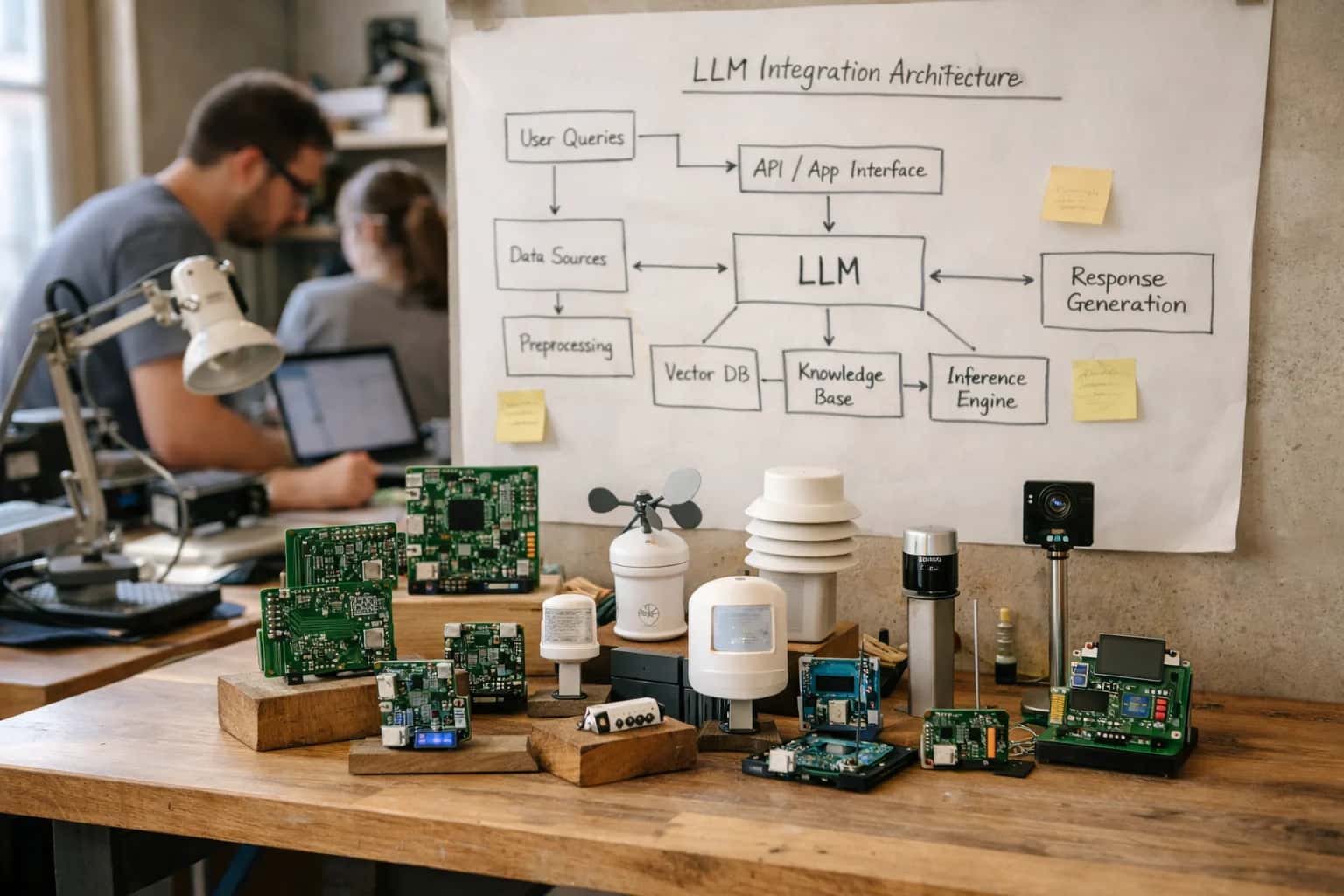
REPRODUCIBLE AI OPERATIONS
Why Version LLM Artifacts Beyond Model Weights?
For production LLM applications, model weights are just one piece of a complex, interdependent system that must be tracked and managed.
Implementation requires instrumenting your LLM pipelines to log these dependencies into W&B Artifacts. For example:
- Your data pipeline that chunks and embeds documents should output a
vector-index:v5artifact. - Your prompt management system should log a
support-agent-prompts:v2artifact containing the Jinja2 templates and system instructions. - Your evaluation job should consume specific dataset artifacts (
test-questions:v1) and produce aperformance-report:v3artifact. W&B's lineage tracking then visually maps how a production incident in your chatbot traces back to a recent change in the prompt artifact or a stale vector index, turning days of forensic investigation into minutes.
Rollout and governance depend on treating these artifact versions as immutable, promoted assets. Integrate W&B Artifacts with your CI/CD (e.g., GitHub Actions) to run validation tests whenever a new prompt or index version is logged. Enforce promotion workflows where only artifacts that pass evaluation gates can be referenced by production inference services. This creates a controlled deployment pipeline for non-code LLM components, allowing prompt engineers and data stewards to ship changes with the same rigor as software engineers, while maintaining a full audit trail for risk and compliance teams.
ARTIFACT TYPES
Key W&B Artifact Surfaces for LLM Lifecycle Governance
Versioning Prompt Templates and Chains
Store and version LangChain or custom prompt templates as W&B Artifacts. This creates a direct lineage from a production LLM response back to the exact prompt version used, which is critical for debugging regressions or A/B testing new templates. Each artifact can include the template string, associated metadata (target model, temperature settings), and the code or configuration that assembles multi-step chains.
Link these artifacts to model runs in the W&B experiment tracker. When a performance metric dips in Arize AI, you can instantly correlate it with a recent prompt artifact promotion. Governance platforms like Credo AI can reference these immutable artifact versions in their audit trails, proving which instructions were active for a given decision.
REPRODUCIBLE LLM APPLICATIONS
High-Value Use Cases for W&B Artifact Integration
Weights & Biases Artifacts provide a versioned, lineage-aware storage layer for all components of an LLM application. Integrating with this system transforms ad-hoc AI projects into governed, production-ready assets.
01
Versioned RAG Knowledge Bases
Store entire vector store indexes (e.g., Pinecone, Weaviate snapshots) as W&B Artifacts. Link each index version to the specific document corpus, embedding model, and chunking strategy used, enabling rollback and audit of retrieval performance changes.
Batch -> Traceable
Indexing workflow
02
Prompt Template Management
Treat prompts as versioned configuration. Store prompt templates, few-shot examples, and system instructions as artifacts. Automatically log which prompt version generated a production inference, linking output quality directly to prompt engineering changes.
1 sprint
A/B test cycle
03
Fine-Tuning Dataset Lineage
Version training and evaluation datasets as artifacts. Create a clear lineage from a fine-tuned model back to the exact data slices, preprocessing code, and quality checks used. Critical for debugging model regressions and regulatory compliance.
Audit-ready
Compliance posture
04
Multi-Model Application Bundles
Package all models for a complex agent as a single, versioned artifact. Bundle the primary LLM, embedding model, classification model, and their configurations. Deploy the entire bundle to staging or production with one reference, ensuring component compatibility.
Hours -> Minutes
Environment sync
05
Evaluation & Benchmark Suites
Store evaluation datasets, grading rubrics, and benchmark results as linked artifacts. Compare new model or prompt performance against a frozen benchmark version, isolating changes in the system from changes in the test.
Same day
Performance review
06
Governed Model Promotion
Use artifact aliases (production, staging) and metadata to enforce a promotion workflow. Integrate with CI/CD to require evaluation metrics, approval tickets, and policy checks before a model artifact can be aliased to production.
Manual -> Automated
Release gate
WEIGHTS & BIASES ARTIFACT STORAGE
Example Workflows: From Development to Rollback
These workflows demonstrate how to integrate W&B Artifacts into the LLM application lifecycle, from initial development to controlled production rollback, ensuring every component is versioned, linked, and reproducible.
Trigger: A prompt engineer iterates on a new system prompt for a customer support agent.
Workflow:
- The engineer saves the final prompt template (
support_agent_v2.jinja) and a small evaluation dataset (eval_questions_v1.jsonl) to a local directory. - A script uses the W&B SDK to create a new Artifact named
support-agent-promptwith typeprompt_template. - The script adds the template file and the dataset file to the artifact, logging metadata like the target model (
gpt-4-turbo) and the author. - The artifact is logged to a W&B Run, which also records the performance metrics (accuracy, tone score) from a test against the eval dataset.
- Result: A versioned artifact (e.g.,
support-agent-prompt:v2) is now the source of truth, linked to the experiment that created it.
ARTIFACT LINEAGE FOR REPRODUCIBLE AI
Implementation Architecture: Connecting Your LLM Stack to W&B
A practical blueprint for using Weights & Biases Artifacts to version and govern the complete LLM application stack, from prompts to vector stores.
A production LLM application is more than just a model—it's a stack of interdependent components. Weights & Biases Artifacts provides the versioning layer for this entire stack. Instead of treating prompts, evaluation datasets, and vector indexes as ephemeral files, you define them as versioned artifacts with explicit dependencies. For example, a prod-rag-prompt-v1.2 artifact can be linked to its parent legal-knowledge-base-2024-Q3 vector store artifact and the customer-support-eval-dataset-v2 used for testing. This creates a directed acyclic graph (DAG) of your AI assets, making every production prediction traceable back to the exact code, data, and configuration that produced it.
Implementation involves instrumenting your CI/CD and inference pipelines to use the W&B SDK. Key steps include:
- Ingestion Pipelines: After building a new vector index from your knowledge base, log it as a
wandb.Artifactwith a unique alias (e.g.,latestor2024-10-26). - Prompt Management: Store prompt templates and chains as artifact files (YAML/JSON). When a prompt engineer updates a template, a new artifact version is created, triggering integration tests.
- Model Registry Integration: Link fine-tuned adapter models from the W&B Model Registry as artifact dependencies, ensuring your RAG system always references an approved model version.
- Inference Service: Your application's runtime (e.g., a FastAPI service) can fetch the latest
prodalias of the prompt and index artifacts on startup, ensuring a synchronized, versioned stack.
Rollout and governance are built into this artifact lineage. Promoting a change—like a new embedding model or a tweaked prompt—becomes a controlled artifact alias update. You can run canary deployments by routing a percentage of traffic to an application instance pinned to a new artifact version, while monitoring performance in W&B Tables or integrated platforms like Arize AI. This approach is critical for audit trails in regulated sectors, as it answers not just what the model predicted, but why the entire system was configured that way at that moment in time. For teams scaling multiple LLM applications, this architecture transforms AI ops from managing scattered files to governing a catalog of linked, versioned assets.
AI Integration with Weights and Biases Artifact Storage
Code Patterns: Logging and Consuming Artifacts
Logging Versioned Prompt Templates
Treat prompts as configuration-as-code by logging them as W&B Artifacts. This creates a lineage from a specific model output back to the exact prompt version used, enabling rollback and A/B testing.
pythonimport wandb from langchain.prompts import PromptTemplate # Initialize a W&B Run run = wandb.init(project="llm-app", job_type="prompt_logging") # Define and log the prompt template prompt_template = PromptTemplate.from_template( "Summarize the following support ticket for a senior agent:\n\n{ticket_text}" ) # Create an artifact artifact = wandb.Artifact(name="support_summarizer_prompt", type="prompt") artifact.add_file(local_path="prompts/support_summary.j2") # Or add as JSON # Log metadata artifact.metadata = { "template": prompt_template.template, "input_variables": prompt_template.input_variables, "version": "v1.2" } run.log_artifact(artifact) run.finish()
This pattern is critical for debugging and governance, especially when prompts are dynamically assembled or retrieved from a database.
W&B ARTIFACTS FOR LLM LINEAGE
Operational Impact: Before and After Artifact Governance
How integrating Weights & Biases Artifacts transforms the management of LLM application components from ad-hoc scripts to governed, versioned assets.
| Metric | Before AI | After AI | Notes |
|---|---|---|---|
Prompt Template Versioning | Manual copy/paste in code or docs | Versioned W&B Artifacts with Git hash links | Rollback to any prompt version in seconds; full audit trail |
Vector Store Index Updates | Manual rebuilds; no change history | Artifact lineage tracks index source data and build params | Reproduce any past index; debug retrieval issues |
Evaluation Dataset Management | CSV files in shared drives | Datasets stored as versioned artifacts with schema metadata | Ensure consistent model testing; track dataset drift |
Model Deployment Promotion | Manual checklist and file transfers | Artifact stage transitions (dev->staging->prod) with approvals | Enforce promotion gates; prevent unauthorized model changes |
Cross-team Collaboration | Email threads and screen shares | Shared W&B projects with linked artifacts and reports | Data scientists and engineers operate from a single source of truth |
Compliance Evidence Collection | Manual screenshot and document gathering | Automated artifact lineage reports for audits | Generate regulatory evidence (e.g., for EU AI Act) in hours, not weeks |
Experiment Reproducibility | “It worked on my machine” | One-click reproduction using artifact dependencies | Re-run any past LLM pipeline with exact dependencies captured |
PRODUCTION ARCHITECTURE
Governance, Security, and Phased Rollout
A governed integration with Weights & Biases Artifacts ensures your LLM components are versioned, traceable, and deployed with control.
Treat prompt templates, vector store indexes, and evaluation datasets as first-class, versioned assets within W&B Artifacts. This creates an immutable lineage linking every production LLM response back to the exact prompt version, knowledge base snapshot, and fine-tuning data used. For RAG applications, this means you can roll back a problematic index update without redeploying code, or audit why a specific answer was generated for compliance inquiries.
Architect the integration to enforce RBAC and project isolation within your W&B instance. Data science teams can iterate in private projects, while approved artifacts are promoted to shared, production-ready artifact collections with strict access controls. Implement automated validation gates—such as running a suite of evaluation queries against a new vector index artifact—before allowing its use in live agents. This prevents untested or low-quality components from reaching end-users.
Adopt a phased rollout strategy, starting with non-critical internal workflows. Use W&B's lineage tracking to monitor the performance and cost impact of new artifact versions. For customer-facing applications, implement canary deployments where a small percentage of traffic uses a new prompt or index artifact, with its outputs logged and compared against the baseline in W&B for quality and safety. This controlled approach de-risks changes and provides data-driven evidence for full rollout decisions.
Finally, integrate artifact version metadata into your existing CI/CD pipelines and change management systems (e.g., Jira, ServiceNow). A promotion of a W&B Artifact to a production alias should trigger a formal ticket, requiring approvals and updating a centralized registry. This closes the loop between rapid AI experimentation and governed enterprise operations, ensuring your LLM applications are both agile and accountable.
Enabling Efficiency, Speed & Accuracy
Intelligent Analysis, Decision & Execution
We build AI systems for teams that need search across company data, workflow automation across tools, or AI features inside products and internal software.
Talk to Us
Search across company data
Give teams answers from docs, tickets, runbooks, and product data with sources and permissions.
Useful when people spend too long searching or get different answers from different systems.
Enterprise searchRAGPermissions
Read more
Automate internal workflows
Use AI to route work, draft outputs, trigger actions, and keep approvals and logs in place.
Useful when repetitive work moves across multiple tools and teams.
AI agentsWorkflow automationGovernance
Read more
Add AI to products and internal tools
Build assistants, guided actions, or decision support into the software your team or customers already use.
Useful when AI needs to be part of the product, not a separate tool.
AI integrationDecision supportModel routing
Read moreIMPLEMENTATION BLUEPRINT
Frequently Asked Questions
Practical questions for engineering and MLOps teams planning to use Weights & Biases Artifacts as a versioned store for LLM application components.
Think beyond model weights. For reproducible LLM applications, version these key components as linked artifacts:
- Prompt Templates: Store Jinja2 or LangChain prompt templates with metadata (creator, intended use case, version).
- Vector Store Indexes: Serialize and version FAISS, Pinecone, or Weaviate indexes used for RAG, linking them to the embedding model and source document snapshot.
- Evaluation Datasets: Version golden datasets, test queries, and expected outputs used for benchmarking.
- Fine-Tuning Datasets: Store the curated prompt-completion pairs and configuration used for adapter training.
- Configuration Files: Version YAML/JSON files for chunking parameters, retrieval settings, and agent orchestration logic.
This creates a complete lineage where any production prediction can be traced back to the exact prompt, index, and model version used.

About the author
Prasad Kumkar
CEO & MD, Inference Systems
Prasad Kumkar is the CEO & MD of Inference Systems and writes about AI systems architecture, LLM infrastructure, model serving, evaluation, and production deployment. Over 5+ years, he has worked across computer vision models, L5 autonomous vehicle systems, and LLM research, with a focus on taking complex AI ideas into real-world engineering systems.
His work and writing cover AI systems, large language models, AI agents, multimodal systems, autonomous systems, inference optimization, RAG, evaluation, and production AI engineering.
LinkedIn
Limited slotsGet a Free AI Consultation
Partnered with leading AI, data, and software stack.





How We Work
Custom AI workflows for your Business
One-fit-all AI don't work for modern businesses. At Inferensys, we aim to understand your business & custom requirements; which we use to define most efficient agentic workflows, the data, and the tools for your business.
01
Review the use case
We understand the task, the users, and where AI can actually help.
Read more02
Pick the right approach
We define what needs search, automation, or product integration.
Read more03
Build the first useful version
We implement the part that proves the value first.
Read more04
Improve from there
We add the checks and visibility needed to keep it useful.
Read moreThe first call is a practical review of your use case and the right next step.
Talk to Us