
Inferensys

Integration

AI Integration for LangChain Vector Stores

Build reliable, scalable, and governed Retrieval-Augmented Generation (RAG) systems by integrating LangChain with enterprise vector databases. Architect for high availability, secure access controls, and automated indexing.
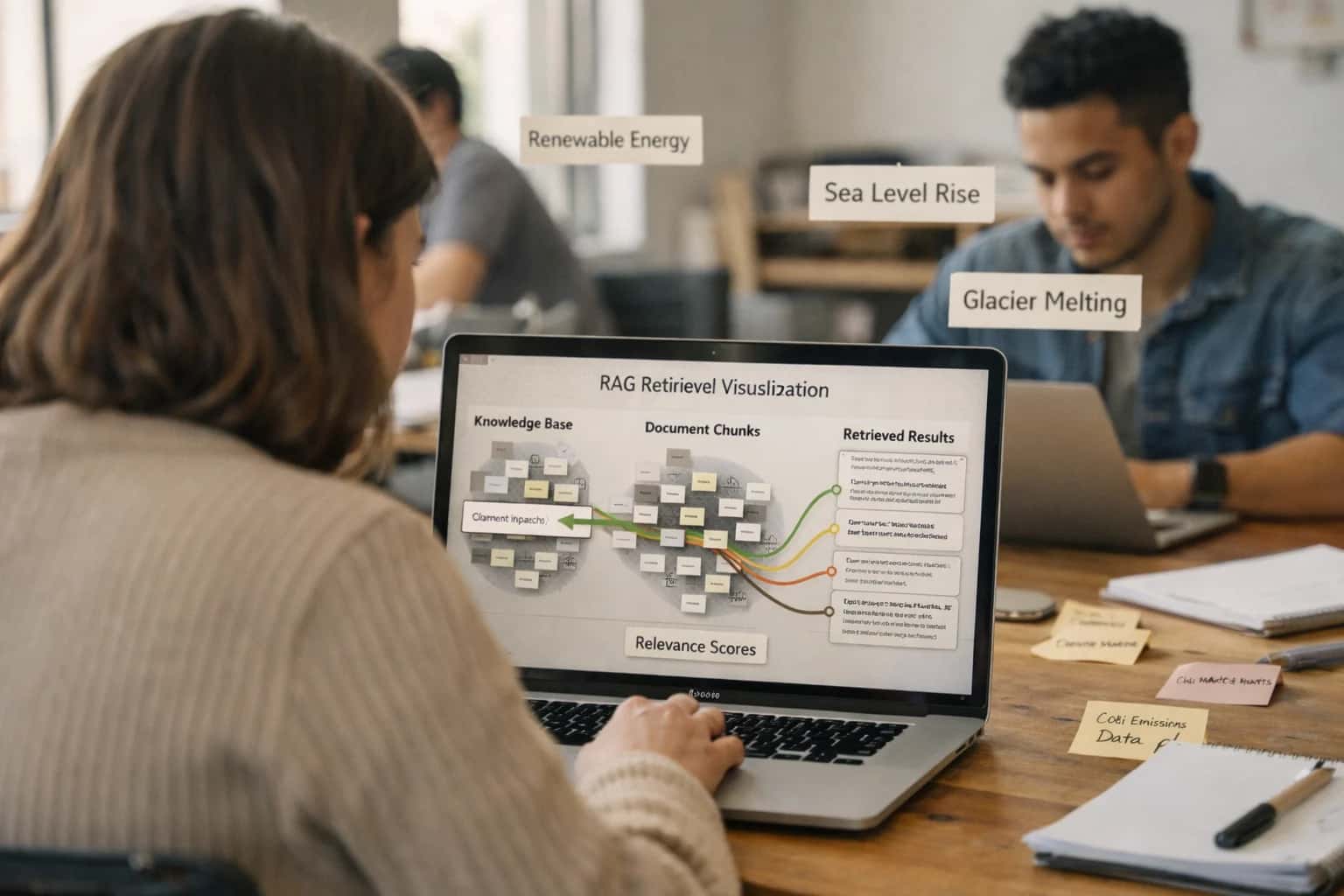
Developer working on RAG retrieval system, document chunks visible on screen, technical workspace with code editor.
ARCHITECTING PRODUCTION RAG

Where AI Fits: Vector Stores as the Memory Layer for LangChain Agents

Vector databases like Pinecone and Weaviate provide the persistent, high-performance memory layer that transforms LangChain agents from stateless prototypes into reliable production systems.

In a production LangChain application, the vector store is the system of record for your agent's knowledge and context. It's where you index internal documents, past conversation summaries, product catalogs, and policy manuals. This isn't just a retrieval tool; it's the agent's long-term memory. Key integration surfaces include:

  • Indexing Pipelines: Automating the ingestion and chunking of source documents from systems like SharePoint, Confluence, or S3, with metadata tagging for access control.
  • Retriever Configuration: Tuning top_k, score_threshold, and hybrid search strategies to balance recall with latency for live user queries.
  • Context Management: Using the vector store to persist and retrieve conversation history across sessions, enabling personalized, continuous dialogues.


A robust integration treats the vector store as a critical, stateful service. This means implementing:

  • High Availability & Backups: Configuring multi-region replication for Pinecone or Weaviate clusters and scheduled backups of index snapshots.
  • Access Control Layers: Integrating vector store queries with your application's RBAC, ensuring agents only retrieve documents the end-user is authorized to see.
  • Index Freshness Workflows: Setting up webhook-driven or scheduled re-indexing pipelines when source documents change, preventing agents from delivering stale information.
  • Performance Monitoring: Tracking query latency, recall rates, and embedding drift using platforms like Arize AI to catch degradation before users do.

Without this governed memory layer, LangChain agents are prone to hallucination, inconsistency, and data leakage. By architecting the vector store integration with the same rigor as a core database, you enable agents to act on grounded, company-specific knowledge—turning generic LLMs into specialized copilots for customer support, internal help desks, or sales enablement. The result is a system where answers are traceable back to source documents, compliance is built into retrieval, and performance is monitored end-to-end.

PRODUCTION RAG ARCHITECTURE

Integration Touchpoints: Connecting LangChain to Your Vector Database

Building Governed Ingestion Pipelines

The indexing layer is where data quality and lineage are established. LangChain document loaders connect to sources like SharePoint, S3, or Confluence, but a production system requires orchestration.

Key integration points include:

  • Scheduled Jobs: Using Airflow or Prefect to trigger re-indexing based on data change events or calendar schedules.
  • Data Quality Gates: Implementing checks for document staleness, PII detection, and schema validation before chunks enter the vector store.
  • Lineage Tracking: Logging source document metadata (URI, last modified, owner) alongside chunk IDs in a separate metadata store for traceability.

Without these controls, your RAG system risks serving outdated or non-compliant information.

LANGCHAIN VECTOR DATABASE OPERATIONS

High-Value Use Cases for Governed Vector Store Integration

Integrating LangChain with vector databases like Pinecone or Weaviate is foundational for production Retrieval-Augmented Generation (RAG). These use cases focus on moving from prototype to governed, high-availability systems where retrieval accuracy, data security, and operational resilience are non-negotiable.

01

Multi-Tenant RAG with Row-Level Security

Architect vector store indexes where customer or tenant data is logically isolated using metadata filters and access control lists (ACLs). LangChain retrievers are configured with dynamic filters based on user context, ensuring queries only return authorized documents. This is critical for SaaS platforms, legal tech, or healthcare applications where data segregation is mandated.

1 sprint
To implement tenant-aware indexing
02

Automated Index Freshness & Re-indexing Pipelines

Build scheduled or event-driven pipelines (using Airflow, Prefect) that detect changes in source knowledge bases (Confluence, SharePoint, document stores), trigger LangChain document loaders and splitters, and update vector embeddings. Includes versioning of indexes and zero-downtime swap strategies to keep RAG systems current without manual intervention.

Batch -> Event-driven
Index update trigger
03

Hybrid Search Optimization with Query Routing

Implement intelligent query analysis to route user questions to the most effective search strategy: dense vector search for semantic meaning, sparse/keyword search for exact term matching, or SQL for structured data. Use LangChain's Retriever abstractions to combine results, improving recall and precision for complex enterprise knowledge bases.

20-40%
Typical recall improvement
04

Disaster Recovery & Geo-Replicated Vector Stores

Design for high availability by deploying vector database clusters across cloud regions. Implement LangChain retriever clients with failover logic and circuit breakers. Establish backup procedures for vector indexes (snapshots) and documented runbooks for recovery, ensuring RAG capabilities remain online during regional outages or data corruption events.

Minutes
Recovery point objective (RPO)
05

Performance-Tuned Retrieval for Latency-Sensitive Apps

Profile and optimize the retrieval step—often the bottleneck in RAG. Techniques include implementing embedding caching, tuning k and score thresholds, using approximate nearest neighbor (ANN) parameters, and pre-filtering with metadata. Integrate monitoring to track p95 latency and recall, feeding data back into tuning cycles.

ms -> sub-ms
Retrieval latency target
06

Auditable Knowledge Retrieval & Lineage Tracking

Instrument every retrieval call to log the query, returned chunk IDs, source documents, and similarity scores. Pipe this telemetry to observability platforms (LangSmith, Arize AI) to build audit trails. Enables debugging of incorrect answers, understanding user intent patterns, and proving compliance for regulated retrieval processes.

100% traceable
Answer provenance
ARCHITECTING GOVERNED RAG SYSTEMS

Example Production Workflows and Data Flows

These workflows illustrate how to connect LangChain-based applications to vector databases like Pinecone or Weaviate within a governed, production-ready architecture. Each pattern includes integration points for monitoring, security, and operational resilience.

Trigger: Scheduled Airflow DAG or webhook from source system (e.g., Confluence, SharePoint).

Data Flow:

  1. LangChain document loaders ingest new or updated documents from source APIs.
  2. A preprocessing chain cleans, chunks, and enriches text with metadata (source, owner, last modified).
  3. Embeddings are generated using a configured model (OpenAI, Cohere, or local).
  4. Vectors and metadata are upserted into Pinecone/Weaviate, with namespace partitioning by data source.

Governance Integration:

  • Weights & Biases: Logs chunk statistics, embedding model version, and job metadata as an artifact.
  • Arize AI: After upsert, a sample of new vectors is compared to the existing distribution to detect embedding drift.
  • Credo AI: The data source and schema are logged for lineage, tagging the index update with a data privacy classification.

Next Step: On drift alert from Arize, trigger a review workflow in Jira for a data steward.

PRODUCTION RAG INTEGRATION

Implementation Architecture: Data Flow, APIs, and Guardrails

A practical blueprint for building a governed, high-availability integration between LangChain and vector databases like Pinecone or Weaviate.

A production-ready architecture treats the vector store not as a standalone component, but as a critical stateful service in your RAG pipeline. The core data flow begins with your LangChain application's indexing logic—using RecursiveCharacterTextSplitter or semantic splitters—to chunk documents. These chunks, alongside their embeddings generated by a model like text-embedding-3-small, are upserted into the vector database via its native SDK (e.g., Pinecone's Python client). For retrieval, LangChain's VectorStoreRetriever queries the database using the same embedding model, returning the top-k relevant chunks to ground the LLM's response. This integration must be wrapped in robust error handling, connection pooling, and idempotent write operations to handle batch failures.

Key APIs and guardrails focus on operational control and data governance. Implement a middleware layer that logs all retrieval operations—query, returned chunk IDs, and scores—to a system like LangSmith or Arize AI for performance tracing. Enforce access controls at the index level, ensuring applications only query authorized namespaces. For data integrity, version your vector indexes by appending a timestamp or commit hash to the index name, allowing for atomic rollbacks. Schedule regular re-indexing jobs triggered by source data changes, and implement backup procedures for your vector store's metadata, as losing the mapping between vector IDs and your source documents can break entire RAG applications.

Rollout and governance require treating the vector store with the same rigor as a production database. Start with a canary deployment for new index versions, routing a small percentage of queries to the new index while monitoring retrieval accuracy and latency. Implement rate limiting and query cost tracking, especially for embedding API calls. For sensitive data, consider a hybrid retrieval strategy where metadata filtering is applied before semantic search to enforce data boundaries. Finally, establish clear retention and purge policies aligned with data privacy regulations, automating the deletion of vectors when source documents are archived or when a user exercises their 'right to be forgotten'.

PRODUCTION RAG ARCHITECTURE

Code and Configuration Patterns

Configuring High-Availability Indexing Pipelines

Production RAG requires reliable, scheduled indexing jobs that keep vector stores fresh. Use LangChain's document loaders and text splitters, but orchestrate them with a workflow engine (e.g., Airflow, Prefect) to handle failures and retries. Implement a dual-write strategy: write chunks to both a primary vector store (Pinecone) and a secondary/backup (Weaviate) for disaster recovery.

Key patterns include:

  • Incremental Updates: Use document last_modified timestamps or change data capture (CDC) from source systems to trigger partial re-indexing.
  • Embedding Model Fallback: Configure multiple embedding providers (OpenAI text-embedding-3-small, Cohere, open-source via Ollama) with automatic failover if the primary times out.
  • Metadata Tagging: Enrich each vector with source system, access level, and data freshness metadata for retrieval filtering.
python
# Example: Robust indexing pipeline with retry logic
from langchain.text_splitter import RecursiveCharacterTextSplitter
from langchain.embeddings import OpenAIEmbeddings, CacheBackedEmbeddings
from langchain.storage import LocalFileStore
from langchain.vectorstores import Pinecone
import backoff

@backoff.on_exception(backoff.expo, Exception, max_tries=3)
def create_and_upsert_index(docs, index_name):
    text_splitter = RecursiveCharacterTextSplitter(chunk_size=1000, chunk_overlap=200)
    splits = text_splitter.split_documents(docs)
    
    # Cache embeddings to reduce cost and latency on re-index
    underlying_embeddings = OpenAIEmbeddings(model="text-embedding-3-small")
    fs = LocalFileStore("./embedding_cache")
    cached_embedder = CacheBackedEmbeddings.from_bytes_store(
        underlying_embeddings, fs, namespace=index_name
    )
    
    Pinecone.from_documents(
        documents=splits,
        embedding=cached_embedder,
        index_name=index_name
    )
AI-ENABLED VECTOR STORE OPERATIONS

Operational Impact: Time Saved and Risk Reduced

How integrating AI governance and LLMOps platforms with LangChain vector stores transforms the reliability, security, and efficiency of production RAG systems.

MetricBefore AIAfter AINotes

Index Freshness Update

Manual, scheduled weekly

Event-driven, within hours

Triggers on source document changes; monitored for completion

Retrieval Accuracy Monitoring

Periodic manual sampling

Continuous automated scoring

Arize AI tracks chunk relevance and answer quality drift

Access Control & Audit Trail

Database logs reviewed ad-hoc

Policy-enforced, Credo AI logged

All queries tagged with user, purpose, and policy check

Disaster Recovery Testing

Quarterly manual drills

Automated failover validation

W&B artifacts version indexes; recovery time objective tracked

Cost Attribution & Optimization

Monthly bill analysis

Real-time per-query tracking

W&B logs token usage; alerts on anomalous spend patterns

Data Privacy Compliance Scan

Manual quarterly review

Automated PII detection pre-index

Credo AI policies block sensitive data; audit trail auto-generated

Performance Degradation Detection

User-reported issues

Proactive anomaly alerts in <5 min

Arize AI monitors latency & error rates; triggers RCA workflows

PRODUCTION ARCHITECTURE FOR RAG SYSTEMS

Governance, Security, and Phased Rollout

A secure, observable, and controlled deployment strategy for LangChain-powered RAG applications using vector databases like Pinecone or Weaviate.

Production RAG systems require a multi-layered security and governance model. This starts with role-based access controls (RBAC) on the vector store itself, ensuring only authorized applications and users can query specific indexes or collections. For LangChain applications, this means configuring the vector store client with scoped API keys and implementing query-time filtering based on user context or data classification. All data ingestion pipelines must include PII detection and redaction before chunking and embedding, and all queries and retrieved documents should be logged to a secure audit trail for compliance reviews.

A phased rollout is critical for managing risk and performance. Start with a shadow mode where the RAG system processes real user queries but its outputs are only logged and evaluated, not shown to users. Use this phase to establish baseline metrics for retrieval accuracy (e.g., MRR, NDCG) and answer quality via LLM-as-a-judge evaluations. Next, move to a canary release for a small percentage of internal or low-risk user traffic, integrating with monitoring tools like Arize AI or LangSmith to track latency, cost, and user feedback. Finally, implement automated kill switches and fallback to keyword search or a human agent based on confidence scores or error rates.

Long-term governance hinges on continuous monitoring and automated retraining. Implement drift detection for both the embedding models (monitoring the distribution of query and document vectors) and the LLM's generation quality. Set up alerts in your LLMOps platform for degradation in key metrics, triggering a re-indexing of the knowledge base or a review of chunking strategies. Treat your vector store indexes, embedding models, and LangChain prompt chains as versioned assets, promoting them through development, staging, and production environments with integrated approval gates from data science, security, and compliance teams.

LANGCHAIN VECTOR STORE INTEGRATION

Frequently Asked Technical & Commercial Questions

Architecting production-ready RAG systems requires careful planning around infrastructure, security, and operations. Below are answers to the most common questions from engineering and AI leads.

A production architecture focuses on redundancy, failover, and performance isolation. We typically implement a multi-layered approach:

  1. Primary & Replica Setup: Deploy your chosen vector database (e.g., Pinecone, Weaviate) with a primary instance in your main region and a read-only replica in a secondary region. LangChain's retriever is configured to fail over to the replica if the primary's health check fails.
  2. Caching Layer: Introduce a Redis or similar cache for frequent, low-volatility queries. This reduces load on the vector store and cuts latency for common user questions.
  3. Indexing Strategy: Implement a dual-index strategy:
    • A main index for real-time, high-recall semantic search.
    • A metadata-filtered index for fast, exact-match queries on known categories (e.g., document_type='policy'). LangChain's MultiQueryRetriever or EnsembleRetriever can combine results.
  4. Connection Pooling & Timeouts: Configure the LangChain vector store client with aggressive connection pooling and sensible timeouts (e.g., 5-10 seconds) to prevent application threads from hanging during vector DB outages.

This pattern ensures your RAG application remains responsive even during partial infrastructure degradation.

Prasad Kumkar

About the author

Prasad Kumkar

CEO & MD, Inference Systems

Prasad Kumkar is the CEO & MD of Inference Systems and writes about AI systems architecture, LLM infrastructure, model serving, evaluation, and production deployment. Over 5+ years, he has worked across computer vision models, L5 autonomous vehicle systems, and LLM research, with a focus on taking complex AI ideas into real-world engineering systems.

His work and writing cover AI systems, large language models, AI agents, multimodal systems, autonomous systems, inference optimization, RAG, evaluation, and production AI engineering.


