
Inferensys

Integration

AI Integration for LangChain Memory Management

Build production-ready conversational AI with persistent, governed memory. Architect secure integrations between LangChain memory abstractions, vector databases, and enterprise systems to create context-aware agents that remember user interactions while complying with data privacy regulations.
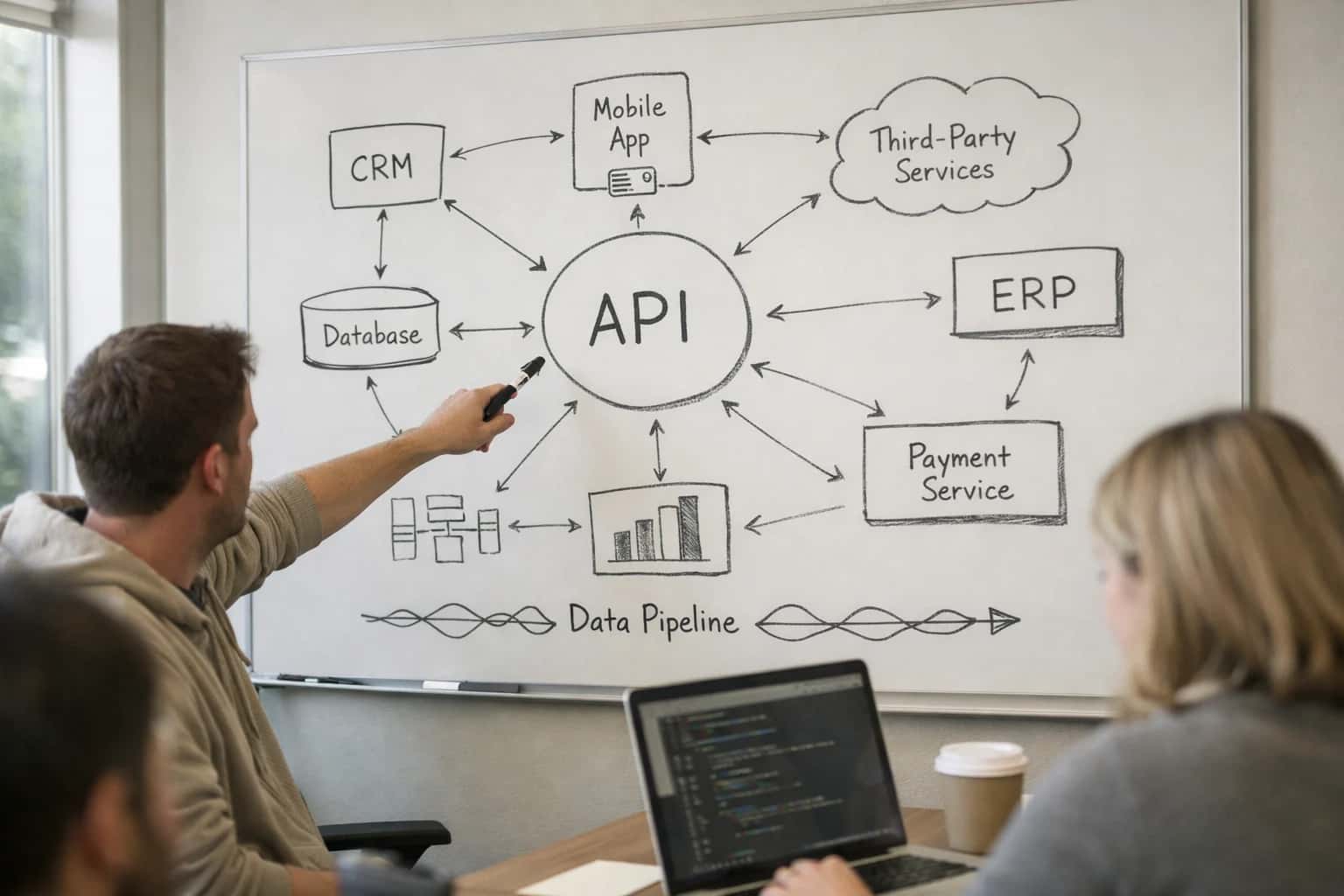
Enterprise integration architect reviewing API connections on laptop, diagram showing systems connecting, modern office setup.
ARCHITECTURE FOR PERSISTENT AGENTS

Where Memory Fits in the LangChain Stack

LangChain memory is the critical layer that enables conversational agents to maintain context, learn from interactions, and operate securely over time.

In the LangChain architecture, memory is not a single component but a strategic integration point connecting the agent's runtime to persistent storage and governance systems. It sits between the LLM, your tools, and the end-user, managing context windows, chat histories, and summarized knowledge. For production, this means integrating with:

  • Vector Databases (Pinecone, Weaviate) for long-term semantic memory and RAG context.
  • Traditional Databases (PostgreSQL, Redis) for structured session data, user profiles, and audit logs.
  • Governance Platforms (LangSmith, Arize AI) to trace memory accesses, log PII exposure, and enforce retention policies.


Implementation requires designing memory workflows that balance performance, privacy, and cost. A common pattern uses a multi-tiered memory system:

  • Short-term Buffer: In-memory conversation history for the immediate context window, managed by LangChain's ConversationBufferMemory or ConversationSummaryMemory.
  • Long-term Vector Store: A separate VectorStoreRetrieverMemory that indexes key facts, decisions, and documents from past sessions for semantic recall across conversations.
  • Governance Hook: Custom callback handlers that stream memory operations (reads/writes) to monitoring tools, triggering alerts for policy violations like unauthorized data access or attempts to store sensitive information (e.g., credit card numbers). This setup allows agents to "remember" user preferences and past issues without retaining full chat logs, reducing privacy risk and storage costs.

Rollout and governance are paramount. Start by defining a data retention policy aligned with regulations like GDPR or CCPA—for instance, automatically purging raw chat history after 30 days while retaining anonymized, aggregated insights in the vector store. Integrate memory operations into your existing RBAC and audit trail systems; every memory fetch or update should log the agent ID, user, timestamp, and data scope. Use LangChain's memory abstractions to easily swap storage backends during testing and enforce encryption-in-transit and at-rest for all memory layers. Finally, implement canary deployments for memory schema changes, monitoring for spikes in latency or retrieval inaccuracy before full rollout.

ARCHITECTING PERSISTENT AND SECURE AGENT MEMORY

LangChain Memory Abstractions and Integration Surfaces

Core Memory Abstractions for Production Agents

LangChain provides several memory classes, each suited for different integration patterns. ConversationBufferMemory is ideal for simple chat histories within a session, often integrated directly into a chat interface's backend. ConversationSummaryMemory condenses long dialogues, perfect for support ticketing systems where a summary of past issues must be prepended to new queries.

For more complex, stateful workflows, ConversationEntityMemory or ConversationKGMemory track entities and relationships. This is critical for sales or service agents integrated with CRMs like Salesforce, where remembering a customer's product, past complaints, or deal stage across multiple sessions drives personalized interactions. VectorStoreRetrieverMemory uses a vector database to make past conversations semantically searchable, enabling agents in platforms like Zendesk to retrieve relevant historical context for complex user inquiries.

LANGCHAIN MEMORY MANAGEMENT

High-Value Use Cases for Persistent Memory

Persistent memory transforms LangChain agents from stateless chatbots into long-term, context-aware collaborators. These use cases illustrate where secure, governed memory delivers operational value across enterprise workflows.

01

Customer Support Escalation Context

When a support ticket escalates to a human agent, a persistent memory layer provides the full conversation history, previous troubleshooting steps, and customer sentiment from the AI agent. This eliminates repetitive questioning and reduces average handle time by providing immediate context for the human agent.

Minutes Saved
Per Escalation
02

Multi-Session Sales Development

Enable sales development reps (SDRs) to use an AI agent that remembers previous interactions with a lead across emails, calls, and demos. The agent can reference past objections, discussed features, and promised follow-ups, allowing it to draft highly personalized, context-rich outreach that progresses the conversation.

Context-Rich
Across Channels
03

Personalized Learning Path Continuity

For corporate LMS or training platforms, an AI tutor with persistent memory tracks an employee's completed modules, assessment scores, and knowledge gaps. It can then recommend the next most relevant training content and adapt its explanations based on what the learner has historically struggled with or mastered.

Adaptive
Learning Guidance
04

Long-Running Project Management Assistants

An agent integrated into a project management tool (e.g., Jira, Asana) can maintain memory of project goals, stakeholder decisions, and past status updates. When asked "What's blocking the Q3 launch?", it can synthesize weeks of discussion from memory and linked tickets to provide a coherent, historical summary instead of just current status.

Weeks → Summary
Historical Context
05

Compliant Chat History Purge Workflows

Implement automated, policy-driven memory retention and deletion. For regulated use cases (GDPR, HIPAA), configure memory to automatically purge user-specific conversation data after a mandated period or upon user request, with audit trails proving compliance. This turns a feature into a governance requirement.

Policy-Driven
Data Retention
06

Proactive IT Incident Correlation

An IT support agent with memory of past incidents and resolutions can correlate new alerts with historical patterns. For example, recognizing that a "database slow" alert from System A often precedes a "payment failure" alert from System B, allowing it to suggest pre-emptive remediation steps based on learned historical workflows.

Proactive
Alert Triage
LANGCHAIN INTEGRATION PATTERNS

Example Memory-Enabled Workflows

These workflows illustrate how persistent, governed memory transforms LangChain agents from stateless chatbots into accountable, context-aware assistants. Each pattern integrates with vector databases and enforces data retention policies.

Trigger: A customer initiates a new chat session via a web widget or support portal.

Context/Data Pulled:

  1. The system hashes the user's identifier (e.g., user_id, anonymized session token) to create a secure memory key.
  2. Using this key, the LangChain agent retrieves the user's conversation history from a vector database (e.g., Pinecone, Weaviate). This includes past queries, resolved issues, and any saved preferences.
  3. The agent also fetches the customer's open tickets and recent order data from the CRM/ERP via a LangChain Tool.

Model/Agent Action:

  • The LLM receives a prompt structured as: "You are assisting [Customer Name]. Previous conversation summary: [Memory Summary]. Current open issues: [Ticket List]. The customer now asks: [New Query]"
  • The agent uses this enriched context to provide a personalized response, avoiding repetition and acknowledging past interactions.

System Update:

  1. The full interaction (query + response) is chunked, embedded, and upserted into the vector database under the user's memory key.
  2. A metadata field timestamp and data_category (e.g., "support_interaction") are attached.
  3. This update is logged to an audit trail (e.g., in LangSmith or a governance platform like Credo AI) for compliance.

Human Review Point: If the agent's confidence score is below a threshold or it attempts an action like "issue refund," the conversation is routed to a human agent with the full memory context provided as a summary.

BUILDING PERSISTENT, GOVERNED MEMORY FOR AGENTS

Implementation Architecture: Data Flow and Components

A production-ready memory system for LangChain agents requires a multi-layered architecture that balances context, privacy, and performance.

The core architecture integrates three key components: the LangChain application layer, a vector database (like Pinecone or Weaviate), and a relational database (like PostgreSQL). The LangChain agent uses a ConversationBufferWindowMemory or ConversationSummaryMemory object for short-term context within a session. For long-term, searchable memory, relevant conversation turns are processed into embeddings via OpenAIEmbeddings or a similar model and upserted into the vector store, indexed with metadata such as user_id, session_id, timestamp, and conversation_topic. This creates a semantic search layer for past interactions.

A critical governance layer sits between the agent and the memory stores. Before any memory is persisted or retrieved, a policy engine evaluates the action against configured rules. This engine can block storage of sensitive data (e.g., PII patterns detected via regex or a dedicated NER model), enforce data retention policies by automatically purging records older than a configured window (e.g., 90 days for GDPR compliance), and log all memory access events to an audit trail. Retrieval is also governed, ensuring agents only access memory scoped to the current user or authorized context.

For rollout, we recommend a phased approach: start with a simple ConversationBufferMemory in a non-production environment to validate agent workflows. Then, implement the vector-backed memory with a dry-run policy engine that logs violations without blocking, to tune rules. Finally, activate full governance and integrate with existing data subject request (DSR) workflows, ensuring the memory system can execute search and delete operations by user_id for compliance. This architecture turns LangChain memory from a transient cache into a secure, auditable system of record for agent interactions.

LANGCHAIN MEMORY MANAGEMENT

Code and Configuration Patterns

Connecting to Persistent Vector Stores

LangChain's memory abstractions require a backing vector database for long-term, searchable conversation context. The integration pattern involves configuring a retriever that connects to your chosen store (e.g., Pinecone, Weaviate, Qdrant) and embedding model.

Key steps include:

  • Initialization: Securely load credentials via environment variables.
  • Index Management: Implement routines to create, update, and version indexes to handle schema changes or data purges.
  • Retrieval Configuration: Set k (number of relevant chunks to retrieve) and score thresholds to balance context relevance with noise.

This setup ensures agent conversations have access to past interactions without hitting context window limits, enabling coherent multi-session dialogues.

python
from langchain.vectorstores import Pinecone
from langchain.embeddings import OpenAIEmbeddings
import pinecone

# Initialize connection
pinecone.init(api_key=os.getenv('PINECONE_API_KEY'), environment='us-west1-gcp')
index_name = "agent-conversation-history"

# Create vector store connection
embeddings = OpenAIEmbeddings(model="text-embedding-3-small")
vectorstore = Pinecone.from_existing_index(index_name, embeddings)

# Use as retriever for memory
retriever = vectorstore.as_retriever(search_kwargs={"k": 5})
LANGCHAIN MEMORY MANAGEMENT

Operational Impact and Time Savings

How integrating persistent, governed memory into LangChain agents transforms development velocity, operational reliability, and compliance overhead.

MetricBefore AI IntegrationAfter AI IntegrationNotes

Conversation context persistence

Stateless sessions requiring full history re-submission

Secure, vector-backed memory with automatic session recall

Reduces token costs and latency; enables long-running workflows

Memory compliance review cycle

Manual audit of chat logs for PII/GDPR, taking days

Automated policy checks and data purge workflows triggered on schedule

Integrates with tools like Credo AI for audit trails; ensures regulatory adherence

Agent debugging and root cause analysis

Hours correlating logs to reconstruct agent state and reasoning

Minutes querying indexed memory traces linked to LangSmith spans

Accelerates troubleshooting of complex, multi-turn agent failures

Memory architecture deployment time

Weeks to design, build, and test custom persistence layer

Days to integrate and configure production-ready vector store (e.g., Pinecone, Weaviate)

Leverages pre-built LangChain abstractions and secure cloud services

Cross-session knowledge reuse

Manual extraction and injection of prior insights into new sessions

Automated retrieval of relevant past interactions using semantic search

Improves agent consistency and user experience over time

Data retention policy enforcement

Ad-hoc scripting and manual database cleanup

Programmatic lifecycle management via integrated job schedulers and policy engines

Prevents data sprawl and reduces storage costs; automates compliance

Memory performance monitoring

Reactive alerts based on application errors or timeouts

Proactive monitoring of embedding drift, retrieval latency, and recall metrics in Arize AI

Enables capacity planning and preemptive optimization of retrieval systems

ARCHITECTING CONTROLLED AGENT MEMORY

Governance, Compliance, and Phased Rollout

Implementing LangChain memory for conversational agents requires a deliberate approach to data retention, access control, and incremental deployment to manage risk and ensure compliance.

A governed memory architecture starts by classifying the data your agents handle. Conversation history, user preferences, and retrieved document snippets must be mapped to data categories (e.g., PII, business confidential, public). This classification dictates the vector database namespace, encryption-at-rest policies, and retention schedules applied. For instance, a chat history containing customer service details may be stored in a Pinecone namespace with a 90-day automated purge to align with GDPR's right to erasure, while anonymized interaction patterns for improving retrieval might be kept indefinitely in a separate, lower-cost index.

Implementation follows a phased, role-based rollout to contain blast radius and gather feedback.

  • Phase 1 (Internal Pilot): Deploy memory-enabled agents to a controlled group of power users or support staff. Implement audit logging for all memory read/write operations, capturing the user ID, session, timestamp, and accessed memory keys. Use this phase to validate retrieval accuracy and tune chunking strategies and embedding models.
  • Phase 2 (Staged Expansion): Introduce memory to broader user segments, using feature flags to control access. Integrate memory operations with your existing RBAC system; for example, a sales agent's memory should only be accessible to that agent and their manager, not the entire sales org. Implement runtime validation to scrub PII from data before it's embedded and stored.
  • Phase 3 (General Availability): Roll out fully, with automated compliance checks in the CI/CD pipeline for any changes to the memory layer's code or configuration. Establish monitoring dashboards tracking memory usage growth, vector store latency, and the frequency of data purge operations to forecast costs and performance.

Continuous governance is maintained by integrating the memory layer with your broader LLMOps stack. Link LangChain callbacks to Arize AI or Weights & Biases to monitor for embedding drift—shifts in how user queries or documents are represented over time, which can degrade retrieval quality. Use Credo AI to map memory access patterns and retention policies to specific controls within frameworks like GDPR or the EU AI Act, auto-generating evidence for audit trails. This layered approach ensures your agents become more helpful over time without introducing unmanaged data liability or compliance gaps.

LANGCHAIN MEMORY MANAGEMENT

Frequently Asked Questions

Common questions about architecting persistent, secure, and compliant memory for conversational agents using LangChain.

Implementing compliant persistent memory involves a multi-layered architecture:

  1. Data Classification & Retention Policies:

    • Tag conversations with metadata (user ID, session, sensitivity level).
    • Configure retention periods in your vector database (e.g., Pinecone, Weaviate) using TTL (Time-To-Live) indexes or scheduled cleanup jobs based on regulation (e.g., GDPR's right to erasure).
  2. Secure Storage & Access:

    • Store memory vectors in a dedicated namespace with role-based access controls (RBAC).
    • Use LangChain's ConversationSummaryBufferMemory or ZepMemory with encryption-at-rest enabled on the backing database.
  3. Implementation Pattern:

    python
    # Example using a vector store-backed memory with a cleanup policy
    from langchain.memory import VectorStoreRetrieverMemory
    from langchain.vectorstores import Pinecone
    import pinecone
    
    # Initialize Pinecone index with a namespace for user 'user_123'
    index = pinecone.Index('chat-memory')
    vectorstore = Pinecone(index, embedding_function, 'user_123')
    retriever = vectorstore.as_retriever(search_kwargs={'filter': {'session_id': 'session_abc'}})
    memory = VectorStoreRetrieverMemory(retriever=retriever)
    
    # Scheduled job to delete vectors older than 90 days for this user
    # (Pseudo-code for Pinecone's delete operation with filter)
    # index.delete(filter={'timestamp': {'$lt': '2024-01-01'}, 'user_id': 'user_123'})
  4. Governance Integration: Connect the memory system to your governance platform (e.g., Credo AI) to log data access and purge events for audit trails.

Prasad Kumkar

About the author

Prasad Kumkar

CEO & MD, Inference Systems

Prasad Kumkar is the CEO & MD of Inference Systems and writes about AI systems architecture, LLM infrastructure, model serving, evaluation, and production deployment. Over 5+ years, he has worked across computer vision models, L5 autonomous vehicle systems, and LLM research, with a focus on taking complex AI ideas into real-world engineering systems.

His work and writing cover AI systems, large language models, AI agents, multimodal systems, autonomous systems, inference optimization, RAG, evaluation, and production AI engineering.


