In production, LangChain applications face real-world failures: API timeouts from providers like OpenAI or Anthropic, rate limit errors, unexpected cost spikes, or degraded output quality for specific query types. A robust fallback strategy layers multiple contingency plans, such as routing to a cheaper/faster model (e.g., GPT-3.5-turbo instead of GPT-4), serving a cached response from a vector store for repetitive queries, executing a deterministic rule-based workflow, or escalating to a human agent queue via a webhook to platforms like ServiceNow or Zendesk. The architecture decision hinges on the use case's tolerance for latency, cost, and accuracy.

Integration
AI Integration for LangChain Fallback Mechanisms
Design and implement robust fallback strategies for LangChain applications to ensure reliability when primary LLMs fail, integrating monitoring to track fallback rates and reasons.
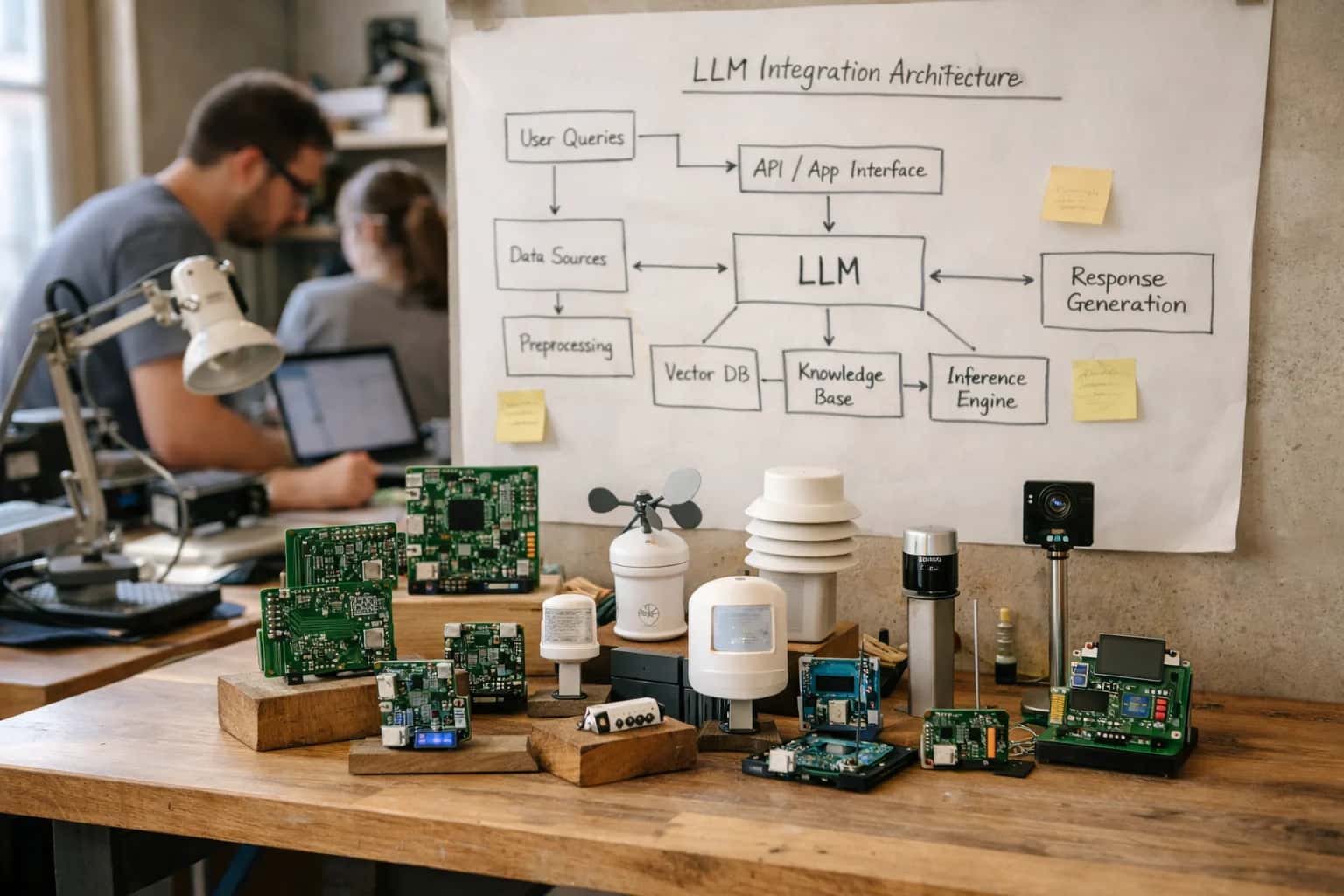
ARCHITECTING FOR PRODUCTION RESILIENCE
Building Reliable LangChain Applications with Intelligent Fallbacks
Design robust fallback strategies for LangChain applications to maintain service levels when primary LLM calls fail, degrade, or exceed cost thresholds.
Implementation requires instrumenting the LangChain runtime with custom CallbackHandlers or wrapping chains with a fallback router. This router evaluates the primary call's result against validation logic (e.g., structured output parsing, sentiment safety checks) and predefined failure modes (status codes, latency thresholds, empty responses). For cost-aware fallbacks, integrate token usage tracking from callbacks with a real-time budget service. A common pattern is a priority list: Primary LLM -> Fallback LLM -> Vector Cache -> Rule Engine -> Human Ticket. Each step should log its invocation reason, cost, and outcome to a tracing system like LangSmith or Weights & Biases for post-mortem analysis and strategy tuning.
Rollout and governance demand treating fallbacks as versioned application logic. Use feature flags to control the activation of new fallback layers and canary deployments to monitor their impact on key metrics like fallback rate, successful resolution rate, and average handle time. Integrate with monitoring platforms like Arize AI to set alerts on anomalous spikes in fallback triggers, which can indicate upstream model degradation or data drift. For regulated use cases, document the fallback decision logic in Credo AI to demonstrate controlled failure modes to auditors, ensuring fallbacks don't inadvertently violate compliance policies (e.g., using an unapproved model for financial advice).
ARCHITECTURE PATTERNS
Where to Integrate Fallback Logic in the LangChain Stack
At the LLM Provider Call
Integrate fallback logic directly within the ChatModel or LLM class instantiation. This is the most common and critical layer for handling provider outages, rate limits, and cost overruns.
Implementation Patterns:
- Sequential Fallback: Chain multiple model providers (e.g., OpenAI GPT-4 → Anthropic Claude → open-source Llama) using LangChain's
RouterChainor a custom wrapper that catchesRateLimitErrororServiceUnavailableErrorand retries with the next model in the list. - Load Balancing & Failover: Use a service like
LangSmithor a custom orchestrator to monitor latency and error rates, dynamically routing requests to the healthiest endpoint.
Key Integration: Connect this layer to your cost tracking and monitoring platform (e.g., Weights & Biases, Arize AI) to log which fallback was triggered and why, enabling analysis of reliability and cost trade-offs.
PRODUCTION RESILIENCY PATTERNS
High-Value Use Cases for Fallback-Enabled LangChain
Fallback mechanisms are critical for maintaining uptime and user trust in production LangChain applications. These patterns integrate monitoring to track failure modes and automate graceful degradation.
01
Primary LLM Service Degradation
When the primary LLM provider (e.g., OpenAI, Anthropic) experiences high latency or errors, automatically route requests to a secondary provider or a cheaper, faster model. Integrate with LangSmith to log fallback triggers, cost differentials, and latency savings for capacity planning.
Batch -> Real-time
Failover speed
02
Tool-Calling Agent Error Handling
For agents that call external APIs, implement fallbacks when a tool fails (e.g., database timeout, 4xx error). Fallback logic can retry, use a cached value, or execute an alternative workflow. Connect to monitoring to track tool failure rates and reasons, identifying brittle dependencies.
1 sprint
Recovery time reduced
03
RAG Retrieval Confidence Fallback
When a Retrieval-Augmented Generation query returns low-confidence search results or an empty context, fall back to a general-purpose LLM response or route the query to a human agent. Integrate with vector store metrics and Arize AI to monitor retrieval quality and tune chunking/embedding strategies.
Hours -> Minutes
Issue detection
04
Structured Output Parsing Failure
If a LangChain PydanticOutputParser fails to generate valid JSON, trigger a fallback that uses a simpler parsing method, asks the LLM to reformat, or extracts data via a secondary, rule-based process. Log parsing failure rates and schema issues to Weights & Biases for prompt engineering improvements.
Same day
Schema fix deployment
05
Content Safety & Policy Violation
Use a fallback workflow when a primary LLM generates content that fails safety or policy checks (e.g., via Credo AI guardrails). The fallback can sanitize the output, switch to a more restricted model, or flag for human review. Integrate violation logs with governance dashboards for audit trails.
Real-time
Policy enforcement
06
Cost & Budget Threshold Management
Implement fallbacks triggered by real-time cost monitoring. When a user session or specific tool chain exceeds a token budget, automatically downgrade to a cheaper model or a cached response pattern. Connect cost telemetry from LangSmith to internal FinOps dashboards for spend governance.
Batch -> Real-time
Spend control
IMPLEMENTATION PATTERNS
Example Fallback Workflows for LangChain Applications
Designing robust fallback strategies is critical for production LangChain applications. These workflows illustrate how to gracefully degrade performance when primary LLM calls fail, return low-confidence outputs, or violate safety policies, ensuring system resilience and user trust.
This workflow routes queries to a cheaper, faster model when the primary LLM's confidence score is below a defined threshold, balancing cost and quality.
- Trigger: A LangChain agent generates a response using a primary model (e.g., GPT-4). The chain includes a custom callback that extracts the log probability or a self-evaluation score.
- Context/Data Pulled: The initial query, the generated response, and the computed confidence score are logged to a monitoring platform like Arize AI or Weights & Biases.
- Model/Agent Action: A conditional check is performed. If confidence <
threshold(e.g., 0.7):- The original query is re-routed through a secondary, simpler chain using a faster/cheaper model (e.g., GPT-3.5-Turbo or a fine-tuned smaller model).
- The fallback reason (
"low_confidence") is tagged.
- System Update: The final response (from the fallback model) is returned to the user. The entire interaction—including primary response, confidence score, fallback trigger, and final output—is recorded in LangSmith for traceability.
- Human Review Point: Responses that trigger the fallback can be automatically queued in a dashboard for later review by prompt engineers to adjust thresholds or improve the primary model's prompts.
DESIGNING FOR RESILIENCE
Implementation Architecture: Data Flow, APIs, and Guardrails
A production-ready fallback architecture for LangChain applications ensures uptime and trust by gracefully degrading when primary LLM services fail or underperform.
A robust fallback strategy is a multi-layered safety net integrated directly into your LangChain chains and agents. The first layer is model failover, typically configured within the ChatModel abstraction (e.g., ChatOpenAI). You define a primary provider (like GPT-4) and a secondary, often cheaper or more reliable provider (like Claude 3 Haiku or a fine-tuned open-source model) using LangChain's fallbacks parameter. When the primary call fails due to an API outage, rate limit, or high latency timeout, the request is automatically rerouted. The second layer is cached response retrieval. For predictable, repetitive queries (e.g., FAQ lookups), you integrate a semantic cache (like GPTCache or a vector store) before the LLM call. If a semantically similar query and its validated answer exist in the cache, you return it immediately, slashing cost and latency. The final automated layer is a simplified, rule-based response. For critical functions where "something is better than nothing," you can configure the chain to match the user intent to a pre-written template or execute a simple database query if the LLM call fails.
To make this operational, you must instrument the decision flow. Every LLM call and its fallback path should be logged with tracing tools like LangSmith. Key data points include: the invoked fallback reason (error, latency, low confidence score), the fallback tier used, and the final response. This creates a fallback_rate metric, which becomes a key performance indicator for your AI operations. Integrating this telemetry with platforms like Arize AI or Weights & Biases allows you to set alerts on rising fallback rates, which can indicate deteriorating primary model performance or emerging data drift. For the human-in-the-loop fallback, you design a workflow where low-confidence outputs or specific error types are routed to a queue (e.g., in LangSmith or a connected system like ServiceNow). This queue notifies human agents, provides them context, and allows them to submit a corrected response, which can then be fed back to update your cache or fine-tuning datasets.
Governance is critical. Fallback logic must be version-controlled and tested like any other application code. You should implement canary deployments for changes to your fallback chains, monitoring the fallback trigger rate across the new and old versions. Furthermore, cached responses and rule-based outputs require their own quality and compliance reviews to ensure they don't inadvertently propagate outdated or non-compliant information. By architecting fallbacks as a monitored, governed subsystem, you move from fragile AI prototypes to resilient business services that maintain user trust even when underlying components falter. For related patterns on monitoring these systems, see our guides on /integrations/ai-governance-and-llmops-platforms/ai-integration-for-langchain-tracing-and-evaluation and /integrations/ai-governance-and-llmops-platforms/ai-integration-for-arize-ai-model-performance-monitoring.
IMPLEMENTING ROBUST FAILOVER FOR PRODUCTION AGENTS
Code Patterns for LangChain Fallback Integration
Graceful Degradation Between Model Tiers
When a primary LLM provider (e.g., GPT-4) fails due to rate limits, timeouts, or content policy violations, a model-based fallback automatically routes the request to a secondary, often cheaper or faster model. This pattern is critical for maintaining uptime and controlling costs.
Implementation Steps:
- Wrap your primary LLM call in a try-catch block.
- On specific exceptions (e.g.,
openai.RateLimitError), log the failure reason to your monitoring platform (e.g., Arize AI). - Instantiate a fallback LLM (e.g.,
ChatAnthropicfor Claude Haiku, or a localChatOpenAIinstance pointing to a cheaper model likegpt-3.5-turbo). - Retry the call with the fallback model.
Key Integration: Log both the fallback trigger reason and the subsequent performance/cost of the fallback model to your LLMOps platform (like Weights & Biases) to analyze failure patterns and optimize your tiering strategy.
LANGCHAIN AI GOVERNANCE
Operational Impact and Time Savings from Robust Fallbacks
How implementing structured fallback strategies in LangChain applications reduces downtime, improves user experience, and controls operational costs.
| Metric | Before AI | After AI | Notes |
|---|---|---|---|
Critical Workflow Downtime | Hours to days for manual diagnosis and redeployment | Minutes to hours with automated failover | Fallback to cached response or simpler model keeps core service live |
Mean Time to Resolution (MTTR) for LLM Failures | Next-day investigation and hotfix | Same-day automated detection and switch | Monitoring integration triggers fallback and alerts engineering |
User Experience During Provider Outages | Service degradation or complete failure | Graceful degradation with maintained core functionality | User may notice slower or simpler responses, but service remains available |
Cost of Unplanned Incidents | High: emergency engineering hours and potential SLA credits | Reduced: automated containment limits blast radius | Fallback to cheaper, local model can also reduce API cost spikes |
Operational Overhead for On-Call | High-volume, high-stress pages for every API error | Reduced pages; only escalated for pattern failures | Fallback handles transient errors; alerts focus on systemic issues |
Confidence in Deployment | Cautious, slow rollouts with manual verification | Confident, automated canary deployments with rollback triggers | Fallback rate serves as a key health metric for release gates |
Time to Implement New LLM Features | Weeks, including extensive failure mode planning | Days, leveraging reusable fallback patterns and templates | Development velocity increases with trusted safety nets in place |
OPERATIONALIZING FALLBACKS
Governance, Security, and Phased Rollout
A robust fallback strategy is a critical control point for governing production LangChain applications.
Effective fallback governance starts with instrumenting every decision point. In a LangChain application, this means logging the trigger for each fallback—whether it's a RateLimitError from an LLM provider, a ToolExecutionError, a low-confidence score from a self-check chain, or a validation failure from a PydanticOutputParser. These logs must be routed to your observability platform (e.g., LangSmith or Arize AI) and tagged with metadata like chain_id, session_id, and fallback_reason. This creates an audit trail for compliance reviews and a dataset for analyzing failure modes.
Security for fallbacks requires context-aware degradation. A fallback to a simpler, cheaper model (e.g., GPT-3.5-turbo from GPT-4) must still enforce the same data privacy and content safety policies as the primary path. Implement a centralized policy layer—integrating with a platform like Credo AI—that validates all outputs against guardrails before they are returned to the user. For fallbacks to cached responses or human agents, ensure the retrieval or handoff process does not leak sensitive session data outside approved channels.
Roll out fallback mechanisms in phases, treating them as a safety system, not an afterthought.
- Shadow Mode: Deploy fallback logic to run in parallel with the primary chain, logging what would have happened without impacting the user. Analyze the fallback rate and reason distribution.
- Canary with Kill Switch: Enable fallbacks for a small percentage of traffic (e.g., 5%) in a specific geographic region or user segment. Integrate with your monitoring dashboards in Weights & Biases or Arize AI to track key metrics like user satisfaction (if measurable) and latency. Maintain an immediate kill switch to disable the fallback path.
- Full Deployment with SLOs: Define a Service Level Objective (SLO) for your fallback system itself, such as
99% of fallback responses are generated within [X]ms. Roll out fully only when you can monitor against this SLO and have a clear escalation path for when fallback rates exceed a defined threshold, indicating a potential issue with the primary model or tools.
Enabling Efficiency, Speed & Accuracy
Intelligent Analysis, Decision & Execution
We build AI systems for teams that need search across company data, workflow automation across tools, or AI features inside products and internal software.
Talk to Us
Search across company data
Give teams answers from docs, tickets, runbooks, and product data with sources and permissions.
Useful when people spend too long searching or get different answers from different systems.
Enterprise searchRAGPermissions
Read more
Automate internal workflows
Use AI to route work, draft outputs, trigger actions, and keep approvals and logs in place.
Useful when repetitive work moves across multiple tools and teams.
AI agentsWorkflow automationGovernance
Read more
Add AI to products and internal tools
Build assistants, guided actions, or decision support into the software your team or customers already use.
Useful when AI needs to be part of the product, not a separate tool.
AI integrationDecision supportModel routing
Read moreDESIGNING ROBUST, GOVERNED FAILOVER
FAQ: LangChain Fallback Implementation
Fallback strategies are critical for production LangChain applications. This FAQ covers how to architect, implement, and govern fallback mechanisms—from simpler models to human-in-the-loop—ensuring reliability without sacrificing observability or compliance.
Choosing the right pattern depends on your error tolerance, latency budget, and cost constraints.
1. Sequential Model Fallback (Cost/Latency Optimized)
- Trigger: Primary LLM (e.g., GPT-4) times out, returns a rate limit error, or exceeds a configured cost threshold.
- Action: The chain automatically retries the call with a cheaper/faster model (e.g., GPT-3.5-Turbo, Claude Haiku).
- Use Case: General Q&A, internal chatbots where slight quality degradation is acceptable.
- Implementation: Use LangChain's
FallbackChainor a customRunnablewith error handling.
2. Cached Response Fallback (Stability Optimized)
- Trigger: Primary LLM call fails, or for identical/similar queries where a previous high-quality answer exists.
- Action: System retrieves a semantically similar query and its validated answer from a vector cache (e.g., Redis, PostgreSQL with pgvector).
- Use Case: Repetitive operational queries, product FAQs, where consistency is valued.
- Governance Note: Cache entries should be tagged with their source model and creation date for drift analysis.
3. Rule-Based or Heuristic Fallback (Deterministic)
- Trigger: The query matches a predefined pattern (e.g., "reset my password") or is classified as high-risk/low-complexity.
- Action: Bypasses the LLM entirely and executes a predefined workflow or returns a templated response.
- Use Case: Simple transactional requests, safety-critical instructions.
4. Human-in-the-Loop (HITL) Escalation (High-Stakes)
- Trigger: LLM's confidence score is below threshold, query is flagged by a content filter, or the task is classified as requiring human judgment.
- Action: The task is placed in a review queue (e.g., ServiceNow, Jira) for a human agent. The user receives a status update.
- Use Case: Customer complaints, legal or financial advice, complex exception handling.
Integration Tip: Implement fallback choice logic as a configurable policy, not hardcoded, allowing you to A/B test strategies using tools like Weights & Biases.

About the author
Prasad Kumkar
CEO & MD, Inference Systems
Prasad Kumkar is the CEO & MD of Inference Systems and writes about AI systems architecture, LLM infrastructure, model serving, evaluation, and production deployment. Over 5+ years, he has worked across computer vision models, L5 autonomous vehicle systems, and LLM research, with a focus on taking complex AI ideas into real-world engineering systems.
His work and writing cover AI systems, large language models, AI agents, multimodal systems, autonomous systems, inference optimization, RAG, evaluation, and production AI engineering.
LinkedIn
Limited slotsGet a Free AI Consultation
Partnered with leading AI, data, and software stack.





How We Work
Custom AI workflows for your Business
One-fit-all AI don't work for modern businesses. At Inferensys, we aim to understand your business & custom requirements; which we use to define most efficient agentic workflows, the data, and the tools for your business.
01
Review the use case
We understand the task, the users, and where AI can actually help.
Read more02
Pick the right approach
We define what needs search, automation, or product integration.
Read more03
Build the first useful version
We implement the part that proves the value first.
Read more04
Improve from there
We add the checks and visibility needed to keep it useful.
Read moreThe first call is a practical review of your use case and the right next step.
Talk to Us