AI integration for Xero budgeting focuses on three primary surfaces: the Budget Manager API for reading and writing budget figures, the Analytics API for pulling actuals and historical trends, and webhook triggers from the general ledger to initiate updates. The AI layer acts as a middleware service that ingests actual performance data (e.g., monthly profit & loss), compares it against the static budget, and uses predictive models to suggest rolling adjustments for the next 3-6 periods. This is not a replacement for Xero's native budgeting tool but an augmentation that adds continuous, data-driven recalibration.

Integration
Automated Budgeting for Xero
A technical guide to integrating AI with Xero's budgeting module for predictive forecasting, automated variance explanation, and dynamic rolling budget updates based on actual performance.
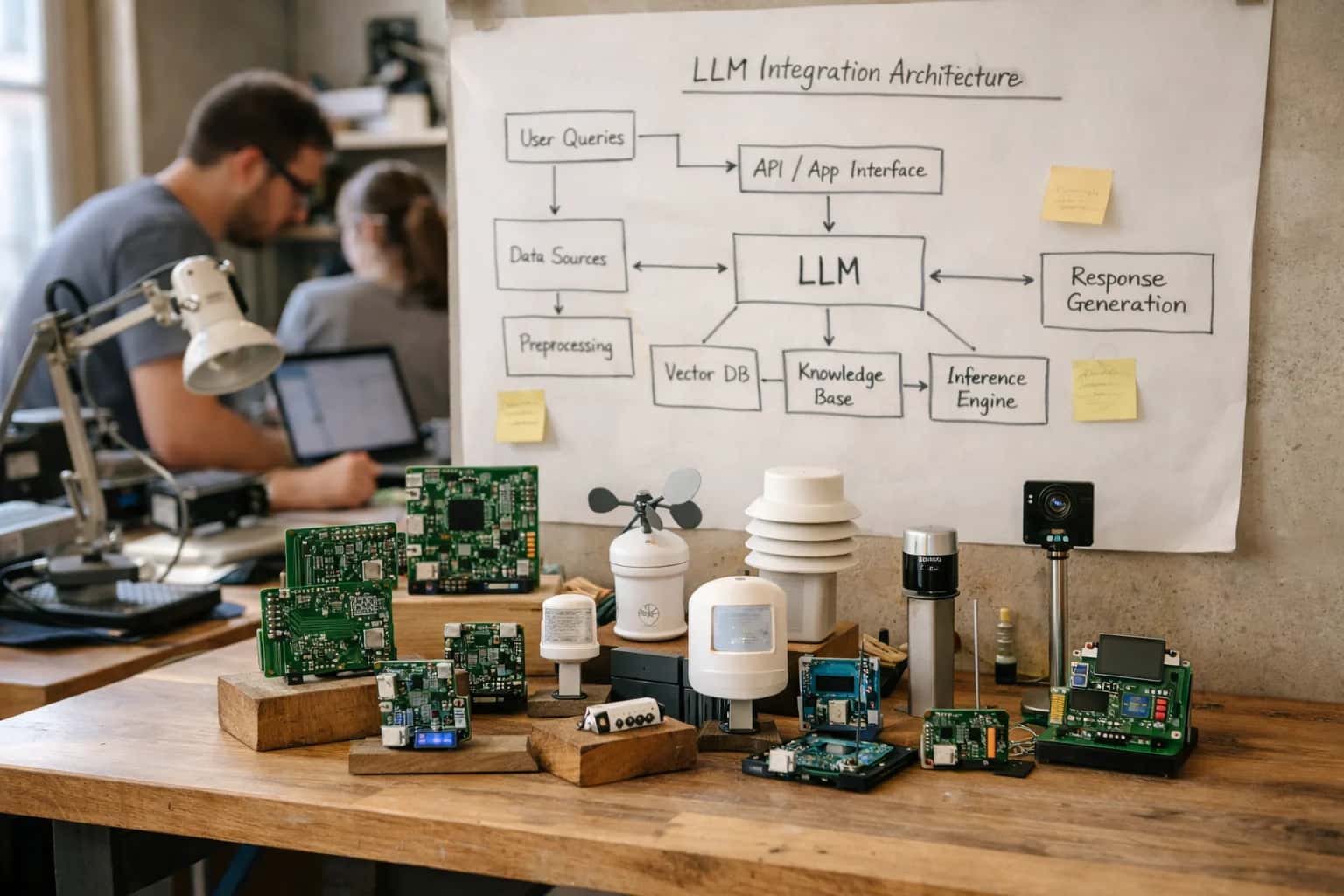
ARCHITECTURE FOR ROLLING FORECASTS
Where AI Fits into Xero's Budgeting Workflow
A technical blueprint for integrating AI agents with Xero's Budget Manager and reporting APIs to automate predictive forecasting and variance analysis.
A typical implementation involves a scheduled agent that runs post-month-close. It queries the Analytics API for actual revenue and expense lines by tracking category, then calculates variances. Using this variance data and external signals (like pipeline data from a CRM), a forecasting model proposes updated budget figures for future months. These proposed figures are written back to Xero's Budget Manager via API, often into a dedicated "Forecast" scenario, preserving the original budget for comparison. Key governance steps include approval workflows (e.g., Slack or email alerts to the budget owner) and maintaining a full audit log of all AI-suggested changes before they are committed.
For rollout, we recommend starting with a single high-impact budget area—such as Cost of Goods Sold or Sales & Marketing expenses—where variance is common and forecasting value is clear. The AI system can be configured to only suggest updates when variance exceeds a configurable threshold (e.g., >10%), reducing noise. This phased approach allows finance teams to build trust in the AI's recommendations and refine the prompting logic for their specific business model before scaling to the full chart of accounts. The end result is a budget that adapts to business performance in near-real time, shifting finance efforts from manual re-forecasting to strategic analysis of the AI's proposals.
ARCHITECTURE GUIDE
Key Xero APIs and Surfaces for AI Budgeting
Core Data Access for AI Models
The Budgeting API provides programmatic access to create, retrieve, and update budget figures for tracking categories, accounts, and tracking categories. This is the primary surface for an AI agent to read historical budgets and write new forecasted figures. It enables rolling budget updates based on actual performance data pulled from Xero.
For predictive forecasting, the Analytics API (Reports) is critical. It allows the AI system to query aggregated, time-series financial data (e.g., Profit & Loss, Balance Sheet) without complex report generation. This provides the raw performance data needed to train lightweight forecasting models or to calculate variances between actuals and the budget. The AI can use this to identify trends and suggest adjustments.
PREDICTIVE FORECASTING & VARIANCE EXPLANATION
High-Value AI Budgeting Use Cases for Xero
Xero's budgeting module provides a solid foundation, but AI can transform it from a static planning tool into a dynamic, predictive engine. These use cases show where to connect AI to automate forecasting, explain performance gaps, and maintain rolling budgets based on actuals.
01
Rolling Forecast Automation
AI continuously analyzes actual performance from Xero's Profit & Loss and Balance Sheet reports via the Analytics API. It automatically extends the budget forward each month, adjusting future periods based on trends, seasonality, and recent variances. This replaces manual quarterly re-forecasting sprints.
Quarterly -> Continuous
Forecast Cadence
02
Variance Explanation & Narrative Reporting
For each budget line item with a significant variance, an AI agent queries Xero's detailed transaction data and journal entries. It generates a plain-English explanation (e.g., 'Q3 marketing overspend driven by a one-time campaign with Vendor X') and attaches it to the budget report, saving FP&A hours of manual investigation.
Hours -> Minutes
Investigation Time
03
Predictive Budget Line Suggestions
During annual budget setup, AI reviews 2-3 years of historical Xero data, including tracking categories (departments/projects), to propose initial budget amounts. It learns from past approvals and flags atypical line items for review, acting as a copilot for finance managers.
1-2 Days
Setup Acceleration
04
Scenario Modeling for 'What-If' Planning
Integrate AI with Xero's budget data to enable conversational scenario analysis. Ask, 'What happens to net profit if we increase sales by 15% but COGS rises 5%?' The AI calculates the impact across the P&L and updates a scenario-specific budget version, empowering real-time decision-making.
Batch -> Real-time
Modeling Speed
05
Automated Budget-to-Actual Alerts
AI monitors Xero's webhooks for new transactions and journal entries. It compares them against the current budget and triggers Slack or email alerts to budget owners when spending in a category (e.g., 'Software Subscriptions') exceeds a dynamic threshold, enabling proactive cost control.
Reactive -> Proactive
Overspend Management
06
Multi-Currency Budget Reconciliation
For businesses using Xero's multi-currency features, AI automates the complex reconciliation of budgeted exchange rates versus actuals. It analyzes foreign currency gains/losses from the Bank Accounts and Currency Balances APIs, explaining their impact on the budget in the home currency.
Manual -> Automated
FX Impact Analysis
PRACTICAL AUTOMATION PATTERNS
Example AI Budgeting Workflows for Xero
These workflows illustrate how AI agents can connect to Xero's API to automate predictive forecasting, variance analysis, and rolling budget updates. Each pattern is designed to reduce manual effort in the planning cycle and provide data-driven insights directly within Xero's budgeting module.
Trigger: Monthly close process completes in Xero (detected via webhook for a locked accounting period).
Context/Data Pulled: The AI agent queries Xero's Reports API for the latest Profit & Loss statement and Balance Sheet. It also fetches the current budget version from the Budgets API for the relevant departments or tracking categories.
Model or Agent Action: A forecasting model compares actuals to budget line-by-line, calculates variances (absolute and percentage), and uses time-series analysis to project the next 3-6 months. The agent generates a narrative summary highlighting major drivers (e.g., "Sales in Services category exceeded budget by 15%, likely to continue based on pipeline").
System Update or Next Step: The agent uses Xero's Budgets API to create a new draft budget version with adjusted future periods. It posts the narrative summary as a note attached to the new budget draft within Xero.
Human Review Point: The draft budget and summary are automatically assigned to the relevant budget manager in Xero for review and approval before publication. The agent can be configured to send an email alert via Xero's notification system.
FROM STATIC SPREADSHEETS TO DYNAMIC FORECASTS
Implementation Architecture: Data Flow and System Design
A practical architecture for integrating predictive AI with Xero's budgeting module to automate forecasting, variance analysis, and rolling budget updates.
The integration connects to Xero's Budgets API and Reports API (specifically the Profit and Loss and Balance Sheet endpoints) to pull actuals and existing budget data. A scheduled agent, triggered via a secure webhook or cron job, executes a multi-step workflow: 1) It retrieves the latest actuals for the current period and YTD, 2) fetches the current budget plan, 3) sends this structured financial data—along with contextual metadata like business size, industry, and seasonality flags—to a configured LLM (e.g., GPT-4, Claude 3) via a secure inference endpoint. The LLM's role is to analyze variances, project trends based on historical performance, and generate a revised, forward-looking budget proposal.
The AI's output is a structured JSON payload containing proposed budget line items, confidence scores for each forecast, and narrative explanations for significant variances (e.g., "Sales in Q3 are projected to be 15% below plan due to seasonal downturn; recommend reducing marketing budget proportionally"). This payload is validated against business rules (e.g., caps on certain expense categories) and, if approved via an optional human-in-the-loop step in a tool like n8n or a custom dashboard, is posted back to Xero via the Budgets API to create a new, updated budget version. All actions are logged with a full audit trail, linking the AI's reasoning to the specific budget revision.
For governance, the system is designed with rollback capabilities and approval workflows. Budget updates can be configured to require manager sign-off via email or within a connected platform like Slack before being committed to Xero. The architecture also includes a feedback loop where actuals from subsequent periods are used to fine-tune the forecasting models, improving accuracy over time. This turns Xero's static budgeting tool into a dynamic, AI-augmented financial planning system that adapts to real business performance.
AUTOMATED BUDGETING FOR XERO
Code and Payload Examples
Connecting to Xero's Budget API
Integrating AI for automated budgeting requires a robust connection to Xero's API ecosystem. The primary surface is the Budgets API endpoint, which allows for programmatic creation, retrieval, and updating of budget data linked to Xero's Chart of Accounts.
A typical integration architecture involves:
- Authentication: Using OAuth 2.0 to securely access the tenant's Xero organization.
- Data Retrieval: Fetching actuals (spending and revenue) from the Reports API (specifically the
ProfitAndLossreport) for historical periods. - Budget Management: Creating or updating budget lines via the
POST /api.xro/2.0/Budgetsendpoint.
This server-side pattern ensures the AI engine has real-time access to financial performance, enabling predictive adjustments. Webhooks from Xero can also be configured to trigger AI re-forecasting when significant actuals are posted.
AI-ENHANCED BUDGETING WORKFLOWS
Realistic Time Savings and Business Impact
How AI integration transforms manual, periodic budgeting in Xero into a continuous, predictive process, freeing up finance teams for analysis.
| Budgeting Activity | Traditional Process | With AI Integration | Key Impact Notes |
|---|---|---|---|
Historical Data Consolidation | Manual export from multiple reports | Automated API sync and aggregation | Eliminates 2-4 hours of prep work per budget cycle |
Variance Analysis & Explanation | Manual line-by-line review in spreadsheets | AI-generated narrative on key drivers | Reduces investigation time from hours to minutes for major variances |
Rolling Forecast Updates | Quarterly or annual static refresh | Continuous update based on actuals and trends | Shifts forecasting from a project to an operational process |
Departmental Budget Drafting | Email templates and manual consolidation | AI-assisted first draft with guardrails | Cuts initial drafting time by 50-70% for managers |
Scenario Modeling | Complex, error-prone spreadsheet copies | Rapid scenario generation via AI prompts | Enables same-day analysis of 3-5 scenarios vs. next-week |
Approval Workflow Coordination | Manual follow-ups and status tracking | AI-driven task reminders and summary digests | Reduces budget finalization cycle by 3-5 business days |
Report Generation & Distribution | Manual formatting and email distribution | Automated, scheduled report packages | Ensures stakeholders receive consistent, timely insights |
PRODUCTION ARCHITECTURE FOR XERO
Governance, Security, and Phased Rollout
A secure, governed approach to deploying AI-powered budgeting that integrates with Xero's data model and user workflows.
A production integration connects to Xero's Organisation, Accounts, and Budgets API endpoints via OAuth 2.0, with all AI operations scoped to a dedicated service account. Forecasts and variance explanations are generated by an inference service that queries Xero's Reports API (e.g., Profit & Loss, Balance Sheet) and the Bank Transactions feed. All AI-generated budget suggestions are written back to Xero as draft budget records via the POST /Budgets endpoint, never directly publishing. This creates a mandatory human review step within Xero's native interface, maintaining the accountant's control over the final GL.
Rollout follows a three-phase pattern: 1) Read-Only Analysis, where AI analyzes historical performance and generates forecast reports without writing back, 2) Assisted Drafting, where AI creates draft budgets for a single entity or cost center, and 3) Multi-Entity Orchestration, where AI manages rolling budget updates across all departments, using Xero's tracking categories for dimensional alignment. Each phase includes a parallel audit log, capturing the source data, the AI's rationale, and the user's final action, which is stored externally for compliance and can be linked to Xero's built-in history trails.
Governance is enforced through a policy layer that sits between the AI and Xero's API. This layer validates all suggestions against configurable rules—such as maximum variance thresholds, approval chains for capital expenditures flagged in the budget, and segregation of duties—before a draft budget is created. For security, all data in transit is encrypted, and PII is masked at the inference layer. The system is designed for incremental adoption, allowing finance teams to start with a single high-variance account (e.g., Marketing Expense) before scaling to the full chart of accounts, ensuring trust is built alongside capability.
Enabling Efficiency, Speed & Accuracy
Intelligent Analysis, Decision & Execution
We build AI systems for teams that need search across company data, workflow automation across tools, or AI features inside products and internal software.
Talk to Us
Search across company data
Give teams answers from docs, tickets, runbooks, and product data with sources and permissions.
Useful when people spend too long searching or get different answers from different systems.
Enterprise searchRAGPermissions
Read more
Automate internal workflows
Use AI to route work, draft outputs, trigger actions, and keep approvals and logs in place.
Useful when repetitive work moves across multiple tools and teams.
AI agentsWorkflow automationGovernance
Read more
Add AI to products and internal tools
Build assistants, guided actions, or decision support into the software your team or customers already use.
Useful when AI needs to be part of the product, not a separate tool.
AI integrationDecision supportModel routing
Read moreIMPLEMENTATION GUIDE
Frequently Asked Questions (FAQ)
Practical questions for finance teams and system integrators planning AI-enhanced budgeting within Xero.
AI integrates with Xero's budgeting module via its REST API and the newer Analytics API (currently in preview).
Typical data flow:
- Extract: Your integration service (or an Inference Systems agent) calls the
GET /Budgetsendpoint to retrieve existing budget templates and actuals from theGET /Reports/ProfitAndLossorGET /Reports/BudgetSummaryendpoints. - Process: Historical performance, current actuals, and external drivers (e.g., sales pipeline from a CRM) are fed into forecasting models.
- Update: The AI generates proposed budget line adjustments or new rolling forecasts, which are posted back to Xero using the
PUT /Budgets/{BudgetID}endpoint to update existing budgets or create new ones viaPOST /Budgets.
Key Consideration: The Analytics API provides more granular, dimensional data crucial for predictive modeling, but requires specific API permissions and careful mapping to your chart of accounts structure.

About the author
Prasad Kumkar
CEO & MD, Inference Systems
Prasad Kumkar is the CEO & MD of Inference Systems and writes about AI systems architecture, LLM infrastructure, model serving, evaluation, and production deployment. Over 5+ years, he has worked across computer vision models, L5 autonomous vehicle systems, and LLM research, with a focus on taking complex AI ideas into real-world engineering systems.
His work and writing cover AI systems, large language models, AI agents, multimodal systems, autonomous systems, inference optimization, RAG, evaluation, and production AI engineering.
LinkedIn
Limited slotsGet a Free AI Consultation
Partnered with leading AI, data, and software stack.





How We Work
Custom AI workflows for your Business
One-fit-all AI don't work for modern businesses. At Inferensys, we aim to understand your business & custom requirements; which we use to define most efficient agentic workflows, the data, and the tools for your business.
01
Review the use case
We understand the task, the users, and where AI can actually help.
Read more02
Pick the right approach
We define what needs search, automation, or product integration.
Read more03
Build the first useful version
We implement the part that proves the value first.
Read more04
Improve from there
We add the checks and visibility needed to keep it useful.
Read moreThe first call is a practical review of your use case and the right next step.
Talk to Us