AI integration for Sage Intacct cash flow management connects at three primary surfaces: the General Ledger for historical transaction analysis, the Accounts Receivable and Payable modules for real-time obligation tracking, and the Projects and Dimensions data for granular, entity-specific forecasting. The integration typically uses Sage Intacct's REST API and webhook subscriptions to stream journal entries, open invoices, bills, and project commitments into a vector-enabled data pipeline. This creates a live, queryable financial context layer that AI models use to predict cash positions, not in a silo, but anchored to the exact GL accounts, departments, and legal entities defined in Intacct.

Integration
AI Cash Flow Management for Sage Intacct
Enterprise-focused integration for AI-powered cash flow forecasting and management within Sage Intacct, leveraging its multi-entity and project data for accurate predictions.
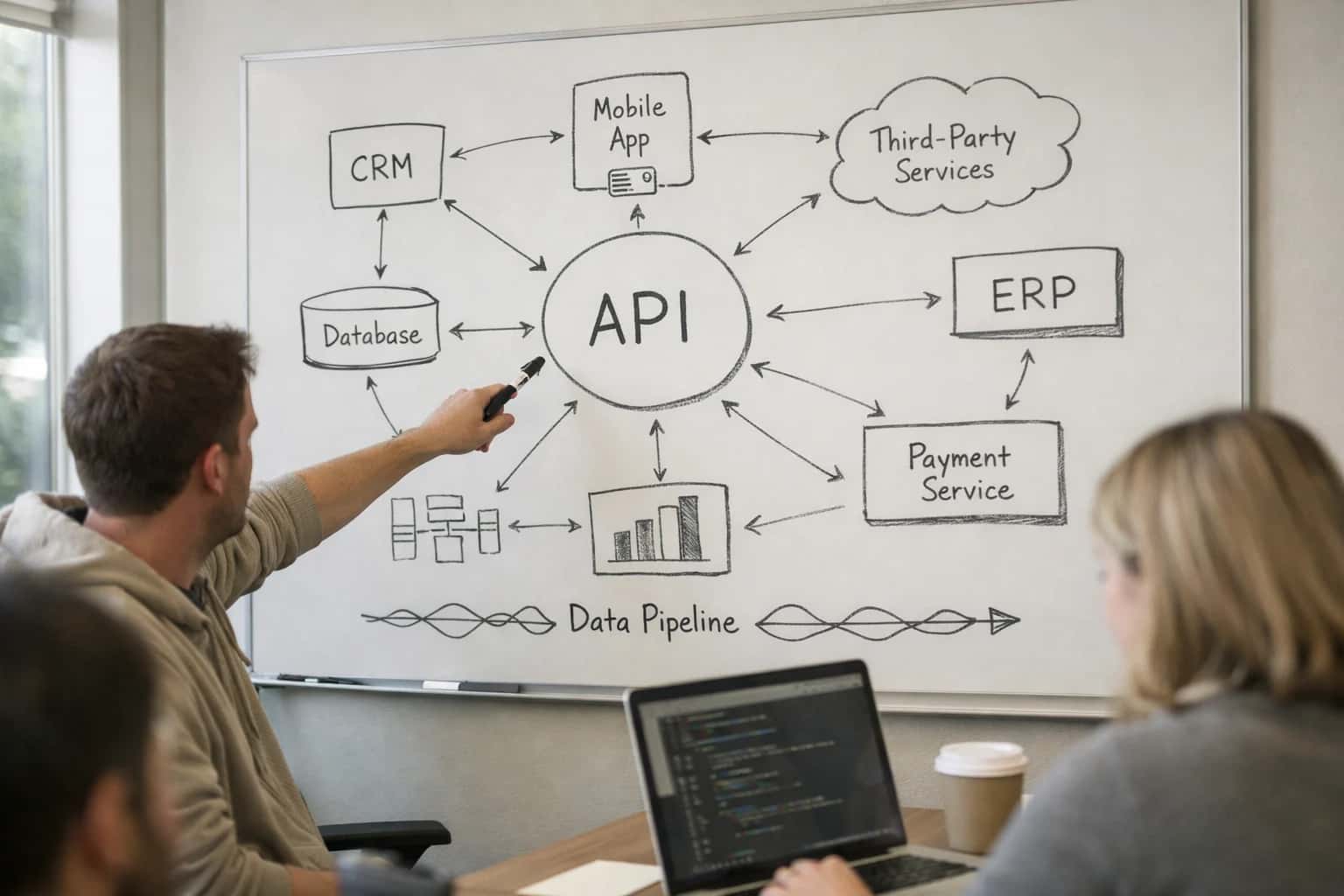
ARCHITECTURE AND ROLLOUT
Where AI Fits into Sage Intacct Cash Flow Management
A practical blueprint for embedding AI-driven forecasting and management directly into Sage Intacct's multi-entity financial workflows.
Implementation focuses on automating high-friction workflows. For example, an AI agent can be triggered at the close of each business day to analyze the Cash Management dashboard, reconcile it against predicted inflows from the AR Aging Report, and flag any variances exceeding a configured threshold for the controller. For project-based firms, AI can model cash flow by analyzing Project Budgets versus Actuals and scheduled Customer Invoice milestones, providing early warnings for potential shortfalls at the project or contract level. The output isn't just a forecast; it's actionable intelligence written back to Intacct as Custom Records or surfaced in Custom Dashboards, enabling treasury teams to make decisions within their existing system of record.
Rollout is phased, starting with a single entity or business unit to validate model accuracy against actual cash movements. Governance is critical: all AI-suggested forecasts or alerts should be logged as Audit Trail entries in Intacct, and key predictions (like a recommended draw on a line of credit) should route through existing Approval Workflows. This controlled integration ensures finance teams maintain oversight while gaining the proactive insights needed to reduce manual cash positioning from hours to minutes. For a deeper look at connecting AI to Sage Intacct's core modules, see our guide on AI Integration for Sage Intacct.
ARCHITECTURE SURFACES
Key Sage Intacct Modules and APIs for Cash Flow AI
GL, Statistical Accounts, and Dimensions
The General Ledger is the core system of record for cash flow forecasting. AI models primarily interact with the GLENTRY and GLBATCH objects to analyze historical cash movements. The true power for forecasting lies in Sage Intacct's dimensional accounting.
Key Data Points for AI:
- Statistical Accounts: Track non-financial metrics (e.g., headcount, square footage) that are leading indicators of cash outflows for payroll or rent.
- Custom Dimensions: Attributes like
Department,Project,Location, andItemallow AI to forecast cash flow at a granular, operational level. For example, predicting cash needs for a specific project based on its burn rate.
Integration Pattern: AI systems query the GLBATCH and GLENTRY APIs, often filtered by dimension values, to build time-series datasets. Forecasts are then written back as future-dated journal entries (GLBATCH) into a dedicated forecast dimension for comparison against actuals.
ENTERPRISE CASH FLOW AUTOMATION
High-Value AI Cash Flow Use Cases for Sage Intacct
Integrate AI directly into Sage Intacct's multi-entity and project accounting data to automate forecasting, optimize working capital, and provide real-time liquidity insights for finance controllers and CFOs.
01
Multi-Entity Cash Position Consolidation
An AI agent continuously aggregates real-time cash balances, AR aging, and AP commitments across all Sage Intacct entities and departments. It generates a unified, daily cash position report, flagging entities with liquidity constraints or surplus cash for intercompany funding opportunities.
Days -> Real-time
Consolidation speed
02
Project-Driven Cash Flow Forecasting
Leverages Sage Intacct's project accounting module to forecast cash inflows/outflows based on project milestones, billing schedules, and vendor commitments. The AI model predicts timing of cash needs for active projects, improving capital allocation for professional services and construction firms.
±5% Accuracy
Typical forecast improvement
03
Intelligent Collections Prioritization
Integrates with the AR module to analyze customer payment history, invoice size, and communication logs. The AI scores and ranks overdue invoices by likelihood of payment, suggesting which accounts to contact first and drafting personalized collection emails logged directly in Sage Intacct.
Hours -> Minutes
Prioritization time
04
Automated Payment Run Optimization
AI analyzes vendor terms, early payment discounts, and current cash position to recommend an optimal weekly payment schedule. It prepares a proposed payment run within Sage Intacct's AP module, maximizing discount capture while preserving necessary working capital, with full audit trail.
1-3% Saved
Potential discount capture
05
Scenario Modeling for Capital Events
An AI copilot allows finance teams to ask "what-if" questions (e.g., impact of a 15-day delay in receivables, or a new capital expenditure). It simulates scenarios using live GL, AR, and AP data, projecting cash flow impacts and suggesting mitigating actions, all within the Sage Intacct environment.
06
Anomaly Detection in Cash Transactions
Monitors the cash-related journal entry and bank feed streams in real-time to identify unusual patterns—like unexpected large outflows, duplicate payments, or deviations from seasonal norms. Alerts are routed to the controller's dashboard with suggested investigation steps, reducing fraud and error risk.
Batch -> Real-time
Detection mode
ENTERPRISE AUTOMATION PATTERNS
Example AI Cash Flow Workflows for Sage Intacct
These workflows illustrate how AI agents integrate directly with Sage Intacct's multi-entity GL, AR, AP, and project modules to automate cash flow forecasting, working capital analysis, and liquidity management.
Trigger: Scheduled job runs each morning before market open.
Context/Data Pulled:
- AR Data: Open invoices (
invoiceobject) filtered bydue_date,customer_id, andamount_dueacross all subsidiaries. - AP Data: Approved bills (
billobject) filtered bydue_date,vendor_id, andamount_due. - GL Data: Current bank account balances (
bank_accountobject) and recent transaction history. - Project Data: Unbilled time and expenses (
projectobjects) with expected billing dates.
Model/Agent Action:
- An AI model trained on historical payment patterns predicts the probability and timing of payment for each open invoice and bill.
- The agent aggregates these predictions, applying entity-specific currency exchange rates from Sage Intacct.
- It generates a consolidated 7-day cash forecast, highlighting days with potential shortfalls.
System Update/Next Step:
- Forecast is written to a custom Sage Intacct object (
cash_forecast) for dashboarding. - A summary email is sent to the corporate treasurer via a webhook to the corporate communication system.
- For forecasted shortfalls, the system flags high-probability collections targets in the AR aging report.
Human Review Point: The treasurer reviews the forecast and the flagged AR items, deciding whether to initiate early payment outreach or adjust payment terms with vendors.
ENTERPRISE-GRADE INTEGRATION PATTERN
Implementation Architecture: Data Flow, APIs, and Guardrails
A production-ready blueprint for connecting AI forecasting models to Sage Intacct's multi-entity data model, APIs, and approval workflows.
The integration is built on Sage Intacct's REST API and SDK, primarily interacting with core objects like GLDETAIL (journal entries), ARINVOICE, APBILL, and CCTRANSACTION (credit card charges). For forecasting, the AI agent first extracts a time-series dataset via the GLBATCH and STATEMENT endpoints, enriched with dimensional data from LOCATION, DEPARTMENT, and PROJECT entities. This data is staged in a secure intermediate layer (like a dedicated database or data warehouse) where the AI model—trained on historical patterns—runs daily to generate probabilistic cash flow forecasts. Predictions are then written back to Sage Intacct as custom objects or attached to existing records via the API, making them accessible within custom dashboards or the Sage Intacct Customization Suite.
Key workflows are automated through webhook-triggered agents. For instance, when a new ARINVOICE is created or an APBILL is posted, a webhook fires, prompting an AI agent to re-run the near-term forecast and update a Cash Position dashboard. For collections, an agent analyzes the ARAGING report, segments customers by payment risk using transaction history, and drafts personalized collection emails via the SENDEMAIL function, logging all activity in a CUSTOMERNOTE. Governance is enforced through RBAC; forecast updates and automated actions are scoped to specific user roles and require audit trail creation in AUDITTRAIL for any system-generated journal entry or communication.
Rollout follows a phased approach: start with a read-only analysis phase to validate model accuracy against a single entity's historical data, then progress to a pilot that writes forecast data to a sandbox company. Full production deployment includes establishing guardrails like forecast variance thresholds that trigger human review, rate limiting on API calls to prevent system overload, and a weekly reconciliation process where the finance team reviews AI-proposed cash allocations against actual bank feeds. This architecture ensures the AI augments—rather than replaces—existing financial controls, providing actionable intelligence while maintaining Sage Intacct's integrity as the system of record.
SAGE INTACCT CASH FLOW FORECASTING
Code and Integration Patterns
Core Data Objects for Forecasting
Effective cash flow forecasting requires pulling multi-dimensional data from Sage Intacct's API. The primary objects are:
- GLDETAIL: The core transaction table for historical cash flow analysis. Filter by
ACCOUNTNOfor cash accounts (e.g.,10100,10200). - ARINVOICE & APBILL: For open receivables and payables to model near-term inflows/outflows.
- CUSTOMER & VENDOR: To apply payment term logic and historical on-time payment rates.
- PROJECT & DIMENSION: For entity, department, or location-specific forecasts.
A robust implementation uses the Sage Intacct Python SDK or direct REST calls with OAuth2. The key is to retrieve data with sufficient history (e.g., 24 months) and granularity (daily) to train time-series models. Always include RECORDNO and CREATEDDATE for incremental syncs.
python# Example: Retrieve GLDETAIL for cash accounts from sageintacctsdk import SageIntacctSDK sdk = SageIntacctSDK( sender_id='YOUR_SENDER_ID', sender_password='YOUR_PASSWORD', user_id='YOUR_USER_ID', company_id='YOUR_COMPANY_ID', user_password='YOUR_USER_PASSWORD' ) # Build a filter for cash account transactions filter_dict = { 'and': [ {'greaterthan': {'field': 'POSTINGDATE', 'value': '2023-01-01'}}, {'in': {'field': 'ACCOUNTNO', 'value': ['10100', '10200']}} ] } transactions = sdk.gl_detail.get_all(filter=filter_dict, pagesize=1000)
AI-POWERED CASH FLOW FORECASTING
Realistic Time Savings and Business Impact
This table outlines the operational and strategic impact of integrating AI-driven cash flow forecasting directly into Sage Intacct's multi-entity and project accounting environment.
| Process | Before AI | After AI | Key Impact |
|---|---|---|---|
Data Consolidation for Forecasting | Manual export/import from GL, projects, AR/AP modules; 4-8 hours weekly | Automated, scheduled data pulls via API; near real-time sync | Eliminates manual data prep, ensures forecasts use latest actuals |
Forecast Model Generation | Static spreadsheet models; updated monthly or quarterly | Dynamic AI models that learn from historical patterns; updated daily or weekly | Shifts from reactive, lagging views to proactive, adaptive predictions |
Scenario Analysis (e.g., late payments, new project) | Manual adjustment of spreadsheet assumptions; 2-3 hours per scenario | AI generates multiple scenarios in minutes based on defined parameters | Enables rapid stress-testing for better strategic decision-making |
Anomaly & Variance Explanation | Manual investigation of forecast vs. actual variances; next-day analysis | AI flags significant deviations in real-time with suggested root causes | Reduces time to insight from days to hours, improving course correction |
Executive Reporting & Narrative | Manual compilation of charts and written summaries; half-day per report | AI auto-generates narrative summaries and visualizations from forecast data | Frees FP&A time for analysis versus report assembly |
Multi-Entity Roll-Up & Consolidation | Manual consolidation of forecasts from separate entity files; prone to errors | AI aggregates and harmonizes forecasts across all Sage Intacct entities automatically | Improves accuracy and provides a single source of truth for group cash position |
Project-Based Cash Flow Projection | Estimates based on static project budgets, not actual burn rate | AI correlates project accounting data (time, expenses) with cash outflows for live projections | Provides precise cash needs for project portfolios, improving resource planning |
ENTERPRISE-GRADE AI DEPLOYMENT
Governance, Security, and Phased Rollout
A practical framework for deploying AI cash flow management within Sage Intacct with controlled risk and measurable impact.
A production AI integration for Sage Intacct must operate within the platform's existing security and data governance model. This means the AI agent interacts solely through Sage Intacct's official REST API and webhooks, inheriting the platform's role-based access controls (RBAC), audit trails, and data encryption. All AI-generated forecasts, anomaly flags, or suggested journal entries are written back as custom objects, journal entry drafts, or report comments—never directly modifying live financials without review. This ensures a clear, auditable separation between AI-suggested actions and user-approved postings, maintaining the integrity of your GL.
A phased rollout is critical for adoption and trust. We recommend starting with a read-only analysis phase, where the AI system ingests historical GL, AR, and AP data to build baseline forecasts and identify past cash flow patterns without making any system changes. The second phase introduces human-in-the-loop workflows, such as presenting 13-week cash flow forecasts in a custom dashboard and flagging high-probability payment delays for collector review. The final phase enables controlled automation, like auto-generating cash position reports for entity managers or suggesting intercompany cash transfer entries for treasurer approval.
Governance is maintained through a centralized AI Operations Layer that logs all model inferences, user interactions, and data queries. This layer, which can be deployed in your cloud environment, manages prompt versions, tracks forecast accuracy over time, and enforces data retention policies. Regular review cycles with finance leadership should compare AI-driven cash projections against actuals, tuning the models for your specific business cycles. This structured approach de-risks the integration, aligns it with financial controls, and delivers incremental value, transforming cash flow management from a reactive reporting task into a proactive, intelligence-driven operation.
Enabling Efficiency, Speed & Accuracy
Intelligent Analysis, Decision & Execution
We build AI systems for teams that need search across company data, workflow automation across tools, or AI features inside products and internal software.
Talk to Us
Search across company data
Give teams answers from docs, tickets, runbooks, and product data with sources and permissions.
Useful when people spend too long searching or get different answers from different systems.
Enterprise searchRAGPermissions
Read more
Automate internal workflows
Use AI to route work, draft outputs, trigger actions, and keep approvals and logs in place.
Useful when repetitive work moves across multiple tools and teams.
AI agentsWorkflow automationGovernance
Read more
Add AI to products and internal tools
Build assistants, guided actions, or decision support into the software your team or customers already use.
Useful when AI needs to be part of the product, not a separate tool.
AI integrationDecision supportModel routing
Read moreIMPLEMENTATION AND WORKFLOW DETAILS
Frequently Asked Questions
Practical questions about integrating AI for cash flow forecasting and management directly into your Sage Intacct environment.
The integration uses Sage Intacct's REST API and ODBC connection to your data warehouse (if applicable) to pull historical and real-time data. The AI agent is granted read access to specific objects and dimensions critical for cash flow modeling:
- GL Transaction Details: Historical cash inflows and outflows.
- Accounts Receivable (AR): Open invoices, customer payment terms, and aging reports.
- Accounts Payable (AP): Unpaid bills and vendor terms.
- Projects & Contracts: Future billable milestones and committed spend.
- Multi-Entity Structures: Consolidates data across subsidiaries for a unified view.
The agent runs on a scheduled basis (e.g., nightly) to refresh its dataset, ensuring forecasts are based on the latest transactional data without impacting Intacct's performance during business hours.

About the author
Prasad Kumkar
CEO & MD, Inference Systems
Prasad Kumkar is the CEO & MD of Inference Systems and writes about AI systems architecture, LLM infrastructure, model serving, evaluation, and production deployment. Over 5+ years, he has worked across computer vision models, L5 autonomous vehicle systems, and LLM research, with a focus on taking complex AI ideas into real-world engineering systems.
His work and writing cover AI systems, large language models, AI agents, multimodal systems, autonomous systems, inference optimization, RAG, evaluation, and production AI engineering.
LinkedIn
Limited slotsGet a Free AI Consultation
Partnered with leading AI, data, and software stack.





How We Work
Custom AI workflows for your Business
One-fit-all AI don't work for modern businesses. At Inferensys, we aim to understand your business & custom requirements; which we use to define most efficient agentic workflows, the data, and the tools for your business.
01
Review the use case
We understand the task, the users, and where AI can actually help.
Read more02
Pick the right approach
We define what needs search, automation, or product integration.
Read more03
Build the first useful version
We implement the part that proves the value first.
Read more04
Improve from there
We add the checks and visibility needed to keep it useful.
Read moreThe first call is a practical review of your use case and the right next step.
Talk to Us