AI integrates with NetSuite at three primary layers: the data layer (via SuiteTalk REST/SOAP APIs and SuiteAnalytics Connect), the logic layer (via SuiteScript 2.x RESTlets and scheduled scripts), and the user interface (via Suitelets, portlets, or custom fields). This allows AI agents to read from core records like Transactions, Customers, and Items; execute business logic such as creating Journal Entries or updating Sales Orders; and present insights directly within the NetSuite UI. The most common integration points are SuiteScript RESTlets, which act as secure endpoints for external AI services to call, and scheduled scripts, which can run AI-powered batch jobs for tasks like nightly reconciliation or anomaly detection.

Integration
AI Integration for Oracle NetSuite
A technical guide for embedding AI agents into Oracle NetSuite to automate financial close, detect anomalies, generate custom reports, and orchestrate complex accounting workflows using SuiteScript and RESTlets.
ARCHITECTURE AND ROLLOUT
Where AI Fits into the NetSuite Stack
A practical blueprint for embedding AI agents into NetSuite's data model, automation layer, and user workflows to augment—not replace—your existing investment.
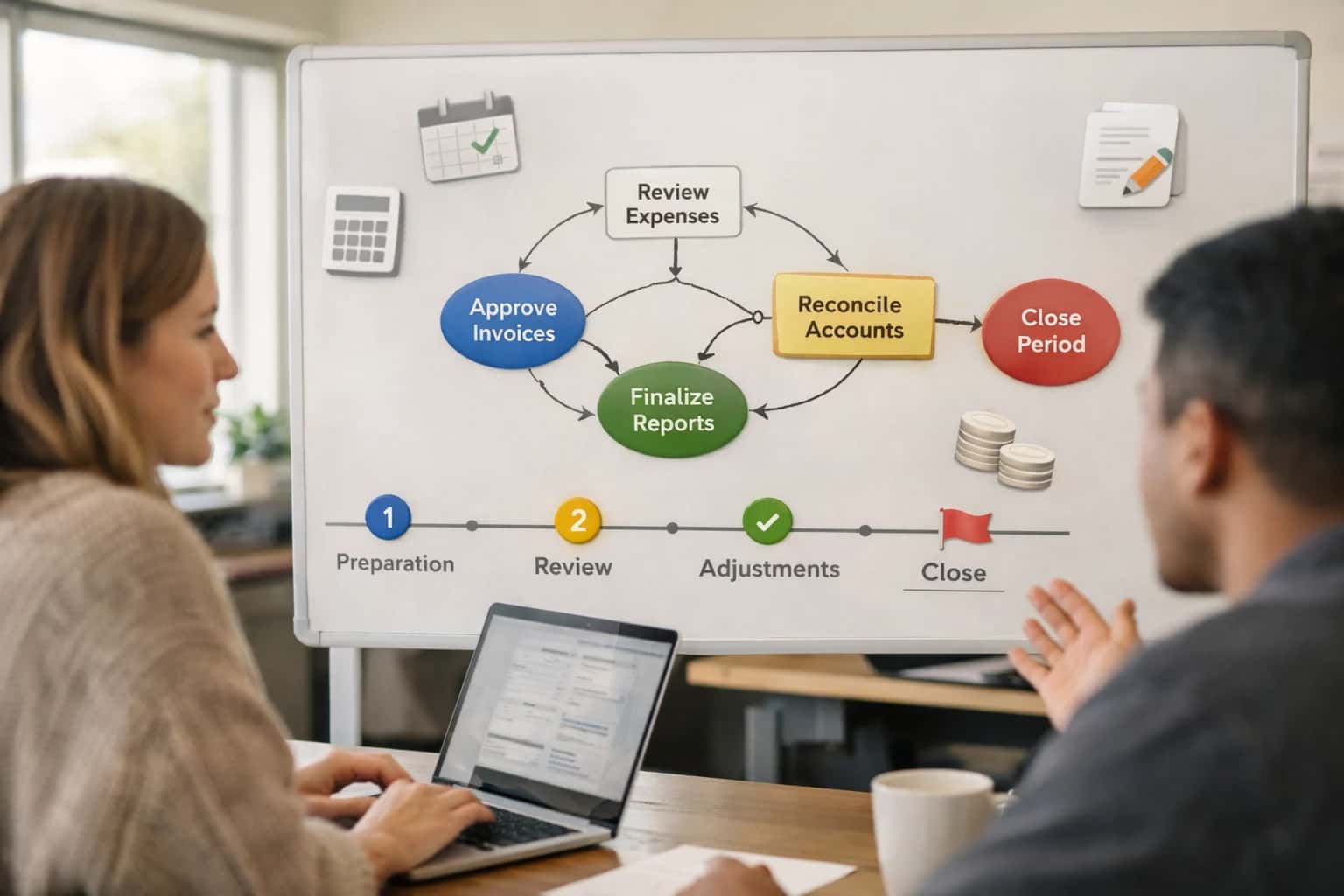
For a production rollout, start with a single, high-impact workflow. A typical pattern is an AI agent for automated period-end close. The agent, hosted externally for GPU access, is triggered via a scheduled script. It calls the NetSuite API to fetch unreconciled bank statement lines and transaction data, uses an LLM with retrieval-augmented generation (RAG) over your chart of accounts and historical patterns to suggest matches, and posts proposed journal entries via a SuiteScript RESTlet for human review. This reduces manual matching from hours to minutes. Governance is critical: all AI-generated actions should be logged in a custom record, require approval based on NetSuite's native Approval Workflows, and be traceable through the standard System Notes audit trail.
The value isn't in replacing NetSuite's robust core but in augmenting its human-intensive edges. Focus on workflows where judgment is needed on unstructured data or complex patterns: variance analysis in financial reports, custom financial report generation from natural language queries, or anomaly detection in vendor payments. By using NetSuite as the system of record and AI as an orchestration layer, you maintain data integrity, leverage existing roles and permissions, and deliver measurable impact—like closing the books a day faster—without a risky platform migration. For a deeper look at specific automation patterns, see our guide on AI-Driven Anomaly Detection in NetSuite.
WHERE TO CONNECT AI AGENTS AND AUTOMATION
Key NetSuite Surfaces for AI Integration
The Automation Core
SuiteScript (JavaScript) and RESTlets provide the primary programmatic surface for integrating AI directly into NetSuite's business logic. This is where you build server-side AI agents that act on records, trigger workflows, and process data in real-time.
Common AI Integration Patterns:
- Scheduled Scripts: Deploy agents that run on a schedule (e.g., nightly) to perform tasks like anomaly detection on journal entries, automated reconciliation proposals, or variance analysis for the period-end close.
- User Event Scripts: Inject AI logic before or after record submissions. Example: Before a Vendor Bill is approved, an AI agent reviews line items against PO and receipt history to flag discrepancies.
- RESTlets: Expose custom endpoints for external AI services to securely push or pull data. Use for bidirectional workflows where an external LLM or RAG system needs to query NetSuite data or write back insights.
Implementation Note: AI logic often runs externally (e.g., via API calls to OpenAI, Anthropic, or a private model). SuiteScript handles the secure data marshaling, context building, and result application within NetSuite's transactional boundaries.
ENTERPRISE AUTOMATION
High-Value AI Use Cases for NetSuite
Integrate AI directly into NetSuite's SuiteScript and SuiteTalk APIs to automate complex financial workflows, reduce manual effort, and deliver real-time insights. These patterns are designed for enterprise finance, accounting, and operations teams.
01
Automated Period-End Close
Orchestrate the financial close across multiple subsidiaries using AI agents. Automate reconciliation of bank feeds and intercompany balances via RESTlets, propose adjusting journal entries, and manage the close checklist. Reduces close cycle time and manual coordination.
Days -> Hours
Close acceleration
02
Anomaly Detection & Variance Analysis
Deploy statistical models on NetSuite's GL and transaction data to flag unusual journal entries, duplicate payments, or significant budget variances. AI reviews Journal Entry and Transaction records in real-time, alerting controllers via SuiteScript workflows.
Batch -> Real-time
Review cadence
03
Intelligent Accounts Payable Processing
Build an AI layer that extracts data from vendor invoices (PDF/email), matches to Purchase Order and Item Receipt records in NetSuite, and routes bills for approval. Handles exceptions and learns from user corrections to improve matching logic over time.
Hours -> Minutes
Invoice processing
04
Dynamic Financial Report Generation
Use AI to generate narrative financial reports and executive summaries by querying NetSuite's saved searches and analytics via SuiteTalk. Automates the creation of monthly P&L commentaries, cash flow analyses, and board packages, pulling data from the Financial Report and General Ledger modules.
1 sprint
Report development
05
AI-Powered Collections Management
Integrate AI with the Customer and Invoice records to prioritize collection efforts. Analyze aging reports, payment history, and external data to score customer risk. Automate dunning email sequences and log all communications back to the customer record within NetSuite.
Same day
Action prioritization
06
Multi-Entity Consolidation & Eliminations
Automate complex consolidation journal entries for multi-subsidiary structures. AI agents map intercompany transactions across Subsidiary records, propose elimination entries, and maintain audit trails. Critical for enterprises using NetSuite's OneWorld.
Manual -> Automated
Workflow shift
SUITESCRIPT AND RESTLET INTEGRATION PATTERNS
Example AI Agent Workflows in NetSuite
These are production-ready workflows for integrating AI agents into NetSuite's financial operations. Each pattern leverages SuiteScript for in-platform automation and RESTlets for secure, external AI service orchestration.
This agent automates the review of high-volume journal entries before posting, flagging outliers for human review.
Trigger: A new journal entry is saved in a Pending Review status.
Context Pulled: The SuiteScript fetches:
- The journal entry lines (account, debit/credit, class, department, location)
- Historical averages and standard deviations for the same account/period from a saved search.
- The submitting user's role and typical posting patterns.
Agent Action: The data is sent via a RESTlet to an external AI service. The model evaluates:
- Statistical Outliers: Amounts deviating >2σ from the historical norm for that account.
- Dimensional Inconsistencies: Unusual class/department combinations.
- Round-Number Flags: Entries with perfectly round amounts that may indicate estimates.
System Update: The RESTlet returns a JSON payload:
json{ "entryId": "JE12345", "riskScore": 0.87, "flags": ["Amount outlier for account 5100", "Unusual department for this class"], "recommendation": "REVIEW_REQUIRED" }
A subsequent SuiteScript updates the journal entry's memo with the flags and, if risk is high, reassigns the approval workflow to a senior accountant.
Human Review Point: All entries with a riskScore > 0.7 are routed to a dedicated approval queue with the AI-generated context appended.
ENTERPRISE-GRADE AI ORCHESTRATION
Implementation Architecture: Data Flow & Guardrails
A production-ready integration for Oracle NetSuite connects AI agents to SuiteScript RESTlets, ensuring data integrity, auditability, and controlled automation.
The core integration pattern uses NetSuite's SuiteScript 2.x RESTlets as the secure API gateway. AI agents, hosted externally, call these RESTlets to perform actions like fetching open invoices for collections analysis, posting proposed adjusting journal entries, or retrieving GL data for variance explanations. This keeps all business logic and data access permissions within NetSuite's governed environment. For data retrieval, agents query Saved Searches or SuiteAnalytics Connect to pull structured datasets (e.g., Transaction, Journal Entry, Customer records) without direct database access. For write-back, agents submit payloads to custom RESTlets that enforce validation, initiate approval workflows if needed, and log all actions via System Notes.
A critical guardrail is the human-in-the-loop approval step for material financial actions. For example, an AI agent analyzing period-end close might identify and draft a complex intercompany elimination journal. Instead of posting directly, the RESTlet creates a Custom Record for the proposed entry, triggers a notification to the controller in NetSuite, and waits for a manual approval via a Suitelet interface before the nlapiSubmitRecord function is executed. All data flows are logged with a correlation ID, allowing full traceability from the AI's prompt through to the resulting NetSuite transaction. This architecture ensures compliance with financial controls while automating the heavy lifting of data analysis and draft preparation.
Rollout follows a phased approach, starting with read-only agents for financial reporting and anomaly detection that pose no risk to the ledger. Subsequent phases introduce write-back for low-risk, high-volume tasks like automated transaction categorization in the bank feed, followed by controlled agents for close checklist management and collections outreach drafting. Each phase is governed by a dedicated Custom Role in NetSuite, limiting the AI's access to specific records, forms, and fields. This role-based model, combined with the stateless RESTlet pattern, allows the AI integration to scale securely across business units and subsidiaries without compromising NetSuite's native audit trails. For teams managing complex consolidations, this architecture turns NetSuite from a system of record into an intelligent, automated financial command center.
AI INTEGRATION FOR ORACLE NETSUITE
Code Examples: SuiteScript & API Patterns
Automating Journal Entry Review with SuiteScript
Deploy a scheduled script to analyze posted journal entries for anomalies like duplicate amounts, unusual posting periods, or entries from non-standard users. The script retrieves GL data, calls an external AI service via RESTlet, and logs findings as custom records for review.
javascript// SuiteScript 2.1 - Scheduled GL Anomaly Scan /** * @NApiVersion 2.1 * @NScriptType ScheduledScript */ define(['N/record', 'N/search', 'N/https'], function(record, search, https) { function execute(context) { // 1. Search for recent journal entries var journalSearch = search.create({ type: search.Type.JOURNAL_ENTRY, filters: [ ['postingperiod', 'within', 'lastmonth'], 'AND', ['mainline', 'is', 'T'] ], columns: ['internalid', 'tranid', 'trandate', 'amount'] }); var batchData = []; journalSearch.run().each(function(result) { batchData.push({ id: result.getValue('internalid'), amount: result.getValue('amount'), date: result.getValue('trandate') }); return true; }); // 2. Call AI service via RESTlet for analysis var aiResponse = https.post({ url: 'https://your-ai-service.com/api/anomaly', body: JSON.stringify({ entries: batchData }), headers: { 'Content-Type': 'application/json' } }); var anomalies = JSON.parse(aiResponse.body).flaggedEntries; // 3. Create custom records for review anomalies.forEach(function(anomaly) { record.create({ type: 'customrecord_ai_anomaly', isDynamic: true, defaultValues: { custrecord_journal_link: anomaly.id, custrecord_anomaly_score: anomaly.score, custrecord_reason: anomaly.reason } }); }); return true; } return { execute: execute }; });
This pattern enables continuous monitoring of the general ledger, surfacing potential errors or fraud for finance controllers without manual sampling.
NETSUITE FINANCE OPERATIONS
Realistic Time Savings & Operational Impact
This table outlines the tangible improvements in key NetSuite finance workflows after integrating AI agents via SuiteScript and RESTlets. Impact is directional and based on typical enterprise implementations.
| Workflow / Metric | Before AI Integration | After AI Integration | Implementation Notes |
|---|---|---|---|
Journal Entry Reconciliation | Manual review of 100s of lines per day | AI-assisted matching & exception flagging | Human reviews only the 5-10% flagged exceptions; audit trail preserved |
Intercompany Matching & Eliminations | Days spent consolidating across subsidiaries | Automated matching & proposal generation | AI proposes elimination entries; finance team reviews and posts |
Anomaly Detection in AP | Monthly sample-based audit | Continuous monitoring of all vendor payments | Alerts for duplicate payments, unusual amounts, or new vendor patterns |
Financial Report Generation | Manual data pull, Excel manipulation, narrative writing | Automated data fetch & narrative drafting | AI drafts variance explanations; FP&A team edits and finalizes |
Month-End Close Task Orchestration | Checklist managed via email/spreadsheets | AI-driven workflow with status tracking | AI sequences tasks, notifies owners, and escalates delays |
Customer Credit & Collections Triage | Static aging report review | Dynamic risk scoring & priority queue | AI scores AR aging by payment history; collectors focus on high-risk accounts |
Custom Report / Saved Search Creation | IT ticket or admin time to build | Natural language to SuiteScript translation | Users describe need in plain text; AI suggests and builds the search logic |
ENTERPRISE-CLASS IMPLEMENTATION
Governance, Security & Phased Rollout
A controlled, secure approach to embedding AI into NetSuite's financial core.
Production AI integrations for NetSuite must operate within the platform's native security model. This means AI agents and workflows execute under specific, provisioned SuiteScript roles with scoped permissions—never as a generic admin user. All API calls to NetSuite's RESTlets or SuiteTalk are authenticated via OAuth 2.0 or Token-Based Authentication (TBA), with audit trails logged to the System Notes and Audit Trail records. Sensitive data, such as raw bank statements or vendor contracts processed for AP automation, is never persisted in the AI layer; it's processed ephemerally, with only the resulting validated journal entries or bill records written back to NetSuite.
A phased rollout is critical for user adoption and risk management. A typical implementation starts with a read-only pilot in a sandbox, where AI agents analyze historical General Ledger data to flag potential anomalies or suggest reconciliation matches, allowing the finance team to validate outputs without any write-back. Phase two introduces assisted write-back for a single, high-volume process—like bank reconciliation or invoice coding—where the AI suggests entries and a controller approves them via a custom Suitelet dashboard before posting. The final phase enables autonomous execution for predefined, rule-based workflows (e.g., automated recurring journal entries for depreciation), with a mandatory human-in-the-loop approval step configured in NetSuite's Approval Workflow Engine for any transaction exceeding a defined monetary or risk threshold.
Governance is enforced through NetSuite's existing controls. AI-generated transactions are tagged with a custom Custom Record or Classification to distinguish them for monitoring and potential reversal. Performance and drift are monitored by logging AI confidence scores and user overrides back to a custom record, enabling continuous refinement. Rollback plans are built around NetSuite's native capabilities: using Saved Searches to isolate AI-posted entries and Mass Updates to reverse them if needed. This approach ensures the AI integration enhances—rather than disrupts—the controlled, audit-ready environment that NetSuite is designed to provide.
Enabling Efficiency, Speed & Accuracy
Intelligent Analysis, Decision & Execution
We build AI systems for teams that need search across company data, workflow automation across tools, or AI features inside products and internal software.
Talk to Us
Search across company data
Give teams answers from docs, tickets, runbooks, and product data with sources and permissions.
Useful when people spend too long searching or get different answers from different systems.
Enterprise searchRAGPermissions
Read more
Automate internal workflows
Use AI to route work, draft outputs, trigger actions, and keep approvals and logs in place.
Useful when repetitive work moves across multiple tools and teams.
AI agentsWorkflow automationGovernance
Read more
Add AI to products and internal tools
Build assistants, guided actions, or decision support into the software your team or customers already use.
Useful when AI needs to be part of the product, not a separate tool.
AI integrationDecision supportModel routing
Read moreNETSUITE AI INTEGRATION
Frequently Asked Questions
Practical answers for technical leaders planning to embed AI agents and automation into Oracle NetSuite's financial workflows.
Secure integration is built on NetSuite's native authentication and role-based access control (RBAC). The standard pattern involves:
- Service Account & Token Management: Create a dedicated integration user with a narrowly scoped role (e.g., "AI Integration") and use OAuth 2.0 or Token-Based Authentication (TBA) for API access.
- API Layer: Interact with NetSuite's RESTlets (custom endpoints) or the SuiteTalk (SOAP) Web Services. RESTlets are preferred for custom logic, as they can be written in SuiteScript to:
- Expose only the necessary records (e.g.,
JournalEntry,Transaction,Customer). - Apply server-side filtering and data masking before the AI system ever sees it.
- Log all access for audit trails.
- Expose only the necessary records (e.g.,
- Data Flow: The AI system calls these secured endpoints, passing the required record internal IDs or search criteria. Data is processed externally, and results (like a suggested journal entry) are posted back via a separate, write-specific RESTlet that validates the payload against NetSuite's schema.
- Governance: All prompts, model calls, and data transformations are logged in the AI system's audit trail, which can be linked back to NetSuite's System Notes for a complete lineage.

About the author
Prasad Kumkar
CEO & MD, Inference Systems
Prasad Kumkar is the CEO & MD of Inference Systems and writes about AI systems architecture, LLM infrastructure, model serving, evaluation, and production deployment. Over 5+ years, he has worked across computer vision models, L5 autonomous vehicle systems, and LLM research, with a focus on taking complex AI ideas into real-world engineering systems.
His work and writing cover AI systems, large language models, AI agents, multimodal systems, autonomous systems, inference optimization, RAG, evaluation, and production AI engineering.
LinkedIn
Limited slotsGet a Free AI Consultation
Partnered with leading AI, data, and software stack.





How We Work
Custom AI workflows for your Business
One-fit-all AI don't work for modern businesses. At Inferensys, we aim to understand your business & custom requirements; which we use to define most efficient agentic workflows, the data, and the tools for your business.
01
Review the use case
We understand the task, the users, and where AI can actually help.
Read more02
Pick the right approach
We define what needs search, automation, or product integration.
Read more03
Build the first useful version
We implement the part that proves the value first.
Read more04
Improve from there
We add the checks and visibility needed to keep it useful.
Read moreThe first call is a practical review of your use case and the right next step.
Talk to Us