AI integrates with Microsoft Dynamics 365 Business Central by extending its AL-based extension model and connecting to its OData v4 and SOAP APIs. The primary surfaces for AI are the General Ledger, Sales & Receivables, Purchase & Payables, and Cash Management modules. AI agents can be deployed to act on specific data objects like G/L Entries, Sales Invoices, Purchase Invoices, and Bank Account Ledger Entries. This allows for automation within the native workflow, such as suggesting journal entry account codes, validating vendor invoice line items against purchase orders, or prioritizing collections customers based on aging reports and payment history.

Integration
AI Integration for Microsoft Dynamics 365 Business Central
A practical blueprint for connecting AI agents to Microsoft Dynamics 365 Business Central's API and AL extension layer to automate financial workflows, enhance decision-making, and reduce manual data entry for Microsoft-centric businesses.
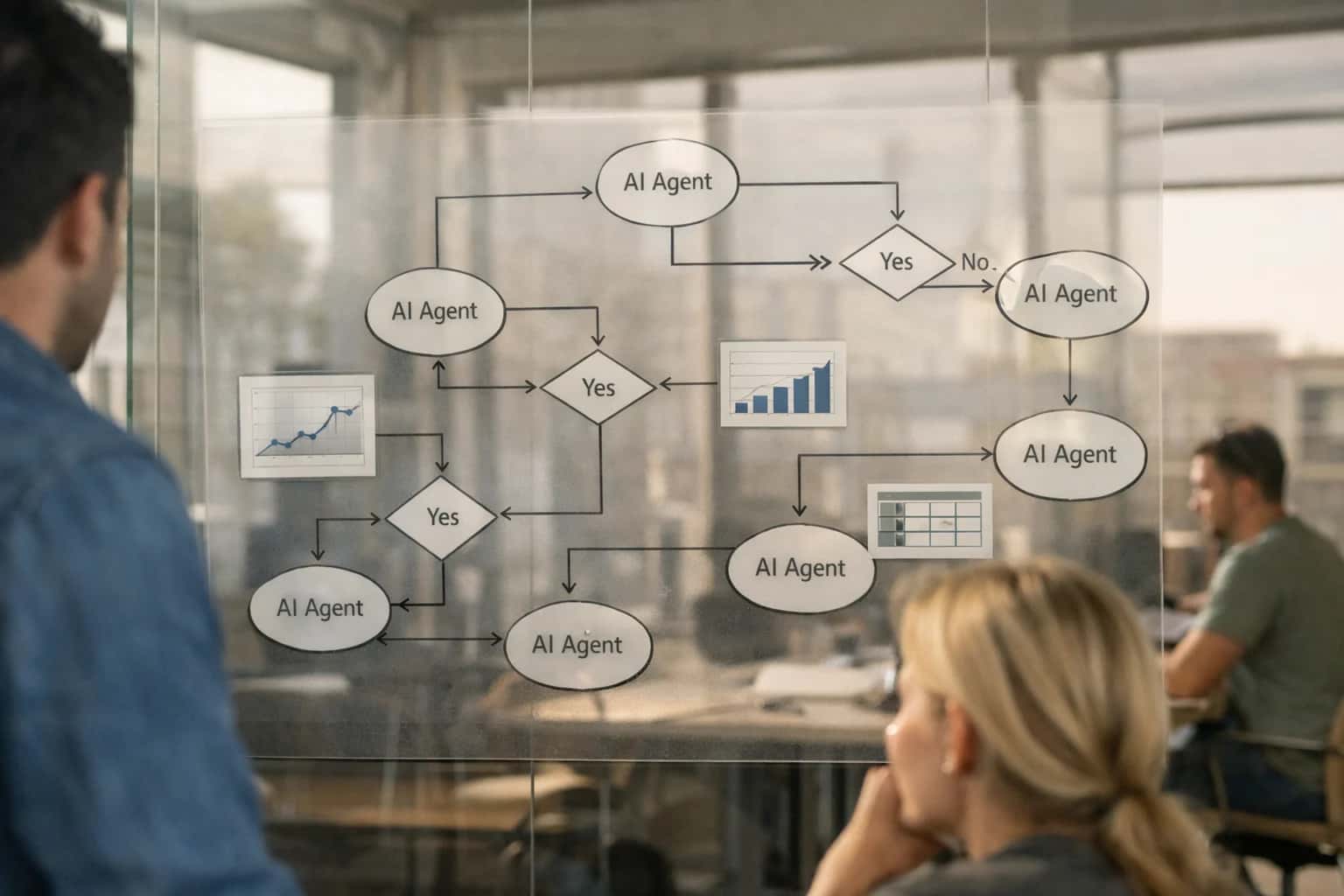
ARCHITECTURE AND ROLLOUT
Where AI Fits into the Business Central Stack
A practical guide to embedding AI within Business Central's AL extension model and API layer to automate core finance and operations workflows.
A typical production implementation uses Business Central's webhook-enabled events (like OnAfterInsertSalesHeader) to trigger serverless AI workflows. For example, when a new sales order is posted, an event can invoke an Azure Function that uses an LLM to draft a personalized customer invoice email, then writes the draft back to the Sales Invoice record via the API for review. For data-intensive tasks like cash flow forecasting, AI models run externally on a scheduled basis, pulling aggregated data from the Financial Reports API or the data lake via Azure Synapse Link for Dynamics 365, and then push forecast journal entries or dashboard alerts back into a custom table or page extension.
Rollout and governance are critical. Start with a pilot in a single company within the Business Central tenant, focusing on a high-volume, rule-based task like AP invoice data extraction. Use Business Central's built-in Approval Workflow system to keep a human in the loop for AI-suggested entries above a certain threshold. All AI-generated actions should write to a custom Audit Log table with trace IDs linking back to the source prompt, model version, and user. This creates a compliant audit trail and allows for continuous model evaluation based on user overrides. The goal is to augment, not replace, the existing role-based security and business process flows that finance teams already rely on.
WHERE AI AGENTS CONNECT TO THE PLATFORM
Key Integration Surfaces in Business Central
Automating the Order-to-Cash and Procure-to-Pay Cycles
AI integrates directly with Business Central's Sales & Receivables and Purchase & Payables tables to automate high-volume, manual workflows. Key surfaces include:
- Sales Invoice and Credit Memo APIs: For AI to generate, validate, and post customer invoices based on shipped sales orders or service records.
- General Journal API: To post cash receipt journals after AI matches incoming bank payments to open invoices, handling partial payments and deductions.
- Vendor Ledger Entries: Enabling AI to process vendor invoices via OCR, perform 2 or 3-way matching against Purchase Orders and Item Ledger Entries, and route for approval.
Implementation typically uses webhooks from document capture services or bank feeds to trigger AI agents, which then call Business Central's OData or SOAP APIs to create and update records, reducing manual data entry from days to hours.
INTEGRATION PATTERNS
High-Value AI Use Cases for Business Central
Practical AI integration patterns for Microsoft Dynamics 365 Business Central, connecting to its API and AL extension layer to automate core finance and operations workflows.
01
Intelligent AP Processing
AI agents integrate with Business Central's Purchase Invoices and Purchase Orders APIs to automate 3-way matching. Use OCR to extract vendor invoice data, match against POs and item receipts, and route exceptions for review. Reduces manual data entry and speeds up approval cycles.
Batch -> Real-time
Invoice processing
02
Automated Bank Reconciliation
Connect AI to Business Central's Bank Account Reconciliation journal and bank feed APIs. Agents match bank statement lines to open customer payments, vendor disbursements, and journal entries, suggesting matches and flagging unreconciled items for the finance team.
Hours -> Minutes
Reconciliation time
03
Sales Order to Invoice Automation
Orchestrate the Sales Order to Posted Sales Invoice workflow. AI monitors released sales orders, checks inventory availability via the Item API, and automatically generates and posts invoices upon shipment confirmation, updating the General Ledger.
Same day
Invoice generation
04
Cash Flow Forecasting Agent
Build an AI model that queries Business Central's General Ledger Entries, Sales Invoices, and Purchase Invoices to predict short-term cash flow. The agent surfaces insights directly in Role Centers or via Power BI, helping controllers manage liquidity.
1 sprint
Initial deployment
05
Anomaly Detection in Journal Entries
Deploy monitoring on the General Journal API to flag unusual entries. AI analyzes amounts, accounts, users, and posting dates against historical patterns to detect potential errors or fraud, creating review tasks in Business Central for the accounting team.
Real-time
Monitoring
06
AI-Powered Collections Management
Integrate with the Customer Ledger Entries and Reminders modules. AI segments customers by payment risk, drafts personalized collection emails via the Email API, and logs all interactions back to the customer card, prioritizing collector effort.
Batch -> Real-time
Customer prioritization
BUSINESS CENTRAL AUTOMATION
Example AI-Powered Workflows
These are practical, production-ready workflows that connect AI agents to Business Central's API and AL extension points. Each flow is designed to augment existing processes, not replace them, delivering measurable time savings and improved accuracy for finance and operations teams.
This workflow automates the ingestion, validation, and entry of vendor invoices into Business Central's Purchase Invoice module, reducing manual data entry by up to 80%.
- Trigger: A new vendor invoice PDF or email arrives in a designated inbox (e.g., SharePoint, email alias).
- Context/Data Pulled: An AI agent with integrated OCR extracts line-item details (vendor name, invoice number, date, amounts, line descriptions). It then calls the Business Central API to retrieve the relevant Purchase Order (PO) and receipt information.
- Model/Agent Action: The agent performs a 3-way match:
- Compares extracted invoice line items to the PO lines in BC.
- Validates quantities against posted receipts.
- Flags any price variances or quantity mismatches beyond a configured tolerance.
- System Update: For fully matched invoices, the agent automatically creates a Purchase Invoice in Business Central via the
purchaseInvoicesAPI, populating vendor, lines, and linking to the PO. For invoices with exceptions, it creates a draft invoice and assigns it to an "Exception Review" approval workflow in BC, attaching the AI's analysis as a note. - Human Review Point: All invoices with exceptions are routed to the AP clerk's role center for review. The agent's notes provide clear context (e.g., "Unit price 5% above PO," "Quantity billed exceeds received by 2 units"), accelerating the decision.
CONNECTING AI TO THE BUSINESS CENTRAL DATA MODEL
Implementation Architecture & Data Flow
A production-ready AI integration for Dynamics 365 Business Central connects via its OData v4 and SOAP APIs, using AL extensions to embed intelligence directly into finance and sales workflows.
The integration typically uses Business Central's OData v4 API as the primary data conduit, pulling real-time data from core tables like G/L Entry, Cust. Ledger Entry, Vendor Ledger Entry, Sales Header/Line, and Purchase Header/Line. For write-back operations—such as posting suggested journal entries or updating customer credit limits—the SOAP-based Web Services or the newer API v2.0 are used within controlled, audited automation jobs. This dual-API approach ensures the AI layer can read the full transactional history for context and write back actionable insights without disrupting live user sessions.
AI processing is orchestrated through Azure-hosted services. A common pattern involves:
- Event Triggers: A
Job Queue Entrycompletion or aWebhookfrom a posted document triggers an Azure Logic App or Function. - Data Enrichment: The function calls the BC API to retrieve the relevant record and its related data (e.g., a sales invoice plus the customer's payment history).
- AI Processing: This payload is sent to an inference endpoint (like Azure OpenAI) for tasks such as predicting payment probability, suggesting an AR collection action, or drafting a collections email.
- Action & Logging: The result is posted back to a custom table (e.g.,
AI Action Log) via API, and/or a Task is created for a collector, with the AI's reasoning stored for audit. For forecasting, aggregated data is pulled nightly into a separate analytics store for model retraining.
Rollout and governance are critical. Start with a single, high-impact workflow like automated payment application or intelligent AP invoice coding in a sandbox company. Use BC's Permission Sets to restrict the AI service account to only the necessary tables and operations. All AI-suggested actions, especially those that would post to the GL, should route through an Approval Workflow where a finance user can review and approve with one click. Implement comprehensive logging in a custom AI Audit Trail table, linking every suggestion to the source transaction, model version, and user action. This controlled, phased approach de-risks the integration while delivering immediate operational lift in AP/AR processing and cash flow analysis.
INTEGRATION PATTERNS
Code & Payload Examples
Automating GL Postings via API
Integrate AI agents with Business Central's journalLines API to post suggested entries. A common pattern is to have an AI service analyze source documents (like processed invoices), determine the correct G/L accounts and dimensions, and then push a validated batch.
Example Payload (POST to /companies({companyId})/journals({journalId})/journalLines)
json{ "lineNumber": 10000, "postingDate": "2024-05-15", "documentNumber": "AI-INV-001", "accountNumber": "6110", "description": "Office Supplies - March", "amount": 245.67, "dimensions": [ { "code": "DEPARTMENT", "value": "ADMIN" }, { "code": "PROJECT", "value": "GENERAL" } ] }
The AI layer handles the logic for account mapping, dimension assignment, and batch balancing before the API call, ensuring audit-ready entries.
BUSINESS CENTRAL AI INTEGRATION
Realistic Time Savings & Operational Impact
How AI integration with Business Central's API and AL extensions transforms manual finance and operations workflows into intelligent, assisted processes.
| Workflow | Before AI | After AI | Implementation Notes |
|---|---|---|---|
Vendor Invoice Processing | Manual data entry from PDF/email (15-20 min per invoice) | AI extracts line items, matches to PO/Receipt (2-3 min review) | Integrates with Business Central's Purchase Invoices API; human approves exceptions |
Sales Order to Invoice | Manual review of shipments, pricing, and terms for billing | AI triggers and drafts invoices from posted shipments | Uses Business Central's Sales Shipments and Sales Invoices APIs; configurable rules |
Bank Reconciliation | Manual line-by-line matching (hours per account) | AI suggests matches for 80-90% of transactions | Connects to Bank Rec. worksheet; flags variances for review |
Cash Flow Forecasting | Static spreadsheet updates based on aged AR/AP reports | Dynamic 30/60/90-day forecast with scenario modeling | Pulls real-time data from G/L, Sales, and Purchase modules; updates daily |
Customer Credit & Collections | Periodic manual review of aging reports and customer history | AI prioritizes collection list and drafts personalized emails | Integrates with Customer Ledger Entries; logs actions in Business Central |
Month-End Journal Entries | Manual compilation and entry of recurring/adjusting entries | AI proposes standard entries and populates the General Journal | Leverages Business Central's General Journal API; requires controller sign-off |
Anomaly Detection (AP/AR) | Spot checks or post-audit discovery of duplicates/errors | Real-time alerts on duplicate payments or unusual discounts | Monitors Posted Purchase Invoices and Sales Invoices streams; low false-positive rate target |
ENTERPRISE-GRADE IMPLEMENTATION
Governance, Security & Phased Rollout
A practical framework for deploying AI in Business Central with control, security, and measurable impact.
Integrating AI with Microsoft Dynamics 365 Business Central requires a security-first approach that respects its role as the financial system of record. Implementation focuses on the API layer (v2.0) and AL extension model, ensuring AI agents interact with core objects—like G/L Entries, Sales Invoices, Purchase Invoices, and Bank Account Ledger Entries—through controlled, auditable endpoints. All AI-initiated writes should pass through a dedicated approval queue or staging table within a custom extension, allowing for human-in-the-loop validation before posting to the general ledger. This maintains the integrity of financial data and creates a clear audit trail linking every AI-suggested action to a user approval.
A phased rollout is critical for adoption and risk management. Start with a read-only pilot in a single, non-critical area such as automated anomaly detection on AP invoices, where the AI analyzes posted bills and flags duplicates or policy violations without making changes. Phase two introduces assisted write-backs, like having the AI draft and suggest journal entries for recurring accruals, which a controller reviews and posts manually. The final phase enables conditional automation for high-confidence, low-risk tasks, such as auto-categorizing bank statement lines against a learned rule set, with exceptions routed for review. This crawl-walk-run approach builds trust and surfaces process gaps before full automation.
Governance is built on Microsoft's existing security model. AI service accounts must operate under the principle of least privilege, using dedicated Azure AD service principals with scoped API permissions. All prompts, context sent to LLMs, and generated outputs should be logged to a secure Azure Log Analytics workspace for compliance and model evaluation. For sensitive financial data, employ prompt engineering techniques to minimize PII/PCI exposure and consider using Azure OpenAI's on-your-data deployments for enhanced data residency. Regular reviews of AI-driven decisions against a sample of manual processes ensure accuracy and provide feedback for continuous improvement, turning the integration into a governed asset rather than a black box.
Enabling Efficiency, Speed & Accuracy
Intelligent Analysis, Decision & Execution
We build AI systems for teams that need search across company data, workflow automation across tools, or AI features inside products and internal software.
Talk to Us
Search across company data
Give teams answers from docs, tickets, runbooks, and product data with sources and permissions.
Useful when people spend too long searching or get different answers from different systems.
Enterprise searchRAGPermissions
Read more
Automate internal workflows
Use AI to route work, draft outputs, trigger actions, and keep approvals and logs in place.
Useful when repetitive work moves across multiple tools and teams.
AI agentsWorkflow automationGovernance
Read more
Add AI to products and internal tools
Build assistants, guided actions, or decision support into the software your team or customers already use.
Useful when AI needs to be part of the product, not a separate tool.
AI integrationDecision supportModel routing
Read moreIMPLEMENTATION AND WORKFLOW DETAILS
Frequently Asked Questions
Practical questions and workflow walkthroughs for integrating AI with Microsoft Dynamics 365 Business Central's API and AL extensions.
Authentication and secure data flow are critical. The standard pattern uses OAuth 2.0 with Azure Active Directory (Azure AD) for service-to-service authentication.
- Register an Azure AD App: Create an app registration in the Azure portal for your AI service, granting it the necessary delegated or application permissions (e.g.,
Financials.ReadWrite.All,Sales.ReadWrite.All). - Use Service Principal: For background automation, authenticate using a service principal (client credentials flow) to obtain an access token.
- API Endpoint & Scope: Direct your AI agent's calls to the Business Central v2.0 API endpoint (e.g.,
https://api.businesscentral.dynamics.com/v2.0/{environment}/api/{version}/). The token scope must includehttps://api.businesscentral.dynamics.com/.default. - Data Minimization: Design your agent to query only the specific tables and fields needed (e.g.,
salesInvoices,generalLedgerEntries,items) using OData$selectand$filterto limit data exposure. - Audit Trail: Log all AI-initiated API calls and data modifications within your middleware for traceability. Business Central's change log can also be queried to audit agent actions.

About the author
Prasad Kumkar
CEO & MD, Inference Systems
Prasad Kumkar is the CEO & MD of Inference Systems and writes about AI systems architecture, LLM infrastructure, model serving, evaluation, and production deployment. Over 5+ years, he has worked across computer vision models, L5 autonomous vehicle systems, and LLM research, with a focus on taking complex AI ideas into real-world engineering systems.
His work and writing cover AI systems, large language models, AI agents, multimodal systems, autonomous systems, inference optimization, RAG, evaluation, and production AI engineering.
LinkedIn
Limited slotsGet a Free AI Consultation
Partnered with leading AI, data, and software stack.





How We Work
Custom AI workflows for your Business
One-fit-all AI don't work for modern businesses. At Inferensys, we aim to understand your business & custom requirements; which we use to define most efficient agentic workflows, the data, and the tools for your business.
01
Review the use case
We understand the task, the users, and where AI can actually help.
Read more02
Pick the right approach
We define what needs search, automation, or product integration.
Read more03
Build the first useful version
We implement the part that proves the value first.
Read more04
Improve from there
We add the checks and visibility needed to keep it useful.
Read moreThe first call is a practical review of your use case and the right next step.
Talk to Us