A self-healing transportation network is an AI-driven physical system that autonomously detects, diagnoses, and remediates faults in real-time. It integrates data from diverse sources—traffic cameras, inductive loops, connected vehicles, and roadway sensors—to form a unified operational picture. The core intelligence uses reinforcement learning for dynamic traffic light synchronization and congestion routing, while computer vision monitors pavement health for cracks and potholes. This creates a closed-loop system that not only manages flow but also maintains the physical infrastructure itself.

Guide
Launching a Self-Healing Transportation Network
A developer guide to architecting an AI system that autonomously manages traffic flow and repairs roadways. Learn to integrate sensor data, train RL agents, deploy computer vision models, and implement edge computing for real-time response.
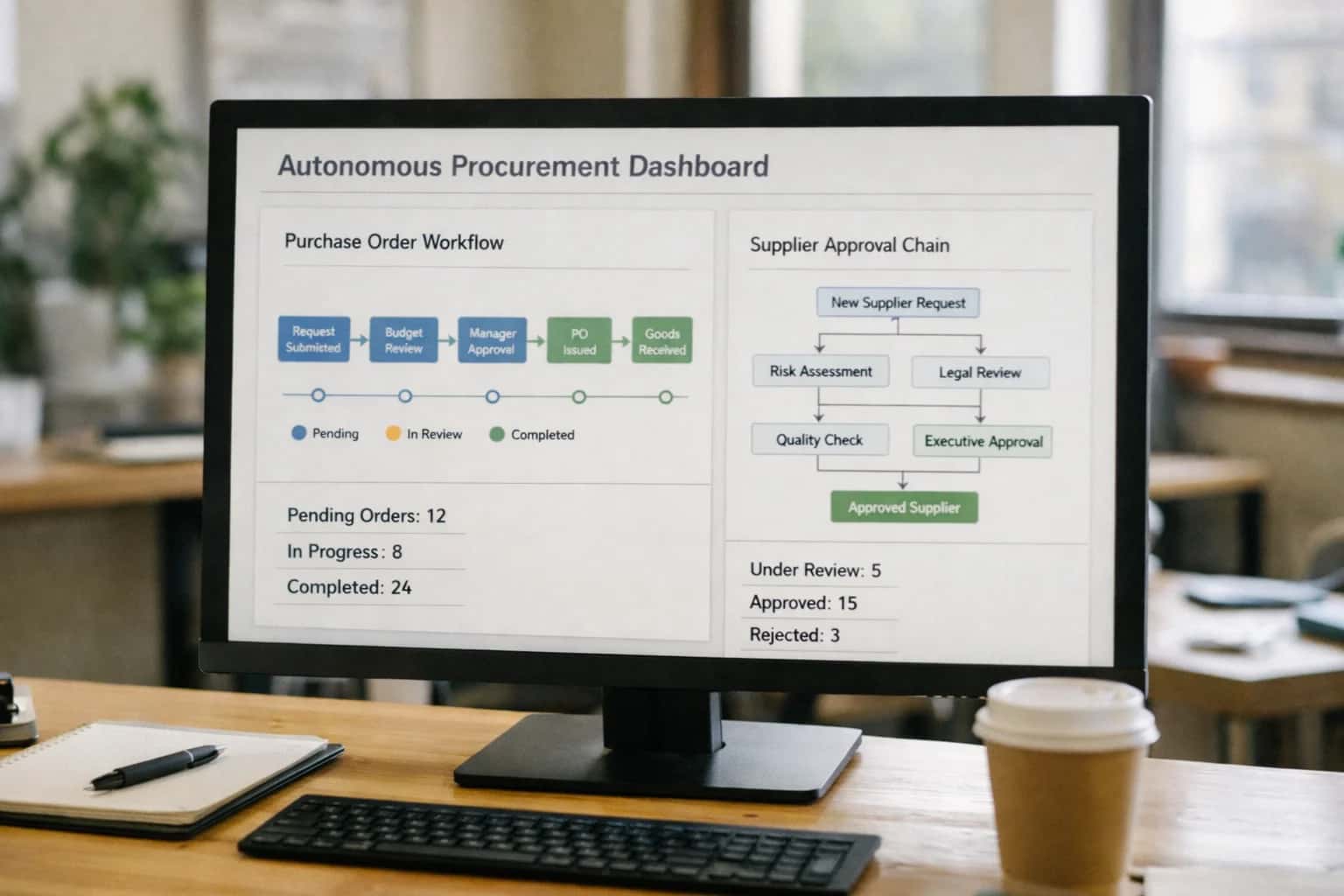
This guide explains how to architect an autonomous system for traffic management and infrastructure healing, integrating sensor data and AI for dynamic optimization and proactive maintenance.
To launch this system, you begin by architecting a scalable data ingestion pipeline using tools like Apache Kafka. Next, you deploy edge AI models on hardware like NVIDIA Jetson for low-latency inference at intersections. The system's action layer autonomously adjusts signal timing and dispatches repair crews based on AI-prioritized tickets. Crucially, you must implement a human-in-the-loop (HITL) governance override for safety-critical decisions, ensuring ethical alignment and risk mitigation in public spaces.
DEPLOYMENT OPTIONS
Edge AI Hardware Comparison
Selecting the right edge hardware is critical for balancing inference speed, power consumption, and environmental durability in a distributed transportation network.
| Feature / Metric | NVIDIA Jetson AGX Orin | Intel Movidius Myriad X | Google Coral Edge TPU | Qualcomm Cloud AI 100 |
|---|---|---|---|---|
Peak INT8 Performance (TOPS) | 275 TOPS | 4 TOPS | 4 TOPS | 400 TOPS |
Typical Power Draw | 15-60W | 1-2W | 2W | 15-75W |
Inference Latency (ResNet-50) | < 10 ms | ~50 ms | ~6 ms | < 5 ms |
Operating Temperature Range | -25°C to 80°C | -40°C to 105°C | -40°C to 85°C | 0°C to 90°C |
Camera & Sensor Interfaces | ||||
5G/4G Modem Integration | ||||
Hardware-Accelerated CV (e.g., optical flow) | ||||
Real-Time OS (RTOS) Support |
Enabling Efficiency, Speed & Accuracy
Intelligent Analysis, Decision & Execution
We build AI systems for teams that need search across company data, workflow automation across tools, or AI features inside products and internal software.
Talk to Us
Search across company data
Give teams answers from docs, tickets, runbooks, and product data with sources and permissions.
Useful when people spend too long searching or get different answers from different systems.
Enterprise searchRAGPermissions
Read more
Automate internal workflows
Use AI to route work, draft outputs, trigger actions, and keep approvals and logs in place.
Useful when repetitive work moves across multiple tools and teams.
AI agentsWorkflow automationGovernance
Read more
Add AI to products and internal tools
Build assistants, guided actions, or decision support into the software your team or customers already use.
Useful when AI needs to be part of the product, not a separate tool.
AI integrationDecision supportModel routing
Read moreTROUBLESHOOTING
Common Mistakes
Launching a self-healing transportation network is a complex integration of AI, IoT, and physical systems. These are the most frequent technical pitfalls developers encounter and how to avoid them.
Reinforcement Learning (RL) agents for traffic light control often fail due to poor reward shaping and non-stationary environments. The reward function must balance multiple competing objectives: minimizing average wait time, reducing queue length, and ensuring emergency vehicle priority. A common mistake is using a sparse reward (e.g., only for clearing a junction) which provides insufficient learning signal.
Solution: Implement a dense, multi-component reward function. For example:
pythonreward = -(alpha * avg_wait_time + beta * max_queue_length) + gamma * emergency_vehicle_priority_bonus
Simulate in a high-fidelity environment like SUMO before edge deployment to ensure the agent's policy generalizes across different traffic patterns.

About the author
Prasad Kumkar
CEO & MD, Inference Systems
Prasad Kumkar is the CEO & MD of Inference Systems and writes about AI systems architecture, LLM infrastructure, model serving, evaluation, and production deployment. Over 5+ years, he has worked across computer vision models, L5 autonomous vehicle systems, and LLM research, with a focus on taking complex AI ideas into real-world engineering systems.
His work and writing cover AI systems, large language models, AI agents, multimodal systems, autonomous systems, inference optimization, RAG, evaluation, and production AI engineering.
LinkedIn
Limited slotsGet a Free AI Consultation
Partnered with leading AI, data, and software stack.





How We Work
Custom AI workflows for your Business
One-fit-all AI don't work for modern businesses. At Inferensys, we aim to understand your business & custom requirements; which we use to define most efficient agentic workflows, the data, and the tools for your business.
01
Review the use case
We understand the task, the users, and where AI can actually help.
Read more02
Pick the right approach
We define what needs search, automation, or product integration.
Read more03
Build the first useful version
We implement the part that proves the value first.
Read more04
Improve from there
We add the checks and visibility needed to keep it useful.
Read moreThe first call is a practical review of your use case and the right next step.
Talk to Us