An AI-powered grid resilience framework is a proactive system architecture that integrates machine learning, real-time data, and autonomous control to maintain electricity delivery during faults and extreme events. It moves beyond traditional SCADA systems by embedding hyper-local demand forecasting, dynamic line rating (DLR), and autonomous islanding protocols. This framework treats the grid as a self-healing organism, capable of reconfiguring itself using AI agents that coordinate distributed energy resources like renewable microgrids and virtual power plants (VPPs) to ensure stability.

Guide
How to Build an AI-Powered Grid Resilience Framework
A strategic, code-rich guide for engineers to design and implement a comprehensive AI framework that enables energy grids to autonomously forecast demand, maximize capacity, and isolate faults.
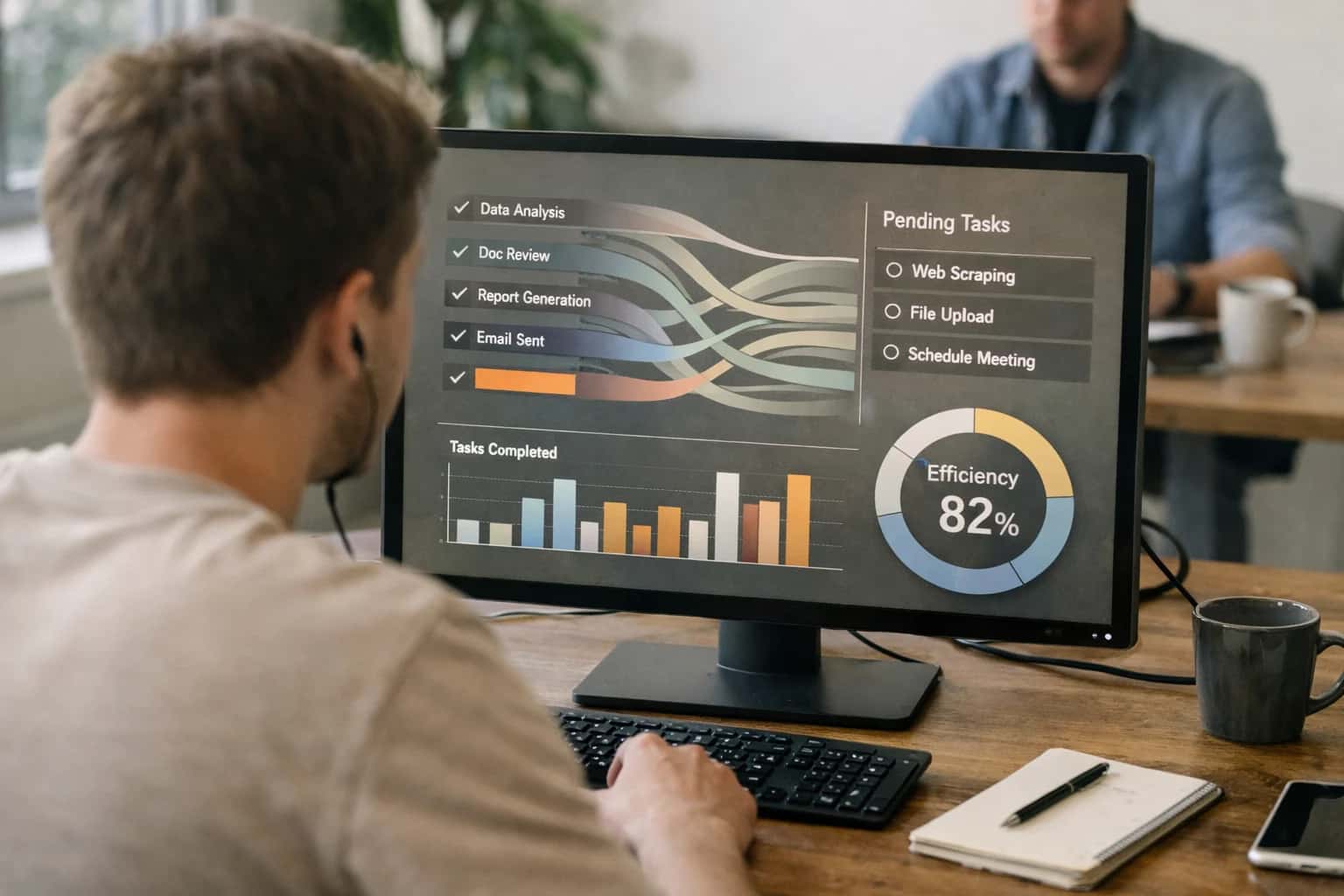
A strategic guide to designing a comprehensive AI framework that enables energy grids to autonomously predict, withstand, and recover from disruptions.
Building this framework requires a layered approach: First, establish a digital twin using tools like GridLAB-D for simulating stress scenarios and validating AI responses. Second, deploy edge inference agents for real-time anomaly detection and control. Finally, implement a human-in-the-loop (HITL) governance system for critical overrides. This guide provides the actionable steps to architect this system, connecting to our deeper dives on self-healing power grid controllers and autonomous fault isolation.
AI GRID RESILIENCE
Core Framework Tools Comparison
Comparison of key software frameworks and platforms for building the AI and simulation layers of a grid resilience system.
| Feature / Capability | Open-Source Stack | Commercial Platform | Hybrid Edge-Cloud |
|---|---|---|---|
Hyper-Local Demand Forecasting | Prophet, Scikit-learn | Custom ML on Azure/GCP | Federated Learning on NVIDIA Fleet Command |
Dynamic Line Rating (DLR) Simulation | GridLAB-D, Pandapower | PowerWorld, ETAP | Real-time DLR with RTDS Hardware |
Autonomous Islanding Logic | Custom Python Agents | OSIsoft PI System with AF | BallerinaLang on K3s Edge Clusters |
Virtual Power Plant (VPP) Coordination | OpenLEADR, SunSpec | AutoGrid Flex, Enbala | Multi-Agent RL with Ray |
Real-Time Anomaly Detection | PyTorch, Apache Kafka | Splunk MLTK, Databricks | TensorFlow Lite on Raspberry Pi |
Digital Twin Integration | OpenSCADA, Grafana | AWS IoT TwinMaker, Siemens MindSphere | FIWARE Context Brokers |
Human-in-the-Loop (HITL) Override | Custom Django Dashboard | PagerDuty Runbook Automation | Red Hat OpenShift GitOps |
Compliance & Logging (NERC CIP) | ELK Stack, Wazuh | IBM Security QRadar | Confidential Computing with Intel SGX |
Enabling Efficiency, Speed & Accuracy
Intelligent Analysis, Decision & Execution
We build AI systems for teams that need search across company data, workflow automation across tools, or AI features inside products and internal software.
Talk to Us
Search across company data
Give teams answers from docs, tickets, runbooks, and product data with sources and permissions.
Useful when people spend too long searching or get different answers from different systems.
Enterprise searchRAGPermissions
Read more
Automate internal workflows
Use AI to route work, draft outputs, trigger actions, and keep approvals and logs in place.
Useful when repetitive work moves across multiple tools and teams.
AI agentsWorkflow automationGovernance
Read more
Add AI to products and internal tools
Build assistants, guided actions, or decision support into the software your team or customers already use.
Useful when AI needs to be part of the product, not a separate tool.
AI integrationDecision supportModel routing
Read moreTROUBLESHOOTING
Common Mistakes
Building an AI-powered grid resilience framework is complex. These are the most frequent technical pitfalls developers encounter, from data pipelines to autonomous action safety.
Hyper-local demand forecasting fails because models are trained on average historical data and lack the feature engineering for edge cases. You must integrate granular, real-time exogenous variables.
Common Fixes:
- Ingest high-resolution weather data (e.g., NOAA's HRRR model) for wind, solar irradiance, and temperature at the feeder level.
- Add social and event data (e.g., via SafeGraph) to capture sudden load shifts from evacuations or sheltering.
- Use online learning techniques to allow models to adapt to unprecedented conditions, rather than relying solely on batch retraining.
- Validate forecasts against a digital twin simulation in tools like GridLAB-D to stress-test model assumptions under storm scenarios.

About the author
Prasad Kumkar
CEO & MD, Inference Systems
Prasad Kumkar is the CEO & MD of Inference Systems and writes about AI systems architecture, LLM infrastructure, model serving, evaluation, and production deployment. Over 5+ years, he has worked across computer vision models, L5 autonomous vehicle systems, and LLM research, with a focus on taking complex AI ideas into real-world engineering systems.
His work and writing cover AI systems, large language models, AI agents, multimodal systems, autonomous systems, inference optimization, RAG, evaluation, and production AI engineering.
LinkedIn
Limited slotsGet a Free AI Consultation
Partnered with leading AI, data, and software stack.





How We Work
Custom AI workflows for your Business
One-fit-all AI don't work for modern businesses. At Inferensys, we aim to understand your business & custom requirements; which we use to define most efficient agentic workflows, the data, and the tools for your business.
01
Review the use case
We understand the task, the users, and where AI can actually help.
Read more02
Pick the right approach
We define what needs search, automation, or product integration.
Read more03
Build the first useful version
We implement the part that proves the value first.
Read more04
Improve from there
We add the checks and visibility needed to keep it useful.
Read moreThe first call is a practical review of your use case and the right next step.
Talk to Us