An Automated Regulatory Change Management Platform is an AI-driven system that manages the end-to-end lifecycle of proposed changes against Good Manufacturing Practice (GMP) constraints. It replaces manual impact assessments and document generation with autonomous agents that evaluate regulatory implications, auto-generate required documentation like Change Control Forms, and track execution through integrated workflows. This ensures changes are managed consistently, reducing human error and creating an audit-ready digital thread that links directly to your Quality Management System (QMS).

Guide
Launching an Automated Regulatory Change Management Platform
A developer blueprint for building an AI system that automates the entire change control lifecycle—from regulatory impact assessment to implementation verification—ensuring audit-ready compliance.
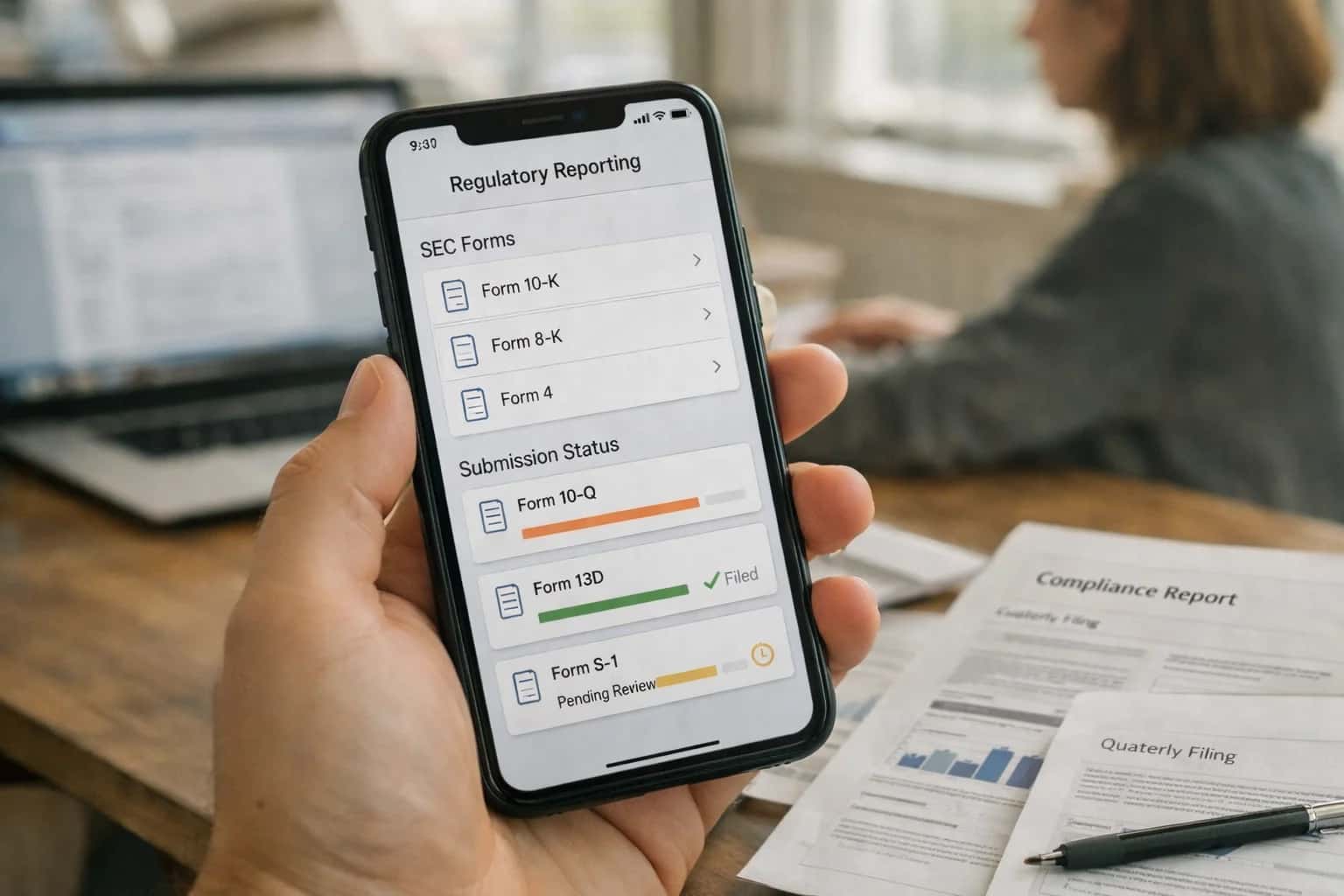
This guide provides a technical blueprint for automating the change control lifecycle, a critical yet manual bottleneck in pharmaceutical compliance.
To architect this platform, you will integrate with data sources like Document Management Systems (DMS) and Manufacturing Execution Systems (MES). The core components are a change evaluation agent that uses NLP to parse regulatory text, a document generation engine that populates templates, and a workflow orchestrator that routes tasks. This system directly supports the principles of autonomous workflow design and logic routing, enabling dynamic, intent-driven processes that maintain compliance while accelerating change implementation.
ARCHITECTURAL BLUEPRINT
Agent Responsibility Matrix
Defines the core responsibilities, data sources, and failure modes for each specialized AI agent within the automated change management platform.
| Agent Role | Primary Responsibility | Key Data Sources | Success Metric | Critical Failure Mode |
|---|---|---|---|---|
Change Scout | Continuously monitors regulatory agencies (FDA, EMA, ICH) for new guidances and updates. | RSS feeds, agency portals, regulatory databases |
| Misses a critical update due to source format change |
Impact Assessor | Analyzes proposed changes against current SOPs, batch records, and regulatory constraints. | QMS documents, product registrations, historical deviation data | Reduces impact assessment time from days to <1 hour | Incorrectly flags a high-risk change as low-risk |
Documentation Agent | Auto-generates required change control forms, justification memos, and implementation plans. | Change request details, approved templates, master data | Generates 100% of initial draft documentation | Produces a non-compliant document structure |
Workflow Orchestrator | Routes tasks between agents and human reviewers based on predefined business rules. | Approval matrices, role-based access controls, task statuses | Maintains task cycle time under SLA for 95% of changes | Routes a high-severity task to an unqualified reviewer |
Verification Agent | Validates that implemented changes are effective and closed per the approved plan. | MES/LIMS data, updated SOPs, training completion records | Automatically closes 90% of verified changes | Fails to detect an incomplete implementation |
Audit Trail Guardian | Ensures a complete, immutable, and 21 CFR Part 11-compliant record of all change-related actions. | System logs, user actions, document versions, electronic signatures | Provides a 100% complete audit trail for any change | Corrupts or loses a segment of the audit log |
Enabling Efficiency, Speed & Accuracy
Intelligent Analysis, Decision & Execution
We build AI systems for teams that need search across company data, workflow automation across tools, or AI features inside products and internal software.
Talk to Us
Search across company data
Give teams answers from docs, tickets, runbooks, and product data with sources and permissions.
Useful when people spend too long searching or get different answers from different systems.
Enterprise searchRAGPermissions
Read more
Automate internal workflows
Use AI to route work, draft outputs, trigger actions, and keep approvals and logs in place.
Useful when repetitive work moves across multiple tools and teams.
AI agentsWorkflow automationGovernance
Read more
Add AI to products and internal tools
Build assistants, guided actions, or decision support into the software your team or customers already use.
Useful when AI needs to be part of the product, not a separate tool.
AI integrationDecision supportModel routing
Read moreTROUBLESHOOTING
Common Mistakes
Launching an automated regulatory change management platform is complex. These are the most frequent technical and architectural pitfalls developers encounter, and how to fix them.
Inaccurate assessments stem from poorly grounded context. An LLM operating on generic knowledge will hallucinate or miss critical, company-specific constraints.
Fix this by implementing a robust Agentic RAG pipeline:
- Index internal documents: SOPs, previous change controls, validation protocols, and product specifications must be in a vector database.
- Use multi-hop retrieval: Design agents that first retrieve the proposed change details, then autonomously query for related procedures, equipment records, and past deviations to build a complete context.
- Implement a verifier agent: A secondary agent should check the initial assessment against a knowledge graph of regulatory rules (e.g., mapping ICH Q9 to your quality system).
Without this grounding, your platform is a liability, not an asset.

About the author
Prasad Kumkar
CEO & MD, Inference Systems
Prasad Kumkar is the CEO & MD of Inference Systems and writes about AI systems architecture, LLM infrastructure, model serving, evaluation, and production deployment. Over 5+ years, he has worked across computer vision models, L5 autonomous vehicle systems, and LLM research, with a focus on taking complex AI ideas into real-world engineering systems.
His work and writing cover AI systems, large language models, AI agents, multimodal systems, autonomous systems, inference optimization, RAG, evaluation, and production AI engineering.
LinkedIn
Limited slotsGet a Free AI Consultation
Partnered with leading AI, data, and software stack.





How We Work
Custom AI workflows for your Business
One-fit-all AI don't work for modern businesses. At Inferensys, we aim to understand your business & custom requirements; which we use to define most efficient agentic workflows, the data, and the tools for your business.
01
Review the use case
We understand the task, the users, and where AI can actually help.
Read more02
Pick the right approach
We define what needs search, automation, or product integration.
Read more03
Build the first useful version
We implement the part that proves the value first.
Read more04
Improve from there
We add the checks and visibility needed to keep it useful.
Read moreThe first call is a practical review of your use case and the right next step.
Talk to Us