Legal document review is not a monolithic task. A multi-model strategy routes different document types and analytical subtasks to the most suitable AI model. This involves using specialized Small Language Models (SLMs) for clause extraction, vision models for scanned PDFs, and large foundational models for complex reasoning. The goal is to optimize the cost-performance trade-off by avoiding the use of an expensive, general-purpose model for every single operation. This approach is foundational for complex workflows like contract due diligence and e-discovery.

Guide
Setting Up a Multi-Model Strategy for Legal Document Review
A technical guide to orchestrating specialized AI models—SLMs, vision models, and foundational LLMs—for higher accuracy and lower cost in legal document review tasks like contract analysis and due diligence.
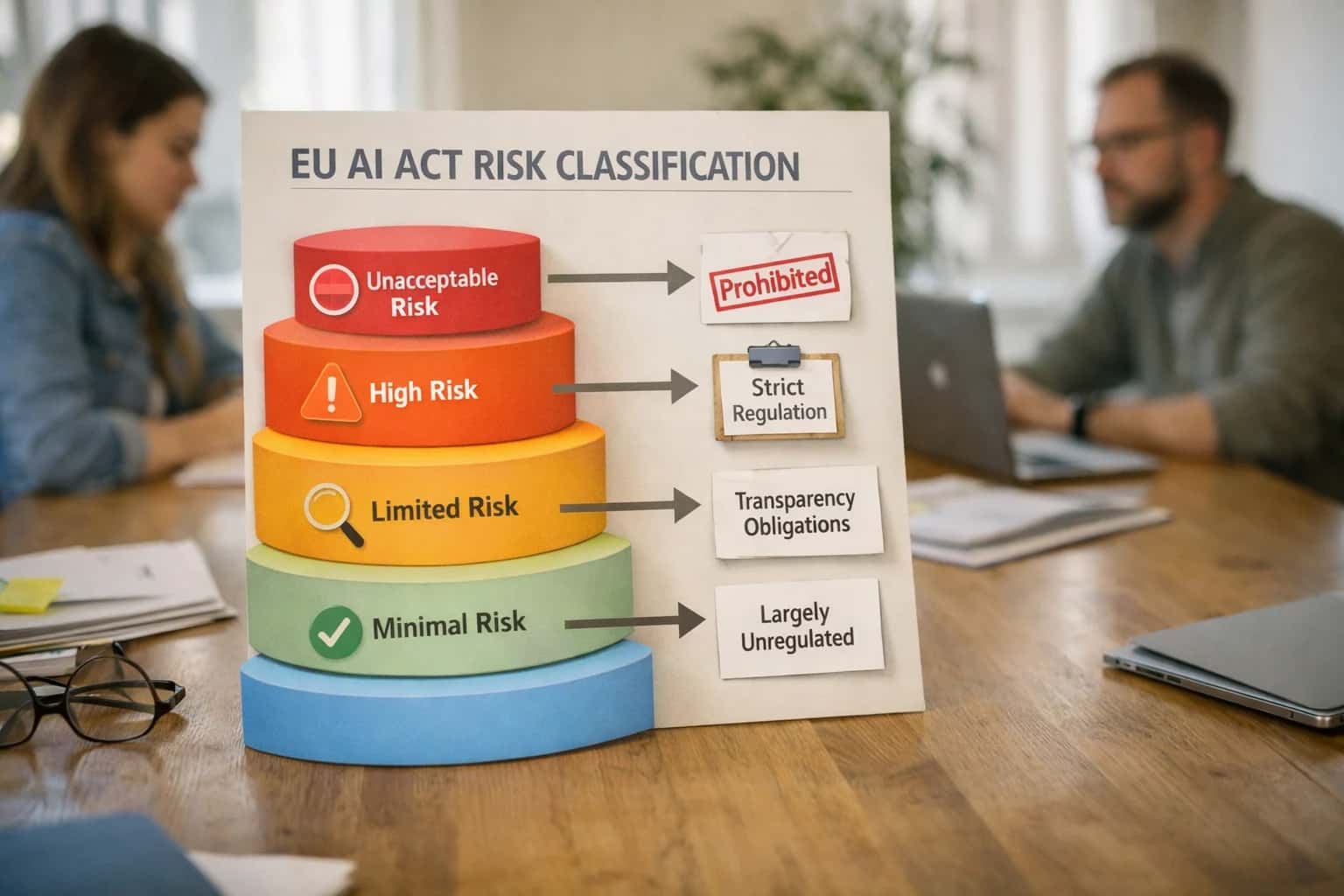
A multi-model strategy is the systematic orchestration of specialized AI models to achieve superior accuracy and efficiency in legal document review. This guide explains the core principles and practical steps for implementation.
Implementing this strategy requires a routing layer that classifies documents by content type and analytical intent. You then implement consensus mechanisms where multiple models vote on ambiguous classifications or extractions to boost confidence. This guide will walk you through building this orchestration system, integrating with secure data pipelines, and establishing governance for model outputs. The result is a robust, scalable system that delivers measurable ROI by reducing manual review time and increasing accuracy.
ARCHITECTURE PRIMER
Key Concepts: The Multi-Model Toolkit
A multi-model strategy routes different legal document types to specialized AI models, balancing cost, speed, and accuracy. This toolkit explains the core components you need to implement.
01
Model Router & Orchestrator
The router is the decision engine that analyzes an incoming document and sends it to the optimal model. It uses metadata (file type, size) and initial content analysis to make routing decisions.
- Rule-based routing: Send scanned PDFs to a vision model, dense contracts to a legal SLM.
- Cost-aware routing: Use cheaper, faster models for simple tasks, reserving expensive foundational models for complex reasoning.
- Implementation: Build using a lightweight classifier or a rules engine integrated into your ingestion pipeline.
02
Specialized Legal SLMs
Small Language Models (SLMs) like fine-tuned Llama 3 or Phi-3 are optimized for legal jargon and document structures. They provide fast, cost-effective inference for high-volume tasks.
- Use Case: Clause extraction, obligation identification, standard contract review.
- Advantage: Lower latency and cost vs. general-purpose LLMs, with higher accuracy on domain-specific tasks.
- Deployment: Can be hosted on-premises or in a VPC for data sovereignty, using inference servers like vLLM.
03
Vision & OCR Integration
Scanned documents, handwritten notes, and exhibits require optical character recognition (OCR) and vision models to convert images to analyzable text.
- Pipeline: Use cloud services (AWS Textract, Google Document AI) or open-source (Tesseract) for OCR, then pass text to language models.
- Advanced Vision: Implement layout-aware models that understand tables, checkboxes, and signatures to preserve document structure.
- Key Consideration: Accuracy here is critical, as errors propagate to all downstream analysis.
04
Foundational Model for Reasoning
A large, general-purpose model (e.g., GPT-4, Claude 3) acts as the reasoning backbone for complex, nuanced tasks that require deep comprehension.
- Use Case: Interpreting ambiguous language, summarizing deposition transcripts, identifying subtle contradictions.
- Orchestration Role: The router sends only the most complex queries here, often using outputs from other models as context.
- Cost Management: Implement caching, prompt optimization, and async processing to control expenses.
05
Consensus & Validation Layer
For high-stakes conclusions, use multiple models and a consensus mechanism to validate outputs and reduce error risk.
- Patterns: Run the same task on 2-3 different models and compare results. Flag discrepancies for human review.
- Implementation: Use a separate agent or service to compare model outputs, calculate confidence scores, and trigger the Human-in-the-Loop (HITL) governance system when thresholds are not met.
- Benefit: Dramatically increases reliability for critical findings like potential liability.
06
Cost-Performance Telemetry
Continuously measure the trade-off between model cost, latency, and task accuracy to optimize your routing logic.
- Track Metrics: Per-document inference cost, processing time, and outcome accuracy (via feedback loops).
- Use Data: Adjust routing rules dynamically; for example, if a legal SLM achieves 95% accuracy on a task, stop routing it to the more expensive foundational model.
- Tooling: Integrate with MLOps and performance monitoring frameworks to visualize trends and justify ROI.
FOUNDATION
Step 1: Analyze and Classify Document Types
Before routing documents to specialized models, you must first understand their content and structure. This initial analysis determines the optimal processing path for each file in your legal review pipeline.
Begin by creating a document taxonomy specific to your legal practice. Common categories include contracts (NDAs, MSAs, leases), pleadings, deposition transcripts, case law, and scanned correspondence. Use a combination of metadata extraction (file type, creation date) and lightweight text classification models to automatically tag each document. For example, a fine-tuned Small Language Model (SLM) like Phi-3 can quickly identify a document as a 'motion to dismiss' versus a 'discovery request' based on its header and initial paragraphs. This classification is the prerequisite for our multi-model routing strategy.
Next, implement a preprocessing pipeline to handle diverse formats. Extract text from PDFs (including scanned images using OCR), Word documents, and emails. For scanned documents, integrate a vision model to ensure accurate text conversion before semantic analysis. This step normalizes all inputs, creating a clean text corpus. The output is a structured dataset where each document has a defined type and extracted content, ready for intelligent routing to the most suitable AI model in the next stage of the workflow, such as a specialized contract analyzer or a RAG system for case law.
STRATEGIC ROUTING
Model Cost-Performance Comparison
A practical comparison of model types for routing legal documents, balancing accuracy, speed, and cost.
| Model / Metric | Specialized SLM (e.g., fine-tuned Llama 3.1 8B) | Vision + Text Model (e.g., GPT-4V) | Large Foundational Model (e.g., GPT-4o) |
|---|---|---|---|
Primary Use Case | Structured contract clause review | Scanned document & exhibit analysis | Complex legal reasoning & synthesis |
Accuracy on Domain Tasks | 95-98% | 92-95% (on visual-text tasks) | 90-93% |
Avg. Inference Latency | < 1 sec | 2-5 sec | 3-8 sec |
Cost per 1M Tokens (Input) | $0.10 - $0.30 | $5.00 - $10.00 | $2.50 - $5.00 |
Fine-Tuning Required | |||
Context Window | 32K tokens | 128K tokens | 128K tokens |
Best for Document Type | Clean digital text (PDF/DOCX) | Scanned PDFs, images, handwritten notes | Multi-document synthesis, ambiguous text |
Integration Complexity | Medium (requires deployment) | Low (API call) | Low (API call) |
MONITORING & OPTIMIZATION
Step 5: Build a Performance and Cost Dashboard
A centralized dashboard is essential for managing your multi-model strategy, tracking the trade-offs between accuracy, latency, and cost across different AI models.
Your dashboard must track key performance indicators (KPIs) for each model in your strategy. For legal document review, this includes per-model accuracy (e.g., clause extraction precision), inference latency, and token consumption cost. Implement logging in your routing logic to capture these metrics for every document processed. Visualize this data to identify which models excel at specific tasks—like a vision model for scanned contracts versus an SLM for NDAs—enabling data-driven routing refinements.
Correlate performance data with cost data from your cloud provider or model API. This reveals the true cost-performance trade-off, allowing you to optimize spending. For instance, you may find a cheaper model suffices for initial document triage, reserving expensive, high-accuracy models for critical due diligence. Integrate this dashboard with your MLOps and Model Lifecycle Management systems to trigger alerts for model drift or cost overruns, ensuring your multi-model system remains efficient and reliable.
Enabling Efficiency, Speed & Accuracy
Intelligent Analysis, Decision & Execution
We build AI systems for teams that need search across company data, workflow automation across tools, or AI features inside products and internal software.
Talk to Us
Search across company data
Give teams answers from docs, tickets, runbooks, and product data with sources and permissions.
Useful when people spend too long searching or get different answers from different systems.
Enterprise searchRAGPermissions
Read more
Automate internal workflows
Use AI to route work, draft outputs, trigger actions, and keep approvals and logs in place.
Useful when repetitive work moves across multiple tools and teams.
AI agentsWorkflow automationGovernance
Read more
Add AI to products and internal tools
Build assistants, guided actions, or decision support into the software your team or customers already use.
Useful when AI needs to be part of the product, not a separate tool.
AI integrationDecision supportModel routing
Read moreTROUBLESHOOTING
Common Mistakes
Implementing a multi-model strategy for legal document review is complex. These are the most frequent technical pitfalls developers encounter and how to fix them.
This happens when your routing logic is too simplistic, often defaulting to a single model due to a lack of clear classification criteria. A router must analyze document content type and complexity before dispatch.
How to fix it:
- Implement a classifier: Use a lightweight model (e.g., a fine-tuned BERT or a small SLM) to categorize documents (e.g.,
contract,scanned_form,email_thread,case_opinion). - Set heuristic rules: Route based on metadata and classifier output.
python# Example routing logic def route_document(document_text, metadata): doc_type = classifier.predict(document_text) if doc_type == "scanned_form": return "vision_model" # For OCR and layout analysis elif doc_type == "standard_contract" and metadata["page_count"] < 10: return "specialized_slm" # For efficient clause extraction else: return "general_llm" # For complex, novel analysis
- Add a cost budget: Implement a circuit breaker that blocks expensive model calls after a daily threshold is met.

About the author
Prasad Kumkar
CEO & MD, Inference Systems
Prasad Kumkar is the CEO & MD of Inference Systems and writes about AI systems architecture, LLM infrastructure, model serving, evaluation, and production deployment. Over 5+ years, he has worked across computer vision models, L5 autonomous vehicle systems, and LLM research, with a focus on taking complex AI ideas into real-world engineering systems.
His work and writing cover AI systems, large language models, AI agents, multimodal systems, autonomous systems, inference optimization, RAG, evaluation, and production AI engineering.
LinkedIn
Limited slotsGet a Free AI Consultation
Partnered with leading AI, data, and software stack.





How We Work
Custom AI workflows for your Business
One-fit-all AI don't work for modern businesses. At Inferensys, we aim to understand your business & custom requirements; which we use to define most efficient agentic workflows, the data, and the tools for your business.
01
Review the use case
We understand the task, the users, and where AI can actually help.
Read more02
Pick the right approach
We define what needs search, automation, or product integration.
Read more03
Build the first useful version
We implement the part that proves the value first.
Read more04
Improve from there
We add the checks and visibility needed to keep it useful.
Read moreThe first call is a practical review of your use case and the right next step.
Talk to Us