The 'right to explanation' is a legal mandate under regulations like the EU AI Act and GDPR, requiring organizations to provide clear reasons for automated decisions that affect individuals. Architecting for this right means designing systems where explainability is a core, non-negotiable feature, not a retrospective add-on. This involves implementing dedicated explanation generation modules, secure logging of all explanation deliveries, and user workflows that trigger these processes upon a data subject request.

Guide
How to Architect for 'Right to Explanation' Compliance
This guide translates the legal 'right to explanation' into technical system requirements. You will learn to design APIs and user interfaces that provide meaningful, timely, and accessible explanations upon request, ensuring compliance with regulations like the EU AI Act and GDPR.
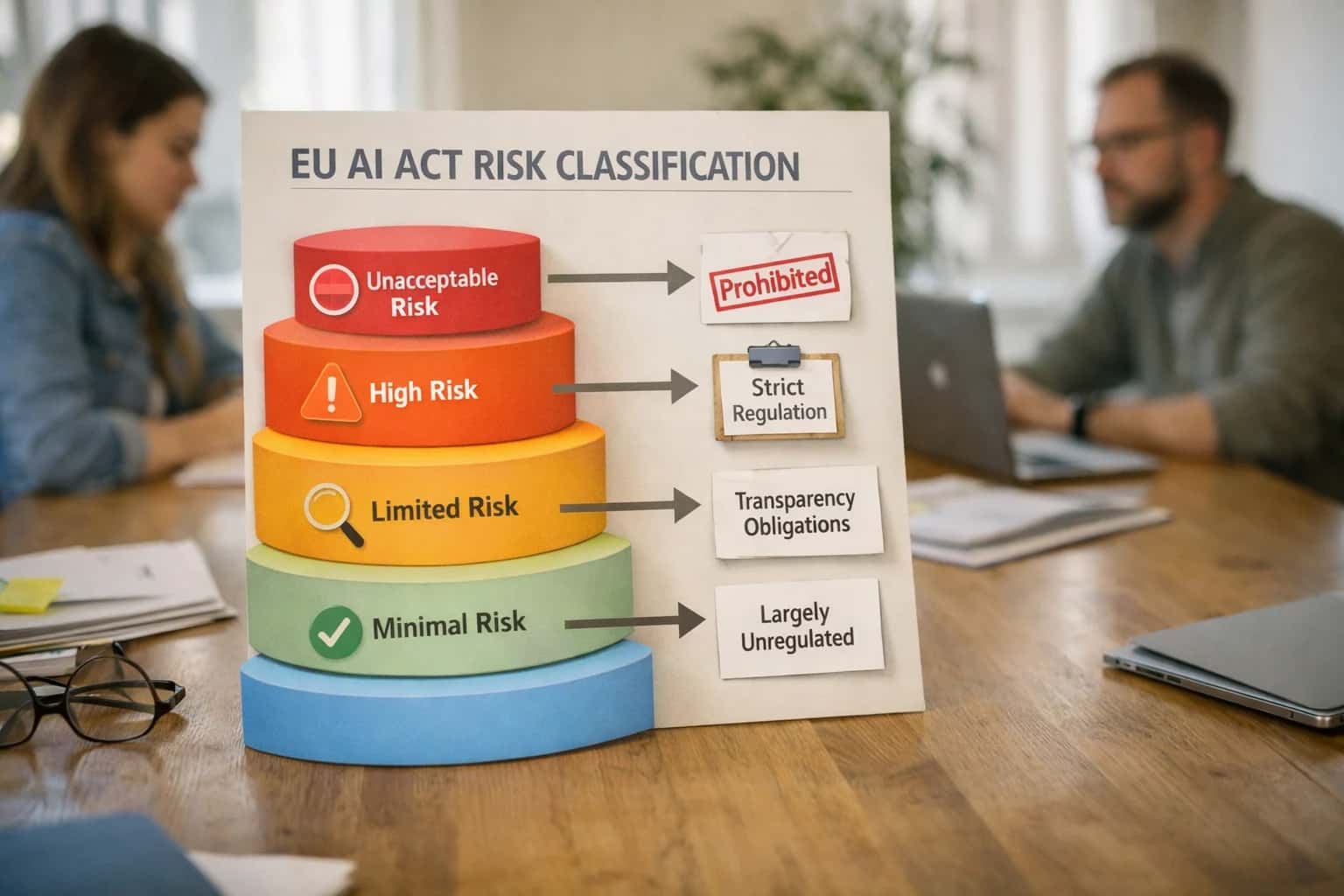
This guide translates the legal 'right to explanation' into technical system requirements, showing you how to design APIs and interfaces that deliver meaningful, timely, and accessible explanations upon request.
Your technical architecture must support two key flows: a user-facing API for on-demand explanation retrieval and a backend logging system to prove compliance. You will need to personalize explanations based on user context, store immutable audit trails, and integrate these components into your existing MLOps lifecycle. This foundational work is critical for building the traceable reasoning paths required for high-risk AI systems in regulated domains.
TECHNICAL APPROACHES
Explanation Method Comparison for Compliance
A comparison of common explanation techniques, evaluating their suitability for meeting the 'Right to Explanation' under regulations like the EU AI Act and GDPR.
| Method | Inherently Interpretable Models | Post-Hoc Local Explanations | Counterfactual Explanations |
|---|---|---|---|
Regulatory Acceptance | |||
Explanation Fidelity | High (Model is the explanation) | Medium (Approximates model) | High (Based on model) |
Technical Overhead | Low | Medium | High |
User Actionability | Low | Medium | High |
Audit Trail Strength | |||
Integration Complexity | Medium | Low | High |
Best For | Credit scoring, Rule-based systems | Image classifiers, Legacy black-box models | Loan denials, High-stakes individual decisions |
Enabling Efficiency, Speed & Accuracy
Intelligent Analysis, Decision & Execution
We build AI systems for teams that need search across company data, workflow automation across tools, or AI features inside products and internal software.
Talk to Us
Search across company data
Give teams answers from docs, tickets, runbooks, and product data with sources and permissions.
Useful when people spend too long searching or get different answers from different systems.
Enterprise searchRAGPermissions
Read more
Automate internal workflows
Use AI to route work, draft outputs, trigger actions, and keep approvals and logs in place.
Useful when repetitive work moves across multiple tools and teams.
AI agentsWorkflow automationGovernance
Read more
Add AI to products and internal tools
Build assistants, guided actions, or decision support into the software your team or customers already use.
Useful when AI needs to be part of the product, not a separate tool.
AI integrationDecision supportModel routing
Read moreARCHITECTING FOR EXPLAINABILITY
Common Mistakes
When building systems to comply with the 'right to explanation,' technical teams often stumble on the same pitfalls. These mistakes can render explanations useless, break compliance, and undermine user trust. This section addresses the most frequent developer errors and how to fix them.
Regulations like the EU AI Act and GDPR require you to demonstrate compliance, not just achieve it. An explanation given to a user is a procedural event that must be logged. Without an immutable audit trail, you cannot prove you fulfilled a data subject's request.
Common Mistake: Only logging the model's prediction, not the act of serving the explanation. Fix: Implement a dedicated logging service for explanation events. Each log entry must include:
- Timestamp and request ID
- User/Data Subject Identifier (hashed)
- The specific explanation provided
- The model version and input data snapshot (referenced, not stored)
- Delivery channel (API, UI, email)
This log is your primary evidence for regulators and is a core component of a traceability framework.

About the author
Prasad Kumkar
CEO & MD, Inference Systems
Prasad Kumkar is the CEO & MD of Inference Systems and writes about AI systems architecture, LLM infrastructure, model serving, evaluation, and production deployment. Over 5+ years, he has worked across computer vision models, L5 autonomous vehicle systems, and LLM research, with a focus on taking complex AI ideas into real-world engineering systems.
His work and writing cover AI systems, large language models, AI agents, multimodal systems, autonomous systems, inference optimization, RAG, evaluation, and production AI engineering.
LinkedIn
Limited slotsGet a Free AI Consultation
Partnered with leading AI, data, and software stack.





How We Work
Custom AI workflows for your Business
One-fit-all AI don't work for modern businesses. At Inferensys, we aim to understand your business & custom requirements; which we use to define most efficient agentic workflows, the data, and the tools for your business.
01
Review the use case
We understand the task, the users, and where AI can actually help.
Read more02
Pick the right approach
We define what needs search, automation, or product integration.
Read more03
Build the first useful version
We implement the part that proves the value first.
Read more04
Improve from there
We add the checks and visibility needed to keep it useful.
Read moreThe first call is a practical review of your use case and the right next step.
Talk to Us