A computer vision-powered shelf monitoring solution automates the tedious, error-prone task of manual store audits. It uses cameras—either fixed, mobile, or robot-mounted—to continuously scan shelves, detecting key metrics like planogram compliance, out-of-stock items, and misplaced products. The core technical challenge is building a system that works reliably across thousands of unique SKUs under variable retail lighting and occlusion conditions, moving beyond simple object detection to dynamic interpretation.

Guide
Launching a CV-Powered Retail Shelf Monitoring Solution
A complete technical guide to building and deploying a computer vision system that automates retail shelf auditing for stock levels, planogram compliance, and promotional execution.
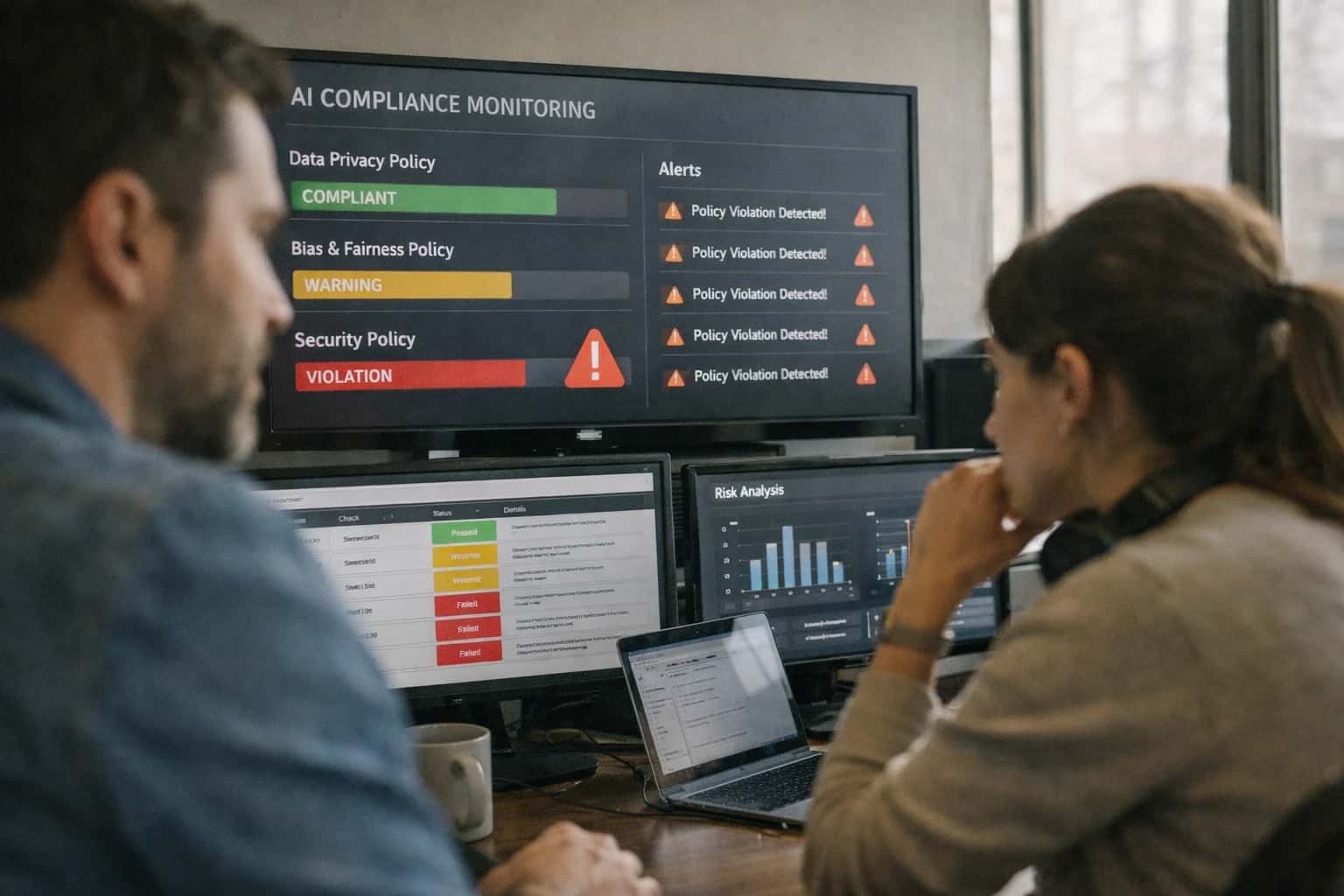
This guide provides the foundational blueprint for deploying a scalable computer vision system to automate retail shelf monitoring, transforming visual data into actionable business insights.
Successful deployment requires an end-to-architecture covering data collection, model serving, and insight delivery. You must design a pipeline for continuous model retraining to handle new products and seasonal changes. The final output is not just raw detections but actionable alerts and dashboards integrated into store manager workflows, closing the loop from sensor to business action. For foundational concepts, see our guide on Computer Vision Sensing and Dynamic Interpretation.
MODEL SELECTION
Computer Vision Model Comparison for Retail
Key trade-offs for models used in shelf monitoring tasks like planogram compliance and out-of-stock detection.
| Feature / Metric | Pre-Trained Foundation Model (e.g., DINOv2, CLIP) | Fine-Tuned Task-Specific Model (e.g., YOLO, EfficientDet) | Custom Small Language Model (SLM) + Vision |
|---|---|---|---|
Primary Use Case | Zero-shot product recognition & novelty detection | High-accuracy detection of known SKUs | Reasoning about shelf context & planogram rules |
Training Data Required | None for inference; vast public datasets for pre-training | 100-1000 labeled images per SKU | Synthetic data + textual planogram rules |
Inference Latency (per frame) | < 100 ms | 50-200 ms | 300-500 ms |
Ease of Adding New Products | Immediate, but lower confidence | Requires new data collection & retraining cycle | Update via prompt or fine-tuning on product descriptions |
Handles Poor Lighting & Occlusions | Moderate (robust features) | High (optimized for target conditions) | High (can reason about partial visibility) |
Planogram Rule Comprehension | None | None | ✅ (e.g., 'Item A must be to the left of Item B') |
Hardware Deployment | Cloud or high-power edge (GPU) | Edge-optimized (Jetson, Coral) | Requires LLM runtime (may need cloud) |
Integration Complexity | Low (API call) | Medium (custom pipeline) | High (multi-model orchestration) |
Enabling Efficiency, Speed & Accuracy
Intelligent Analysis, Decision & Execution
We build AI systems for teams that need search across company data, workflow automation across tools, or AI features inside products and internal software.
Talk to Us
Search across company data
Give teams answers from docs, tickets, runbooks, and product data with sources and permissions.
Useful when people spend too long searching or get different answers from different systems.
Enterprise searchRAGPermissions
Read more
Automate internal workflows
Use AI to route work, draft outputs, trigger actions, and keep approvals and logs in place.
Useful when repetitive work moves across multiple tools and teams.
AI agentsWorkflow automationGovernance
Read more
Add AI to products and internal tools
Build assistants, guided actions, or decision support into the software your team or customers already use.
Useful when AI needs to be part of the product, not a separate tool.
AI integrationDecision supportModel routing
Read moreTROUBLESHOOTING
Common Mistakes
Launching a retail shelf monitoring system presents unique technical pitfalls. This guide addresses the most frequent developer errors, from data collection to model deployment, providing actionable fixes to ensure your solution delivers reliable, actionable insights.
This is a classic data drift and out-of-distribution (OOD) problem. Your initial training dataset lacks the visual diversity of a live retail environment.
Fix this by:
- Implementing a continuous data pipeline. Automatically collect and label new product images from store cameras.
- Using a model retraining strategy. Employ active learning to prioritize uncertain predictions for human review and model updates.
- Starting with a robust base model. Fine-tune a large, pre-trained model (e.g., CLIP, DINOv2) on your initial shelf data, as they have better generalization capabilities than models trained from scratch.
Without this pipeline, your system's accuracy will decay rapidly with each seasonal assortment change.

About the author
Prasad Kumkar
CEO & MD, Inference Systems
Prasad Kumkar is the CEO & MD of Inference Systems and writes about AI systems architecture, LLM infrastructure, model serving, evaluation, and production deployment. Over 5+ years, he has worked across computer vision models, L5 autonomous vehicle systems, and LLM research, with a focus on taking complex AI ideas into real-world engineering systems.
His work and writing cover AI systems, large language models, AI agents, multimodal systems, autonomous systems, inference optimization, RAG, evaluation, and production AI engineering.
LinkedIn
Limited slotsGet a Free AI Consultation
Partnered with leading AI, data, and software stack.





How We Work
Custom AI workflows for your Business
One-fit-all AI don't work for modern businesses. At Inferensys, we aim to understand your business & custom requirements; which we use to define most efficient agentic workflows, the data, and the tools for your business.
01
Review the use case
We understand the task, the users, and where AI can actually help.
Read more02
Pick the right approach
We define what needs search, automation, or product integration.
Read more03
Build the first useful version
We implement the part that proves the value first.
Read more04
Improve from there
We add the checks and visibility needed to keep it useful.
Read moreThe first call is a practical review of your use case and the right next step.
Talk to Us