A cybersecurity posture for networked collaborative robotics is a proactive framework designed to protect robotic systems from unauthorized access, data theft, and operational disruption. Unlike traditional IT, cobot security must address unique industrial control system (ICS) protocols, real-time operational requirements, and the physical safety implications of a breach. This guide is built on standards like IEC 62443 for industrial automation, ensuring your defenses are aligned with industry best practices from the start.

Guide
Setting Up a Cybersecurity Posture for Networked Collaborative Robotics
A developer's guide to implementing a zero-trust security framework for networked collaborative robots (cobots). This tutorial provides actionable steps for network segmentation, secure communication, vulnerability management, and incident response.
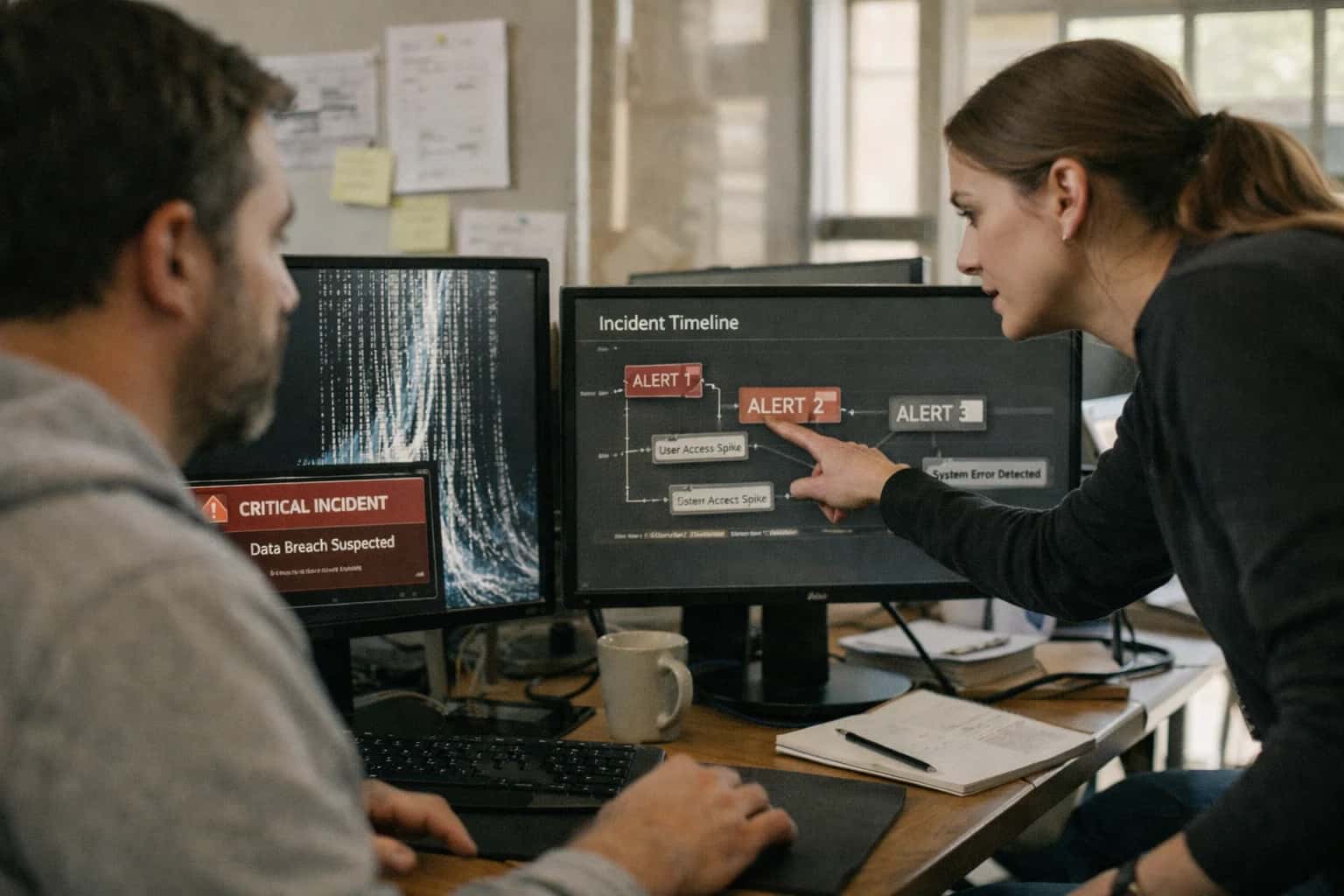
This guide provides a foundational, actionable checklist for securing collaborative robots (cobots) on industrial networks against modern threats.
You will learn to implement core technical controls: segmenting cobot traffic using VLANs, enforcing authentication and encryption on communication channels like OPC UA and ROS 2, performing vulnerability scans on cobot controllers, and establishing a formal incident response plan. These steps create a defense-in-depth strategy critical for protecting both your data and the physical safety of human collaborators, as detailed in our guide on Setting Up a Safety-First AI Protocol for Human-Robot Collaboration.
CONTROL CATEGORIES
Cobot Security Controls Matrix (IEC 62443 Alignment)
This table maps essential security controls for networked collaborative robots to the foundational requirements of the IEC 62443 standard for industrial automation and control systems (IACS) security.
| Security Control | IEC 62443 Zone (Cobot Cell) | IEC 62443 Conduit (Network) | Implementation Priority |
|---|---|---|---|
Network Segmentation & Zoning | FR 3 - System Integrity | SR 3.1 - Segmentation | Critical |
Strong Authentication (MFA) | FR 1 - Identification & Auth. | SR 1.1 - Human User Auth. | High |
Encryption for Data-in-Transit | FR 2 - Use Control | SR 2.1 - Data Confidentiality | High |
Software/Firmware Integrity Checks | FR 3 - System Integrity | SR 3.2 - SW Integrity | High |
Audit Logging & Monitoring | FR 4 - Data Confidentiality | SR 4.1 - Audit Log Generation | Medium |
Patch Management Process | FR 7 - Resource Availability | SR 7.1 - Denial of Service Prot. | Medium |
Physical Port Security | FR 5 - Restricted Data Flow | SR 5.1 - Network Segmentation | Medium |
Incident Response Plan | FR 8 - Timely Response | SR 8.1 - Incident Management | Critical |
Enabling Efficiency, Speed & Accuracy
Intelligent Analysis, Decision & Execution
We build AI systems for teams that need search across company data, workflow automation across tools, or AI features inside products and internal software.
Talk to Us
Search across company data
Give teams answers from docs, tickets, runbooks, and product data with sources and permissions.
Useful when people spend too long searching or get different answers from different systems.
Enterprise searchRAGPermissions
Read more
Automate internal workflows
Use AI to route work, draft outputs, trigger actions, and keep approvals and logs in place.
Useful when repetitive work moves across multiple tools and teams.
AI agentsWorkflow automationGovernance
Read more
Add AI to products and internal tools
Build assistants, guided actions, or decision support into the software your team or customers already use.
Useful when AI needs to be part of the product, not a separate tool.
AI integrationDecision supportModel routing
Read moreTROUBLESHOOTING
Common Mistakes
Securing networked collaborative robots (cobots) introduces unique challenges at the intersection of IT and OT. These are the most frequent and critical errors developers make when establishing their cybersecurity posture.
Treating cobots like any other device on the corporate network is a major vulnerability. Cobots communicate with controllers, sensors, and manufacturing execution systems (MES) using protocols like OPC UA and ROS 2. An attacker who gains a foothold on a less-secure device (like a contractor's laptop) can pivot directly into the industrial control system.
The Fix: Implement strict network segmentation using VLANs or a dedicated industrial demilitarized zone (IDMZ). Cobots, their controllers, and related HMIs should reside on an isolated network segment. Control traffic between this segment and enterprise IT should pass through a stateful firewall with rules explicitly allowing only necessary ports and protocols. This practice aligns with the IEC 62443 standard for industrial network security.

About the author
Prasad Kumkar
CEO & MD, Inference Systems
Prasad Kumkar is the CEO & MD of Inference Systems and writes about AI systems architecture, LLM infrastructure, model serving, evaluation, and production deployment. Over 5+ years, he has worked across computer vision models, L5 autonomous vehicle systems, and LLM research, with a focus on taking complex AI ideas into real-world engineering systems.
His work and writing cover AI systems, large language models, AI agents, multimodal systems, autonomous systems, inference optimization, RAG, evaluation, and production AI engineering.
LinkedIn
Limited slotsGet a Free AI Consultation
Partnered with leading AI, data, and software stack.





How We Work
Custom AI workflows for your Business
One-fit-all AI don't work for modern businesses. At Inferensys, we aim to understand your business & custom requirements; which we use to define most efficient agentic workflows, the data, and the tools for your business.
01
Review the use case
We understand the task, the users, and where AI can actually help.
Read more02
Pick the right approach
We define what needs search, automation, or product integration.
Read more03
Build the first useful version
We implement the part that proves the value first.
Read more04
Improve from there
We add the checks and visibility needed to keep it useful.
Read moreThe first call is a practical review of your use case and the right next step.
Talk to Us