
Guides
Bio-AI and AI-Guided Drug Target Identification
Bio-AI and AI-Guided Drug Target Identification
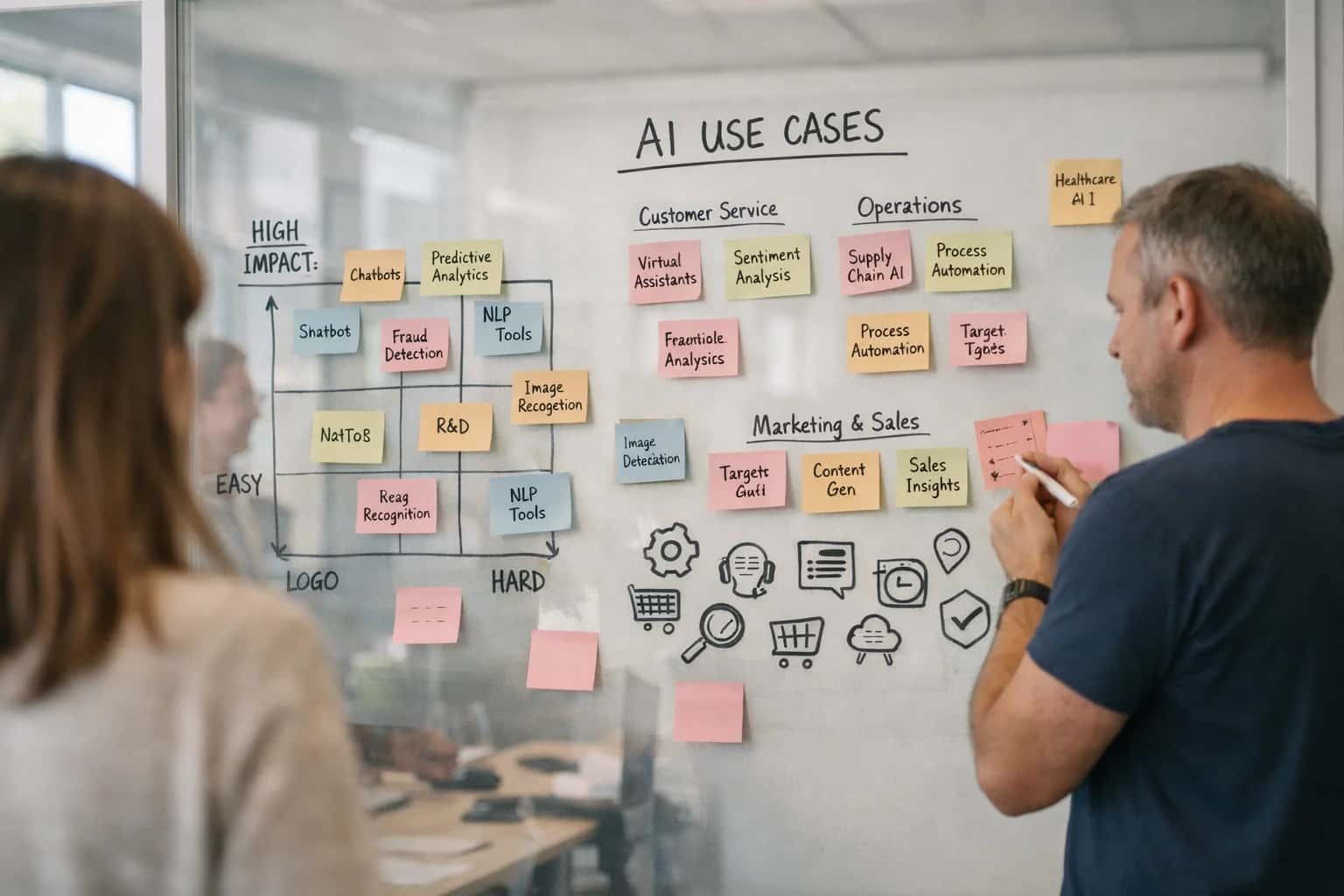
AI has moved into the core of drug discovery, reshaping how targets are chosen and biology is analyzed. This pillar involves integrating genomic, proteomic, and transcriptomic data to reveal molecular patterns. Sub-clusters cover 'How to use AI for oncology target identification,' 'Integrating omics data for drug discovery,' and 'Building AI-guided platforms for molecular design' targeting Big Pharma R&D budgets.
How to Architect an AI-Driven Target Identification Platform
This guide provides a blueprint for building a scalable, cloud-native platform that integrates multi-omics data, AI models, and lab validation workflows. It covers core architectural decisions, including data ingestion pipelines, model serving with vLLM or SageMaker, and designing a microservices-based API layer for computational biologists. You will learn how to structure the system for continuous hypothesis generation and validation.
Setting Up a Multi-Omics Data Integration Strategy
Learn how to design and implement a strategy for harmonizing genomic, transcriptomic, and proteomic data from disparate sources. This guide covers data lake architecture using AWS Lake Formation or Delta Lake, establishing common data models, and implementing quality assurance pipelines. You will establish a single source of truth for downstream AI model training and analysis.
How to Implement a Target Prioritization Framework with AI
This guide details the construction of a scoring system that ranks AI-identified drug targets based on druggability, safety, and novelty. It covers integrating data from knowledge graphs like Neo4j, applying ensemble models, and designing a confidence scoring mechanism. You will learn to build a transparent, auditable framework that balances computational predictions with biological plausibility.
How to Build a Knowledge Graph for Drug Target Relationships
Learn to construct a biomedical knowledge graph that maps relationships between genes, proteins, diseases, and compounds using tools like Neo4j or Amazon Neptune. This guide covers data extraction from public databases (e.g., UniProt, DrugBank), entity resolution, and implementing graph neural networks (GNNs) for link prediction. You will create a queryable system for uncovering novel target-disease associations.
How to Design an API-First Bio-AI Platform
This guide explains how to build a platform where every core function—data query, model inference, and analysis—is exposed via a well-documented API. It covers designing REST and GraphQL endpoints with FastAPI, implementing authentication for sensitive data, and creating client SDKs for wet lab scientists. You will enable seamless integration between computational tools and experimental workflows.
Setting Up a Validation Pipeline for AI-Identified Targets
Learn to establish a rigorous, automated pipeline that transitions AI-generated hypotheses into validated biological assays. This guide covers designing in silico validation steps (e.g., docking simulations), integrating with electronic lab notebooks (ELNs), and setting up feedback loops to retrain models with wet lab results. You will close the loop between AI prediction and experimental confirmation.
How to Implement Explainable AI for Biological Predictions
This guide details techniques to make complex AI models like graph neural networks or transformers interpretable for biologists. It covers implementing SHAP and LIME for feature importance, generating biological rationale reports, and visualizing attention mechanisms in protein sequence models. You will build trust in AI outputs by providing actionable, understandable insights.
Setting Up a Secure Data Lake for Multi-Omics Research
Learn to architect a secure, compliant data repository for sensitive genomic and patient data. This guide covers implementing encryption at rest and in transit, fine-grained access controls with Apache Ranger, and audit logging for HIPAA/GDPR compliance. You will deploy a foundation that enables collaborative research while protecting intellectual property and patient privacy.
How to Navigate Regulatory Considerations for AI in Target ID
This guide provides a practical framework for addressing regulatory requirements from the FDA and EMA when using AI for drug discovery. It covers designing for ALCOA+ data integrity principles, establishing model version control and audit trails, and preparing for pre-submission meetings. You will learn to build governance processes that satisfy regulators while maintaining innovation speed.
How to Structure an AI Team for Computational Biology
Learn how to build and manage a cross-functional team of machine learning engineers, data scientists, and computational biologists. This guide covers role definitions, agile workflows for iterative model development, and strategies for fostering collaboration between dry and wet lab teams. You will create an organizational structure that accelerates the translation of AI research into biological insights.
How to Choose an AI Model Architecture for Molecular Pattern Recognition
This guide provides a decision framework for selecting the right model—from graph neural networks (GNNs) for protein structures to transformers for sequences—based on your specific biological question and data type. It covers benchmarking architectures like ESM-3 and AlphaFold, and considerations for training on limited, noisy biological data. You will make informed choices to maximize predictive performance.
Setting Up an MLOps Pipeline for Evolving Target Models
Learn to implement a continuous integration and deployment (CI/CD) pipeline for AI models in drug discovery using tools like Weights & Biases and MLflow. This guide covers automated retraining triggers, model versioning, performance monitoring for concept drift, and canary deployments. You will ensure your target identification models remain accurate and up-to-date as new data arrives.
How to Build a Data Governance Framework for Sensitive Omics Data
This guide details the policies, roles, and technology needed to manage data provenance, quality, and access control across the AI discovery lifecycle. It covers implementing data lineage tracking with OpenLineage, defining data stewardship roles, and establishing a review process for dataset releases. You will create a system that ensures data integrity and compliance in a multi-team environment.
How to Integrate Real-World Evidence into AI Target Models
Learn to augment traditional omics data with real-world evidence (RWE) from electronic health records and wearables to improve target identification. This guide covers data harmonization techniques, privacy-preserving methods like federated learning, and building multimodal models that combine genomic and clinical data. You will ground AI predictions in broader patient population insights.
Partnered with leading AI, data, and software stack.





How We Work
Custom AI workflows for your Business
One-fit-all AI don't work for modern businesses. At Inferensys, we aim to understand your business & custom requirements; which we use to define most efficient agentic workflows, the data, and the tools for your business.
01
Review the use case
We understand the task, the users, and where AI can actually help.
Read more02
Pick the right approach
We define what needs search, automation, or product integration.
Read more03
Build the first useful version
We implement the part that proves the value first.
Read more04
Improve from there
We add the checks and visibility needed to keep it useful.
Read moreThe first call is a practical review of your use case and the right next step.
Talk to Us