Regulatory bodies like the FDA and EMA view AI as a Software as a Medical Device (SaMD) component when used for target identification. Your primary goal is to demonstrate ALCOA+ data integrity—ensuring data is Attributable, Legible, Contemporaneous, Original, Accurate, and Complete. This begins with designing audit trails and version control for every model and dataset, creating a transparent lineage from raw omics data to a predicted target. Regulators require this traceability to assess the validity and reproducibility of your AI-driven hypotheses.

Guide
How to Navigate Regulatory Considerations for AI in Target ID
A technical guide for implementing FDA and EMA-compliant AI systems in drug target identification, covering data integrity, model governance, and audit trails with actionable code.
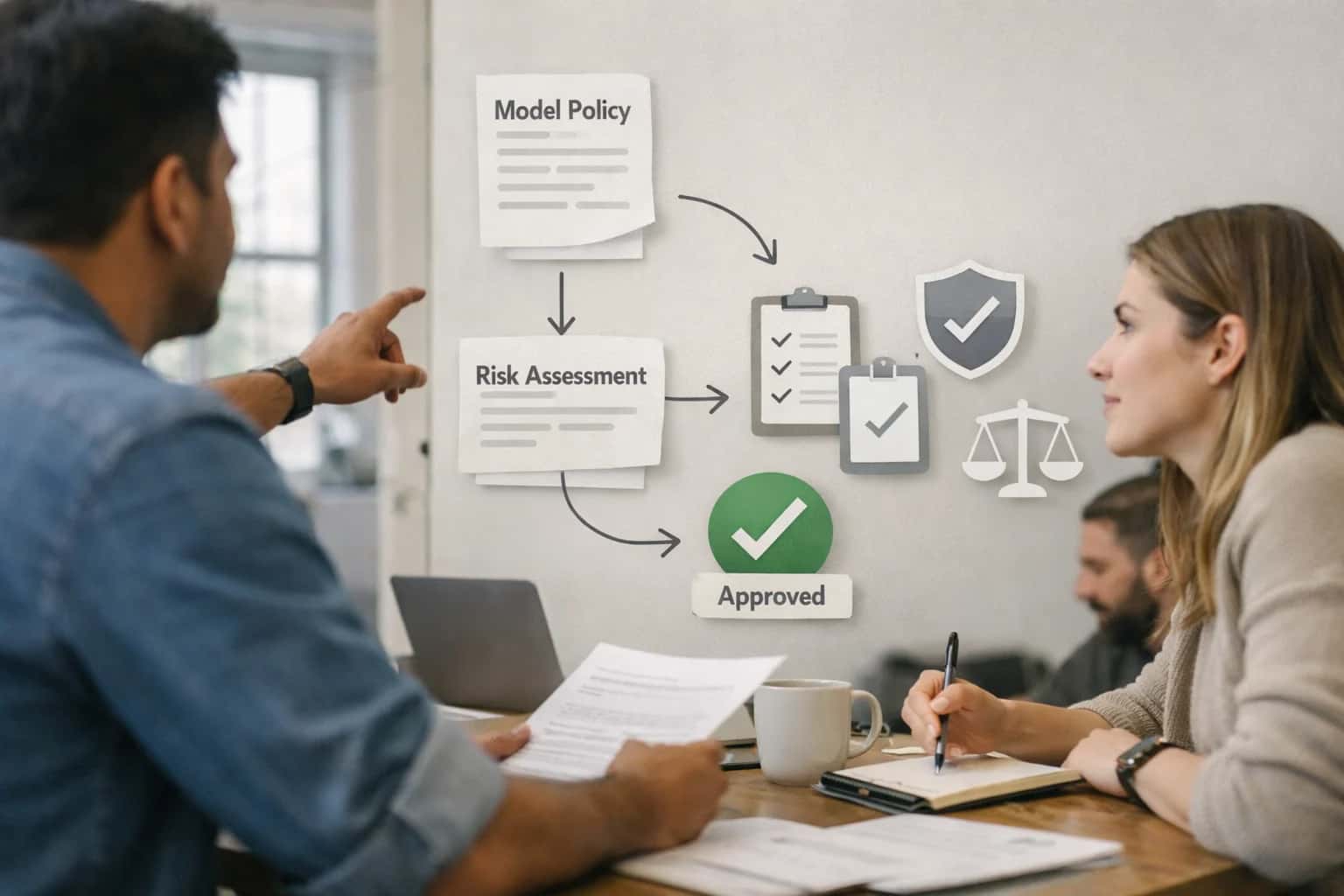
This guide provides a practical framework for addressing regulatory requirements from the FDA and EMA when using AI for drug discovery. It covers designing for ALCOA+ data integrity principles, establishing model version control and audit trails, and preparing for pre-submission meetings. You will learn to build governance processes that satisfy regulators while maintaining innovation speed.
Proactively engage regulators through pre-submission meetings to align on your validation strategy. Document your model risk classification, define clear performance benchmarks, and establish a change control protocol for any model updates. Integrate these governance steps into your existing Quality Management System (QMS). By embedding compliance into the AI development lifecycle, you build a defensible dossier that accelerates review while mitigating the risk of costly delays or rejections.
KEY AGENCIES
Regulatory Framework Comparison: FDA vs EMA
A side-by-side comparison of the U.S. Food and Drug Administration (FDA) and European Medicines Agency (EMA) regulatory approaches for AI/ML-based Software as a Medical Device (SaMD) used in drug discovery and target identification.
| Regulatory Feature | U.S. Food and Drug Administration (FDA) | European Medicines Agency (EMA) |
|---|---|---|
Primary Guidance Document | AI/ML-Based Software as a Medical Device (SaMD) Action Plan | Medical Device Regulation (MDR) 2017/745 & EMA Reflection Paper |
Predominant Regulatory Pathway | Pre-Submission → 510(k) De Novo | Conformity Assessment (Notified Body) → CE Marking |
Risk Classification Basis | Intended Use & Potential Harm (I-IV) | Rule-Based Classification (Annex VIII of MDR) |
Algorithm Change Protocol (ACP) Required | ||
Pre-Specifications (SPS) & Algorithm Change Protocol (ACP) Required | ||
Clinical Evidence Requirement for SaMD | Valid Scientific Assessment (VSA) | Clinical Evaluation Report (CER) |
Real-World Performance Monitoring Mandate | ||
Good Machine Learning Practice (GMLP) Alignment | Explicitly referenced in guidance | Implicitly required under MDR's general safety & performance requirements |
Pre-Submission/Pre-Consultation Meeting Availability | ||
Average Review Timeline for Novel AI-SaMD | 6-12 months | 12-18 months |
Enabling Efficiency, Speed & Accuracy
Intelligent Analysis, Decision & Execution
We build AI systems for teams that need search across company data, workflow automation across tools, or AI features inside products and internal software.
Talk to Us
Search across company data
Give teams answers from docs, tickets, runbooks, and product data with sources and permissions.
Useful when people spend too long searching or get different answers from different systems.
Enterprise searchRAGPermissions
Read more
Automate internal workflows
Use AI to route work, draft outputs, trigger actions, and keep approvals and logs in place.
Useful when repetitive work moves across multiple tools and teams.
AI agentsWorkflow automationGovernance
Read more
Add AI to products and internal tools
Build assistants, guided actions, or decision support into the software your team or customers already use.
Useful when AI needs to be part of the product, not a separate tool.
AI integrationDecision supportModel routing
Read moreREGULATORY COMPLIANCE
Common Mistakes
Navigating the FDA and EMA for AI-driven drug discovery is a technical design challenge, not just a paperwork exercise. These are the most frequent and costly errors teams make when building platforms for target identification.
ALCOA+ is the FDA's data integrity framework: Attributable, Legible, Contemporaneous, Original, Accurate, plus Complete, Consistent, Enduring, and Available. For AI, this means every data point used for model training must have a provenance trail. A common mistake is treating omics data files as static inputs without logging who generated them, when, and under what experimental conditions.
How to fix it: Implement a data catalog (e.g., Amundsen, DataHub) that automatically captures metadata from your multi-omics data integration pipeline. Link raw sequencing files to specific runs, instruments, and operators. Ensure your secure data lake logs all access and transformations, making the data's journey from sequencer to model fully traceable.

About the author
Prasad Kumkar
CEO & MD, Inference Systems
Prasad Kumkar is the CEO & MD of Inference Systems and writes about AI systems architecture, LLM infrastructure, model serving, evaluation, and production deployment. Over 5+ years, he has worked across computer vision models, L5 autonomous vehicle systems, and LLM research, with a focus on taking complex AI ideas into real-world engineering systems.
His work and writing cover AI systems, large language models, AI agents, multimodal systems, autonomous systems, inference optimization, RAG, evaluation, and production AI engineering.
LinkedIn
Limited slotsGet a Free AI Consultation
Partnered with leading AI, data, and software stack.





How We Work
Custom AI workflows for your Business
One-fit-all AI don't work for modern businesses. At Inferensys, we aim to understand your business & custom requirements; which we use to define most efficient agentic workflows, the data, and the tools for your business.
01
Review the use case
We understand the task, the users, and where AI can actually help.
Read more02
Pick the right approach
We define what needs search, automation, or product integration.
Read more03
Build the first useful version
We implement the part that proves the value first.
Read more04
Improve from there
We add the checks and visibility needed to keep it useful.
Read moreThe first call is a practical review of your use case and the right next step.
Talk to Us