The Redfish API is a secure, multi-node capable replacement for legacy IPMI, using a RESTful interface over HTTPS with JSON-encoded responses. It provides a hypermedia-centric data model for managing modern server hardware, including GPUs, storage, and network interfaces, independently of the host operating system state.

Glossary
Redfish API
An open industry-standard RESTful interface for out-of-band management of modern server hardware, enabling automated monitoring, firmware updates, and provisioning of GPU nodes.
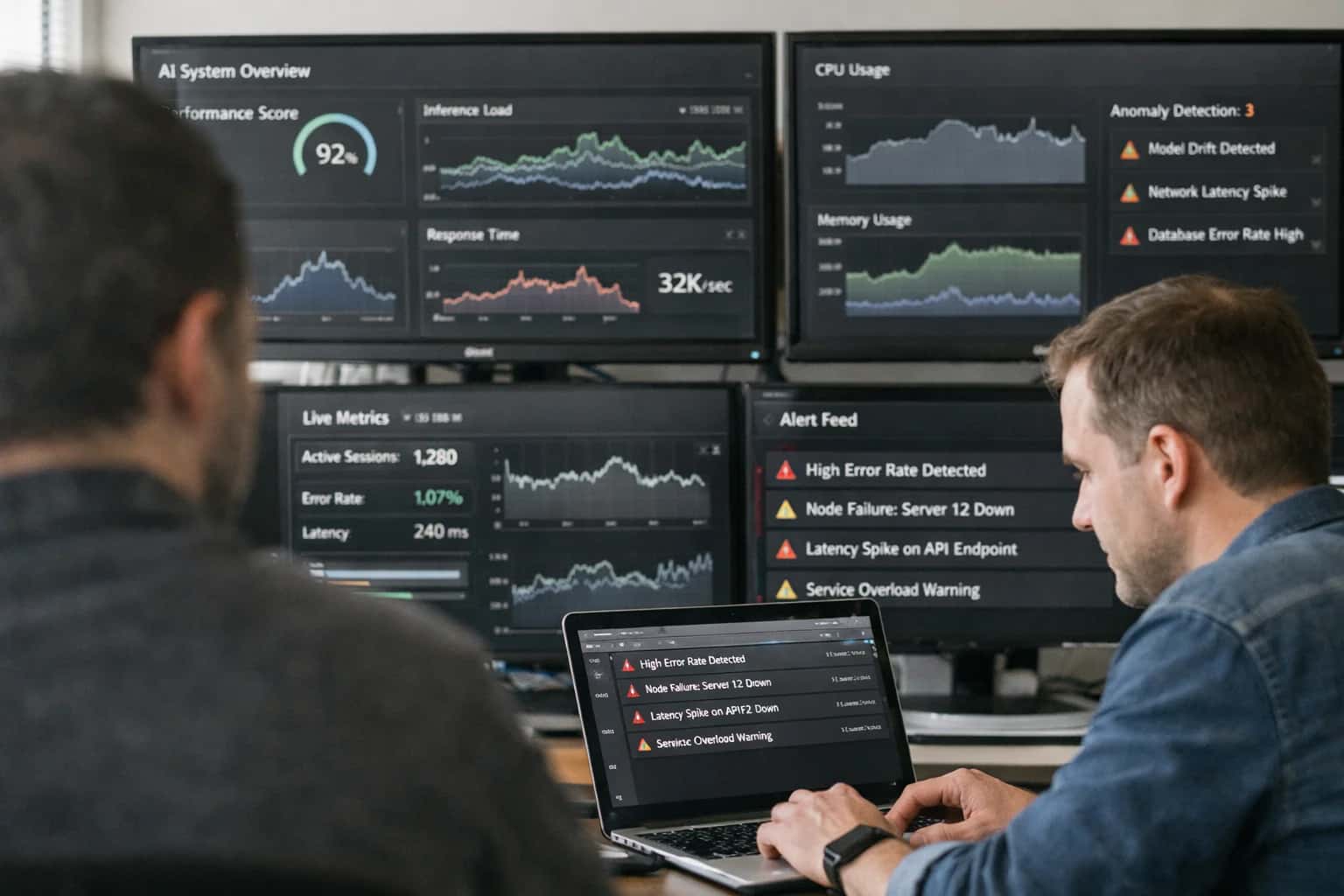
OUT-OF-BAND MANAGEMENT STANDARD
What is Redfish API?
The Redfish API is an open industry-standard RESTful interface for the out-of-band management of modern server hardware, enabling automated monitoring, firmware updates, and provisioning of GPU nodes.
Designed by the DMTF for scalable data center automation, Redfish enables infrastructure directors to programmatically discover, provision, and update GPU clusters at scale. Its standardized schema supports firmware versioning, thermal monitoring, and power capping, making it essential for maintaining a sovereign AI infrastructure with strict hardware integrity controls.
OUT-OF-BAND MANAGEMENT
Key Features of Redfish API
The Redfish API is a modern, secure, and extensible standard for managing scale-out server hardware. It replaces legacy IPMI with a RESTful, JSON-based interface designed for the automation demands of composable and disaggregated infrastructure.
01
RESTful & JSON-Based Architecture
Redfish is built on a modern RESTful (Representational State Transfer) interface, using HTTPS for transport and JSON for data serialization. This makes it inherently human-readable and easily scriptable with standard tools like curl or Python requests, unlike the binary protocols of legacy IPMI. Every resource—from a chassis to a GPU—is addressable via a unique URI, enabling programmatic discovery and management of the entire hardware fleet.
OData v4
Schema Standard
02
Secure by Design
Security is a foundational requirement, not an afterthought. Redfish mandates TLS 1.2 or higher for all communication, ensuring encryption in transit. Authentication is handled through a centralized Session Management model using standard HTTP Basic or Token-based auth. Role-Based Access Control (RBAC) allows administrators to define granular privileges, restricting a monitoring tool to read-only access while granting firmware update permissions only to a provisioning service.
03
Comprehensive Hardware Modeling
The data model is organized around physical and logical computer systems. Key resource types include:
- ComputerSystem: The server itself, including CPU, memory, and GPU inventory.
- Chassis: The physical enclosure, power supplies, and thermal sensors.
- Manager: The Baseboard Management Controller (BMC) providing the Redfish service.
- UpdateService: A standardized endpoint for orchestrating firmware updates across multiple components. This model allows a single API to manage everything from a single GPU to an entire rack.
04
Event-Driven Telemetry & Alerts
Redfish eliminates the need for constant polling through its Event Service. Clients can subscribe to a stream of asynchronous events pushed via Server-Sent Events (SSE) or WebSockets. This enables near-real-time alerting for critical hardware faults, such as a GPU exceeding its thermal threshold or a redundant power supply failure. The MetricReport resource provides standardized telemetry data, allowing integration with monitoring platforms like Prometheus for historical trend analysis.
05
Automated Provisioning & Composability
The API is designed for infrastructure-as-code workflows. Using the CompositionService, administrators can dynamically assemble a server from disaggregated pools of compute, GPU accelerators, and storage. A single POST request can attach a specific GPU model to a blade and boot it with a predefined BIOS configuration. This programmatic composability is essential for bare-metal orchestration platforms like MAAS or Metal3, enabling rapid repurposing of GPU nodes for different AI training jobs.
06
Vendor-Neutral Extensibility
Managed by the DMTF (Distributed Management Task Force), Redfish is an open industry standard with broad adoption across all major server OEMs. While the core schema ensures interoperability, vendors can publish their own OEM extensions to expose unique hardware features—such as NVIDIA's GPU-specific telemetry or custom liquid cooling pump status—without breaking the standard model. This provides a single, unified management interface across a heterogeneous fleet of AI infrastructure.
REDFISH API EXPLAINED
Frequently Asked Questions
Clear, technical answers to the most common questions about the Redfish API and its role in modern infrastructure management.
The Redfish API is an open industry-standard RESTful interface for out-of-band management of modern server hardware. It works by exposing a secure, HTTPS-based JSON data model that allows administrators and automation tools to perform operations independently of the server's operating system or power state. Unlike legacy protocols, Redfish uses a hypermedia-driven design, where a root service entry point (/redfish/v1/) links to all available resources, making it self-describing and discoverable. It communicates with a Baseboard Management Controller (BMC) to monitor sensors, update firmware, configure BIOS settings, and provision operating systems, all through standard GET, POST, PATCH, and DELETE HTTP methods.
Enabling Efficiency, Speed & Accuracy
Intelligent Analysis, Decision & Execution
We build AI systems for teams that need search across company data, workflow automation across tools, or AI features inside products and internal software.
Talk to Us
Search across company data
Give teams answers from docs, tickets, runbooks, and product data with sources and permissions.
Useful when people spend too long searching or get different answers from different systems.
Enterprise searchRAGPermissions
Read more
Automate internal workflows
Use AI to route work, draft outputs, trigger actions, and keep approvals and logs in place.
Useful when repetitive work moves across multiple tools and teams.
AI agentsWorkflow automationGovernance
Read more
Add AI to products and internal tools
Build assistants, guided actions, or decision support into the software your team or customers already use.
Useful when AI needs to be part of the product, not a separate tool.
AI integrationDecision supportModel routing
Read more
About the author
Prasad Kumkar
CEO & MD, Inference Systems
Prasad Kumkar is the CEO & MD of Inference Systems and writes about AI systems architecture, LLM infrastructure, model serving, evaluation, and production deployment. Over 5+ years, he has worked across computer vision models, L5 autonomous vehicle systems, and LLM research, with a focus on taking complex AI ideas into real-world engineering systems.
His work and writing cover AI systems, large language models, AI agents, multimodal systems, autonomous systems, inference optimization, RAG, evaluation, and production AI engineering.
LinkedIn
Limited slotsGet a Free AI Consultation
Partnered with leading AI, data, and software stack.





How We Work
Custom AI workflows for your Business
One-fit-all AI don't work for modern businesses. At Inferensys, we aim to understand your business & custom requirements; which we use to define most efficient agentic workflows, the data, and the tools for your business.
01
Review the use case
We understand the task, the users, and where AI can actually help.
Read more02
Pick the right approach
We define what needs search, automation, or product integration.
Read more03
Build the first useful version
We implement the part that proves the value first.
Read more04
Improve from there
We add the checks and visibility needed to keep it useful.
Read moreThe first call is a practical review of your use case and the right next step.
Talk to Us