A private registry is a self-hosted, internal artifact repository that stores and serves OCI-compliant container images, Helm charts, and other cloud-native artifacts exclusively within an organization's controlled network perimeter. Unlike public registries such as Docker Hub, a private registry operates without requiring an external internet connection, making it the foundational dependency for deploying any containerized AI workload into a disconnected or air-gapped Kubernetes environment. It acts as the single source of truth for all approved, scanned, and signed base images—including GPU driver containers, inference servers like vLLM, and custom model-serving microservices—ensuring that every pod scheduled in the cluster pulls from a trusted, internal origin.

Glossary
Private Registry
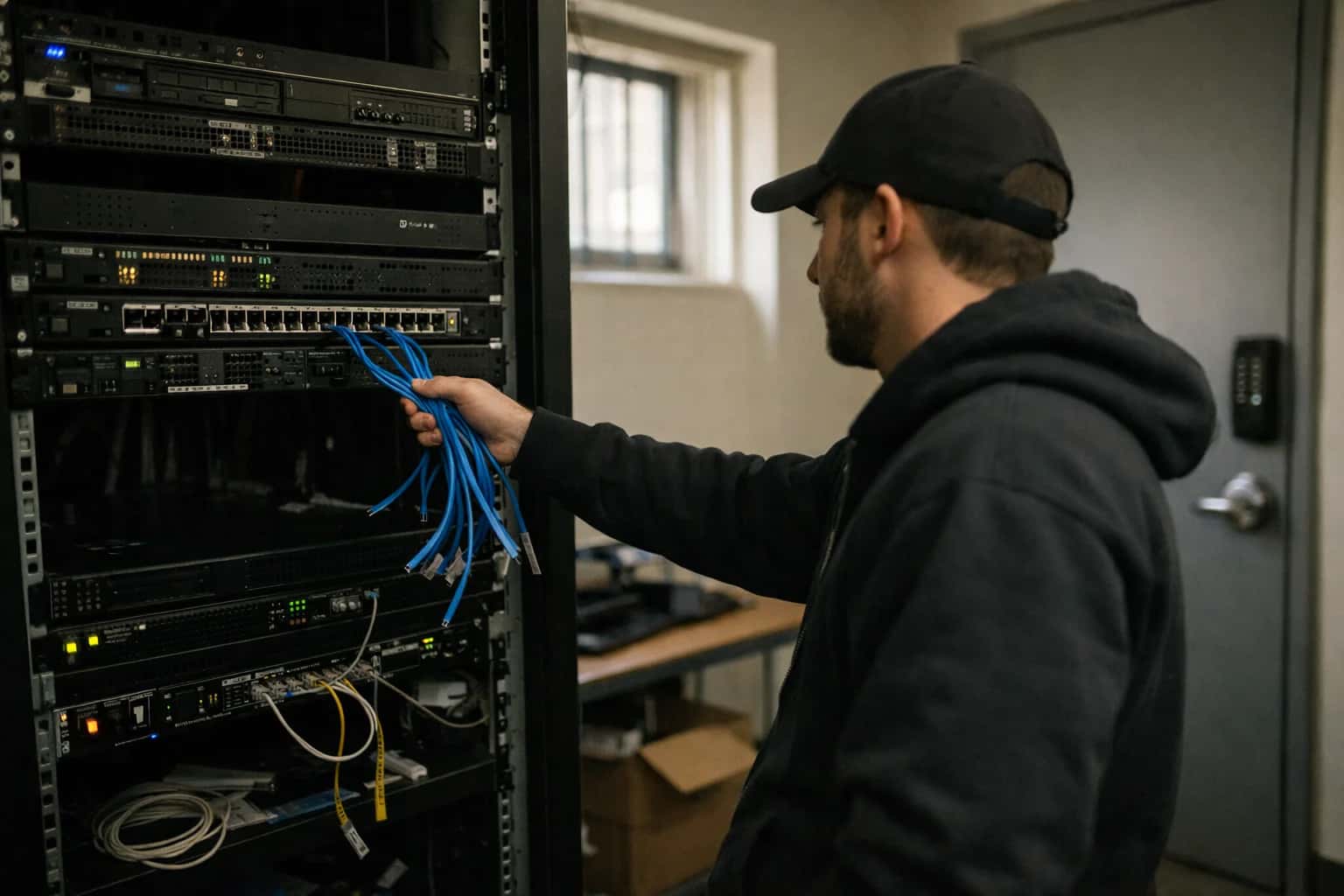
What is a Private Registry?
A private registry is an internal, self-hosted repository for storing and distributing OCI-compliant container images and artifacts within a controlled network perimeter, eliminating dependency on public registries.
In sovereign AI infrastructure, the private registry is a critical security and compliance control point. It integrates with vulnerability scanners to enforce policies that prevent the deployment of images with critical CVEs, and it supports cosign-based image signing to cryptographically verify artifact provenance before a kubelet ever pulls a layer. For air-gapped operations, the registry must support a fully offline workflow: images are pushed to a portable, filesystem-backed instance on a connected staging network, exported to a transportable archive, and then physically transferred and imported into the production registry behind the air gap. This workflow, combined with immutable tagging and garbage collection policies, guarantees that the model-serving infrastructure remains deterministic, auditable, and completely isolated from foreign network dependencies.
Core Capabilities of a Private Registry
A private registry is the foundational component for delivering containerized AI workloads into disconnected environments. It provides secure, high-availability storage for OCI-compliant artifacts while enabling vulnerability scanning, access control, and replication workflows.
OCI-Compliant Artifact Storage
Stores and serves Open Container Initiative (OCI) artifacts, including container images, Helm charts, and model weights, using a standardized API. This ensures compatibility with all OCI-compliant clients like Docker, Podman, and Kubernetes.
- Content-Addressable Storage: Images are stored as content-addressable layers identified by SHA256 digests, enabling deduplication and tamper detection.
- Multi-Architecture Manifests: Supports manifest lists that allow a single image tag to resolve to the correct binary for amd64, arm64, or ppc64le nodes.
- Garbage Collection: Automated policies reclaim storage by deleting unreferenced blobs and untagged manifests, critical for managing large model artifacts.
Vulnerability Scanning & Policy Enforcement
Integrates with static analysis engines to scan every pushed image layer for known Common Vulnerabilities and Exposures (CVEs) before they can be deployed.
- Admission Control: Prevents pulling images with critical or high-severity vulnerabilities based on configurable thresholds.
- Continuous Rescanning: Automatically rescans existing images when new CVEs are published, notifying security teams of newly discovered risks in previously approved artifacts.
- SBOM Generation: Produces a Software Bill of Materials for each image, cataloging all OS packages and language dependencies for compliance audits.
Replication & Synchronization
Enables pull-based and push-based replication of artifacts between registries, which is essential for bridging connected build environments and air-gapped production clusters.
- Filtered Replication: Replicates only specific repositories or image tags matching defined glob patterns, preventing the transfer of development artifacts to secure environments.
- Proxy Cache: Operates as a pull-through cache for external registries like Docker Hub or NVIDIA NGC, storing requested images locally for subsequent air-gapped transfer.
- Incremental Synchronization: Transfers only the missing layers and manifests, minimizing the data volume required for periodic updates to a disconnected registry.
Role-Based Access Control (RBAC)
Enforces granular permissions on registry operations, integrating with enterprise identity providers via LDAP, OIDC, or SAML.
- Project-Level Isolation: Segments artifacts into projects or namespaces, each with independent user and robot account permissions.
- Immutable Tags: Locks specific image tags to prevent overwriting, ensuring that production deployments always reference a known, auditable artifact.
- Audit Logging: Records every operation—push, pull, delete—with user identity and timestamp for forensic analysis and compliance reporting.
High Availability & Storage Backend Abstraction
Deploys in a stateless, horizontally scalable configuration where all metadata and artifacts reside on external, fault-tolerant storage.
- Pluggable Storage: Supports object stores like AWS S3, MinIO, and Azure Blob Storage, as well as filesystem-based persistent volumes for on-premises deployments.
- Read-Only Replicas: Distributes read-only registry instances geographically to serve pull traffic closer to compute nodes, reducing latency for large model downloads.
- Database Resilience: Uses an external PostgreSQL database for metadata, enabling standard backup, failover, and point-in-time recovery procedures.
Artifact Retention & Lifecycle Policies
Automates the cleanup of old or unused artifacts to control storage costs and enforce governance standards.
- Tag-Based Retention: Retains the last N images per repository or those matching specific tag patterns like
prod-*while pruning development snapshots. - Conditional Pruning: Removes images that have not been pulled within a defined time window, indicating they are no longer actively used by any workload.
- Quota Management: Sets per-project storage limits to prevent a single team or workload from consuming disproportionate registry capacity.
Frequently Asked Questions
Clear, technical answers to the most common questions about hosting, securing, and optimizing internal container image registries for air-gapped AI infrastructure.
A private container registry is an internal, self-hosted repository that stores and serves OCI-compliant artifacts—including container images, Helm charts, and model weights—without requiring an external internet connection. It functions as the authoritative source of truth for all containerized workloads within a disconnected environment. The registry exposes a standard HTTP API that implements the OCI Distribution Specification, allowing container runtimes and Kubernetes nodes to push, pull, and discover artifacts via content-addressable digests. Unlike public registries such as Docker Hub, a private registry enforces organizational access controls, integrates with internal identity providers via LDAP or OIDC, and operates entirely behind the corporate firewall. In air-gapped AI deployments, the registry is populated through a manual import workflow: images are pulled from external sources on a connected 'jump host,' exported as tarballs, physically transferred across the air gap, and then pushed into the private registry where they become available for scheduling onto GPU nodes.
Enabling Efficiency, Speed & Accuracy
Intelligent Analysis, Decision & Execution
We build AI systems for teams that need search across company data, workflow automation across tools, or AI features inside products and internal software.
Talk to Us
Search across company data
Give teams answers from docs, tickets, runbooks, and product data with sources and permissions.
Useful when people spend too long searching or get different answers from different systems.

Automate internal workflows
Use AI to route work, draft outputs, trigger actions, and keep approvals and logs in place.
Useful when repetitive work moves across multiple tools and teams.

Add AI to products and internal tools
Build assistants, guided actions, or decision support into the software your team or customers already use.
Useful when AI needs to be part of the product, not a separate tool.

About the author
Prasad Kumkar
CEO & MD, Inference Systems
Prasad Kumkar is the CEO & MD of Inference Systems and writes about AI systems architecture, LLM infrastructure, model serving, evaluation, and production deployment. Over 5+ years, he has worked across computer vision models, L5 autonomous vehicle systems, and LLM research, with a focus on taking complex AI ideas into real-world engineering systems.
His work and writing cover AI systems, large language models, AI agents, multimodal systems, autonomous systems, inference optimization, RAG, evaluation, and production AI engineering.
Partnered with leading AI, data, and software stack.





How We Work
Custom AI workflows for your Business
One-fit-all AI don't work for modern businesses. At Inferensys, we aim to understand your business & custom requirements; which we use to define most efficient agentic workflows, the data, and the tools for your business.
01
Review the use case
We understand the task, the users, and where AI can actually help.
Read more02
Pick the right approach
We define what needs search, automation, or product integration.
Read more03
Build the first useful version
We implement the part that proves the value first.
Read more04
Improve from there
We add the checks and visibility needed to keep it useful.
Read moreThe first call is a practical review of your use case and the right next step.
Talk to Us