Federated Continual Learning enables a global model to learn sequentially from evolving data streams across a network of distributed edge devices without centralizing raw data. It directly addresses the dual challenges of catastrophic forgetting and data privacy by performing on-device training on local, non-i.i.d. data and aggregating only model updates. This creates a lifelong learning system that adapts to new patterns over time while preserving client data sovereignty.

Glossary
Federated Continual Learning
Federated Continual Learning (FCL) is a machine learning paradigm that merges federated learning's decentralized privacy with continual learning's ability to learn sequentially from non-stationary data streams across distributed edge devices.
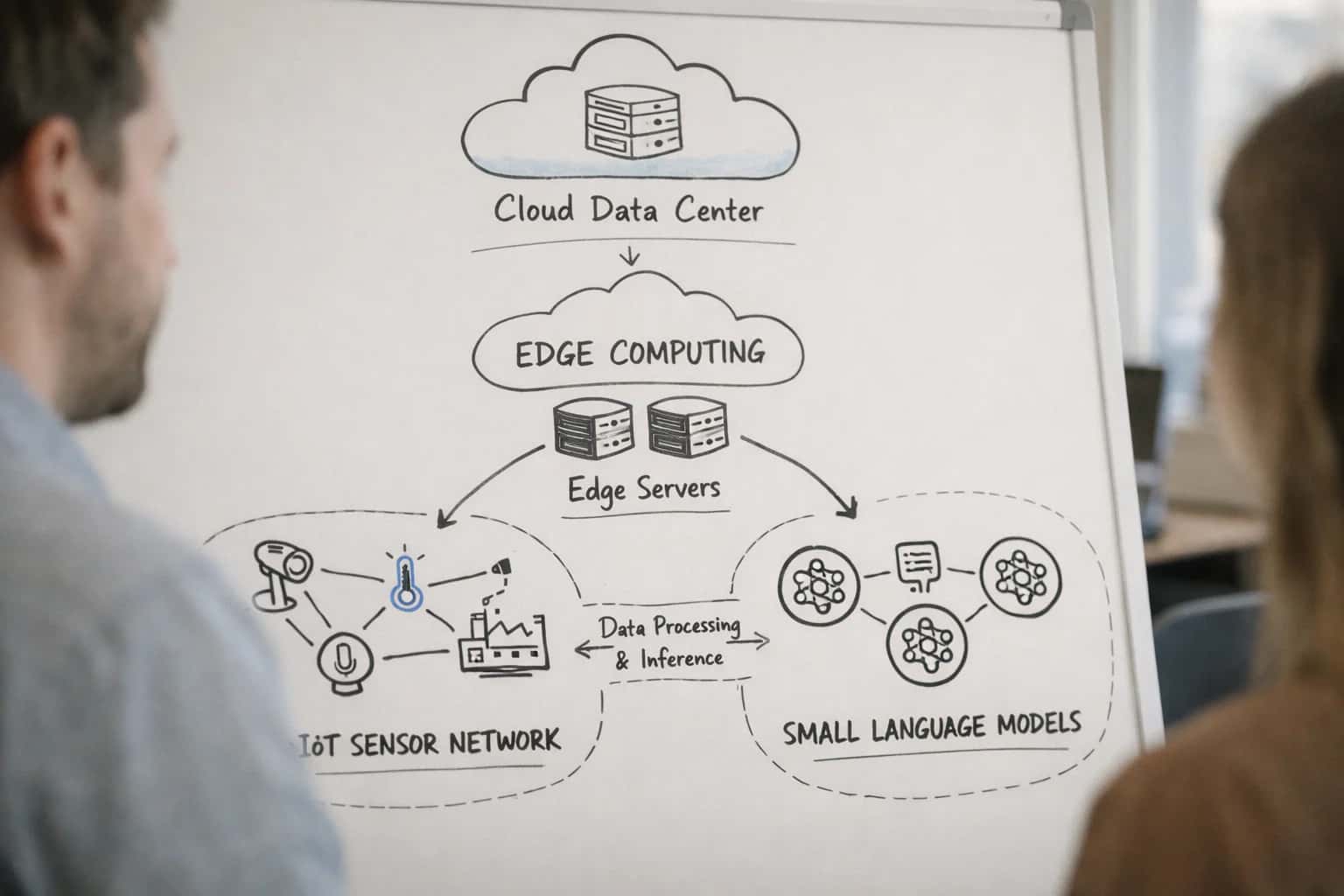
DEFINITION
What is Federated Continual Learning?
Federated Continual Learning (FCL) is a machine learning paradigm that combines the decentralized, privacy-preserving training of federated learning with the sequential, non-stationary learning of continual learning.
Core techniques from both fields are integrated: rehearsal-based methods like experience replay use a local replay buffer, while regularization-based methods like Elastic Weight Consolidation constrain updates. The system must manage the stability-plasticity dilemma under communication and compute constraints. This is critical for applications like personalized healthcare or smart sensors, where data is both private and inherently sequential.
DEFINING ATTRIBUTES
Core Characteristics of Federated Continual Learning
Federated Continual Learning (FCL) is a machine learning paradigm that merges the decentralized, privacy-preserving training of federated learning with the sequential, non-stationary learning of continual learning. Its core characteristics define the unique challenges and solutions for enabling models to evolve over time across a distributed network of edge devices.
01
Decentralized, Sequential Data Streams
FCL models learn from non-i.i.d. (non-independent and identically distributed) and non-stationary data streams that arrive sequentially across many independent clients (e.g., smartphones, IoT sensors). Unlike batch learning, data is not centrally available and its statistical properties change over time at each device. This requires algorithms that can adapt to local concept drift while aggregating knowledge globally.
- Example: A keyboard prediction model on millions of phones must adapt to new slang and typing patterns on each device without accessing the raw text data.
02
Privacy Preservation by Design
A foundational constraint is that raw training data never leaves the local device. Only model updates (e.g., gradients, parameters) are shared with a central server. This is often combined with additional privacy techniques like Differential Privacy (DP), which adds calibrated noise to updates, or Secure Aggregation, a cryptographic protocol that prevents the server from inspecting any single client's update. This addresses regulatory requirements (GDPR, HIPAA) for sensitive data.
03
Mitigation of Catastrophic Forgetting
A primary technical challenge is catastrophic forgetting—the tendency for a neural network to overwrite knowledge of previous tasks when learning new ones. In FCL, this is exacerbated because the server never sees the global data distribution. Solutions are adapted from continual learning:
- Regularization Methods: Penalize changes to parameters important for past global knowledge (e.g., Elastic Weight Consolidation).
- Rehearsal Methods: Devices store a small replay buffer of past local data to interleave with new data.
- Architectural Methods: Dynamically expand the global model or use masking to isolate parameters for different data distributions.
04
Communication Efficiency
FCL must minimize the cost of transmitting model updates between edge devices and a central server, as bandwidth and device energy are limited. This drives techniques like:
- Compression: Sending only the most significant gradient updates via sparsification or quantization.
- Partial Participation: Only a subset of clients (e.g., 1-10%) train and communicate in each federated round.
- Local Training Rounds: Performing multiple stochastic gradient descent steps on the device before communicating, reducing total communication rounds. The goal is to achieve high accuracy with the fewest bits transmitted.
05
Statistical Heterogeneity (Non-IID Data)
Data across clients is inherently heterogeneous—the distribution of data on one device (e.g., a user's photo library) is not representative of the global population. This statistical heterogeneity causes client drift, where local models diverge significantly, complicating the aggregation of a single, globally performant model. FCL algorithms must be robust to this, often employing techniques like client-specific personalization layers or adaptive aggregation (e.g., weighting updates based on data volume or similarity).
06
System and Hardware Heterogeneity
The federated network consists of devices with vastly different capabilities (system heterogeneity). This includes variations in:
- Compute Power: From microcontrollers to smartphones.
- Network Connectivity: Intermittent, slow, or metered connections.
- Battery Life: Training must be energy-efficient.
- Availability: Devices may drop in and out of training (stragglers).
FCL systems must handle this gracefully, often using asynchronous aggregation or allowing devices to perform variable amounts of local work based on their resources.
TECHNICAL OVERVIEW
How Federated Continual Learning Works: A Technical Mechanism
Federated Continual Learning (FCL) is a compound machine learning paradigm that merges the decentralized, privacy-preserving training of federated learning with the sequential, non-stationary learning of continual learning. This mechanism enables a global model to evolve over time from data streams across a distributed network of edge devices without centralizing data or catastrophically forgetting past knowledge.
The core mechanism operates in synchronized rounds. Each participating edge device performs on-device training on its local, sequentially arriving data stream using a continual learning algorithm (e.g., Experience Replay, EWC) to mitigate catastrophic forgetting. This local training produces a set of model updates, typically gradients or weight deltas. These updates are then sent to a central aggregation server, which uses an algorithm like Federated Averaging (FedAvg) to compute a new global model. This aggregated model is redistributed to devices, beginning the next round.
The primary technical challenges are the communication-computation trade-off and statistical heterogeneity. Devices have varying data distributions (non-IID data) and may join/leave the federation, creating a dynamic learning environment. Advanced FCL systems implement adaptive aggregation, personalized federated learning, and efficient buffer management for replay to handle these disparities. The result is a single, evolving model that learns from a changing world while preserving the data privacy inherent to the federated framework.
FEDERATED CONTINUAL LEARNING
Real-World Applications and Use Cases
Federated Continual Learning enables decentralized models to adapt to evolving data streams across millions of devices while preserving privacy. These applications highlight its critical role in dynamic, real-world environments.
01
Personalized On-Device Assistants
Smartphone assistants and predictive keyboards use FCL to learn from individual user interactions—typing habits, app usage, location patterns—without uploading private data. The local model sequentially adapts to new slang, schedule changes, or emerging interests. Key challenges include managing battery consumption during local training and ensuring backward transfer so learning a new language doesn't degrade existing autocorrect performance.
02
Autonomous Vehicle Fleet Adaptation
A fleet of vehicles encounters diverse, non-stationary driving conditions (e.g., new construction zones, seasonal weather). Each vehicle performs on-device training to adapt its perception model to local anomalies. Federated aggregation at a central server merges these adaptations into a global model that improves safety for the entire fleet. This addresses the stability-plasticity dilemma at scale, ensuring the model learns new road signs without forgetting how to recognize standard ones.
03
Healthcare Diagnostic Model Evolution
Hospitals worldwide use FCL to collaboratively improve a medical imaging model (e.g., for tumor detection) as new patient data and rare case studies emerge. Each institution trains locally on sequential patient batches, preserving data sovereignty. The global model evolves without catastrophic forgetting of previously learned pathologies. Techniques like gradient episodic memory (GEM) are crucial to prevent learning from a new cancer subtype from degrading performance on common diagnoses.
04
Industrial IoT Predictive Maintenance
Networks of factory sensors monitor machinery. Each sensor's local model learns sequentially from its unique vibration and thermal data stream, adapting to wear patterns. A global FCL model synthesizes these learnings to predict failures across different machine types and environments. This requires efficient replay buffers on memory-constrained devices and robust aggregation to handle non-IID data—sensors in one plant may experience very different failure modes.
05
Adaptive Content Recommendation
Streaming platforms use FCL on smart TVs and phones to personalize recommendations. The local model continually learns from a user's evolving viewing sessions (a non-stationary data stream). Federated updates allow the global model to discover emerging trends (e.g., a new show going viral) across millions of users without accessing individual watch histories. This system must balance online continual learning (immediate adaptation) with privacy guarantees like differential privacy during update transmission.
06
Wildlife Conservation & Sensor Networks
Remote acoustic sensors in a forest use FCL to adaptively classify animal sounds as species migrate or new vocalizations are discovered. Each sensor trains on a sequential stream of audio clips. Federated aggregation creates a robust, evolving bio-acoustic model. This application epitomizes edge-CL challenges: extreme resource constraints, unreliable connectivity, and the need for lifelong learning over years without human intervention.
COMPARATIVE ANALYSIS
Federated Continual Learning vs. Related Paradigms
A feature-by-feature comparison of Federated Continual Learning against its foundational paradigms and related decentralized learning approaches.
| Core Feature / Metric | Federated Continual Learning (FCL) | Standard Federated Learning (FL) | Centralized Continual Learning (CL) | Edge-CL (On-Device Continual Learning) |
|---|---|---|---|---|
Primary Objective | Sequential learning from non-stationary data streams across decentralized devices | Collaborative training on static, distributed datasets | Sequential learning from a centralized, non-stationary data stream | Sequential learning from a local, on-device data stream |
Data Privacy Guarantee | ||||
Mitigates Catastrophic Forgetting | ||||
Learning Context | Global model evolution across a device population | Single global model convergence | Single model evolution on a server | Local model evolution on a single device |
Communication Overhead | Periodic, synchronized model aggregation | Periodic, synchronized model aggregation | None (centralized) | None (local only) |
On-Device Training Required | ||||
Handles Non-IID Data Streams | ||||
Requires Central Data Buffer/Replay | Optional (constrained) | |||
Key Challenge | Coordinating stability-plasticity trade-off across heterogeneous devices | Statistical heterogeneity (non-IID data) across devices | Catastrophic forgetting on a single model | Extreme resource constraints (memory, compute) |
Typical Model Count | One global synchronized model | One global synchronized model | One central model | One unique model per device |
Knowledge Sharing Mechanism | Aggregation of model updates (gradients/weights) | Aggregation of model updates (gradients/weights) | Direct parameter updates from central data | None (knowledge remains local) |
Forward/Backward Transfer Potential | Across devices via global model | Limited to initial model improvement | Within the single model's sequence | None (isolated learning) |
FEDERATED CONTINUAL LEARNING
Frequently Asked Questions
Federated Continual Learning (FCL) merges the decentralized, privacy-preserving training of federated learning with the sequential, non-stationary learning of continual learning. This glossary answers key questions about how it works, its challenges, and its applications on the edge.
Federated Continual Learning (FCL) is a machine learning paradigm that enables a global model to learn sequentially from evolving, non-stationary data streams distributed across multiple edge devices, without centralizing the raw data and without catastrophically forgetting previously acquired knowledge.
It combines two core techniques:
- Federated Learning (FL): A decentralized training framework where a central server coordinates learning by aggregating model updates (e.g., gradients or weights) from many clients, keeping raw data on-device.
- Continual Learning (CL): A training paradigm where a model learns from a stream of tasks or data distributions over time, aiming to accumulate knowledge without catastrophic forgetting.
In FCL, each edge device acts as a local continual learner, adapting its personal model to its own unique, sequentially arriving data. Periodically, these local updates are sent to a central server, which performs federated averaging to create a single, improved global model that has learned from all devices while attempting to preserve knowledge from all past tasks.
Enabling Efficiency, Speed & Accuracy
Intelligent Analysis, Decision & Execution
We build AI systems for teams that need search across company data, workflow automation across tools, or AI features inside products and internal software.
Talk to Us
Search across company data
Give teams answers from docs, tickets, runbooks, and product data with sources and permissions.
Useful when people spend too long searching or get different answers from different systems.
Enterprise searchRAGPermissions
Read more
Automate internal workflows
Use AI to route work, draft outputs, trigger actions, and keep approvals and logs in place.
Useful when repetitive work moves across multiple tools and teams.
AI agentsWorkflow automationGovernance
Read more
Add AI to products and internal tools
Build assistants, guided actions, or decision support into the software your team or customers already use.
Useful when AI needs to be part of the product, not a separate tool.
AI integrationDecision supportModel routing
Read more
About the author
Prasad Kumkar
CEO & MD, Inference Systems
Prasad Kumkar is the CEO & MD of Inference Systems and writes about AI systems architecture, LLM infrastructure, model serving, evaluation, and production deployment. Over 5+ years, he has worked across computer vision models, L5 autonomous vehicle systems, and LLM research, with a focus on taking complex AI ideas into real-world engineering systems.
His work and writing cover AI systems, large language models, AI agents, multimodal systems, autonomous systems, inference optimization, RAG, evaluation, and production AI engineering.
LinkedIn
Limited slotsGet a Free AI Consultation
Partnered with leading AI, data, and software stack.





How We Work
Custom AI workflows for your Business
One-fit-all AI don't work for modern businesses. At Inferensys, we aim to understand your business & custom requirements; which we use to define most efficient agentic workflows, the data, and the tools for your business.
01
Review the use case
We understand the task, the users, and where AI can actually help.
Read more02
Pick the right approach
We define what needs search, automation, or product integration.
Read more03
Build the first useful version
We implement the part that proves the value first.
Read more04
Improve from there
We add the checks and visibility needed to keep it useful.
Read moreThe first call is a practical review of your use case and the right next step.
Talk to Us