Policy as Code is the methodology of writing security and operational rules in a high-level declarative language—such as Rego for Open Policy Agent (OPA)—rather than relying on manual ticketing processes. These codified policies are stored in a Git repository, subjected to unit testing, and automatically enforced at deployment time via an admission controller or CI/CD pipeline, ensuring every artifact is compliant before reaching production.

Glossary
Policy as Code
Policy as Code (PaC) is the practice of writing and managing infrastructure and security rules as versioned, executable code, enabling automated enforcement and auditability of compliance requirements.
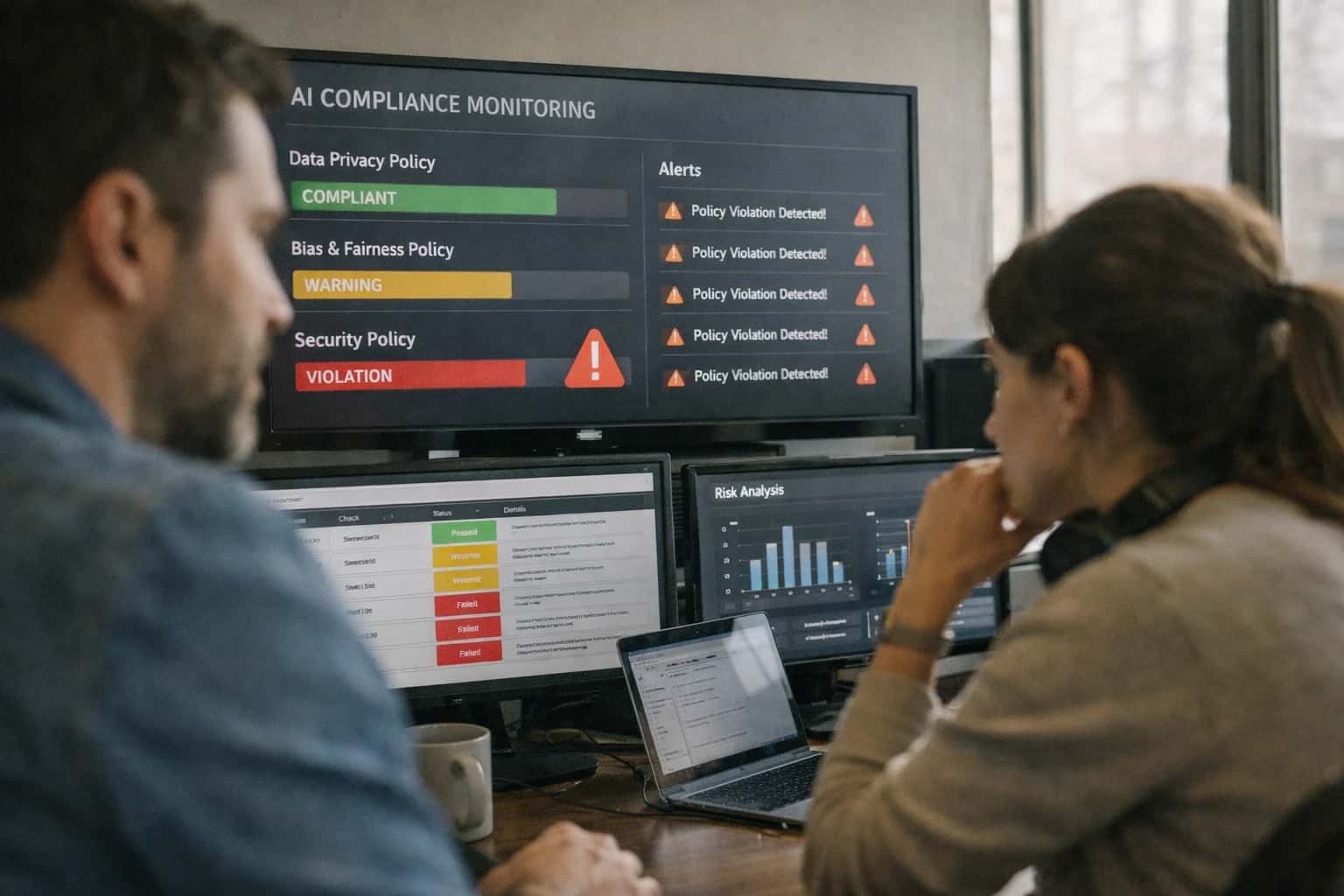
AUTOMATED COMPLIANCE
What is Policy as Code?
Policy as Code (PaC) is the practice of defining, managing, and enforcing infrastructure, security, and compliance rules through machine-readable definition files stored in version control, enabling automated testing and deployment of governance guardrails.
By decoupling policy decisions from application logic, PaC enables a Zero Trust Supply Chain where every kubectl command or Binary Authorization request is evaluated against a single, auditable source of truth. This approach directly supports SLSA Framework attestations and SBOM validation, transforming compliance from a periodic audit into a continuous, verifiable engineering process.
AUTOMATED COMPLIANCE
Key Features of Policy as Code
Policy as Code transforms manual governance into automated, version-controlled enforcement. These core capabilities enable DevSecOps teams to embed security and compliance directly into the software delivery lifecycle.
01
Declarative Policy Language
Policies are expressed as declarative rules using high-level languages like Rego (for Open Policy Agent) or Sentinel, rather than imperative scripts. This specifies what the desired state is, not how to achieve it.
- Rego Example:
allow { input.user.role == "admin" } - Decouples policy logic from application code
- Enables non-developers to read and audit security rules
- Standardizes authorization logic across heterogeneous microservices
02
Automated Enforcement via Policy Engine
A dedicated policy engine (e.g., Open Policy Agent) runs as a sidecar or daemon, intercepting requests and evaluating them against loaded policies in real-time. The engine returns a simple allow/deny decision.
- Integrates via Kubernetes Admission Controllers to block non-compliant pods
- Plugs into API Gateways and Service Meshes for traffic authorization
- Evaluates Terraform plans pre-deployment to prevent misconfigurations
- Latency is typically sub-millisecond for in-process evaluations
03
Version Control & Audit Trail
Policy definitions are stored in Git repositories alongside application code, inheriting the full benefits of the software development lifecycle. Every change is tracked, reviewed, and attributable.
- Pull Request workflows enforce peer review on policy changes
- Git blame provides full non-repudiation for compliance auditors
- Rollback to a known-good policy state is instantaneous via
git revert - Policy versions are tagged and released in sync with application versions
04
Policy Testing & Simulation
Policies are treated as software artifacts and are subject to unit testing and integration testing before deployment. Policy engines provide testing frameworks to validate logic against mock inputs.
- OPA's
opa testcommand runs unit tests on Rego policies - Simulate policy decisions with
opa evalagainst historical data - Dry-run modes in admission controllers log violations without blocking
- CI/CD pipelines gate policy merges on passing test suites
05
Decoupled Decision-Making
Policy as Code enforces a strict separation of concerns: the policy decision point (PDP) is logically and often physically separate from the policy enforcement point (PEP). This architecture scales independently and centralizes governance.
- PEP: The application, proxy, or API gateway that asks for a decision
- PDP: The policy engine that evaluates rules and returns a verdict
- Updates to policies do not require rebuilding or redeploying applications
- A single PDP can serve thousands of PEPs across a multi-cluster environment
06
Compliance-as-Code Reporting
Beyond binary allow/deny decisions, policy engines generate structured decision logs that serve as a continuous compliance audit trail. These logs prove to auditors that specific controls were in place and enforced at a given time.
- Logs include the policy version, input context, and decision outcome
- Exportable to SIEM systems (Splunk, Elastic) for real-time alerting
- Generates on-demand compliance reports for SOC 2, HIPAA, and PCI DSS
- Demonstrates continuous enforcement rather than point-in-time snapshots
POLICY AS CODE
Frequently Asked Questions
Clear, technical answers to the most common questions about implementing, scaling, and securing Policy as Code in modern AI and cloud-native environments.
Policy as Code (PaC) is the practice of defining, managing, and enforcing rules and compliance requirements through machine-readable definition files rather than manual processes or tribal knowledge. It works by codifying security, operational, and regulatory policies into a high-level declarative language—such as Rego for the Open Policy Agent (OPA)—that a policy engine evaluates against structured input data (e.g., a JSON representation of a Kubernetes admission request or a Terraform plan). The engine returns a simple allow/deny decision, decoupling policy logic from application code. This enables version control, automated testing, peer review, and continuous integration of policy changes, transforming governance from a manual gate into an automated, auditable software development lifecycle.
Enabling Efficiency, Speed & Accuracy
Intelligent Analysis, Decision & Execution
We build AI systems for teams that need search across company data, workflow automation across tools, or AI features inside products and internal software.
Talk to Us
Search across company data
Give teams answers from docs, tickets, runbooks, and product data with sources and permissions.
Useful when people spend too long searching or get different answers from different systems.
Enterprise searchRAGPermissions
Read more
Automate internal workflows
Use AI to route work, draft outputs, trigger actions, and keep approvals and logs in place.
Useful when repetitive work moves across multiple tools and teams.
AI agentsWorkflow automationGovernance
Read more
Add AI to products and internal tools
Build assistants, guided actions, or decision support into the software your team or customers already use.
Useful when AI needs to be part of the product, not a separate tool.
AI integrationDecision supportModel routing
Read more
About the author
Prasad Kumkar
CEO & MD, Inference Systems
Prasad Kumkar is the CEO & MD of Inference Systems and writes about AI systems architecture, LLM infrastructure, model serving, evaluation, and production deployment. Over 5+ years, he has worked across computer vision models, L5 autonomous vehicle systems, and LLM research, with a focus on taking complex AI ideas into real-world engineering systems.
His work and writing cover AI systems, large language models, AI agents, multimodal systems, autonomous systems, inference optimization, RAG, evaluation, and production AI engineering.
LinkedIn
Limited slotsGet a Free AI Consultation
Partnered with leading AI, data, and software stack.





How We Work
Custom AI workflows for your Business
One-fit-all AI don't work for modern businesses. At Inferensys, we aim to understand your business & custom requirements; which we use to define most efficient agentic workflows, the data, and the tools for your business.
01
Review the use case
We understand the task, the users, and where AI can actually help.
Read more02
Pick the right approach
We define what needs search, automation, or product integration.
Read more03
Build the first useful version
We implement the part that proves the value first.
Read more04
Improve from there
We add the checks and visibility needed to keep it useful.
Read moreThe first call is a practical review of your use case and the right next step.
Talk to Us