Open Policy Agent (OPA) is a general-purpose policy engine that externalizes authorization logic from application code, enabling unified, context-aware policy decisions across the entire cloud-native stack. It evaluates policies written in Rego, a declarative language, against structured JSON input data to return allow/deny decisions.

Glossary
Open Policy Agent (OPA)
A general-purpose policy engine that decouples policy decision-making from application logic, providing a unified framework for enforcing authorization and compliance across the cloud-native stack.
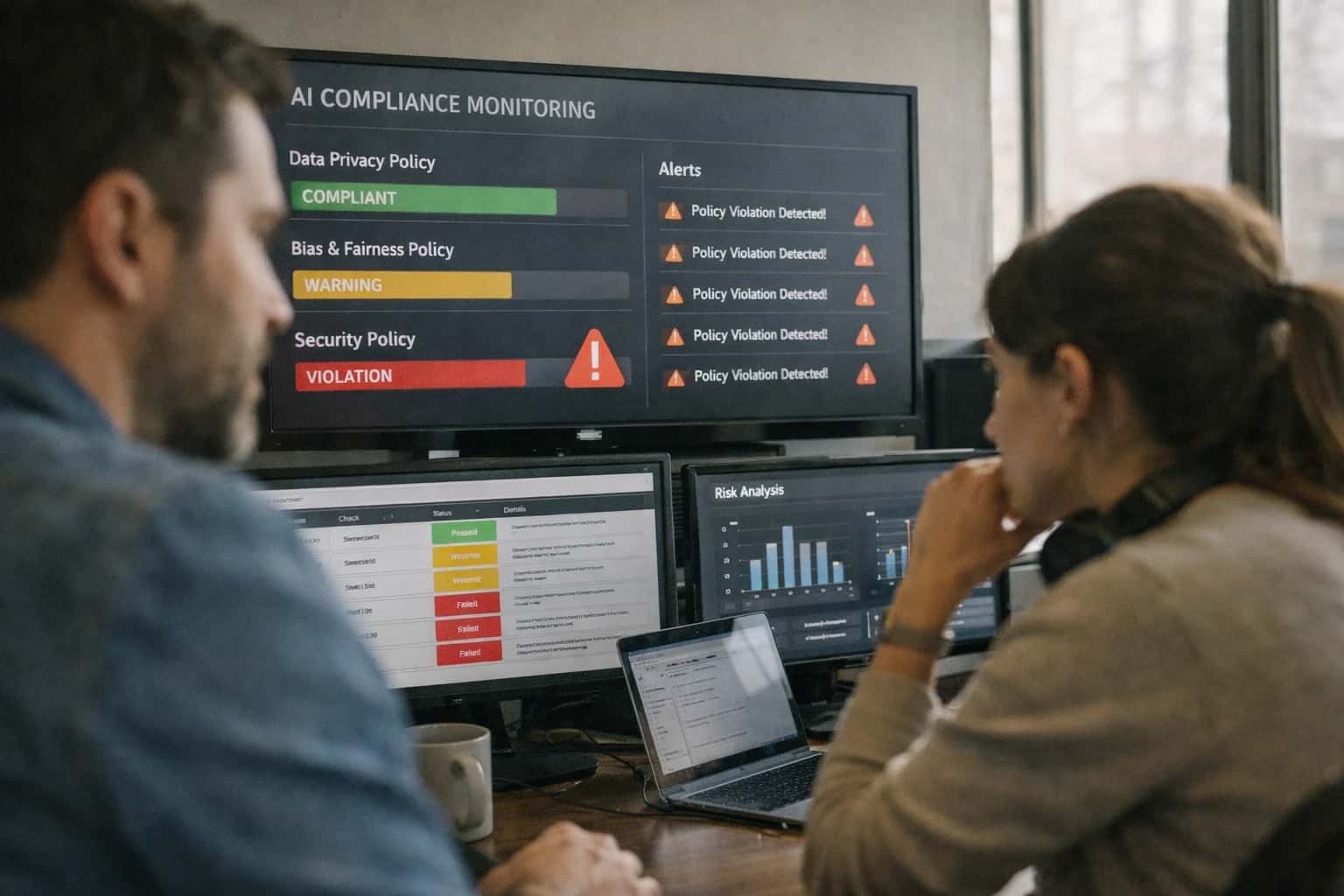
POLICY AS CODE ENGINE
What is Open Policy Agent (OPA)?
A general-purpose policy engine that decouples policy decision-making from application logic, providing a unified framework for enforcing authorization and compliance across the cloud-native stack.
By acting as a centralized decision-making service, OPA decouples policy enforcement from the services requiring authorization. This architecture allows DevSecOps teams to define, audit, and update security and compliance rules—such as Kubernetes admission control or API authorization—without modifying individual microservices or their deployment pipelines.
UNIFIED POLICY ENGINE
Key Features of OPA
Open Policy Agent (OPA) decouples policy decision-making from application logic, providing a unified framework for enforcing authorization and compliance across the cloud-native stack.
01
Decoupled Policy Decision-Making
OPA fundamentally separates the policy decision logic from the policy enforcement point in your application. Instead of embedding complex authorization rules directly into your microservices, your application queries OPA via a simple API. This decoupling allows non-developer stakeholders, such as compliance officers, to audit and manage rules without modifying application code. The architecture follows a clear three-step process: the application sends a structured JSON query containing the request context, OPA evaluates it against its Rego policies, and returns a simple allow/deny decision. This pattern eliminates the technical debt of scattered, hard-coded authorization logic.
02
Rego Policy Language
OPA uses Rego, a high-level declarative language purpose-built for expressing complex policies over structured data. Rego is inspired by Datalog and extends it to handle nested document models like JSON and YAML. Key characteristics include:
- Declarative nature: You define what the desired state is, not how to achieve it.
- Policy as Code: Rules are expressed as version-controlled text files, enabling standard software lifecycle practices like code review, unit testing, and CI/CD integration.
- Iterative evaluation: Rego traverses the hierarchical structure of your input data to find rule violations or compute policy decisions.
- Built-in functions: A rich standard library provides functions for string manipulation, JWT verification, and network CIDR calculations.
03
Versatile Deployment Models
OPA is designed for maximum flexibility in cloud-native environments. It operates as a daemon or sidecar container alongside your services, minimizing network latency for policy decisions. Alternatively, it can be compiled into a Go library and embedded directly into your application binary for the tightest possible integration. For Kubernetes-native workflows, OPA functions as a dynamic admission controller, intercepting API server requests to validate, mutate, or reject resource configurations before they are persisted. This allows platform teams to enforce security and compliance guardrails, such as requiring specific labels or blocking privileged containers, without a separate API call.
04
Unified Authorization Across the Stack
A single OPA instance can enforce policies across your entire technology stack, providing a single pane of glass for authorization logic. This unification eliminates the security gaps and audit nightmares caused by inconsistent policy implementations in different services. OPA can be integrated with:
- API Gateways: Enforce fine-grained access control on incoming HTTP requests.
- Kubernetes: Validate and mutate resource configurations via Admission Control.
- Service Meshes: Authorize service-to-service communication based on mTLS identity.
- Infrastructure as Code: Validate Terraform plans against security and cost policies before provisioning.
- SSH and Sudo: Control access to Linux hosts via a PAM module.
05
Policy Bundle Management
OPA implements a sophisticated policy bundle mechanism for distributing and updating policies at scale. A bundle is a gzipped tarball containing Rego policy files and associated static data. OPA can be configured to periodically download bundles from a remote HTTP server, an AWS S3 bucket, or a Google Cloud Storage bucket. This architecture supports:
- Atomic updates: Policies are loaded as a single, consistent unit, preventing partial or broken policy states.
- Signature verification: Bundles can be cryptographically signed to ensure their integrity and provenance before OPA activates them.
- Active-active deployments: Multiple OPA instances can subscribe to the same bundle endpoint, ensuring consistent policy enforcement across a distributed system.
06
Decision Logging and Auditability
Every policy decision made by OPA can be captured in a structured decision log, providing a comprehensive audit trail for compliance and forensic analysis. These logs include the input query, the resulting decision, and any relevant policy metadata. The logging architecture is designed for high throughput and can be shipped to remote collectors for centralized analysis. This capability is critical for regulated industries that must demonstrate continuous compliance with standards like SOC 2, PCI DSS, and HIPAA. The decision log provides irrefutable proof of who accessed what resource and why the access was granted or denied, directly supporting the Zero Trust Supply Chain principle of continuous verification.
POLICY AS CODE
Frequently Asked Questions
Clear, technical answers to the most common questions about the Open Policy Agent (OPA) and its role in decoupling authorization logic from application code.
Open Policy Agent (OPA) is a general-purpose, open-source policy engine that decouples policy decision-making from the application logic it governs. It works by evaluating a structured JSON input (the state of the world) against a set of rules written in a high-level declarative language called Rego. When an application needs an authorization decision—such as determining if a user can access a specific API endpoint—it queries OPA via a REST API. OPA then executes the Rego policy against the provided data and returns a simple allow: true or allow: false decision, along with any arbitrary structured data. This architecture unifies authorization, admission control, and compliance checks across the entire cloud-native stack, from Kubernetes pod security policies to microservice API authorization and Terraform plan validation.
Enabling Efficiency, Speed & Accuracy
Intelligent Analysis, Decision & Execution
We build AI systems for teams that need search across company data, workflow automation across tools, or AI features inside products and internal software.
Talk to Us
Search across company data
Give teams answers from docs, tickets, runbooks, and product data with sources and permissions.
Useful when people spend too long searching or get different answers from different systems.
Enterprise searchRAGPermissions
Read more
Automate internal workflows
Use AI to route work, draft outputs, trigger actions, and keep approvals and logs in place.
Useful when repetitive work moves across multiple tools and teams.
AI agentsWorkflow automationGovernance
Read more
Add AI to products and internal tools
Build assistants, guided actions, or decision support into the software your team or customers already use.
Useful when AI needs to be part of the product, not a separate tool.
AI integrationDecision supportModel routing
Read more
About the author
Prasad Kumkar
CEO & MD, Inference Systems
Prasad Kumkar is the CEO & MD of Inference Systems and writes about AI systems architecture, LLM infrastructure, model serving, evaluation, and production deployment. Over 5+ years, he has worked across computer vision models, L5 autonomous vehicle systems, and LLM research, with a focus on taking complex AI ideas into real-world engineering systems.
His work and writing cover AI systems, large language models, AI agents, multimodal systems, autonomous systems, inference optimization, RAG, evaluation, and production AI engineering.
LinkedIn
Limited slotsGet a Free AI Consultation
Partnered with leading AI, data, and software stack.





How We Work
Custom AI workflows for your Business
One-fit-all AI don't work for modern businesses. At Inferensys, we aim to understand your business & custom requirements; which we use to define most efficient agentic workflows, the data, and the tools for your business.
01
Review the use case
We understand the task, the users, and where AI can actually help.
Read more02
Pick the right approach
We define what needs search, automation, or product integration.
Read more03
Build the first useful version
We implement the part that proves the value first.
Read more04
Improve from there
We add the checks and visibility needed to keep it useful.
Read moreThe first call is a practical review of your use case and the right next step.
Talk to Us