Deontic Event Calculus is a formal logical framework that extends classical event calculus with deontic operators to model how obligations, permissions, and prohibitions change over time in response to events. It represents normative states as fluents—time-varying properties—that are initiated and terminated by specific actions, enabling precise tracking of when a duty becomes active, when it is fulfilled, and when it is violated.

Glossary
Deontic Event Calculus
A temporal formalism for tracking the lifecycle of obligations—activation, fulfillment, violation, and expiration—within event-driven legal reasoning and compliance monitoring systems.
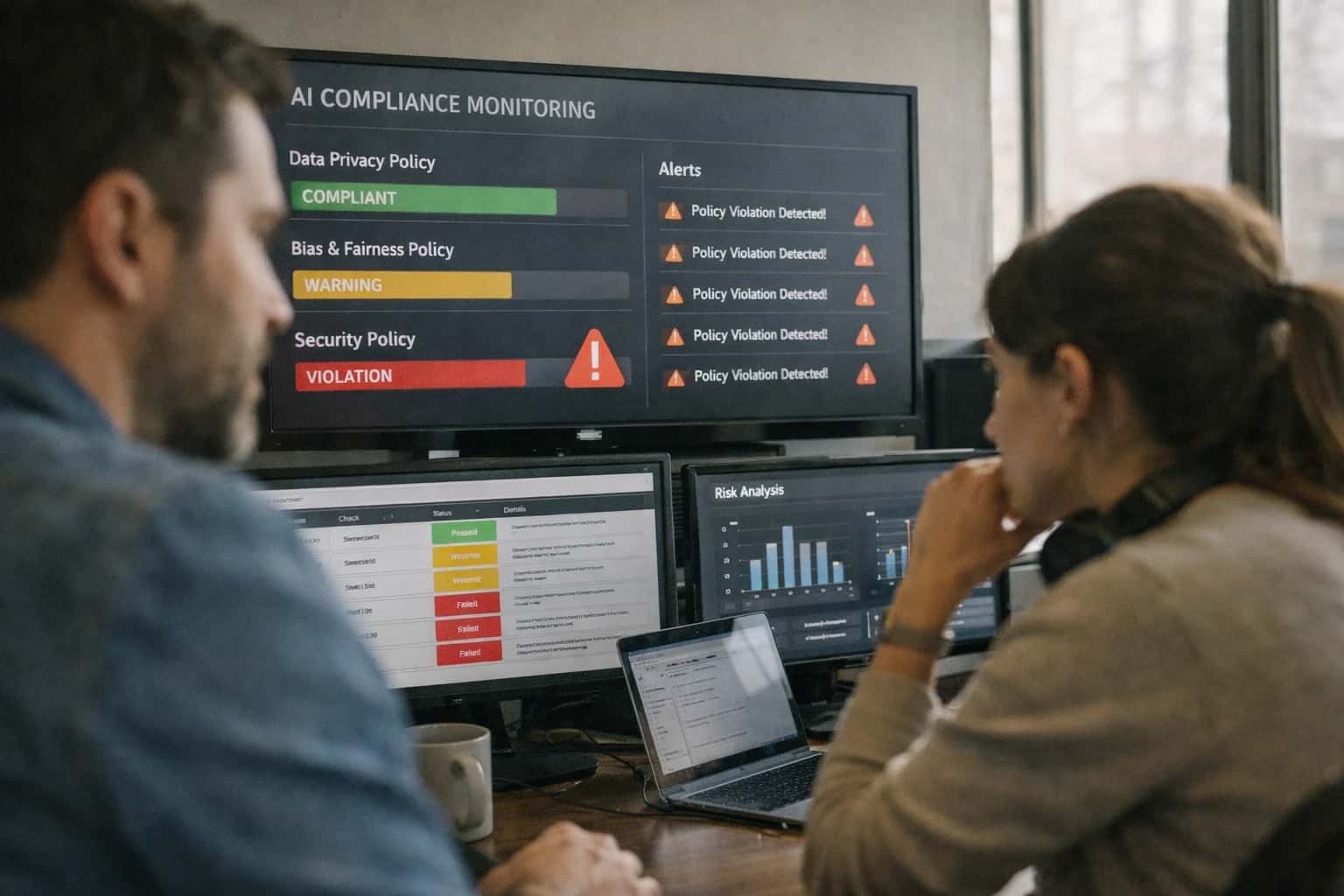
TEMPORAL NORMATIVE REASONING
What is Deontic Event Calculus?
A temporal formalism for tracking the lifecycle of obligations—activation, fulfillment, violation, and expiration—within event-driven legal reasoning and compliance monitoring systems.
The formalism solves the frame problem in normative reasoning by explicitly axiomatizing inertia: obligations persist by default unless explicitly terminated by a fulfillment or expiration event. This makes it uniquely suited for compliance monitoring systems that must evaluate agent behavior against a temporal sequence of contractual or statutory requirements, detecting violations at the exact moment they occur rather than through post-hoc analysis.
TEMPORAL NORMATIVE DYNAMICS
Key Features
Deontic Event Calculus models the full lifecycle of obligations as they are triggered, fulfilled, violated, or expire over time within event-driven legal reasoning systems.
01
Temporal Obligation Lifecycle
Formally tracks the state of a normative position through time, from activation by a triggering event to fulfillment, violation, or expiration. Unlike static deontic logic, it models the dynamics of duties as the world changes.
- Activation: An obligation becomes effective upon a specific event (e.g., contract signing).
- Fulfillment: The obligated action is performed within the deadline.
- Violation: A deadline passes without fulfillment, triggering contrary-to-duty rules.
- Expiration: The obligation ceases to exist due to a terminating condition.
4
Core Lifecycle States
02
Event-Driven Normative Transitions
Uses fluents to represent time-varying normative properties (e.g., obligated(partyA, deliverGoods)) and events that initiate or terminate them. The calculus provides axioms that govern how fluents persist or change.
- Initiates: An event starts a fluent (e.g.,
sign(contract)initiatesobligated). - Terminates: An event ends a fluent (e.g.,
deliver(goods)terminatesobligated). - HoldsAt: A predicate to query whether a fluent is true at a specific time point.
- Clipping: The mechanism for resolving what happens when events overlap or conflict.
03
Contrary-to-Duty Reasoning
Natively handles Chisholm's Paradox and other contrary-to-duty (CTD) scenarios by modeling time explicitly. When a primary obligation is violated at time t1, a secondary obligation is activated at t2.
- Avoids the logical contradictions that plague Standard Deontic Logic.
- Models compensatory obligations as events triggered by violation events.
- Enables deadline monitoring with automatic escalation of remedial duties.
- Supports normative hierarchies where higher-priority obligations override lower ones.
04
Compliance Monitoring Engine
Serves as the formal backbone for runtime compliance verification in automated systems. A stream of real-world events is checked against a model of active obligations to detect violations in real time.
- Event Trace: A log of timestamped actions from an enterprise system or smart contract.
- Normative Model: A set of deontic rules encoded in the event calculus.
- Violation Detection: The engine flags any
HoldsAt(violated, t)state. - Audit Trail: Generates a provable record of all normative state transitions for regulatory reporting.
05
Integration with Legal Knowledge Graphs
Combines with semantic graph representations of legal entities to ground temporal obligations in real-world relationships. The event calculus provides the temporal reasoning layer over a static knowledge graph.
- Nodes: Represent parties, contracts, and clauses.
- Edges: Represent deontic relations (e.g.,
hasObligation,hasPermission). - Temporal Layer: The event calculus fluents are mapped to graph relations, making them time-aware.
- Query: Enables complex queries like 'Find all obligations active on January 15th that were violated within 30 days.'
06
Automated Sanctioning Logic
Extends the core calculus with sanction rules that are automatically triggered by violation events. This closes the normative loop from detection to consequence.
- Sanction Event: An event type that initiates a penalty fluent (e.g.,
imposeFine). - Grace Periods: Modeled as temporal windows between violation and sanction activation.
- Cumulative Penalties: Escalating sanctions for repeated violations are tracked as incrementing fluents.
- Remediation: Fulfillment of a sanction obligation terminates the penalty state.
DEC FAQ
Frequently Asked Questions
Clear answers to common questions about Deontic Event Calculus and its role in modeling the lifecycle of legal obligations within event-driven reasoning systems.
Deontic Event Calculus (DEC) is a temporal formalism that extends classical Event Calculus with deontic operators to model the complete lifecycle of normative states—obligations, permissions, and prohibitions—as they are initiated, fulfilled, violated, and terminated by events over time. It works by representing the world as a sequence of fluents (time-varying properties) whose truth values are governed by events that initiate or terminate them. DEC layers deontic fluents (e.g., obligation(agent, action)) on top of this temporal substrate, allowing a reasoning engine to track when a duty becomes active, when a deadline expires, and whether a violation has occurred. Unlike static deontic logic, DEC natively handles contrary-to-duty (CTD) scenarios by reifying obligations as first-class temporal entities that can be superseded by new events, making it uniquely suited for compliance monitoring in contract automation and regulatory technology.
Enabling Efficiency, Speed & Accuracy
Intelligent Analysis, Decision & Execution
We build AI systems for teams that need search across company data, workflow automation across tools, or AI features inside products and internal software.
Talk to Us
Search across company data
Give teams answers from docs, tickets, runbooks, and product data with sources and permissions.
Useful when people spend too long searching or get different answers from different systems.
Enterprise searchRAGPermissions
Read more
Automate internal workflows
Use AI to route work, draft outputs, trigger actions, and keep approvals and logs in place.
Useful when repetitive work moves across multiple tools and teams.
AI agentsWorkflow automationGovernance
Read more
Add AI to products and internal tools
Build assistants, guided actions, or decision support into the software your team or customers already use.
Useful when AI needs to be part of the product, not a separate tool.
AI integrationDecision supportModel routing
Read more
About the author
Prasad Kumkar
CEO & MD, Inference Systems
Prasad Kumkar is the CEO & MD of Inference Systems and writes about AI systems architecture, LLM infrastructure, model serving, evaluation, and production deployment. Over 5+ years, he has worked across computer vision models, L5 autonomous vehicle systems, and LLM research, with a focus on taking complex AI ideas into real-world engineering systems.
His work and writing cover AI systems, large language models, AI agents, multimodal systems, autonomous systems, inference optimization, RAG, evaluation, and production AI engineering.
LinkedIn
Limited slotsGet a Free AI Consultation
Partnered with leading AI, data, and software stack.





How We Work
Custom AI workflows for your Business
One-fit-all AI don't work for modern businesses. At Inferensys, we aim to understand your business & custom requirements; which we use to define most efficient agentic workflows, the data, and the tools for your business.
01
Review the use case
We understand the task, the users, and where AI can actually help.
Read more02
Pick the right approach
We define what needs search, automation, or product integration.
Read more03
Build the first useful version
We implement the part that proves the value first.
Read more04
Improve from there
We add the checks and visibility needed to keep it useful.
Read moreThe first call is a practical review of your use case and the right next step.
Talk to Us