An immutable log is a write-once, append-only data structure where entries, once written, cannot be altered, overwritten, or deleted, creating a permanent, sequentially ordered record. In multi-agent system orchestration, this provides a canonical source of truth for all agent communications, decisions, and state transitions, enabling deterministic audit logging and forensic analysis. The immutability is typically enforced through cryptographic hashing, where each new entry includes a hash of the previous one, forming a cryptographic chain that makes any tampering immediately evident.

Glossary
Immutable Logs
Immutable logs are write-once, append-only data structures where entries cannot be altered or deleted after creation, ensuring a tamper-evident record for security auditing and compliance.
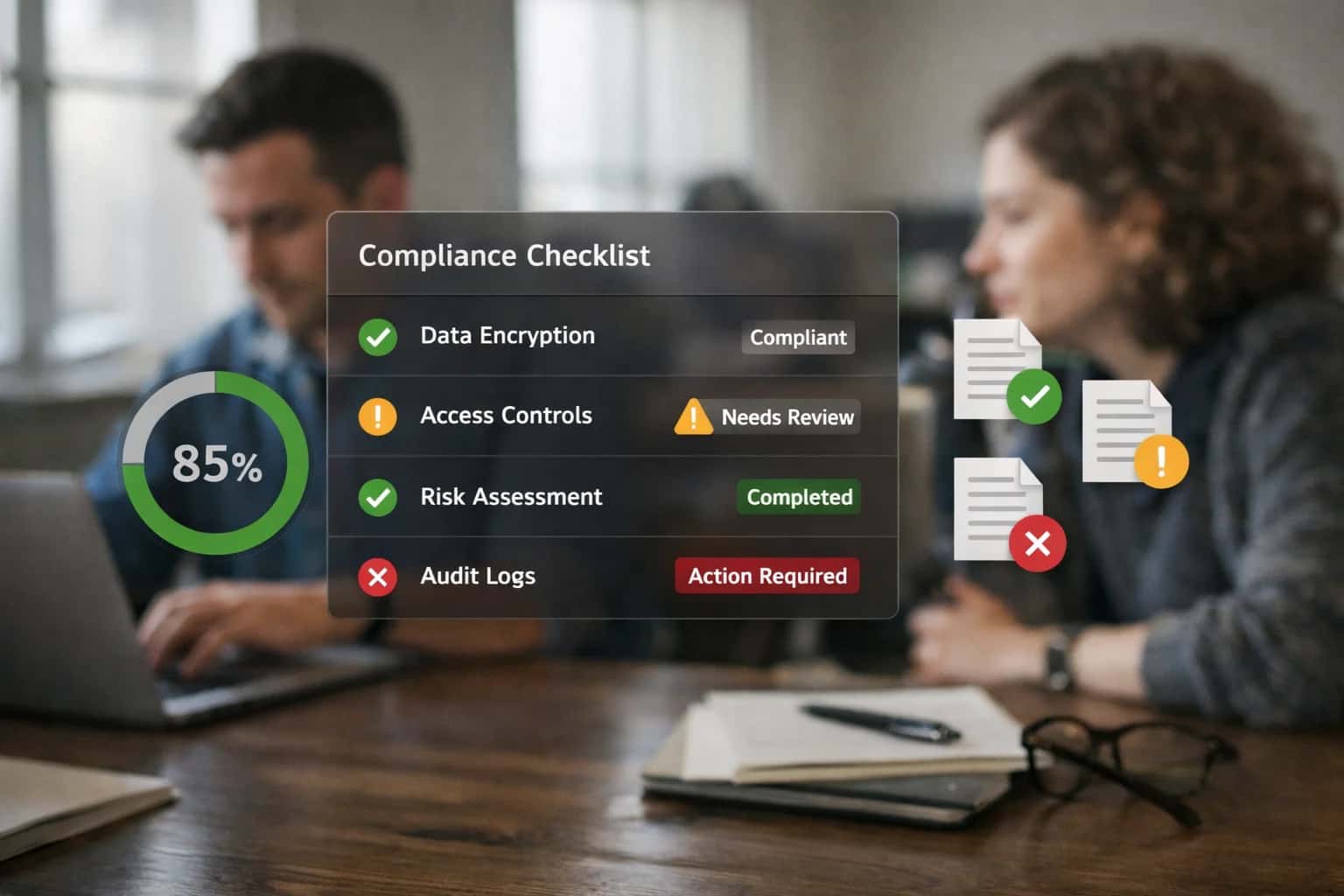
ORCHESTRATION SECURITY
What is Immutable Logs?
Immutable logs are foundational to securing and auditing autonomous multi-agent systems, providing a tamper-evident record of all agent interactions and system state changes.
For security architects, immutable logs are critical for compliance and agentic threat modeling, as they reliably capture events like authentication attempts, policy decisions, and potential prompt injection attacks. They form the backbone of orchestration observability, allowing platforms to reconstruct the exact sequence of events that led to a system state or conflict. When integrated with a Public Key Infrastructure (PKI), these logs provide non-repudiation, ensuring that an agent's actions or messages can be definitively traced back to its verified identity.
ORCHESTRATION SECURITY
Core Characteristics of Immutable Logs
Immutable logs are foundational to secure multi-agent orchestration, providing a tamper-evident, chronological record of all system interactions. Their defining properties ensure auditability, non-repudiation, and system integrity.
01
Append-Only Structure
An immutable log is a write-once, append-only data structure. New entries are sequentially added to the end of the log, but existing entries can never be modified, overwritten, or deleted. This is enforced cryptographically, often via hash chaining, where each entry contains a cryptographic hash of the previous entry. Any attempt to alter a historical entry would break the chain, making the tampering immediately evident. This structure is critical for maintaining a definitive history of agent actions, decisions, and communications.
02
Cryptographic Integrity
The immutability of the log is guaranteed by cryptographic mechanisms, not just policy. The most common method is Merkle Trees or hash linking.
- Each log entry includes a cryptographic hash (e.g., SHA-256) of its content and the hash of the previous entry.
- This creates a cryptographic chain where altering any single entry requires recalculating all subsequent hashes, which is computationally infeasible.
- The final hash in the chain (the root hash) serves as a unique fingerprint for the entire log's state at that moment. This allows any party to verify the log's integrity from its genesis block to the present.
03
Tamper-Evidence & Non-Repudiation
These logs provide tamper-evidence, meaning any unauthorized change is detectable. They also establish non-repudiation: an agent cannot later deny having performed an action that is recorded in the log. This is achieved by combining the append-only log with digital signatures. When an agent commits an entry, it signs the entry with its private key. The log preserves this signed record, providing cryptographic proof of the action's origin, integrity, and sequence. This is essential for audit trails, compliance (e.g., with financial or healthcare regulations), and resolving disputes in a multi-agent system.
04
Sequential Consistency & Ordering
Immutable logs provide a globally consistent, canonical ordering of events. In a distributed multi-agent system, determining the exact sequence of interactions is challenging. An immutable log acts as a single source of truth for event sequencing. Every action, message, or state change is timestamped and placed in a strict, verifiable order. This prevents race conditions and ambiguity about what happened first, which is crucial for consensus algorithms, state machine replication, and ensuring all agents operate from the same historical narrative.
05
High Availability & Replication
To be a reliable source of truth, an immutable log must be highly available and durable. They are typically implemented as distributed, replicated systems (e.g., based on Raft or Paxos consensus protocols).
- The log is copied across multiple nodes to prevent data loss from a single point of failure.
- The consensus protocol ensures all replicas agree on the exact sequence of entries, even in the face of network partitions or node failures.
- This distributed nature aligns with the decentralized architecture of multi-agent systems, providing resilience and fault tolerance for the core audit trail.
06
Use Cases in Multi-Agent Security
In agent orchestration, immutable logs are used for:
- Audit Logging: Recording every agent invocation, tool call, API request, and inter-agent message for post-hoc security analysis.
- State Recovery: Serving as a replayable journal to reconstruct system state after a crash or for debugging complex agent workflows.
- Provenance Tracking: Maintaining data lineage, showing how a final agent decision was derived from a series of inputs and intermediate steps.
- Compliance Evidence: Providing verifiable records for regulations like GDPR, HIPAA, or financial reporting standards that require immutable audit trails.
- Conflict Resolution: Providing an indisputable record of events to algorithmically resolve disputes between agents over resources or outcomes.
ARCHITECTURE
How Immutable Logs Work Technically
Immutable logs are a foundational security primitive for multi-agent orchestration, providing a tamper-evident record of all system events.
An immutable log is a write-once, append-only data structure where new entries are cryptographically linked to previous ones, typically using a cryptographic hash function like SHA-256. Each new block contains the hash of the preceding block, creating a hash chain. This linkage ensures that any alteration to a historical entry would invalidate all subsequent hashes, making tampering immediately evident. The log is stored in a distributed ledger or secure, append-only file system to prevent a single point of failure or corruption.
Technically, immutability is enforced through a combination of cryptographic sealing and strict access controls on the write interface. In a multi-agent system, every agent action, message transmission, and state change is appended as a signed event. This creates a verifiable audit trail essential for security post-mortems, non-repudiation, and compliance with frameworks like Zero-Trust Architecture. The log serves as the single source of truth for orchestration observability, enabling replay and state recovery.
IMMUTABLE LOGS
Frequently Asked Questions
Immutable logs are foundational to secure, auditable multi-agent systems. This FAQ addresses their core mechanisms, security guarantees, and implementation within orchestration architectures.
An immutable log is a write-once, append-only data structure where entries, once written, cannot be altered, overwritten, or deleted, creating a permanent, tamper-evident record of events. This property is enforced cryptographically, typically using cryptographic hashing (like SHA-256) in a chained structure, where each new entry contains a hash of the previous entry. Any attempt to modify a historical entry would break this cryptographic chain, making the tampering immediately evident. In multi-agent orchestration, immutable logs serve as the definitive source of truth for all agent actions, communications, and state changes, providing a non-repudiable audit trail essential for security, compliance, and debugging complex, concurrent interactions.
Enabling Efficiency, Speed & Accuracy
Intelligent Analysis, Decision & Execution
We build AI systems for teams that need search across company data, workflow automation across tools, or AI features inside products and internal software.
Talk to Us
Search across company data
Give teams answers from docs, tickets, runbooks, and product data with sources and permissions.
Useful when people spend too long searching or get different answers from different systems.
Enterprise searchRAGPermissions
Read more
Automate internal workflows
Use AI to route work, draft outputs, trigger actions, and keep approvals and logs in place.
Useful when repetitive work moves across multiple tools and teams.
AI agentsWorkflow automationGovernance
Read more
Add AI to products and internal tools
Build assistants, guided actions, or decision support into the software your team or customers already use.
Useful when AI needs to be part of the product, not a separate tool.
AI integrationDecision supportModel routing
Read more
About the author
Prasad Kumkar
CEO & MD, Inference Systems
Prasad Kumkar is the CEO & MD of Inference Systems and writes about AI systems architecture, LLM infrastructure, model serving, evaluation, and production deployment. Over 5+ years, he has worked across computer vision models, L5 autonomous vehicle systems, and LLM research, with a focus on taking complex AI ideas into real-world engineering systems.
His work and writing cover AI systems, large language models, AI agents, multimodal systems, autonomous systems, inference optimization, RAG, evaluation, and production AI engineering.
LinkedIn
Limited slotsGet a Free AI Consultation
Partnered with leading AI, data, and software stack.





How We Work
Custom AI workflows for your Business
One-fit-all AI don't work for modern businesses. At Inferensys, we aim to understand your business & custom requirements; which we use to define most efficient agentic workflows, the data, and the tools for your business.
01
Review the use case
We understand the task, the users, and where AI can actually help.
Read more02
Pick the right approach
We define what needs search, automation, or product integration.
Read more03
Build the first useful version
We implement the part that proves the value first.
Read more04
Improve from there
We add the checks and visibility needed to keep it useful.
Read moreThe first call is a practical review of your use case and the right next step.
Talk to Us