Zone Audit Logging is the systematic, immutable recording of all access requests, authorization decisions, entries, exits, and state changes for a defined geographic area within a controlled workspace. It creates a forensic timeline for security analysis, compliance verification, and operational debugging in heterogeneous fleet orchestration. Each log entry is a structured event capturing the agent identity, zone, timestamp, action, and policy outcome, forming the basis for post-incident analysis and regulatory audits.

Glossary
Zone Audit Logging
Zone Audit Logging is the systematic recording of all access requests, authorizations, entries, exits, and state changes for a controlled zone to support security analysis and compliance.
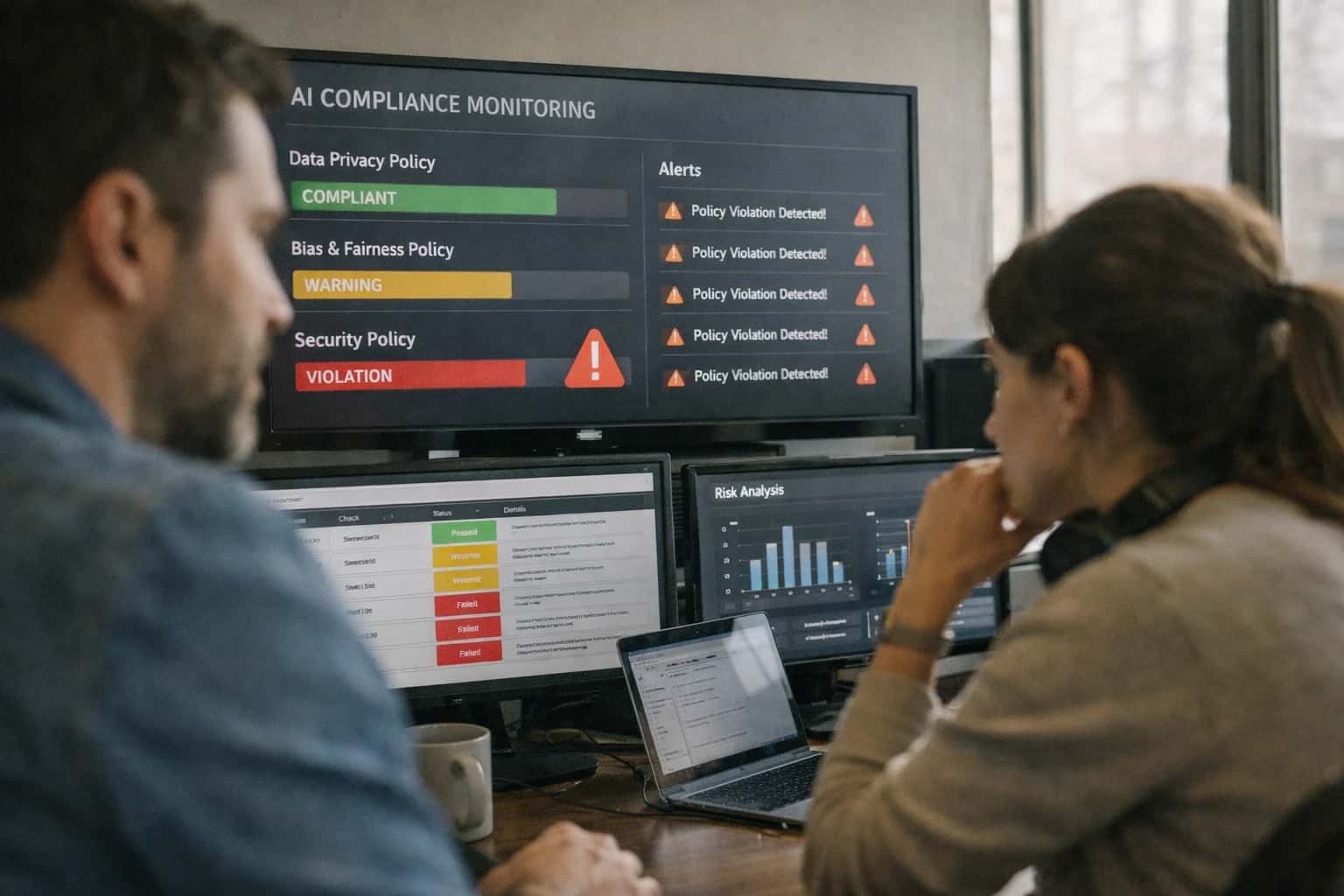
ZONE MANAGEMENT PROTOCOLS
What is Zone Audit Logging?
A technical definition of the systematic recording system for access and activity within controlled geographic areas in automated environments.
The system integrates with Zone Policy Enforcement Points (PEPs) and Zone State Machines to capture events in real-time. Logs are analyzed to detect patterns of boundary violation, assess policy efficacy, and reconstruct incidents. This capability is critical for proving adherence to safety standards like ISO 3691-4 and operational protocols, providing the auditability and transparency required for enterprise deployment of autonomous mobile robots and manual vehicles in shared spaces.
ZONE MANAGEMENT PROTOCOLS
Core Characteristics of Zone Audit Logging
Zone Audit Logging is the systematic recording of all access requests, authorizations, entries, exits, and state changes for a controlled zone. Its core characteristics define the data's structure, integrity, and utility for security and compliance.
01
Immutable Chronological Record
The foundational characteristic of a zone audit log is its immutable, append-only sequence of events ordered by a monotonically increasing timestamp. This creates a tamper-evident ledger where entries cannot be altered or deleted after creation, ensuring the log's integrity for forensic analysis. Each entry is a discrete event, such as:
AGENT_ENTRY_REQUESTAUTHORIZATION_GRANTEDZONE_STATE_CHANGEBOUNDARY_VIOLATIONThe chronological order is critical for reconstructing incident timelines and understanding causal relationships between events.
02
Comprehensive Event Context
Each log entry must capture a complete contextual snapshot of the event, moving beyond simple success/failure recording. This includes immutable metadata that answers the core investigative questions: who, what, when, where, and why. A robust entry contains:
- Actor Identity: Agent ID, role, and assigned task.
- Action & Target: Specific operation (e.g.,
REQUEST_ENTRY) and the target zone ID. - Temporal Data: High-resolution timestamp and event duration.
- Spatial Data: GPS coordinates or relative position at the time of the event.
- Authorization Context: The specific policy rule or Attribute-Based Access Control (ABAC) attributes evaluated, the Policy Decision Point (PDP) consulted, and the final decision.
- System State: Relevant conditions like zone occupancy, battery levels, or active alarms.
03
Integration with Policy Enforcement
Audit logging is intrinsically linked to the Zone Policy Enforcement Point (PEP) and Policy Decision Point (PDP). The log must capture the full authorization chain, not just the outcome. This includes:
- The original access request from the agent.
- The query sent to the PDP with all evaluated attributes (agent type, task priority, zone state).
- The PDP's decision (
ALLOW/DENY) and the specific policy rule invoked. - The PEP's execution of that decision (granting access, triggering a zone handshake protocol).
- Any priority overrides or emergency clearance commands that supersede standard policy. This integration provides transparency into why an access decision was made, which is essential for debugging policy errors and demonstrating compliance.
04
Structured for Automated Analysis
Logs are structured in machine-parsable formats (e.g., JSON, Protocol Buffers) to enable real-time streaming analytics and long-term forensic queries. This structure supports:
- Anomaly Detection: Automated systems can baseline normal access patterns and flag deviations, such as repeated failed entry attempts or unusual access times.
- Compliance Reporting: Automated generation of reports for standards requiring audit trails of physical access.
- Correlation with Other Telemetry: Linking zone access events with data from Fleet Health Monitoring or Collision Avoidance Systems to provide a holistic view of incidents.
- Performance Metrics: Calculating metrics like average authorization latency, zone utilization rates, and Policy Decision Point (PDP) load.
05
Secure Storage & Access Controls
The audit log itself is a high-value security asset and must be protected with stringent controls. Key characteristics include:
- Cryptographic Integrity: Use of hashing (e.g., a Merkle tree) or digital signatures to make any post-creation alteration detectable.
- Controlled Access: The log is read-only for most users, with write access restricted to the logging subsystem. Access to view logs is itself audited.
- Retention & Archiving: Policies define retention periods based on operational and regulatory needs, with secure archiving for long-term storage.
- Resilience: Logs are written to durable, fault-tolerant storage to prevent loss during system failures. This ensures the audit trail remains available for post-incident analysis and legal discovery.
06
Linkage to Zone State & Exceptions
The audit log provides the definitive history of zone state machine transitions and operational exceptions. It records:
- All state changes (e.g.,
AVAILABLE→OCCUPIED,OCCUPIED→QUARANTINE). - The triggering event for each state change (e.g.,
AGENT_ENTRY,HAZARD_DETECTED). - Actions taken during exceptions, such as the execution of a Zone Quarantine Protocol or Emergency Zone Clearance.
- Resolutions of deadlock detection scenarios or boundary violation events. This creates a complete narrative of each zone's operational lifecycle, which is vital for root cause analysis and improving exception handling frameworks.
ZONE MANAGEMENT PROTOCOLS
How Zone Audit Logging Works
A technical overview of the mechanisms for recording and analyzing access events within controlled geographic areas of a robotic fleet workspace.
Zone Audit Logging is a security and compliance subsystem that chronologically records all access control events for a defined geographic zone. It captures immutable entries for each authorization request, policy decision, and physical entry or exit, creating a verifiable trail. This log is essential for post-incident forensics, regulatory compliance, and validating the behavior of the Zone Policy Enforcement Point (PEP) and Policy Decision Point (PDP).
The system timestamps and contextualizes each event with metadata, including agent ID, zone ID, requested action, and the authorization token used. Logs are typically streamed to a secure, centralized telemetry backend where they can be indexed and analyzed. This enables real-time alerting on policy violations, trend analysis for optimizing zone rules, and the generation of attestation reports to prove adherence to operational safety standards.
COMPARISON
Zone Audit Logging vs. Related Concepts
A feature comparison of Zone Audit Logging against other key monitoring and security concepts within heterogeneous fleet orchestration.
| Feature / Metric | Zone Audit Logging | Real-Time Zone Monitoring | Fleet Health Monitoring | Boundary Violation Detection |
|---|---|---|---|---|
Primary Purpose | Systematic recording for post-hoc security analysis and compliance | Continuous observation for immediate policy enforcement and system health | Tracking agent vitals (battery, diagnostics) for operational readiness | Real-time algorithmic identification of unauthorized zone entry/exit |
Data Type Recorded | Access requests, authorizations, entries, exits, zone state changes | Zone states, agent occupancy counts, sensor telemetry streams | Battery levels, component temperatures, error codes, uptime | Timestamp, agent ID, zone ID, violation type (entry/exit) |
Temporal Focus | Historical record-keeping for forensic timelines | Present-moment situational awareness | Present and predictive (e.g., low-battery alerts) | Immediate, real-time event detection |
Trigger for Action | Analysis-driven: triggered by queries, reports, or compliance audits | State-driven: triggered by occupancy changes or sensor anomalies | Threshold-driven: triggered by metric breaches (e.g., battery < 15%) | Event-driven: triggered by a perimeter breach signal |
Output Format | Immutable, timestamped log entries (structured data) | Real-time dashboards and alert feeds | Time-series metrics and diagnostic reports | Instant security alerts and incident tickets |
Primary Consumer | Safety Officers, Compliance Auditors, Systems Architects | Site Managers, Human Operators, System Controllers | DevOps Engineers, Maintenance Technicians | Safety Officers, Security Systems, Orchestration Engine |
Integration with PDP/PEP | Logs decisions from the Policy Decision Point (PDP) and actions of the Policy Enforcement Point (PEP) | Provides live data to the PDP for decision-making; visualizes PEP actions | Minimal direct integration; focuses on agent hardware state | Direct input to the PEP to trigger enforcement actions (e.g., agent halt) |
Retention Period | Long-term (months/years) for compliance | Short-term (hours/days) for operational view | Medium-term (days/weeks) for trend analysis | Short-term (days) for incident review |
ZONE AUDIT LOGGING
Frequently Asked Questions
Zone Audit Logging is the systematic recording of all access requests, authorizations, entries, exits, and state changes for a controlled zone to support security analysis and compliance. This FAQ addresses common technical and operational questions.
Zone Audit Logging is the systematic, immutable recording of all events related to access control and state changes within a defined geographic area in a fleet orchestration system. It is critical for security post-incident analysis, regulatory compliance (e.g., safety standards in warehouses), operational debugging, and establishing a verifiable chain of custody for automated actions. Without comprehensive logs, it is impossible to reconstruct events after a boundary violation, collision near a zone, or operational failure, leaving systems unaccountable and un-auditable.
Enabling Efficiency, Speed & Accuracy
Intelligent Analysis, Decision & Execution
We build AI systems for teams that need search across company data, workflow automation across tools, or AI features inside products and internal software.
Talk to Us
Search across company data
Give teams answers from docs, tickets, runbooks, and product data with sources and permissions.
Useful when people spend too long searching or get different answers from different systems.
Enterprise searchRAGPermissions
Read more
Automate internal workflows
Use AI to route work, draft outputs, trigger actions, and keep approvals and logs in place.
Useful when repetitive work moves across multiple tools and teams.
AI agentsWorkflow automationGovernance
Read more
Add AI to products and internal tools
Build assistants, guided actions, or decision support into the software your team or customers already use.
Useful when AI needs to be part of the product, not a separate tool.
AI integrationDecision supportModel routing
Read more
About the author
Prasad Kumkar
CEO & MD, Inference Systems
Prasad Kumkar is the CEO & MD of Inference Systems and writes about AI systems architecture, LLM infrastructure, model serving, evaluation, and production deployment. Over 5+ years, he has worked across computer vision models, L5 autonomous vehicle systems, and LLM research, with a focus on taking complex AI ideas into real-world engineering systems.
His work and writing cover AI systems, large language models, AI agents, multimodal systems, autonomous systems, inference optimization, RAG, evaluation, and production AI engineering.
LinkedIn
Limited slotsGet a Free AI Consultation
Partnered with leading AI, data, and software stack.





How We Work
Custom AI workflows for your Business
One-fit-all AI don't work for modern businesses. At Inferensys, we aim to understand your business & custom requirements; which we use to define most efficient agentic workflows, the data, and the tools for your business.
01
Review the use case
We understand the task, the users, and where AI can actually help.
Read more02
Pick the right approach
We define what needs search, automation, or product integration.
Read more03
Build the first useful version
We implement the part that proves the value first.
Read more04
Improve from there
We add the checks and visibility needed to keep it useful.
Read moreThe first call is a practical review of your use case and the right next step.
Talk to Us