The Champion-Challenger Framework is a live experimentation methodology where a small percentage of production traffic is routed to a new 'challenger' model while the majority continues to flow through the incumbent 'champion' model. This allows data scientists to rigorously compare the challenger's predictive performance, latency, and stability against the established baseline under real-world conditions without exposing the entire user base to unproven logic.

Glossary
Champion-Challenger Framework
A deployment strategy where a new 'challenger' model is tested against the incumbent 'champion' model in a live environment using a split of production traffic.
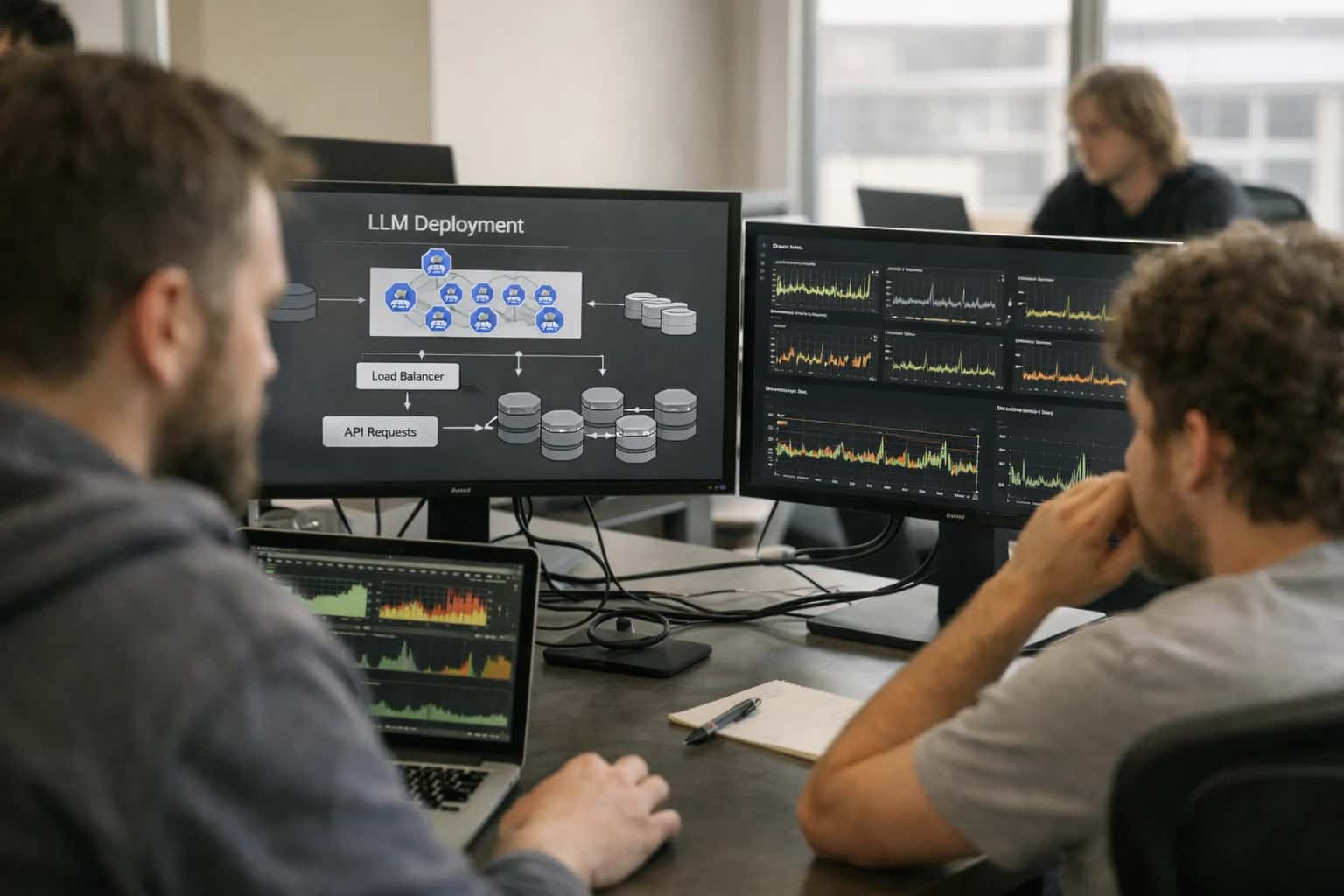
PRODUCTION MODEL TESTING
What is Champion-Challenger Framework?
A deployment strategy where a new 'challenger' model is tested against the incumbent 'champion' model in a live environment using a split of production traffic.
In fraud detection, this framework is critical for safely validating updated models against evolving attack vectors. The challenger's decisions are typically logged in a shadow deployment mode, where they are scored but not actioned, until statistical significance is achieved. Once the challenger consistently outperforms the champion on key metrics like precision-recall or false positive rate, a controlled promotion or full model rollback-capable cutover is executed.
PRODUCTION MODEL TESTING
Key Features of the Champion-Challenger Framework
A systematic deployment strategy where a new 'challenger' model is evaluated against the incumbent 'champion' model using a controlled split of live production traffic to validate performance before full rollout.
01
Traffic Splitting Mechanism
The core operational pattern where a router or load balancer divides incoming prediction requests between the champion and challenger models. Common splits include 95/5 or 90/10, where the challenger receives a statistically significant but low-risk portion of traffic. This ensures the challenger is evaluated on identical, live data distributions without impacting the majority of business decisions. The split can be based on session hashing, user IDs, or random sampling to guarantee consistent routing and prevent confounding variables in the analysis.
02
Statistical Validation Period
The challenger must operate in shadow or live mode for a predetermined duration to accumulate sufficient sample size for statistical significance. Key considerations include:
- Minimum sample size: Calculated using power analysis to detect a meaningful lift in metrics like precision or recall.
- Business cycle coverage: The test must span at least one full business cycle (e.g., weekly, monthly) to capture temporal variance.
- Fraud-specific latency: In financial fraud, the validation must account for feedback loop delay—the weeks-long gap before chargebacks confirm true fraud labels.
03
Performance Metric Comparison
Evaluation goes beyond simple accuracy. The champion and challenger are compared on a holistic metric dashboard:
- Business KPIs: False positive ratio, fraud capture rate, and dollar-value of prevented losses.
- Operational metrics: Inference latency (p99), throughput, and resource utilization.
- Stability metrics: Population Stability Index (PSI) and prediction distribution drift to ensure the challenger is not erratic. A statistical test (e.g., t-test or bootstrap confidence intervals) confirms whether observed differences are significant or noise.
04
Automatic Rollback Protocol
A non-negotiable safety mechanism. If the challenger violates any predefined guardrail metric—such as exceeding a maximum false positive rate or experiencing a critical error rate spike—the system must automatically route 100% of traffic back to the champion. This circuit breaker pattern prevents degraded models from causing financial damage. The rollback decision is based on real-time monitoring dashboards and statistical process control (SPC) alerts, not manual human approval, ensuring sub-second reaction to silent failures.
05
Shadow vs. Live Challenger Modes
Two distinct evaluation strategies exist:
- Shadow Deployment: The challenger receives a copy of live traffic and logs predictions, but its outputs are never returned to the user or downstream systems. This is zero-risk and ideal for initial stability testing.
- Live Challenger: The challenger's predictions are served to a small percentage of real users. This is required to measure true business impact, such as customer friction from false positives, but introduces tangible risk. The framework often progresses from shadow to live mode as confidence in the challenger increases.
06
Promotion and Deprecation Lifecycle
The framework defines a clear model lifecycle state machine:
- Candidate: Model registered in the model registry and awaiting testing.
- Challenger: Actively receiving evaluation traffic.
- Champion: Promoted after statistically outperforming the incumbent on all critical metrics.
- Archived: The previous champion is deprecated but retained for model rollback capability. This formal process ensures no orphaned models remain in production and maintains a clean audit trail for model risk management (MRM) compliance.
Enabling Efficiency, Speed & Accuracy
Intelligent Analysis, Decision & Execution
We build AI systems for teams that need search across company data, workflow automation across tools, or AI features inside products and internal software.
Talk to Us
Search across company data
Give teams answers from docs, tickets, runbooks, and product data with sources and permissions.
Useful when people spend too long searching or get different answers from different systems.
Enterprise searchRAGPermissions
Read more
Automate internal workflows
Use AI to route work, draft outputs, trigger actions, and keep approvals and logs in place.
Useful when repetitive work moves across multiple tools and teams.
AI agentsWorkflow automationGovernance
Read more
Add AI to products and internal tools
Build assistants, guided actions, or decision support into the software your team or customers already use.
Useful when AI needs to be part of the product, not a separate tool.
AI integrationDecision supportModel routing
Read moreCHAMPION-CHALLENGER FRAMEWORK
Frequently Asked Questions
Clear, technical answers to the most common questions about deploying and managing the Champion-Challenger framework for live fraud detection models.
The Champion-Challenger framework is a live A/B testing deployment strategy where a new 'challenger' model is evaluated against the incumbent 'champion' model using a controlled split of production traffic. The champion model continues to serve the majority of decisions, while the challenger receives a statistically significant fraction of traffic to generate predictions without impacting core operations. These predictions are logged and compared against delayed ground truth labels, such as confirmed fraud chargebacks. The framework operates as a shadow deployment variant, ensuring the challenger's decisions are recorded but do not affect the live transaction flow until a formal promotion decision is made. This allows MLOps engineers to rigorously validate improvements in precision, recall, or false positive reduction under real-world conditions before cutting over.

About the author
Prasad Kumkar
CEO & MD, Inference Systems
Prasad Kumkar is the CEO & MD of Inference Systems and writes about AI systems architecture, LLM infrastructure, model serving, evaluation, and production deployment. Over 5+ years, he has worked across computer vision models, L5 autonomous vehicle systems, and LLM research, with a focus on taking complex AI ideas into real-world engineering systems.
His work and writing cover AI systems, large language models, AI agents, multimodal systems, autonomous systems, inference optimization, RAG, evaluation, and production AI engineering.
LinkedIn
Limited slotsGet a Free AI Consultation
Partnered with leading AI, data, and software stack.





How We Work
Custom AI workflows for your Business
One-fit-all AI don't work for modern businesses. At Inferensys, we aim to understand your business & custom requirements; which we use to define most efficient agentic workflows, the data, and the tools for your business.
01
Review the use case
We understand the task, the users, and where AI can actually help.
Read more02
Pick the right approach
We define what needs search, automation, or product integration.
Read more03
Build the first useful version
We implement the part that proves the value first.
Read more04
Improve from there
We add the checks and visibility needed to keep it useful.
Read moreThe first call is a practical review of your use case and the right next step.
Talk to Us