Audit logging is the systematic, chronological recording of immutable events and activities within a software system to create a verifiable trail for security, compliance, and operational analysis. It captures who performed an action, what the action was, when it occurred, and on which data object or resource, forming an essential component of data lineage and provenance capture. In semantic data governance, logs are enriched with ontological context, linking actions to specific entities and relationships within an enterprise knowledge graph.

Glossary
Audit Logging
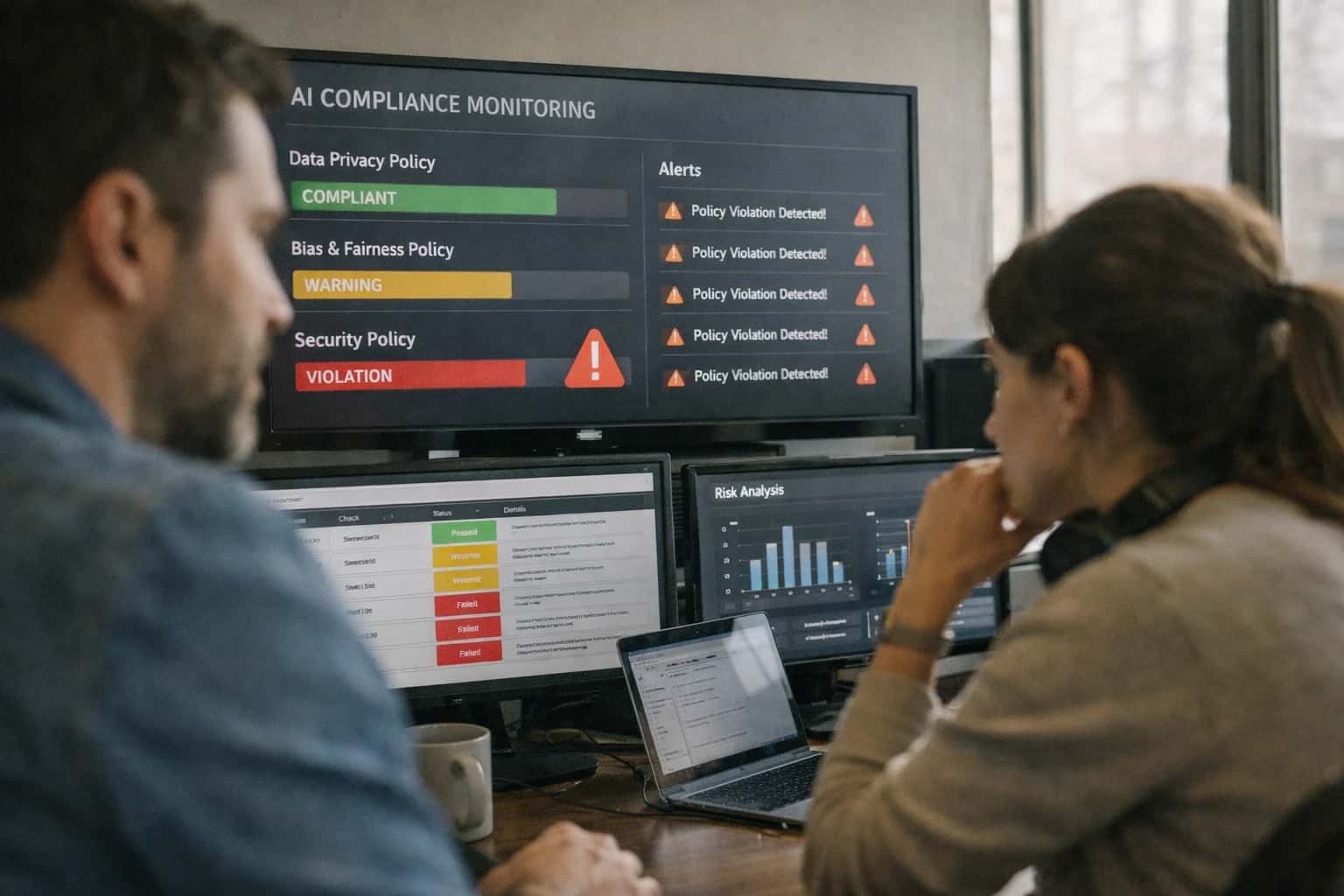
Audit logging is the systematic recording of chronological, immutable records detailing system activities, user actions, and data access events for security monitoring, forensic investigation, and regulatory compliance.
SEMANTIC DATA GOVERNANCE
What is Audit Logging?
A foundational security and governance practice for recording immutable system activity.
These immutable records serve three primary functions: security monitoring for detecting unauthorized access or anomalies, forensic analysis to reconstruct incidents, and compliance reporting to demonstrate adherence to regulations like GDPR or HIPAA. Effective audit logging integrates with access control systems (like RBAC or ABAC) and policy enforcement points (PEPs) to log every authorization decision. The logs themselves must be secured via cryptographic hashing to prevent tampering, ensuring they serve as a trusted source for explainable AI and algorithmic accountability.
SEMANTIC DATA GOVERNANCE
Core Components of an Audit Log
An audit log is a tamper-evident, chronological record of system activities. Its core components are engineered to provide an immutable chain of evidence for security, compliance, and forensic analysis.
01
Immutable Event Records
The fundamental unit of an audit log is an immutable event record. Each record is a structured entry that captures a discrete system action and is cryptographically secured to prevent alteration or deletion. Key attributes include:
- Event Timestamp: Precise, synchronized time of occurrence.
- Principal Identifier: The user, service account, or system entity that initiated the action.
- Action Performed: The specific operation (e.g.,
CREATE,READ,UPDATE,DELETE,EXECUTE). - Target Resource: The data object, file, API endpoint, or system component that was acted upon.
- Outcome Status: Success, failure, or error code of the action.
- Source Context: Originating IP address, device ID, or session token.
02
Cryptographic Integrity Mechanisms
To ensure non-repudiation and tamper-evidence, audit logs employ cryptographic techniques that make any post-creation modification detectable. Standard mechanisms include:
- Sequential Hashing: Each log entry includes a cryptographic hash of the previous entry, creating a hash chain. Altering any record invalidates all subsequent hashes.
- Digital Signatures: Log batches or the entire log stream can be signed with a private key, providing verifiable proof of origin and integrity.
- Write-Once Read-Many (WORM) Storage: Logs are written to storage media configured to prevent overwrites, aligning with regulatory standards for record retention.
03
Structured Semantic Payloads
Beyond basic attributes, effective audit logs for semantic data governance contain structured payloads that capture the business context and semantic meaning of the action. This includes:
- Entity & Relationship Context: The specific Knowledge Graph node (URI) or edge that was accessed or modified.
- Attribute-Level Changes: For updates, the previous and new values of a property, enabling precise rollback or forensic analysis.
- Policy Evaluation Context: The access control policy (e.g., ABAC rule) that was evaluated and the resulting decision (Permit/Deny).
- Query Semantics: For read operations, a representation of the SPARQL or graph query that was executed, crucial for understanding data exposure.
04
Centralized Ingestion & Normalization
Audit events are generated across heterogeneous systems (databases, APIs, applications). A centralized ingestion pipeline collects, parses, and normalizes these events into a consistent schema. This involves:
- Log Forwarders & Agents: Lightweight processes that collect events from source systems and transmit them securely.
- Schema Enforcement: Applying a canonical data model (e.g., based on the OpenTelemetry log data model) to ensure consistency.
- Enrichment: Augmenting raw events with additional context, such as mapping a user ID to a department name from a master data management system.
05
Retention & Archiving Policy Engine
Legal and regulatory requirements dictate how long audit data must be retained. A policy engine automates the lifecycle management of log data based on its classification.
- Retention Periods: Rules define durations (e.g., 90 days for operational logs, 7 years for financial transaction logs).
- Tiered Storage: Hot storage (fast query) for recent events, cold/archive storage (low-cost) for historical compliance data.
- Secure Deletion: Automated, verifiable purging of data after its retention period expires, often requiring a certificate of destruction for compliance audits.
06
Query & Analytics Interface
The value of an audit log is realized through its analytics interface, which allows security and compliance teams to interrogate the data. Capabilities include:
- High-Speed Indexing: Indexing on critical fields (timestamp, user, resource) to enable sub-second query performance over terabytes of data.
- Complex Pattern Detection: Using graph analytics or sequence detection to identify suspicious behavioral patterns (e.g., a user accessing unrelated data domains rapidly).
- Compliance Reporting: Pre-built dashboards and report generators for standards like SOC 2, ISO 27001, and GDPR, showing access to personal data.
- Integration with SIEM: Streaming relevant audit events to a Security Information and Event Management (SIEM) system for correlation with other security telemetry.
DATA GOVERNANCE
Audit Logging in Semantic Data Governance
A technical definition of audit logging within the context of semantic data governance, detailing its role in compliance, security, and observability for knowledge graphs.
Audit logging is the automated, chronological recording of immutable events related to data access, modification, and system activity within a semantic data environment. In semantic data governance, this extends beyond simple access logs to capture contextual metadata about SPARQL queries, ontology changes, inference engine activity, and policy enforcement point decisions. These logs provide a forensic trail for security monitoring, regulatory compliance (e.g., GDPR, SOX), and data lineage verification, forming the backbone of algorithmic accountability.
Effective audit logs in a knowledge graph context must capture the semantic intent of an action—such as which entities were retrieved or what rule was triggered—not just system-level events. This requires integration with policy decision points (PDPs) and semantic reasoning engines. The logs are typically stored in an immutable datastore, analyzed via SIEM systems, and used to generate automated compliance reports. This creates a verifiable chain of custody for high-value enterprise facts, enabling explainable AI and robust agentic threat modeling.
DATA TELEMETRY COMPARISON
Audit Logs vs. System Metrics vs. Application Logs
A comparison of three core telemetry data types used in semantic data governance, highlighting their distinct purposes, contents, and roles in observability and compliance.
| Feature | Audit Logs | System Metrics | Application Logs |
|---|---|---|---|
Primary Purpose | Security, compliance, and forensic analysis of user/entity actions. | Infrastructure health, performance monitoring, and capacity planning. | Debugging, tracing application logic flow, and monitoring business logic health. |
Core Content | Who (identity), what (action/event), when (timestamp), on what (resource/entity), from where (source IP), outcome (success/failure). | Numerical measurements of system state (CPU, memory, disk I/O, network latency, queue depth). | Free-form text messages, error stack traces, variable states, and transaction identifiers generated by application code. |
Data Structure | Highly structured, immutable records following a strict schema (e.g., Common Event Format). | Time-series numerical data, often with tags/dimensions (e.g., Prometheus metrics). | Semi-structured or unstructured text, often following a loose key-value or JSON format. |
Change Frequency | Event-driven; generated per significant action (e.g., login, data access, policy change). | Periodically sampled at fixed intervals (e.g., every 15 seconds). | Generated per code execution path; volume scales with application traffic and error rates. |
Retention Period | Long-term (often 7+ years) for compliance and legal hold requirements. | Short to medium-term (days to months) for trend analysis and alerting. | Variable; debug logs may be short-lived, while critical error logs are retained longer. |
Primary Consumers | Security teams, compliance officers, internal/external auditors. | Site Reliability Engineers (SREs), DevOps, infrastructure teams. | Software developers, application support teams. |
Use in Semantic Governance | Provides immutable proof of data access, policy enforcement, and lineage for entities in the knowledge graph. | Monitors the health and performance of the underlying graph database and semantic reasoning infrastructure. | Traces the execution of ontology alignment, entity resolution, and inference rules within the semantic layer. |
Tamper Evidence | Cryptographically hashed or written to Write-Once-Read-Many (WORM) storage to ensure integrity. | Not typically designed to be tamper-evident; focus is on real-time accuracy. | Not typically tamper-evident; can be overwritten or rotated by application processes. |
AUDIT LOGGING
Frequently Asked Questions
Audit logging is a foundational component of semantic data governance, providing the chronological, immutable record of system activities required for security, compliance, and forensic analysis. These FAQs address its core mechanisms, standards, and integration within modern data architectures.
Audit logging is the automated process of recording immutable, time-stamped entries for security-relevant system events, such as data access, modifications, and user authentication. It works by instrumenting applications, databases, and APIs to emit structured log events to a secure, append-only data store. Each log entry captures essential details—the who (user/process), what (action performed), when (timestamp), where (source IP/resource), and outcome (success/failure)—creating a verifiable trail for analysis. In semantic data governance, these logs are often enriched with entity identifiers from a knowledge graph, linking actions directly to governed data assets like Customer or FinancialReport for precise lineage tracking.
Enabling Efficiency, Speed & Accuracy
Intelligent Analysis, Decision & Execution
We build AI systems for teams that need search across company data, workflow automation across tools, or AI features inside products and internal software.
Talk to Us
Search across company data
Give teams answers from docs, tickets, runbooks, and product data with sources and permissions.
Useful when people spend too long searching or get different answers from different systems.
Enterprise searchRAGPermissions
Read more
Automate internal workflows
Use AI to route work, draft outputs, trigger actions, and keep approvals and logs in place.
Useful when repetitive work moves across multiple tools and teams.
AI agentsWorkflow automationGovernance
Read more
Add AI to products and internal tools
Build assistants, guided actions, or decision support into the software your team or customers already use.
Useful when AI needs to be part of the product, not a separate tool.
AI integrationDecision supportModel routing
Read more
About the author
Prasad Kumkar
CEO & MD, Inference Systems
Prasad Kumkar is the CEO & MD of Inference Systems and writes about AI systems architecture, LLM infrastructure, model serving, evaluation, and production deployment. Over 5+ years, he has worked across computer vision models, L5 autonomous vehicle systems, and LLM research, with a focus on taking complex AI ideas into real-world engineering systems.
His work and writing cover AI systems, large language models, AI agents, multimodal systems, autonomous systems, inference optimization, RAG, evaluation, and production AI engineering.
LinkedIn
Limited slotsGet a Free AI Consultation
Partnered with leading AI, data, and software stack.





How We Work
Custom AI workflows for your Business
One-fit-all AI don't work for modern businesses. At Inferensys, we aim to understand your business & custom requirements; which we use to define most efficient agentic workflows, the data, and the tools for your business.
01
Review the use case
We understand the task, the users, and where AI can actually help.
Read more02
Pick the right approach
We define what needs search, automation, or product integration.
Read more03
Build the first useful version
We implement the part that proves the value first.
Read more04
Improve from there
We add the checks and visibility needed to keep it useful.
Read moreThe first call is a practical review of your use case and the right next step.
Talk to Us