Serious incident reporting is the mandatory regulatory obligation compelling a provider to immediately notify the relevant market surveillance authority of any malfunction or failure of a placed high-risk AI system that directly or indirectly leads to death, serious damage to health, or serious and irreversible damage to property. This obligation is a cornerstone of post-market monitoring under the EU AI Act, designed to trigger rapid intervention and prevent cascading harm.

Glossary
Serious Incident Reporting
The mandatory obligation for providers to immediately notify market surveillance authorities of any malfunction or failure of an AI system that directly or indirectly leads to death or serious damage to health or property.
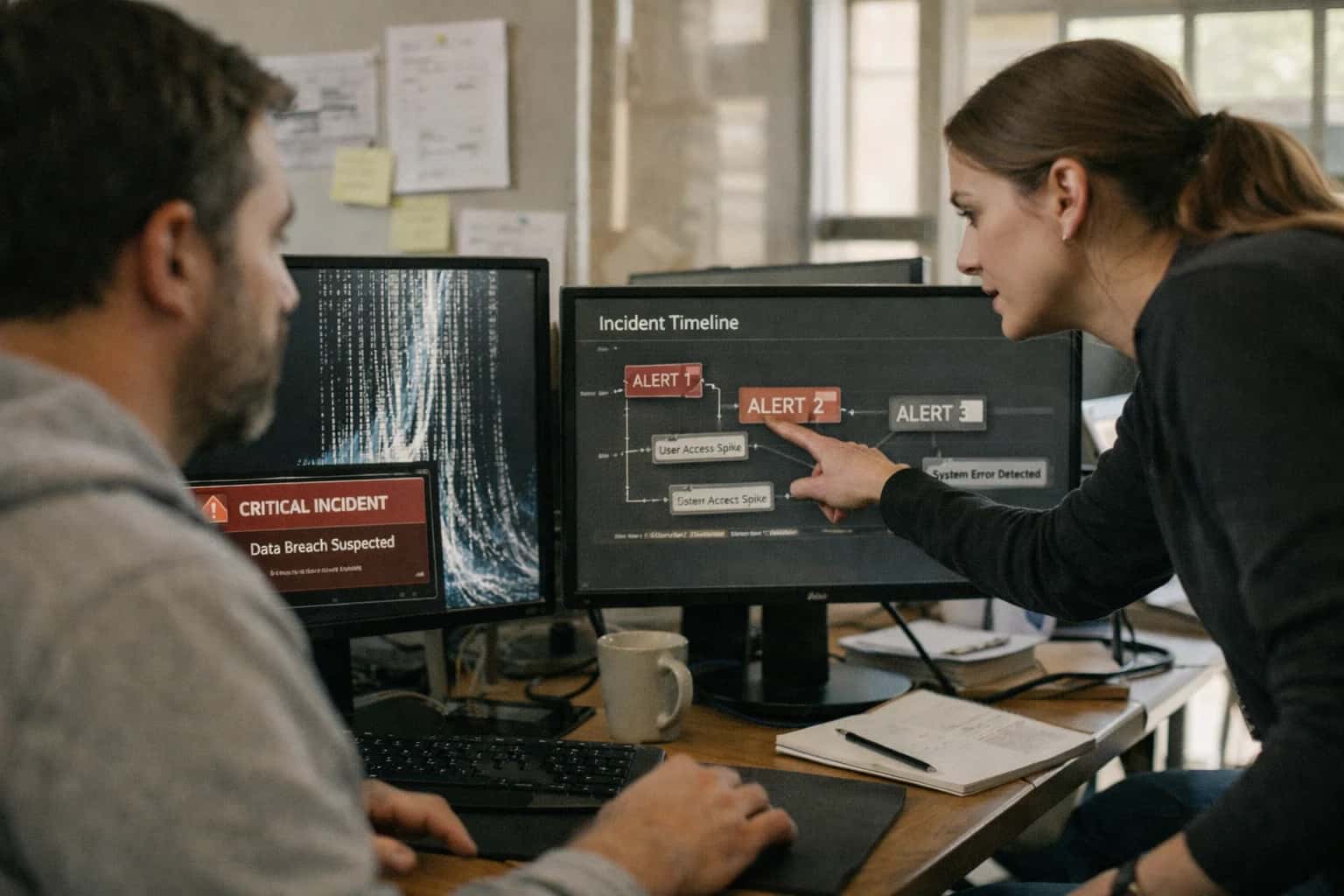
MANDATORY POST-MARKET SURVEILLANCE
What is Serious Incident Reporting?
A legally mandated obligation requiring AI system providers to immediately notify authorities of failures causing death or serious harm.
A reportable incident is defined by its severity of outcome, not merely the system's technical error rate. Upon notification, the provider must conduct a root-cause analysis and implement immediate corrective actions, which may include a product recall or system decommissioning. Failure to report constitutes a severe non-compliance violation, subjecting the provider to significant administrative fines and potential liability for damages resulting from the unreported malfunction.
MANDATORY OBLIGATIONS
Key Characteristics of Serious Incident Reporting
The regulatory framework mandating immediate notification to authorities when an AI system malfunction results in severe harm, ensuring rapid intervention and public safety.
01
Immediate Notification Mandate
Providers must notify the relevant market surveillance authority immediately upon establishing a causal link between an AI system and a serious incident. This obligation is not a periodic review but a real-time trigger activated by death, serious health impairment, or substantial property damage. The clock starts the moment the provider becomes aware, not when an internal investigation concludes.
< 72 hrs
Typical Reporting Window
02
Scope of Reportable Harm
A 'serious incident' is strictly defined as any malfunction or failure that directly or indirectly leads to:
- Death of a person
- Serious and irreversible impairment of health
- Serious damage to property or the environment Indirect causation includes scenarios where the AI's erroneous output was a substantial factor in a downstream decision that caused the harm.
03
Systemic Risk Escalation
For General Purpose AI (GPAI) models with systemic risk, incident reporting is a critical component of the mandatory risk management framework. Providers must couple incident notifications with immediate adversarial testing results and a detailed remediation plan. This transforms the report from a mere notification into a technical dossier demonstrating proactive hazard control.
04
Post-Market Monitoring Integration
Serious incident reporting is not an isolated event but a formal output of the mandated Post-Market Monitoring (PMM) system. The PMM plan must define specific thresholds and detection mechanisms that automatically trigger the reporting protocol. This ensures the reporting process is systematic, auditable, and integrated into the provider's Quality Management System (QMS).
05
Corrective Action and Recall
The incident report must be accompanied by a description of immediate corrective actions taken. If the risk is persistent, the market surveillance authority can compel the provider to:
- Withdraw the system from the market
- Recall deployed instances from users
- Issue urgent safety warnings to deployers Failure to act decisively constitutes a separate, severe non-compliance violation.
06
Investigation and Audit Trail
The report initiates a formal investigation where the provider must preserve an immutable audit trail of the incident. This includes:
- Input data that triggered the failure
- Model inference logs
- Human oversight records at the time of the event This data must be surrendered to authorities to reconstruct the failure chain and verify the provider's technical documentation.
SERIOUS INCIDENT REPORTING
Frequently Asked Questions
Clarifying the mandatory obligation for providers to immediately notify market surveillance authorities of any malfunction or failure of an AI system that directly or indirectly leads to death or serious damage to health or property.
Serious incident reporting is a mandatory regulatory obligation requiring providers of high-risk AI systems to immediately notify the relevant market surveillance authority of any malfunction or failure of their system that directly or indirectly leads to death, serious damage to health, or serious and irreversible damage to property. This obligation, codified in the EU AI Act, is a critical component of the post-market monitoring system, designed to create a rapid feedback loop that allows regulators to identify emerging risks and take swift corrective action. The report must include a detailed description of the incident, the system's role, and the immediate measures taken to contain the harm. Unlike voluntary bug reporting, this is a legally binding duty with strict timelines, typically requiring initial notification within 15 days of the provider becoming aware of the incident, followed by a comprehensive root-cause analysis. The definition of 'serious' is tied to the severity of the outcome, not the technical complexity of the failure, meaning a simple data pipeline error resulting in a critical medical misdiagnosis qualifies as a reportable event.
Enabling Efficiency, Speed & Accuracy
Intelligent Analysis, Decision & Execution
We build AI systems for teams that need search across company data, workflow automation across tools, or AI features inside products and internal software.
Talk to Us
Search across company data
Give teams answers from docs, tickets, runbooks, and product data with sources and permissions.
Useful when people spend too long searching or get different answers from different systems.
Enterprise searchRAGPermissions
Read more
Automate internal workflows
Use AI to route work, draft outputs, trigger actions, and keep approvals and logs in place.
Useful when repetitive work moves across multiple tools and teams.
AI agentsWorkflow automationGovernance
Read more
Add AI to products and internal tools
Build assistants, guided actions, or decision support into the software your team or customers already use.
Useful when AI needs to be part of the product, not a separate tool.
AI integrationDecision supportModel routing
Read more
About the author
Prasad Kumkar
CEO & MD, Inference Systems
Prasad Kumkar is the CEO & MD of Inference Systems and writes about AI systems architecture, LLM infrastructure, model serving, evaluation, and production deployment. Over 5+ years, he has worked across computer vision models, L5 autonomous vehicle systems, and LLM research, with a focus on taking complex AI ideas into real-world engineering systems.
His work and writing cover AI systems, large language models, AI agents, multimodal systems, autonomous systems, inference optimization, RAG, evaluation, and production AI engineering.
LinkedIn
Limited slotsGet a Free AI Consultation
Partnered with leading AI, data, and software stack.





How We Work
Custom AI workflows for your Business
One-fit-all AI don't work for modern businesses. At Inferensys, we aim to understand your business & custom requirements; which we use to define most efficient agentic workflows, the data, and the tools for your business.
01
Review the use case
We understand the task, the users, and where AI can actually help.
Read more02
Pick the right approach
We define what needs search, automation, or product integration.
Read more03
Build the first useful version
We implement the part that proves the value first.
Read more04
Improve from there
We add the checks and visibility needed to keep it useful.
Read moreThe first call is a practical review of your use case and the right next step.
Talk to Us