A Digital Twin of Return Stream is a real-time, data-driven virtual replica of an organization's entire physical reverse logistics network, encompassing every node from customer drop-off to final asset recovery. It ingests live operational telemetry—including carrier scans, warehouse work-in-progress status, and disposition engine outputs—to create a synchronized, dynamic simulation that mirrors the current state of the returns flow with high fidelity.

Glossary
Digital Twin of Return Stream
A dynamic virtual simulation of the physical reverse logistics network used to stress-test disposition strategies and predict bottlenecks without disrupting live operations.
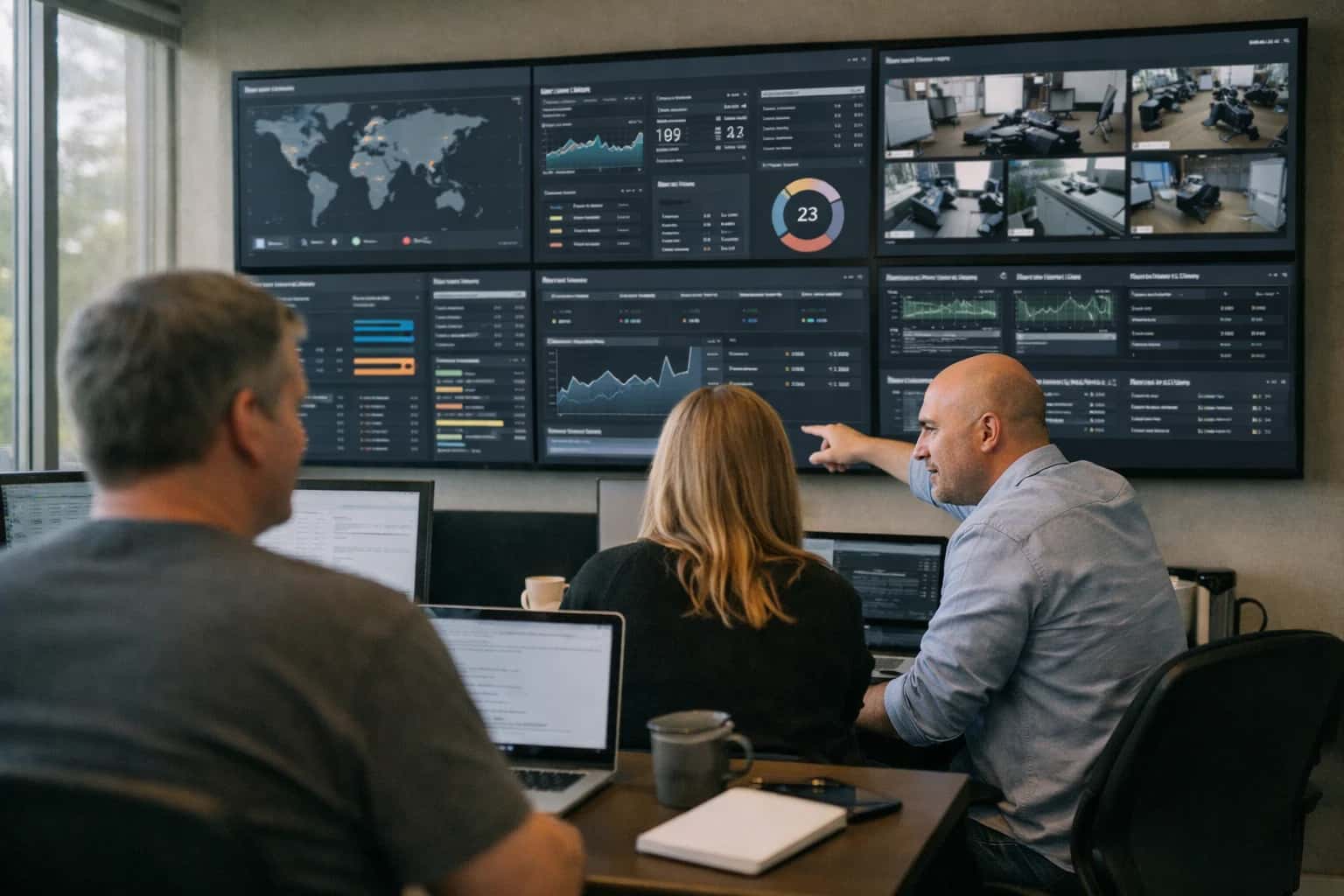
REVERSE LOGISTICS SIMULATION
What is Digital Twin of Return Stream?
A dynamic virtual simulation of the physical reverse logistics network used to stress-test disposition strategies and predict bottlenecks without disrupting live operations.
This simulation enables supply chain architects to run non-disruptive what-if scenario analysis, stress-testing alternative disposition strategies, re-routing logic, and staffing models against a live digital mirror. By predicting bottlenecks, quantifying the financial impact of policy changes, and optimizing the flow of returned goods before physical execution, the digital twin transforms reverse logistics from a reactive cost center into a proactively managed, value-recovery operation.
VIRTUAL REVERSE LOGISTICS
Key Features of a Return Stream Digital Twin
A Digital Twin of the Return Stream is a dynamic virtual replica of the physical reverse logistics network. It enables operators to stress-test disposition strategies, predict bottlenecks, and optimize asset recovery without disrupting live operations.
01
Real-Time Network Mirroring
Ingests live telemetry from IoT sensors, WMS platforms, and TMS systems to maintain a sub-second synchronized state of all physical assets in the reverse flow. This includes the location and status of every returned item, from carrier pickup to final disposition. The twin continuously updates node capacities, transit times, and processing backlogs, providing a single source of truth for the entire reverse network.
< 1 sec
State Sync Latency
02
Disposition Strategy Simulation
Allows operators to run what-if scenarios against the live twin to evaluate the financial and operational impact of different recovery paths. For example, simulate routing a batch of returns to a secondary market versus a re-kitting center. The engine models the cost, time, and net recovery rate for each path, enabling data-driven decisions before committing physical inventory.
03
Bottleneck Prediction Engine
Uses time-series forecasting and anomaly detection to predict capacity constraints before they cause delays. The twin models the cascading effect of a spike in returns at a specific hub, forecasting downstream congestion at sortation centers and final disposition nodes. Alerts are generated with a quantified confidence score, allowing proactive re-routing.
04
Financial Recovery Modeling
Integrates real-time pricing feeds from B2B liquidation and B2C recommerce channels to model the expected net recovery value for each item in the stream. The twin correlates the assigned computer vision grade with current market demand to project total portfolio recovery. This allows finance teams to forecast cash flow from returns with high accuracy.
05
Sustainability Impact Analysis
Calculates the carbon footprint and waste diversion metrics for every simulated disposition decision. The twin models the emissions associated with transportation, processing, and final disposal, enabling operators to optimize for sustainability KPIs alongside financial recovery. Tracks progress toward circular economy targets by measuring landfill avoidance rates.
06
Multi-Agent Orchestration Sandbox
Provides a safe environment to test the behavior of autonomous agents, such as the Automated Disposition Engine and Dynamic Re-routing Algorithm, before deploying updated policies to production. Engineers can observe how agents interact under stress, identify unintended emergent behaviors, and validate that new rules produce the expected system-wide outcomes.
DIGITAL TWIN OF RETURN STREAM
Frequently Asked Questions
Explore the core concepts behind creating a dynamic virtual simulation of your physical reverse logistics network to stress-test strategies and predict bottlenecks without disrupting live operations.
A Digital Twin of a Return Stream is a dynamic, real-time virtual replica of an organization's entire physical reverse logistics network, including every node, asset, and process flow from customer return initiation to final asset recovery. It works by ingesting live operational data—such as carrier scans, warehouse management system (WMS) events, and disposition engine outputs—to mirror the current state of the physical system. Unlike a static model, this twin continuously updates, allowing logistics engineers to run 'what-if' simulations. For example, a manager can simulate a sudden 30% surge in returns volume at a specific facility to observe the cascading effects on labor utilization, sortation throughput, and processing latency before the event actually occurs, enabling proactive bottleneck prevention.
Enabling Efficiency, Speed & Accuracy
Intelligent Analysis, Decision & Execution
We build AI systems for teams that need search across company data, workflow automation across tools, or AI features inside products and internal software.
Talk to Us
Search across company data
Give teams answers from docs, tickets, runbooks, and product data with sources and permissions.
Useful when people spend too long searching or get different answers from different systems.
Enterprise searchRAGPermissions
Read more
Automate internal workflows
Use AI to route work, draft outputs, trigger actions, and keep approvals and logs in place.
Useful when repetitive work moves across multiple tools and teams.
AI agentsWorkflow automationGovernance
Read more
Add AI to products and internal tools
Build assistants, guided actions, or decision support into the software your team or customers already use.
Useful when AI needs to be part of the product, not a separate tool.
AI integrationDecision supportModel routing
Read more
About the author
Prasad Kumkar
CEO & MD, Inference Systems
Prasad Kumkar is the CEO & MD of Inference Systems and writes about AI systems architecture, LLM infrastructure, model serving, evaluation, and production deployment. Over 5+ years, he has worked across computer vision models, L5 autonomous vehicle systems, and LLM research, with a focus on taking complex AI ideas into real-world engineering systems.
His work and writing cover AI systems, large language models, AI agents, multimodal systems, autonomous systems, inference optimization, RAG, evaluation, and production AI engineering.
LinkedIn
Limited slotsGet a Free AI Consultation
Partnered with leading AI, data, and software stack.





How We Work
Custom AI workflows for your Business
One-fit-all AI don't work for modern businesses. At Inferensys, we aim to understand your business & custom requirements; which we use to define most efficient agentic workflows, the data, and the tools for your business.
01
Review the use case
We understand the task, the users, and where AI can actually help.
Read more02
Pick the right approach
We define what needs search, automation, or product integration.
Read more03
Build the first useful version
We implement the part that proves the value first.
Read more04
Improve from there
We add the checks and visibility needed to keep it useful.
Read moreThe first call is a practical review of your use case and the right next step.
Talk to Us