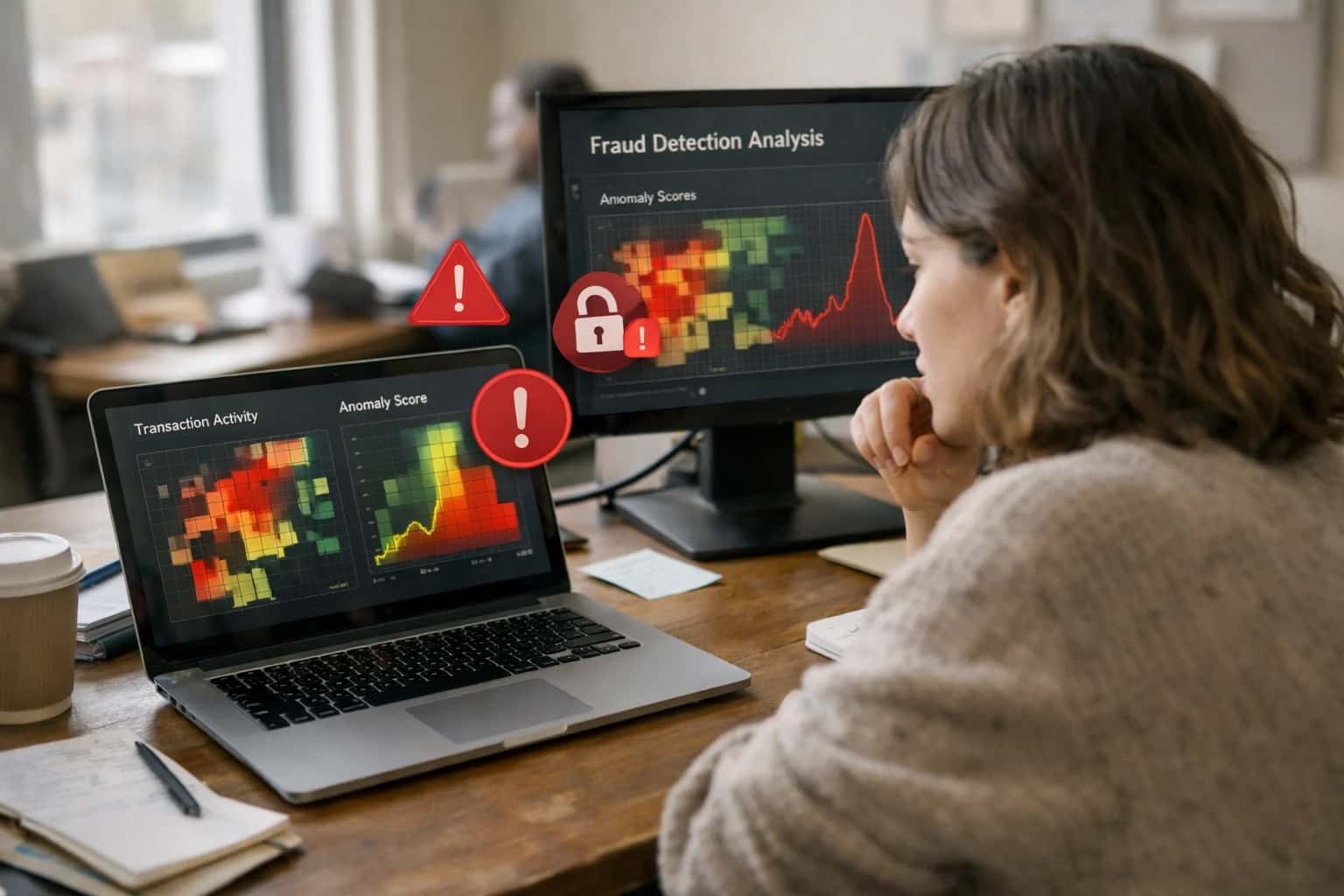
Citation drift detection is a continuous monitoring mechanism that compares the current state of a referenced digital artifact against its state at the time of citation. By computing and comparing cryptographic hashes or semantic embeddings of the source content, the system flags discrepancies—ranging from minor textual edits to complete retractions—that may undermine the factual grounding of an AI-generated output. This process is critical for maintaining the long-term evidence chain integrity of any system that relies on external references.

Glossary
Citation Drift Detection
The algorithmic process of identifying when a cited source's content has been updated or altered post-citation, potentially invalidating or changing the original evidence for a claim.
EVIDENCE INTEGRITY
What is Citation Drift Detection?
Citation drift detection is the algorithmic process of identifying when a cited source's content has been updated, altered, or removed post-citation, potentially invalidating the original evidence for a claim.
The core technical challenge lies in distinguishing between benign updates, such as typographical corrections, and substantive alterations that change the meaning or validity of the cited evidence. Advanced implementations leverage semantic similarity thresholds rather than simple binary checksum comparisons, allowing the system to tolerate inconsequential changes while alerting operators to semantic drift that breaks the logical entailment between the source and the original claim. This capability is a foundational component of a robust algorithmic reputation system.
Citation Drift Detection
Core Characteristics
The essential mechanisms and operational dimensions that define how systems algorithmically identify and respond to post-citation content alterations.
01
Temporal Content Hashing
The foundational mechanism for drift detection. At the moment of citation, the system generates a cryptographic fingerprint (e.g., SHA-256) of the source document's specific content. This reference provenance hash is stored immutably alongside the citation. Detection occurs by periodically re-fetching the source and comparing its current hash to the original. Any mismatch triggers a drift alert, indicating that the content has been added, deleted, or modified since the initial citation was made.
02
Semantic Divergence Analysis
Goes beyond simple byte-level change detection to measure the meaning of the alteration. Using a semantic relevancy vector, the system embeds both the original and the updated source text. It then calculates a source-output divergence metric to quantify the shift in meaning. This distinguishes between a minor typo correction (low divergence) and a substantive factual retraction or update that invalidates the original claim (high divergence), preventing false alarms from trivial edits.
03
Claim Invalidation Logic
The automated reasoning layer that determines the consequence of a detected drift. Once a change is confirmed, the system re-evaluates the original AI-generated claim against the new source version using natural language inference. It calculates a new factual entailment ratio to see if the claim is still supported. If the ratio drops below a critical threshold, the system can automatically flag the output for human review, append a warning, or trigger a full re-generation of the content to restore factual integrity.
04
Continuous Monitoring Cadence
The policy-driven schedule that governs how often cited sources are re-verified. A static document might be checked monthly, while a fast-changing regulatory page requires daily or even hourly checks. This cadence is often tied to a source recency weight and the hallucination risk index of the original claim. High-risk claims backed by volatile sources are placed on a high-frequency monitoring loop, ensuring that critical business decisions are never based on outdated or retracted evidence.
05
Version-Aware Archival
A proactive defense against drift. Instead of relying solely on the live web, the system captures a verifiable snapshot of the source at the time of citation and stores it in an immutable content-addressable archive (like a WORM-compliant knowledge graph). This creates a permanent, auditable record of the exact evidence that supported a claim. If the live source drifts, the archived version serves as the definitive proof of the original context, decoupling the verification process from the volatility of the internet.
CITATION DRIFT DETECTION
Frequently Asked Questions
Explore the technical mechanisms for identifying when a cited source's content has been updated or altered post-citation, potentially invalidating or changing the original evidence for a claim.
Citation drift detection is the algorithmic process of identifying when a cited source's content has been updated, altered, or removed after it was originally referenced, potentially invalidating or changing the evidence for a claim. The mechanism works by establishing a reference provenance hash—a cryptographic fingerprint of the source document's content at the exact moment of citation. Automated crawlers then periodically re-fetch the source URL, compute a new hash, and compare it against the original. If a mismatch is detected, the system triggers a drift alert and initiates a semantic comparison to determine whether the alteration materially impacts the claim. Advanced implementations use diffing algorithms to isolate specific changed passages and calculate a source-output divergence metric that quantifies how much the original claim now deviates from the updated source content. This process is critical for maintaining evidence chain integrity in AI-generated content, ensuring that outputs remain factually grounded even as the web's information landscape evolves.
Enabling Efficiency, Speed & Accuracy
Intelligent Analysis, Decision & Execution
We build AI systems for teams that need search across company data, workflow automation across tools, or AI features inside products and internal software.
Talk to Us
Search across company data
Give teams answers from docs, tickets, runbooks, and product data with sources and permissions.
Useful when people spend too long searching or get different answers from different systems.
Enterprise searchRAGPermissions
Read more
Automate internal workflows
Use AI to route work, draft outputs, trigger actions, and keep approvals and logs in place.
Useful when repetitive work moves across multiple tools and teams.
AI agentsWorkflow automationGovernance
Read more
Add AI to products and internal tools
Build assistants, guided actions, or decision support into the software your team or customers already use.
Useful when AI needs to be part of the product, not a separate tool.
AI integrationDecision supportModel routing
Read more
About the author
Prasad Kumkar
CEO & MD, Inference Systems
Prasad Kumkar is the CEO & MD of Inference Systems and writes about AI systems architecture, LLM infrastructure, model serving, evaluation, and production deployment. Over 5+ years, he has worked across computer vision models, L5 autonomous vehicle systems, and LLM research, with a focus on taking complex AI ideas into real-world engineering systems.
His work and writing cover AI systems, large language models, AI agents, multimodal systems, autonomous systems, inference optimization, RAG, evaluation, and production AI engineering.
LinkedIn
Limited slotsGet a Free AI Consultation
Partnered with leading AI, data, and software stack.





How We Work
Custom AI workflows for your Business
One-fit-all AI don't work for modern businesses. At Inferensys, we aim to understand your business & custom requirements; which we use to define most efficient agentic workflows, the data, and the tools for your business.
01
Review the use case
We understand the task, the users, and where AI can actually help.
Read more02
Pick the right approach
We define what needs search, automation, or product integration.
Read more03
Build the first useful version
We implement the part that proves the value first.
Read more04
Improve from there
We add the checks and visibility needed to keep it useful.
Read moreThe first call is a practical review of your use case and the right next step.
Talk to Us