An Attribution Confidence Interval is a statistical range quantifying the certainty that a specific AI-generated claim originates from a given source, explicitly accounting for inherent ambiguities in the model's source attribution process. Unlike a binary citation, it expresses attribution as a probabilistic estimate, such as a 95% confidence that the true source lies within a defined set of candidate documents.

Glossary
Attribution Confidence Interval
A statistical range expressing the certainty that a specific claim originates from a given source, accounting for ambiguities in the AI's source attribution process.
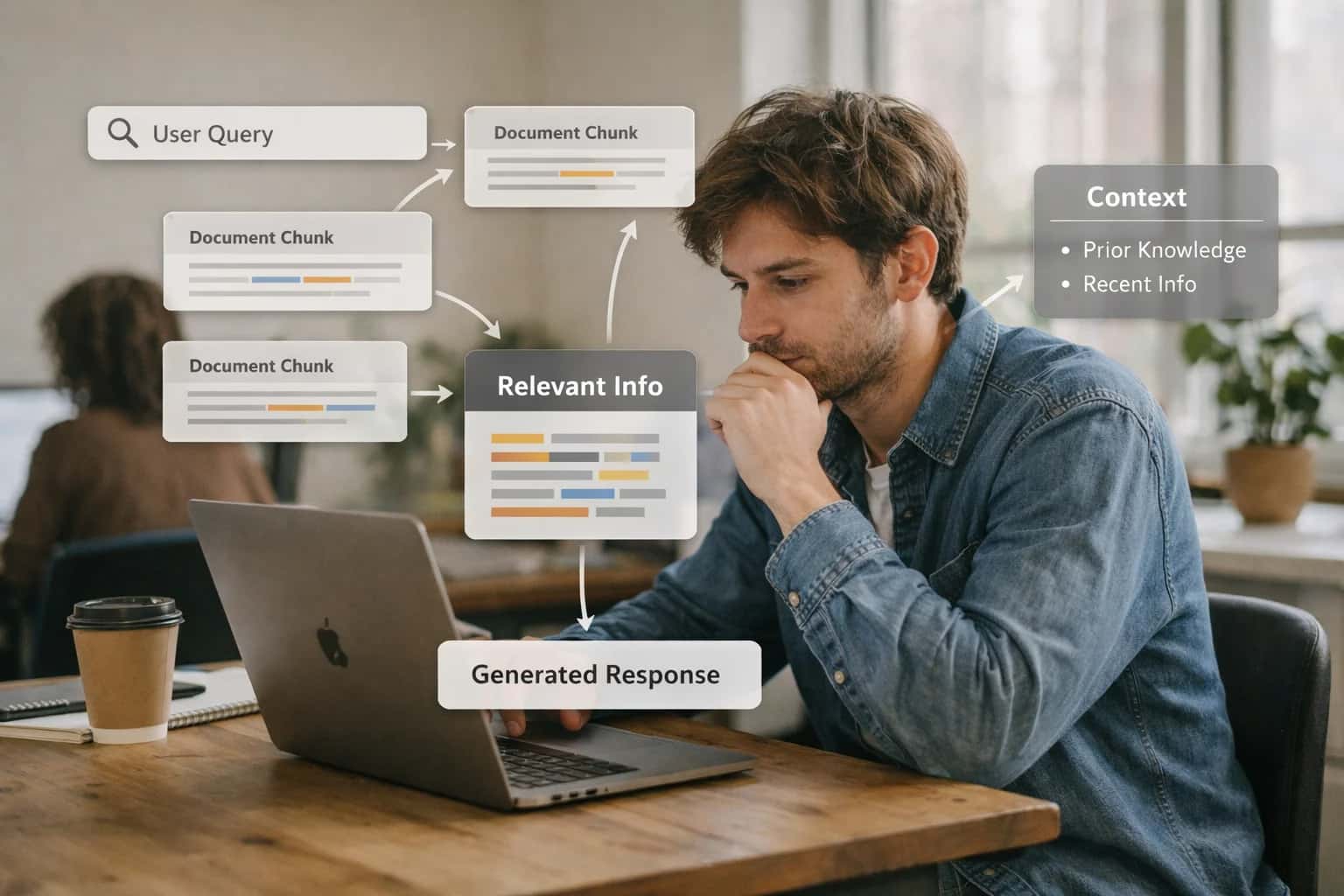
CITATION INTEGRITY SCORING
What is Attribution Confidence Interval?
A statistical range expressing the certainty that a specific claim originates from a given source, accounting for ambiguities in the AI's source attribution process.
This metric is critical for Citation Integrity Scoring because it communicates the reliability of an AI's evidence chain to users. A narrow interval signals high confidence in a single source, while a wide interval indicates the model is uncertain, perhaps attributing a claim to a cluster of semantically similar documents. This transparency allows for nuanced trust calibration in high-stakes research.
STATISTICAL RIGOR IN AI CITATION
Key Characteristics of Attribution Confidence Intervals
Attribution Confidence Intervals provide a statistical framework for expressing the certainty that a specific claim originates from a given source, accounting for ambiguities in the AI's source attribution process.
01
Probabilistic Source Mapping
Unlike binary attribution (cited/not cited), confidence intervals express attribution as a probability distribution. The interval quantifies the range within which the true attribution likelihood falls, typically at a 95% confidence level. This accounts for the inherent ambiguity when an AI synthesizes information from multiple overlapping sources. For example, a claim might have an 85% probability of originating from Source A, with a confidence interval of ±7%, indicating the true probability lies between 78% and 92%.
02
Ambiguity Decomposition
The interval width directly reflects attribution ambiguity—the degree to which a claim could have been derived from multiple sources. Key contributing factors include:
- Semantic overlap between candidate source documents
- Paraphrastic regeneration where the AI rewrites source material
- Multi-source fusion where a single claim synthesizes several references
- Training data memorization versus real-time retrieval A narrow interval indicates high attribution certainty; a wide interval signals significant ambiguity requiring human review.
03
Calibration Against Ground Truth
Confidence intervals must be empirically calibrated against known attribution cases to ensure statistical validity. This involves:
- Holdout testing on documents with known provenance
- Perturbation analysis where source text is deliberately modified to measure interval sensitivity
- Inter-annotator agreement studies comparing AI attribution to human expert judgments A well-calibrated interval means that 95% confidence intervals contain the true attribution value approximately 95% of the time. Miscalibrated intervals produce overconfident or underconfident attributions.
04
Temporal Decay Modeling
Attribution confidence naturally decays over time as source documents are updated, retracted, or superseded. Confidence intervals incorporate temporal decay functions that widen the interval as the time since citation increases. This reflects growing uncertainty about whether the cited source still supports the claim. For rapidly evolving fields like medical research or technology, decay rates are accelerated. For historical or mathematical claims, decay may be negligible.
05
Multi-Modal Attribution Uncertainty
When claims derive from multi-modal sources—such as text extracted from a chart in a PDF, or a statement transcribed from a video—confidence intervals must account for cross-modal extraction error. The interval widens to reflect:
- OCR inaccuracies in image-to-text conversion
- Speech-to-text transcription errors
- Visual-to-claim interpretation ambiguity Each modality introduces distinct error distributions that compound in the final attribution confidence calculation.
06
Threshold-Based Action Triggers
Confidence intervals enable automated decision logic for downstream systems:
- Above 90% lower bound: Auto-publish with full citation
- 70-90% lower bound: Publish with 'medium confidence' flag
- 50-70% lower bound: Queue for human editorial review
- Below 50% lower bound: Suppress citation entirely or mark as unverified These thresholds transform statistical outputs into operational workflows, ensuring that only high-confidence attributions reach end-users without manual intervention.
ATTRIBUTION CONFIDENCE INTERVAL
Frequently Asked Questions
Explore the statistical foundations of AI citation trustworthiness. These answers clarify how confidence intervals quantify the certainty of source attribution in generative models.
An Attribution Confidence Interval is a statistical range expressing the certainty that a specific claim originates from a given source, accounting for ambiguities in the AI's source attribution process. It works by modeling the attribution as a probabilistic event rather than a binary link. The system calculates a lower and upper bound (e.g., 85%–95%) within which the true source-claim relationship is expected to lie. This calculation integrates signals from semantic relevancy vectors, factual entailment ratios, and model calibration data. A narrow interval indicates high certainty in the attribution, while a wide interval signals ambiguity, potentially triggering a citation drift detection check or a request for human review.
Enabling Efficiency, Speed & Accuracy
Intelligent Analysis, Decision & Execution
We build AI systems for teams that need search across company data, workflow automation across tools, or AI features inside products and internal software.
Talk to Us
Search across company data
Give teams answers from docs, tickets, runbooks, and product data with sources and permissions.
Useful when people spend too long searching or get different answers from different systems.
Enterprise searchRAGPermissions
Read more
Automate internal workflows
Use AI to route work, draft outputs, trigger actions, and keep approvals and logs in place.
Useful when repetitive work moves across multiple tools and teams.
AI agentsWorkflow automationGovernance
Read more
Add AI to products and internal tools
Build assistants, guided actions, or decision support into the software your team or customers already use.
Useful when AI needs to be part of the product, not a separate tool.
AI integrationDecision supportModel routing
Read more
About the author
Prasad Kumkar
CEO & MD, Inference Systems
Prasad Kumkar is the CEO & MD of Inference Systems and writes about AI systems architecture, LLM infrastructure, model serving, evaluation, and production deployment. Over 5+ years, he has worked across computer vision models, L5 autonomous vehicle systems, and LLM research, with a focus on taking complex AI ideas into real-world engineering systems.
His work and writing cover AI systems, large language models, AI agents, multimodal systems, autonomous systems, inference optimization, RAG, evaluation, and production AI engineering.
LinkedIn
Limited slotsGet a Free AI Consultation
Partnered with leading AI, data, and software stack.





How We Work
Custom AI workflows for your Business
One-fit-all AI don't work for modern businesses. At Inferensys, we aim to understand your business & custom requirements; which we use to define most efficient agentic workflows, the data, and the tools for your business.
01
Review the use case
We understand the task, the users, and where AI can actually help.
Read more02
Pick the right approach
We define what needs search, automation, or product integration.
Read more03
Build the first useful version
We implement the part that proves the value first.
Read more04
Improve from there
We add the checks and visibility needed to keep it useful.
Read moreThe first call is a practical review of your use case and the right next step.
Talk to Us