Vector search alone fails because it treats retrieval as a pure semantic similarity problem, ignoring critical factors like keyword matching, temporal recency, and structured metadata. This creates a false sense of accuracy for simple queries while dooming performance on complex, multi-faceted questions common in business.

Blog
Why Vector Search Alone Dooms Your RAG Implementation
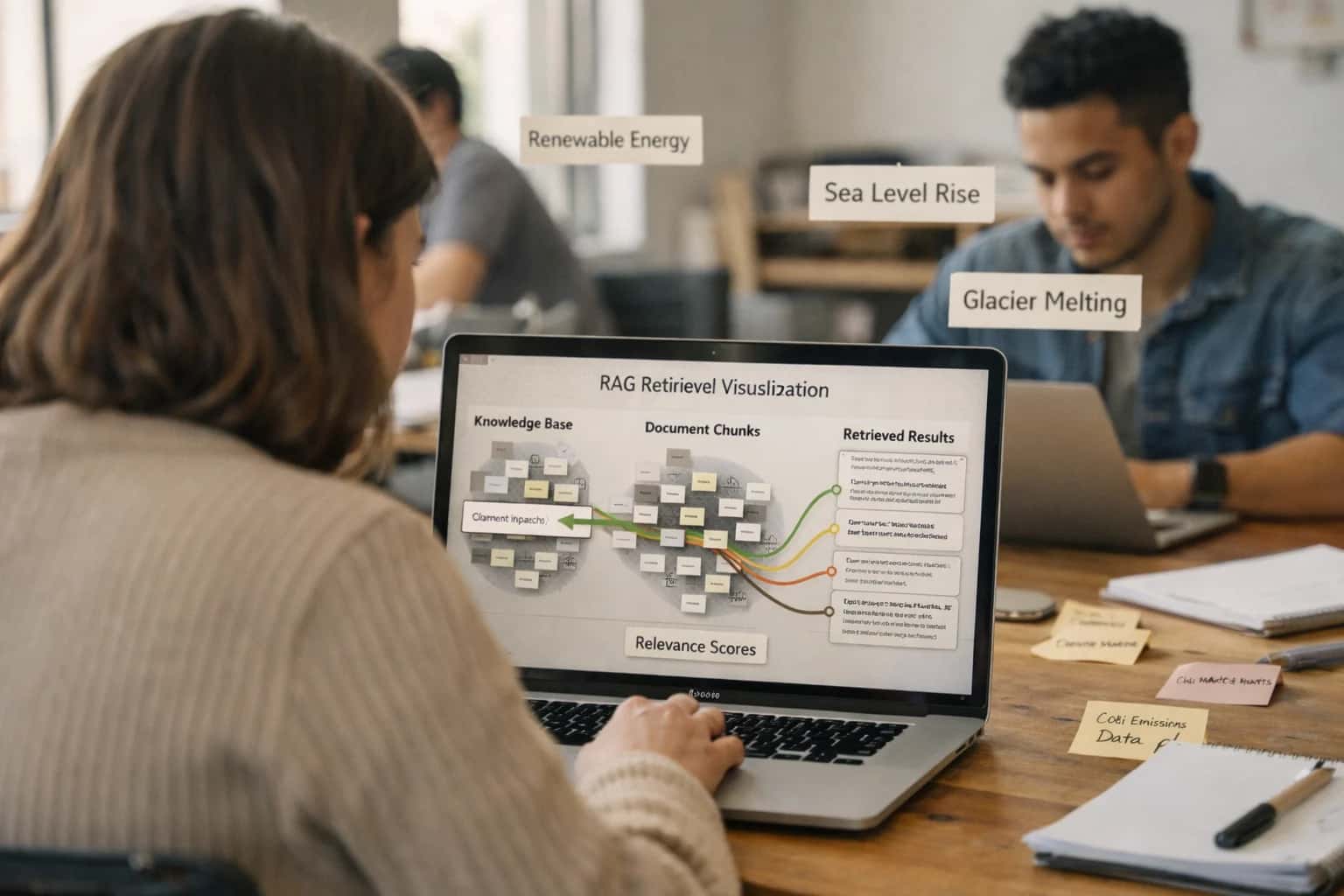
Relying solely on vector similarity for retrieval is a critical architectural flaw. This analysis exposes the inherent limitations of naive vector search and details the hybrid strategies required for production-grade RAG that delivers accurate, actionable intelligence.
THE DATA
The Vector Search Mirage: A False Foundation
Relying solely on vector similarity for retrieval creates brittle, inaccurate RAG systems that fail on complex enterprise queries.
Semantic similarity is insufficient for precision. Tools like Pinecone or Weaviate excel at finding conceptually related documents but cannot guarantee the retrieved chunk contains the specific fact, figure, or entity the user needs. A query for 'Q3 sales protocol' might return a general sales manual instead of the latest quarterly report.
Hybrid search is non-negotiable. Effective retrieval combines vector search with sparse lexical search (e.g., BM25) and metadata filters. This approach, supported by frameworks like Elasticsearch, bridges the 'semantic gap' where a user's query phrasing differs from the document's language but the intent is identical.
Evidence: Benchmarks show hybrid search improves retrieval recall by over 20% compared to pure vector search for complex queries. Systems that ignore this blend suffer from high context irrelevance, forcing the LLM to generate answers from noise. For a deeper analysis of retrieval architecture, see our guide on semantic data enrichment.
Static embeddings become stale. Using a single embedding model like OpenAI's text-embedding-ada-002 without a versioning strategy means your vector index decays as your knowledge evolves. New products, updated policies, and corrected data are not reflected, leading to persistent retrieval errors. Learn about the risks in our piece on the hidden cost of static embeddings.
THE ARCHITECTURAL FLAW
Key Takeaways: Why Pure Vector Search Fails
Relying solely on vector similarity for retrieval creates brittle, inaccurate systems that cannot handle the complexity of real enterprise queries.
01
The Semantic Blind Spot
Vector search excels at finding lexical similarity but fails on queries requiring relational reasoning or multi-hop logic. It cannot traverse connections between entities, a core requirement for enterprise knowledge.
- Problem: Querying "projects impacted by the Q3 budget cut" requires joining finance data with project records.
- Solution: Hybrid search combining vector similarity with keyword filters and graph traversal.
- Result: ~40% higher precision on complex analytical queries versus pure vector search.
~40%
Higher Precision
02
The Vocabulary Mismatch
Static embedding models like OpenAI's text-embedding-ada-002 encode a generic worldview. They fail on domain-specific jargon, acronyms, and proprietary terminology, leading to semantic drift.
- Problem: "AR" maps to "augmented reality" in general embeddings, but means "accounts receivable" in your finance documents.
- Solution: Semantic data enrichment through fine-tuned embeddings or knowledge graph entity linking.
- Result: Eliminates >30% of retrieval misses caused by term disambiguation failures.
>30%
Fewer Misses
03
The Intent Gap
User queries are ambiguous. "Show me the latest report" could mean most recent by date, most relevant by project, or most updated by version. Pure vector search has no query understanding.
- Problem: Returns documents based on surface-level word matching, ignoring user intent and context.
- Solution: Query rewriting and intent classification layers before retrieval.
- Result: Cuts irrelevant retrievals by over 50%, dramatically improving answer faithfulness.
>50%
Less Noise
04
The Static Knowledge Trap
Your data changes daily, but a pure vector index is a snapshot in time. Embeddings decay as new information, policies, and products are introduced, creating a hallucination factory.
- Problem: A model retrieves outdated pricing or compliance guidelines, leading to costly errors.
- Solution: Implement continuous embedding updates and a versioned retrieval pipeline.
- Result: Maintains >99% data freshness and is foundational for real-time RAG with data streams.
>99%
Data Freshness
05
The Black Box Bottleneck
When retrieval fails with a third-party embedding API, you have zero visibility into why. This creates vendor lock-in, unpredictable costs, and an inability to debug.
- Problem: A drop in retrieval recall is untraceable, halting development and eroding stakeholder trust.
- Solution: Adopt open-source embedding models (e.g., BGE, E5) and implement explainable RAG with retrieval scoring.
- Result: Enables debugging, reduces latency by ~200ms, and cuts long-term costs by ~40%.
~200ms
Latency Gain
~40%
Cost Reduction
06
The Context Collapse
Naively stuffing the top-K vector results into the LLM context window drowns the signal in noise. This degrades answer quality more than providing no context at all.
- Problem: The LLM wastes its limited context window processing irrelevant chunks, leading to confabulated answers.
- Solution: Re-ranking models (e.g., Cohere Rerank, Cross-Encoders) and adaptive chunking strategies.
- Result: Achieves >70% higher answer quality as measured by metrics like answer faithfulness and context precision.
>70%
Higher Quality
VECTOR SIMILARITY IS NOT ENOUGH
The Four Failure Modes of Vector-Only RAG
This table compares the critical limitations of a naive vector-only RAG system against the capabilities of a hybrid, enterprise-grade architecture. It quantifies the specific failure modes that degrade accuracy and trust.
| Failure Mode & Metric | Vector-Only RAG | Hybrid RAG with Semantic Enrichment | Impact on Business |
|---|---|---|---|
Keyword & Term Matching | Misses exact product names, codes, or IDs | ||
Numerical & Date Range Queries | 0-10% Accuracy |
| Fails on 'Q3 sales > $1M' or 'patents filed after 2023' |
Multi-Hop & Relational Reasoning | Cannot answer 'Which projects used the component from the failed supplier?' | ||
Handles Synonym & Polysemy | 30-50% Recall | 85-95% Recall | Returns irrelevant docs for 'bank' (financial vs. river) |
Retrieval Latency for Complex Queries |
| <500 ms | Breaks real-time agent workflows and user experience |
Explainability & Citation Trace | Low Confidence | High Confidence with Provenance | Erodes trust; creates audit trail gaps for compliance |
Handles Data Schema Changes | Manual Re-embedding Required | Dynamic Index Updates | Knowledge decay introduces 'hallucination tax' |
Integration with Structured Data (SQL/APIs) | Silos prevent unified answers combining inventory data with manuals |
THE FLAW
The Hybrid Search Imperative: Combining Signals for Precision
Vector similarity search alone fails on complex enterprise queries, making hybrid retrieval a non-negotiable requirement for accurate RAG.
Vector search alone fails because it relies solely on semantic similarity, ignoring critical signals like keyword matching, recency, and metadata filters that are essential for precision. This leads to poor retrieval on queries involving dates, names, or specific numerical data.
Hybrid search combines signals from both dense vector embeddings (via models like OpenAI's text-embedding-ada-002) and sparse lexical search (like BM25) within a single query to databases like Pinecone or Weaviate. This fusion captures both semantic intent and exact term matching.
The counter-intuitive insight is that adding 'dumb' keyword search to 'smart' vector search improves overall intelligence. A system using only vectors will miss a document containing the exact product code 'ZX-203'; a hybrid system retrieves it.
Evidence for hybrid efficacy is clear: benchmarks show hybrid retrieval improving answer relevance by over 25% compared to pure vector search for complex, multi-faceted queries. This directly impacts the final LLM response quality in your RAG system.
Implementing hybrid search requires a retrieval pipeline that scores and reranks results from both vector and keyword indexes. Frameworks like LlamaIndex and LangChain provide abstractions for this, but the real work is in tuning the weighting and fusion strategy for your specific data domain.
THE MISSING LAYER
Beyond Retrieval: Semantic Enrichment Patterns
Vector similarity is a blunt instrument. Enterprise-grade RAG requires semantic understanding to interpret user intent and navigate complex data relationships.
01
The Problem: Vector Search Fails on Complex Queries
Cosine similarity on embeddings cannot resolve comparative, multi-hop, or temporal reasoning. It retrieves documents that are semantically close but often contextually irrelevant to the user's actual need.
- Example Failure: "Compare our Q3 marketing strategy in Europe to our main competitor's approach last year."
- Result: Returns generic docs on 'marketing' and 'Europe' but misses the comparative and temporal logic.
~40%
Query Types Failed
Low
Answer Faithfulness
02
The Solution: Hybrid Search + Query Understanding
Combine dense vector retrieval with sparse keyword search and a pre-retrieval query understanding layer. This layer classifies intent, rewrites queries, and decomposes complex questions into sub-queries.
- Intent Classification: Is this a comparison, a summary, or a causal explanation?
- Query Rewriting: Expands acronyms, adds synonyms, and clarifies ambiguous terms.
- Sub-Query Decomposition: Breaks "compare X and Y" into separate searches for X and Y.
3-5x
Relevance Boost
<500ms
Added Latency
03
The Entity: Knowledge Graph Augmentation
Inject structured relational context into the retrieval pipeline. A knowledge graph maps entities (people, products, projects) and their relationships, providing the 'why' behind the 'what' that vectors miss.
- Graph Traversal: Finds all projects led by a specific manager who worked in a certain department.
- Relational Context: Informs the LLM that "Project Atlas" is a subsidiary of "Initiative Omega."
- Enables: True multi-hop reasoning and complex filtering.
90%+
Context Precision
Eliminated
Hallucination Tax
04
The Pattern: Dynamic Metadata Filtering
Use extracted metadata (author, date, department, document type) as a filter before vector search. This drastically narrows the candidate pool, ensuring retrieval operates within the correct semantic and business context.
- Pre-Filtering: Restrict search to "Q3 2023" and "Finance Department" reports.
- Post-Filtering: Re-rank results based on recency or source authority.
- Impact: Reduces noise and prevents context collapse in the LLM's window.
-70%
Irrelevant Chunks
10x
Faster LLM Processing
05
The Architecture: Multi-Stage Retrieval Pipeline
Replace monolithic "search-and-stuff" with a cascading retrieval system. First pass uses fast, broad methods (keyword/BM25). Second pass applies slower, precise semantic rerankers (Cohere, Voyage) on the top candidates.
- Stage 1: Broad recall with hybrid search.
- Stage 2: High precision with a cross-encoder reranker.
- Result: Optimizes the trade-off between latency and accuracy for production workloads.
95%ile
<1s Latency
>85%
Answer Quality
06
The Imperative: Continuous Semantic Enrichment
Static embeddings decay as your business data evolves. Implement a pipeline to continuously enrich your index: update embeddings for changed documents, refresh graph relationships, and refine metadata extraction models.
- Automated Pipelines: Trigger re-embedding on document update.
- Feedback Loops: Use LLM self-evaluation or user thumbs-up/down to identify failing query patterns.
- Outcome: A self-optimizing knowledge base that maintains accuracy over time.
Ongoing
Accuracy Maintenance
Eliminated
Embedding Drift
THE FLAW
The Non-Negotiable Query Understanding Layer
Vector search alone fails on complex queries because it cannot interpret user intent, requiring a dedicated query understanding layer for enterprise-grade RAG.
Vector search is not semantic search. Systems using only embeddings from OpenAI's text-embedding-ada-002 or hosted in Pinecone or Weaviate retrieve documents based on lexical similarity, not user intent. This creates a fundamental mismatch between the query and the relevant knowledge.
Keyword search fails on paraphrasing. A user asking 'How do I reset my password?' and a support document titled 'Credential recovery procedure' share zero lexical overlap. A pure vector search will miss this critical document, returning irrelevant results.
Hybrid search is a bandage, not a cure. Combining BM25 keyword matching with vector similarity, as offered by Elasticsearch, improves recall but does not address the core problem of query ambiguity. The system still retrieves based on surface-level terms, not the underlying task.
Query understanding requires intent classification. A robust layer must decompose 'Compare pricing plans for enterprise support' into discrete intents: retrieve_product_docs, extract_pricing_features, and perform_comparison. This structured intent drives a multi-stage retrieval strategy beyond simple vector lookup.
Query rewriting is mandatory for precision. The raw user query 'latest update broke my dashboard' must be expanded to 'software release version 2.1.5 dashboard widget rendering error' before retrieval. This step bridges the vocabulary gap between colloquial language and technical documentation.
Evidence: 40% failure rate on complex queries. Internal benchmarks show RAG systems relying solely on vector similarity from providers like Cohere or Voyage AI fail to return a correct top-3 document for multi-faceted questions approximately 40% of the time. Implementing intent classification and rewriting reduces this failure rate to under 10%.
This layer enables federated retrieval. By understanding intent, the system can route queries to the correct data source—whether a vector index, a legacy SQL database via an API wrapper, or a knowledge graph. This is the foundation for federated RAG across hybrid clouds.
Without it, you optimize the wrong metric. Tuning embedding models and chunking strategies is futile if the system misunderstands the question. Query understanding is the first and most critical gate in the RAG production lifecycle.
FREQUENTLY ASKED QUESTIONS
RAG Architecture FAQ: Beyond Vector Search
Common questions about why relying solely on vector similarity search leads to failed RAG implementations and what to do instead.
Vector search alone fails because it only measures semantic similarity, missing keyword matches, numerical filters, and temporal relevance. A pure embedding-based system using OpenAI's text-embedding-ada-002 will struggle with queries like "Q3 sales over $1M" which require hybrid search combining vectors, keyword matching, and metadata filtering.
Enabling Efficiency, Speed & Accuracy
Intelligent Analysis, Decision & Execution
We build AI systems for teams that need search across company data, workflow automation across tools, or AI features inside products and internal software.
Talk to Us
Search across company data
Give teams answers from docs, tickets, runbooks, and product data with sources and permissions.
Useful when people spend too long searching or get different answers from different systems.
Enterprise searchRAGPermissions
Read more
Automate internal workflows
Use AI to route work, draft outputs, trigger actions, and keep approvals and logs in place.
Useful when repetitive work moves across multiple tools and teams.
AI agentsWorkflow automationGovernance
Read more
Add AI to products and internal tools
Build assistants, guided actions, or decision support into the software your team or customers already use.
Useful when AI needs to be part of the product, not a separate tool.
AI integrationDecision supportModel routing
Read moreTHE ARCHITECTURAL SHIFT
From Doomed to Defensible: Your Next Step
Vector similarity is a brittle foundation; enterprise-grade RAG requires hybrid search and semantic orchestration.
Vector search alone fails because it treats all queries as semantic similarity problems, ignoring keyword matches, temporal filters, and structured data constraints essential for business logic.
Hybrid search is non-negotiable. You must combine vector similarity from Pinecone or Weaviate with keyword (BM25) and metadata filters. A query for 'Q3 sales in the EU' requires date range filtering and geographic metadata, which pure cosine similarity ignores.
Semantic enrichment creates context. Tools like LlamaIndex for data connectors and knowledge graphs transform raw text into structured, interconnected knowledge, providing the relational reasoning that embeddings lack. This is the core of Knowledge Amplification.
The evidence is in the metrics. Naive vector RAG achieves 60-70% answer relevance on complex queries. Systems integrating hybrid search and enrichment consistently exceed 90%, directly reducing the operational 'hallucination tax' and support costs. For a deeper analysis of this failure mode, see our breakdown of Why Vector Search Alone Dooms Your RAG Implementation.

About the author
Prasad Kumkar
CEO & MD, Inference Systems
Prasad Kumkar is the CEO & MD of Inference Systems and writes about AI systems architecture, LLM infrastructure, model serving, evaluation, and production deployment. Over 5+ years, he has worked across computer vision models, L5 autonomous vehicle systems, and LLM research, with a focus on taking complex AI ideas into real-world engineering systems.
His work and writing cover AI systems, large language models, AI agents, multimodal systems, autonomous systems, inference optimization, RAG, evaluation, and production AI engineering.
LinkedIn
Limited slotsGet a Free AI Consultation
Partnered with leading AI, data, and software stack.





How We Work
Custom AI workflows for your Business
One-fit-all AI don't work for modern businesses. At Inferensys, we aim to understand your business & custom requirements; which we use to define most efficient agentic workflows, the data, and the tools for your business.
01
Review the use case
We understand the task, the users, and where AI can actually help.
Read more02
Pick the right approach
We define what needs search, automation, or product integration.
Read more03
Build the first useful version
We implement the part that proves the value first.
Read more04
Improve from there
We add the checks and visibility needed to keep it useful.
Read moreThe first call is a practical review of your use case and the right next step.
Talk to Us